
Roofing Guide
Types of Gutter Guards: Micro-Mesh, Screen and Reverse Curve
By Jose ZarumaPublished
- gutter guards
- gutters
- connecticut
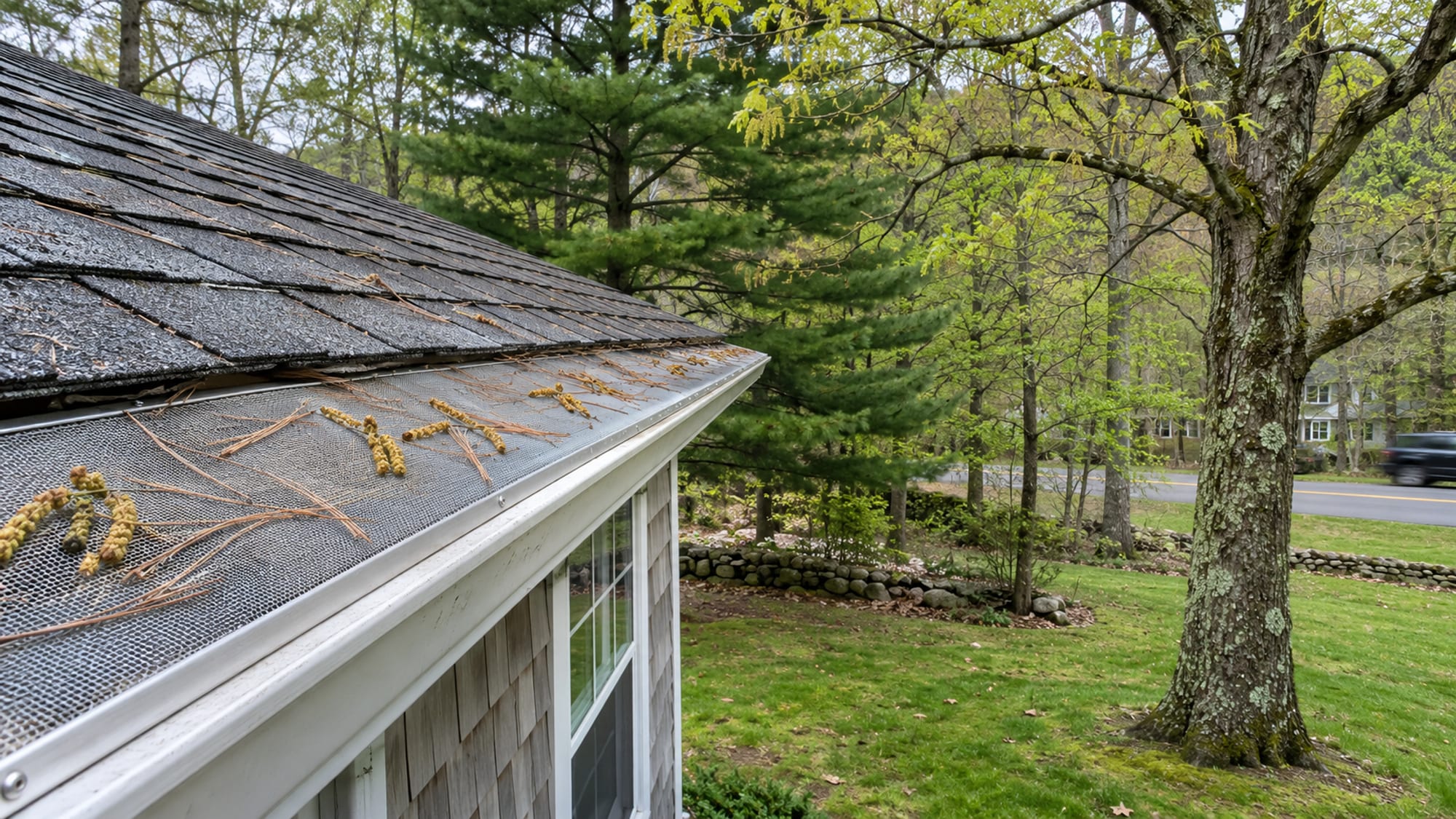
Fine stainless micro-mesh is the type built for pine needles and oak catkins, while screens and reverse-curve covers do better with broad leaves. Which one fits your house depends on what your trees drop, how your roof sheds water and what shape the gutters are in.
Oak tassels, maple seeds and pine needles are different sizes, and each guard type lets a different share of them through. Winter adds another test, because snow, ice and falling branches load a guard in ways a September rainstorm never does. No single type suits every home, and every type still needs a look after leaf fall, after major storms and before spring rain.
If you are choosing between guards for a Connecticut house, the useful comparison is your own debris against each design, then how each one handles a Connecticut winter, what an installed quote includes and what upkeep is left.
Key Takeaways
Manufacturer descriptions put stainless micro-mesh at the top for fine debris such as pine needles, pollen, roof grit, oak catkins and helicopter seeds, while screens and perforated panels depend on their opening size.
Reverse-curve covers rely on water following the curve, so valleys and heavy runoff areas are where they can overshoot.
Guards do not stop ice dams when the cause is roof heat or ventilation, and no guard type makes a Connecticut gutter ice-proof.
Get the exact product, the attachment method, any shingle lifting, the permit plan, the warranty and the upkeep plan in writing before you sign.
Which Gutter Guard Fits Your Actual Problem?
Start with the gutters, not the guard. A guard sits on top of whatever is already there, so gutters that sag, pull from the fascia or drain slowly will still do those things with a cover on them. Fix the slope, the hangers and the downspout flow first, and then pick the cover.
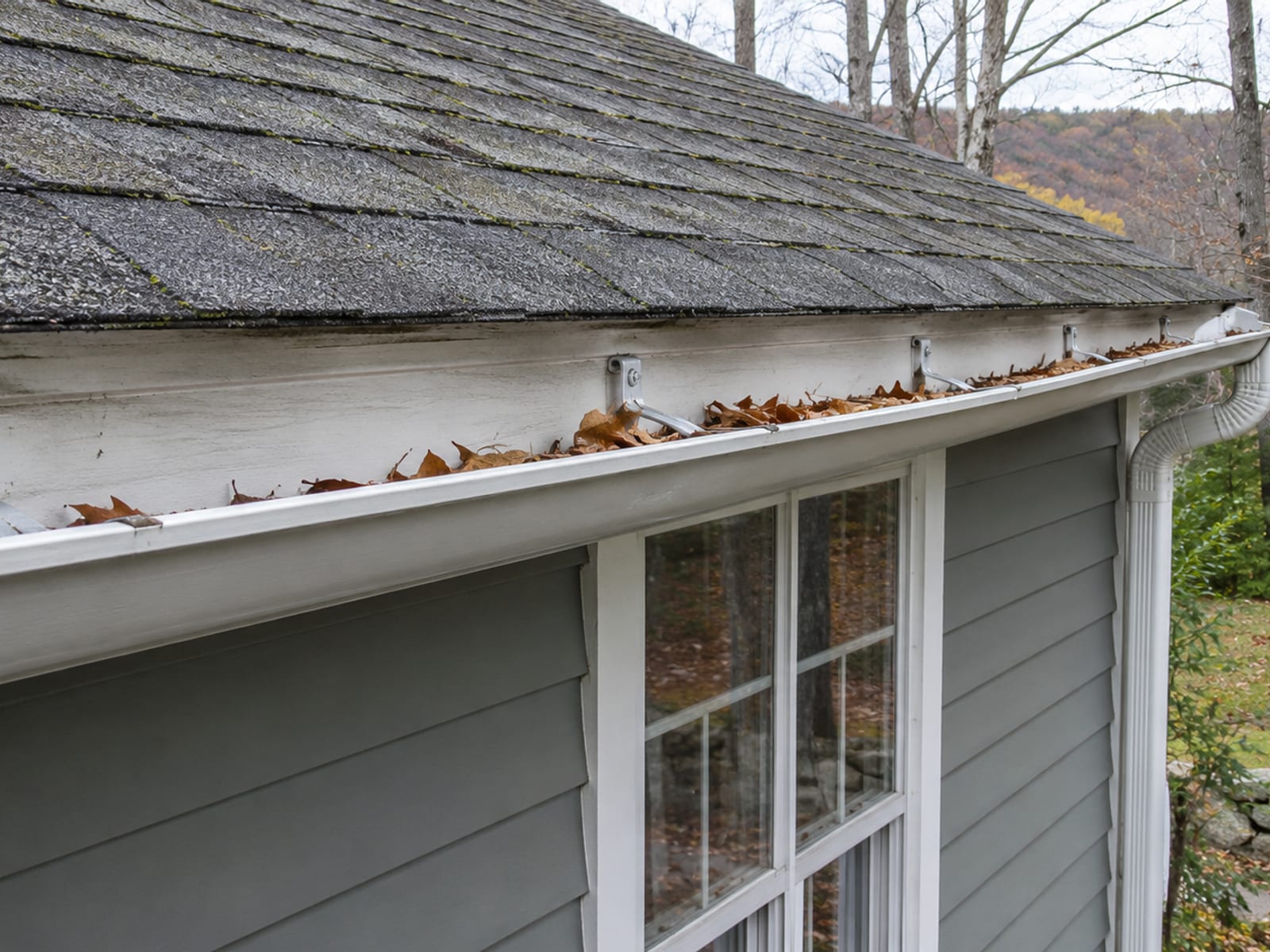
Today, you can photograph the roofline, gutters, downspout outlets, fascia and nearby trees from the ground. Note whether water already overflows, whether the gutters sag and where leaves or needles pile up. Those pictures make a written evaluation from a registered contractor far more useful. Our page on gutter guards covers the service itself, and whether guards are worth it is the better read if you are still deciding whether to buy one at all.
How Do Micro-Mesh, Screens, Perforated Aluminum and Surface-Tension Covers Compare?
Six designs show up most often, and each one handles water and debris in its own way. Foam inserts and brush guards sit inside the gutter channel, while the other four sit over it. Each is built differently.
Gutter Guard Types at a Glance
A fine mesh surface, usually stainless steel, held by a frame or formed structure. Water passes through the tiny openings while fine debris stays on top. Gutterglove describes its stainless micro-mesh as filtering pine needles, pollen, roof grit, oak catkins, helicopter seeds, insect debris and small twigs.
Tap a factor to see how it moves the price.
This Old House's guides to installing gutter guards and building your own describe the same families of products. The descriptions below come from the makers, not from independent testing, so treat them as a starting point for questions, not a guarantee.
How Do Oak, Maple and Pine Debris Change the Choice?
Your trees are the test. Oak leaves are large and usually sit on top of any cover, but oak tassels are thin and long, maple seeds are small and winged, and pine needles are narrow enough to slip through or lie across wide openings. Roof grit and pollen are the finest of all.

Debris Against Guard Type
Micro-Mesh: Retained on top; wet leaves can mat over the surface
Screen: Large leaves usually retained; wet leaves may clog openings
Perforated Aluminum: Depends on opening size and panel design
Reverse Curve: Usually sheds broad leaves if water flow is adequate
Tap a factor to see how it moves the price.
Foam and brush guards let debris collect on or in them across all six kinds. Leaves, needles and seeds collect on or in the foam, and needles and seeds tangle in brush bristles, which is why both usually need to be pulled out when the gutter underneath is cleaned. If your lot is oak-heavy with some pines, the fine debris is the main problem, and micro-mesh is the design made for it. If broad leaves are most of what you see and the roof has no tricky valleys, a screen, perforated panel or reverse-curve cover may be enough.
What Do Snow, Ice and Valleys Do to Each Type?
Connecticut winter is mixed. The National Weather Service's Hartford climate summary for 2025 recorded 4 heavy-snow events, 7 snow events, 7 light freezing-rain events, 1 freezing-rain event and 1 hail event. Nor'easters can drop snow at 3 to 6 inches an hour, according to the Weather Service's winter awareness material, and that load lands on the roof edge fast.
The first thing to know is what a guard cannot do. MicroMax's installation instructions say guards do not eliminate ice dams or icicles when the cause is roof ventilation or heat loss. Ice dams come from heat escaping into the attic, melting the snow on the roof deck and refreezing at the cold edge. A guard does nothing about that, so fixing it means attic air sealing, insulation and ventilation.
How each type behaves at the edge differs. A mesh or perforated guard can gather snow, ice, roof grit or wet debris on its surface, and the result depends on the strength of the material, how it is attached and how the roof edge is shaped. Reverse-curve covers need water to keep flowing along the curve, and ice or debris at the lip can interrupt that. Foam and brush hold material inside the channel, which keeps more of it in contact with water when it freezes. Screens and perforated panels can be bent or pulled loose by falling branches, heavy ice or weak attachment.
Valleys are the other trouble spot. Where two roof planes meet, water arrives in a concentrated stream, and MicroMax warns that valleys and reverse gables can cause overshoot. Ask any installer how they plan to handle each valley, inside corner and downspout on your roof, and whether the roof edge can take the attachment method.
What Does Gutter Guard Installation Cost and What Changes the Quote?
A product price on a shelf or a website is not an installed price. An installed quote adds labor, gutter cleaning, repairs, roof access, disposal of old guards or debris, downspout work, any fascia repair and a permit if one is required. That is why asking for an itemized written estimate matters more than comparing one number against another.
Several things on your own house set the total. The table lists the ones that move it most.
What Changes a Gutter Guard Quote
Guards are measured by the linear foot, so a longer roofline costs more
Tap a factor to see how it moves the price.
Snow, ice and wet-roof conditions can also affect when a crew can work safely. Our page on gutter installation cost goes through what shows up on a gutter quote, and you can use the same list to check any estimate against the factors above.
Do You Need a Permit and What Does a Connecticut Contract Cover?
Connecticut's current building rules are the 2022 State Building Code, which applies to permit applications filed from October 1, 2022 and is based on the 2021 International Residential Code. Whether a guard-only job needs a permit is a local decision. A guard-only installation may be treated differently from new gutters, roof work, fascia repair, structural attachment or drainage changes, so describe the exact scope to your town building official before work begins.

That makes the contract your installation timeline. The start and completion dates belong in writing, along with who cleans up. DCP's 2025 consumer notice on home improvement contracts adds that you can cancel until midnight of the third business day after signing, and that Saturday counts as a business day.
How Do You Vet a Gutter Guard Contractor Before Signing?
Begin with registration. Connecticut requires home improvement contractors to be registered with the Department of Consumer Protection, and you can verify a registration through the state's eLicense system on the DCP home improvement page. Confirm that the legal name on the proposal matches the registered name, and ask for proof of general liability insurance. The state says a contractor needs at least $20,000 in general liability coverage to qualify for registration.
Then ask product questions. Which exact product will go on the house, and can you have the manufacturer's installation instructions and warranty? Does the system sit over the gutter, tuck under the shingle edge or require lifting shingles? A gutter guard warranty is separate from the roof shingle warranty, so confirm the attachment method fits the shingle maker's requirements. Ask how valleys, inside corners, downspouts, snow and ice will be handled.
Ask for references on similar rooflines and tree cover. Then look at the payment terms. DCP's 2025 notice calls a deposit above one-third of the project cost a warning sign and advises against paying in cash, using peer-to-peer payment apps, or paying the full amount before work starts. Keep the contract, warranty, installation record, photographs and any permit paperwork together.
The usual mistakes are choosing by product name alone, putting guards over damaged gutters, ignoring valleys, assuming "maintenance-free" means no inspection, accepting an unspecified material, and signing before permit responsibility is clear. Our page on what to expect from gutter installation in Connecticut covers the process from the contractor's side.
What Maintenance Remains After Installation?
A guard changes the gutter cleaning job, and it does not end it. Instead of pulling large amounts of debris out of the gutter, you check the guard surface, fasteners, corners, outlets, downspouts and the places where valleys discharge. The upkeep depends on the type.
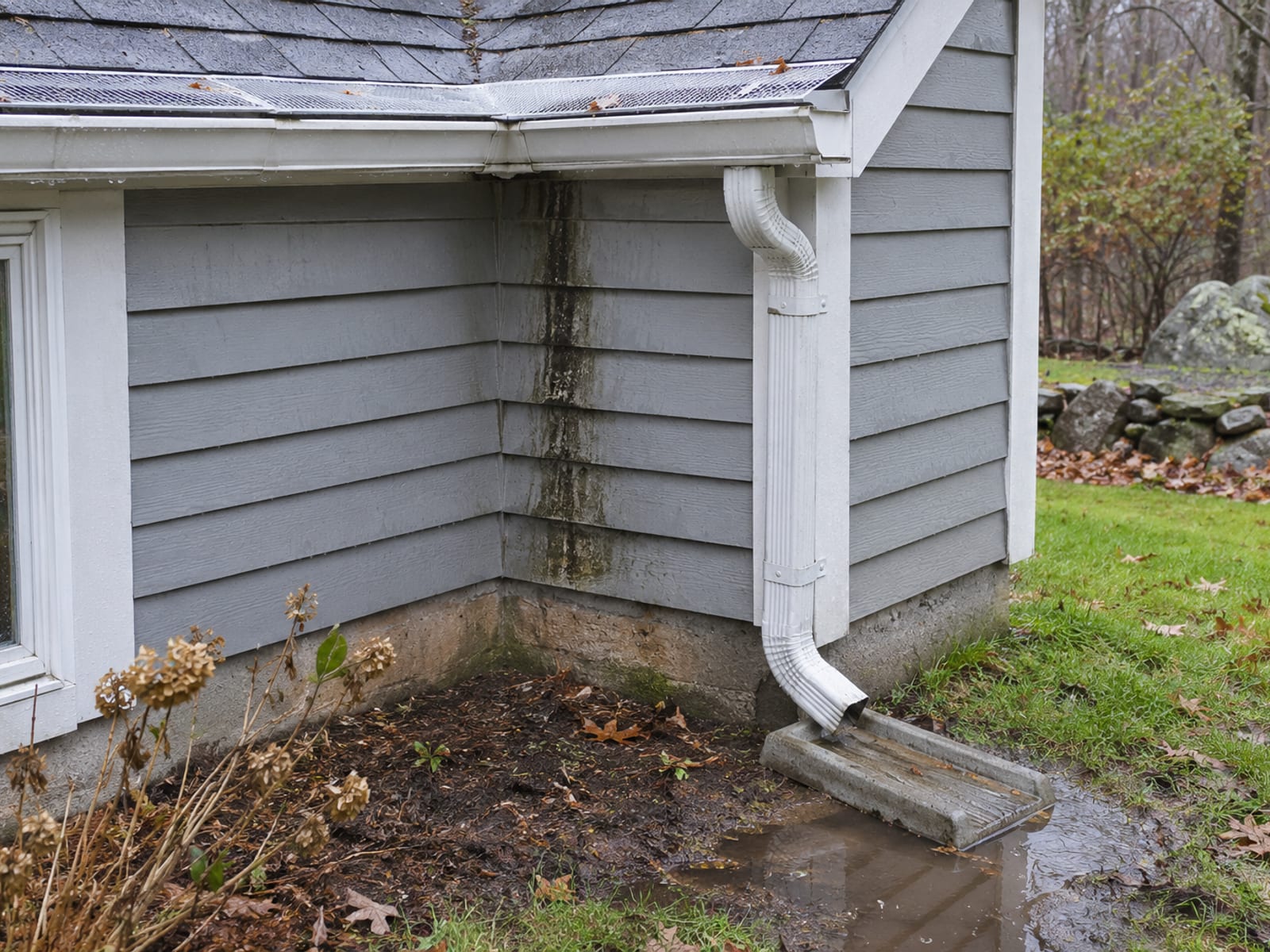
From the ground, you can watch for water overflowing during rain, staining below the gutter, water spilling at corners, sagging or separated runs, loose guard edges, debris mats, disconnected downspouts and water pooling near the foundation. A practical Connecticut routine is a look after autumn leaf fall, after major wind or snow events and before spring rain. Do not climb onto the roof to check or clean a guard. If the guard needs work, a leaf gutter guard installation crew can handle it from the right access.
Frequently Asked Questions About Gutter Guard Types in Connecticut
What is the most effective type of gutter guard?
It depends on your debris, roof drainage, gutter condition, installation and upkeep. Manufacturers describe stainless micro-mesh as suited to fine debris, while screens have larger openings and reverse-curve covers rely on water flow. No one type is best for every Connecticut property.
What is the downside of gutter guards?
They add material and installation cost, can collect debris on top and can hide sagging gutters, leaks or blocked downspouts. Wet leaves, pollen, grit, seeds and needles can still slow the flow. A poorly fitted guard can add to overflow near valleys.
Do you still have to clean gutters if you have gutter guards?
Yes. Cleaning may be less frequent, but the guard surface, gutter channel, outlets, corners and valleys still need inspection and occasional cleaning. MicroMax notes that debris may occasionally need to be brushed off its system.
Do roofers recommend gutter guards?
A roofer may recommend them when the gutters are sound, trees create repeated debris and the roof edge can take the attachment method. The decision should follow your debris, drainage and gutter condition, not a blanket rule.
What are some alternatives to gutter guards?
Scheduled cleaning, downspout screens, repairing or replacing sagging gutters, better downspout discharge, fixing valley or drainage problems and professional tree pruning where branches threaten the roof or gutter. Each one addresses a different cause of maintenance or overflow.
Is it better to have 5-inch or 6-inch gutters?
Neither is better in every case. The right size depends on roof area, pitch, layout, valleys, downspout capacity and rainfall. A guard must match the gutter profile and must not cut its drainage capacity.
Quick Gutter Guard Knowledge Check
1. Which guard type is described by manufacturers as made for fine debris like pine needles and oak catkins?
2. What can a gutter guard NOT fix when ice dams form from roof heat or ventilation?
3. Where do reverse-curve covers have the most trouble?
4. According to Connecticut's consumer notice, what is a warning sign on payment?
5. When should you check a guard even though it is installed?
Final Thoughts
Match the guard to your trees and your roof. Micro-mesh is made for fine debris, screens and perforated panels depend on their openings, and reverse-curve covers depend on water flowing along the curve. Guards do not solve ice dams caused by roof heat, and every type still needs inspecting after leaf fall, after major storms and before spring rain.
Get the exact product, the attachment method, any shingle lifting, the permit plan, the warranty and the upkeep plan in writing before you sign. A guard chosen for your own debris and installed over sound gutters can cut down on how often you need to clean, and a short inspection routine keeps it working.
If you want a property-specific comparison, we can help. American Quality Roofing and Siding installs seamless gutters and gutter guards across Central and Western Connecticut, and we are licensed and insured, CT HIC #0633301. We will look at your gutters, valleys, downspouts and trees, and give you a written, itemized estimate. Request a free estimate or call us, and we will walk you through the options.
Written by Jose Zaruma, American Quality Roofing and Siding.
← Back to the blog