
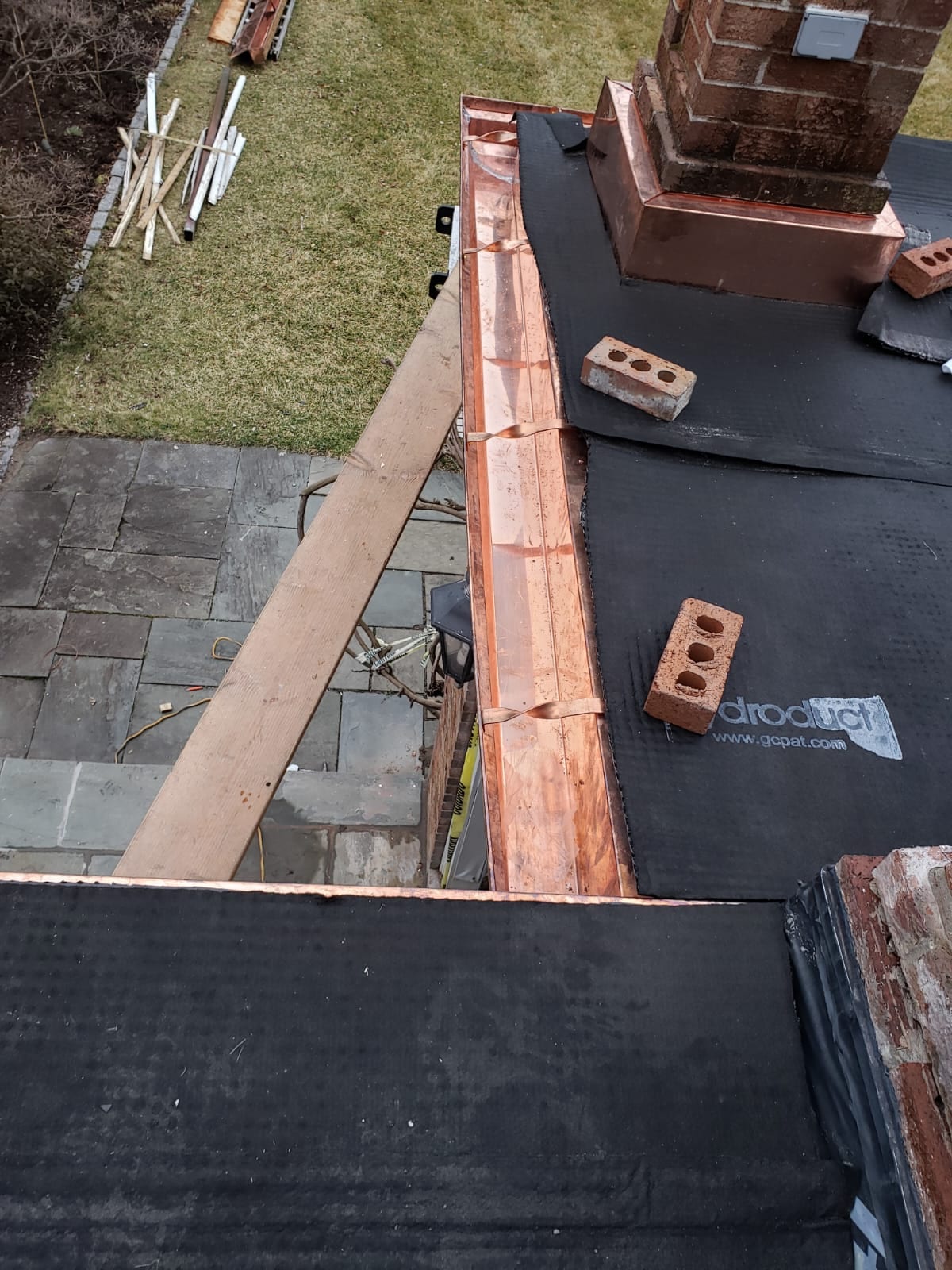
Downspouts and Extensions That Actually Protect Your Home
Most homeowners don't think about downspouts until water is pooling against their foundation. American Quality Roofing and Siding installs and extends downspouts across Central and Western CT so your gutters do their job from roof to yard, every time it rains.
Your Gutters Are Only as Good as Where the Water Goes
Gutters collect rainwater and snowmelt off your roof, but that's only half the job. The downspout carries all that water from the gutter to the ground, and the extension pushes it away from your foundation. When either one is missing, undersized, clogged, or too short, water ends up exactly where you don't want it.
Water that pools at your foundation can work its way into your basement, erode the soil under your slab, and cause cracks that cost far more to fix than a proper downspout ever would. In Connecticut, where spring thaws and nor'easters can dump several inches of water in hours, a functional downspout system isn't optional. It's the difference between a dry basement and a wet one.
At American Quality Roofing and Siding, we handle downspout installation and extensions as part of a complete water-management approach. We look at your whole roof drainage picture, not just the visible pipe on the side of your house, so the solution we put in place actually works for your specific property.
What Can Go Wrong When Downspouts Fall Short
A lot of homeowners inherit downspout setups that were never quite right, or that have degraded over years of Connecticut winters. The problems that follow are often slow-moving and easy to miss until the damage is done.
Short downspouts that terminate right against the house are one of the most common issues we see. Water discharging within a foot or two of your foundation has nowhere to go but down and in. Over time, that constant saturation softens the soil, puts pressure on foundation walls, and works through any crack or gap it finds.
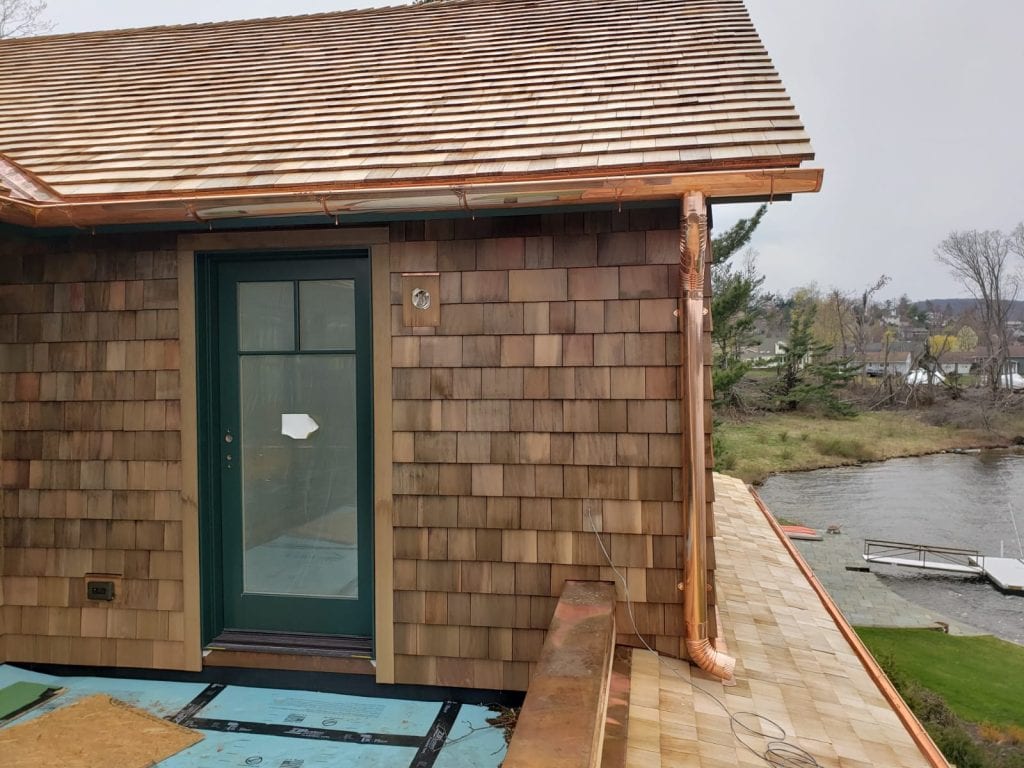
Disconnected or loose downspout sections are another frequent problem. The joints connecting each segment can pull apart from ice expansion, wind, or age. When that happens, water pours out mid-wall instead of reaching the ground, soaking your siding, rotting your fascia boards, and working into wall cavities before you notice anything from inside.
Downspouts that drain onto flat or inward-sloping ground are just as problematic as short ones. The extension might be there, but if it points toward a low spot near your house rather than away from it, you've redirected the water without solving the problem. The grading and direction of an extension matters just as much as its length.
Finally, some homes simply don't have enough downspouts for the roof area they're draining. One downspout per 20 linear feet of gutter is a reasonable baseline, but steeper roofs, complex drainage patterns, or heavy tree cover may need more. When one pipe handles too much volume, it backs up and sends water cascading over the gutter edge rather than through the system.
What We Install and Why It Matters
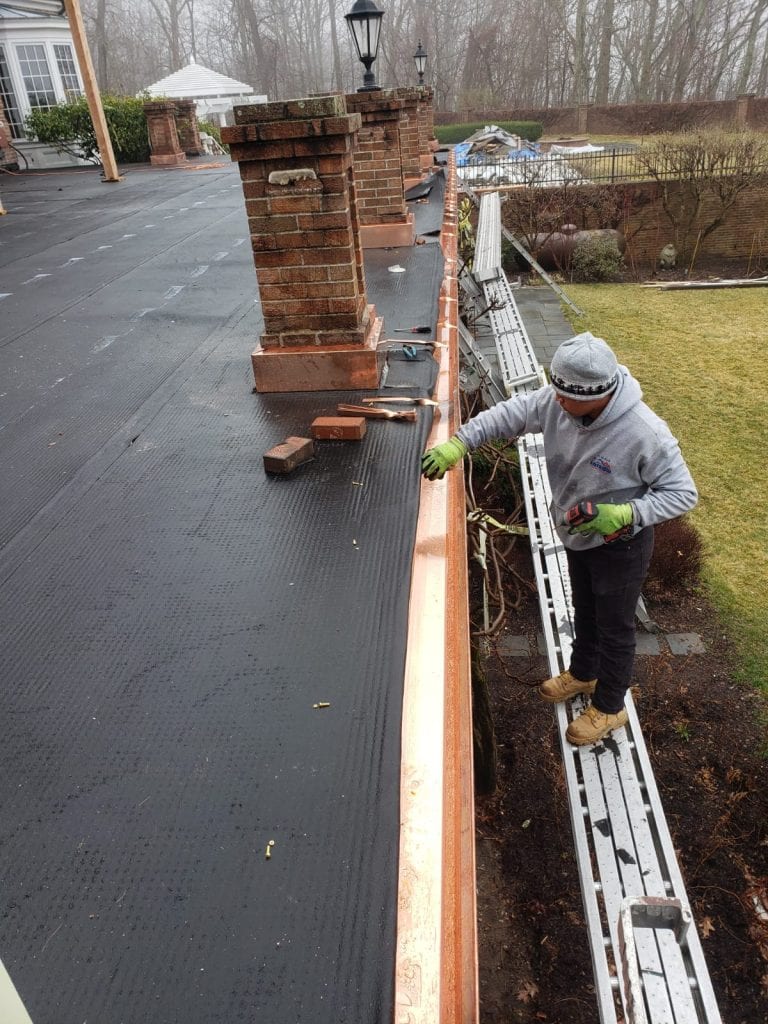
There's more variety in downspout systems than most homeowners realize. The right choice depends on your home's exterior style, your landscaping, the volume of water your roof sheds, and how far that water needs to travel before it's safely away from your foundation.
Standard Aluminum Downspouts
Aluminum is the most common material for residential downspouts in Connecticut because it handles freeze-thaw cycles without cracking and doesn't rust. We install aluminum downspouts in rectangular and round profiles, sized appropriately for your gutter system. Properly sized aluminum downspouts move water efficiently and hold up through decades of New England weather without demanding much attention.
Corrugated Pipe Extensions
When you need to move water a significant distance from your house, flexible corrugated pipe is one of the most practical solutions. It connects to the bottom of your downspout and can run across a lawn or landscaped bed to a more suitable discharge point. We bury these when appropriate, which keeps your yard clean and prevents tripping hazards while still doing the job underground.
Solid PVC Extensions
For longer runs where a rigid solution makes sense, solid PVC pipe buried underground gives you a clean, durable extension that won't collapse or clog as easily as corrugated pipe. This is often the right call when water needs to reach a French drain, a dry well, or a discharge point well away from any structure on your property.
Flip-Up and Roll-Out Extensions
For homeowners who want a simple above-ground solution, flip-up and roll-out extensions attach to the bottom of the downspout and lay flat when it rains, then fold back up or retract when dry. These are practical in lawn areas where you mow regularly and don't want a buried pipe. They're not a premium solution, but they're significantly better than a downspout that terminates at the house.
Downspout Diverters and Rain Barrels
Some homeowners want to capture rainwater for garden use rather than just directing it away. We can configure downspout diverters that route water into rain barrels during dry periods and automatically redirect overflow away from the foundation when the barrel is full, a practical option for homeowners who want to make use of what their roof collects.
Underground Drainage Connections
In some situations, the cleanest solution is to tie your downspouts directly into an underground drainage system that carries water to a safe discharge point at the edge of your property. This eliminates above-ground extensions entirely and works especially well on properties where surface drainage is difficult due to slopes, landscaping, or nearby structures.
How We Handle a Downspout and Extension Project
Every property has its own drainage challenges, so we don't show up with a one-size-fits-all plan. Here's how we approach the work from start to finish.
- 1
Assessment and Measurement
Assessment and Measurement
We start by looking at your existing downspout setup, the slope and condition of the ground around your foundation, the size and pitch of your gutters, and any areas where water is already causing visible problems. We measure the square footage your downspouts need to drain and identify any spots where the current system is undersized, damaged, or draining in the wrong direction. This step shapes everything that follows.
- 2
Recommendation and Planning
Recommendation and Planning
Once we understand what your property needs, we walk you through what we recommend and why. That might mean adding downspouts where there aren't enough, replacing sections that have pulled apart or corroded, extending current downspouts to a proper discharge point, or regrading the discharge area so water flows away rather than pooling. We explain the options in plain language and give you a clear picture of what the work involves before anything is agreed to.
- 3
Removal of Problem Components
Removal of Problem Components
Before anything new goes in, we remove or correct whatever isn't working. That might mean pulling off a downspout that's the wrong size for your gutters, clearing a clog that's been backing water up, cutting away a corrugated extension that's collapsed underground, or resealing joints that have separated. Getting rid of the problem components first means the new installation goes in clean.
- 4
Installation and Fastening
Installation and Fastening
We install new downspouts and extensions to fit your home properly, secured with appropriate hangers and fasteners spaced to handle Connecticut's freeze-thaw stress without pulling away from the wall. Where we're burying extensions, we ensure the pipe slopes slightly downward toward the discharge point so water flows by gravity rather than sitting in the pipe. Every connection is sealed and tested to confirm it's watertight.
- 5
Final Review and Cleanup
Final Review and Cleanup
When the work is done, we walk the perimeter with you to show what was installed and where water will now discharge. We check that all downspouts are properly secured, extensions are running in the right direction, and discharge points are positioned well away from the foundation. Then we clean up the site completely before we leave, including any soil disturbed during a buried extension installation.
Why the Right Extension Length Matters More Than Most People Think
A common question we get is how long a downspout extension actually needs to be. The honest answer depends on your soil type, your foundation's condition, the slope of your yard, and how much water your roof sheds. That said, a minimum of four to six feet from the foundation wall is a reasonable starting point for most Connecticut homes. Flat lots or clay-heavy soils may need more.
Connecticut has a lot of older homes with block or stone foundations that weren't built to handle the water pressure modern storms produce. These foundations can manage normal moisture levels in the surrounding soil, but consistent saturation from short or misdirected downspouts adds hydrostatic pressure over time. That pressure finds the weakest point in the foundation, usually a mortar joint or an existing hairline crack, and eventually water gets in.
Beyond the foundation itself, water that pools near your house can damage landscaping, erode mulch from beds, undermine concrete or paver walkways that abut the house, and create mosquito breeding habitat right next to your door. Extending your downspouts properly solves several problems at once, not just the basement moisture issue.
We've worked on properties across Central and Western CT where the homeowner had already spent money on interior waterproofing systems but was still dealing with recurring basement dampness. In many of those cases, the root issue was downspouts that terminated too close to the house. Fixing the drainage at the source is almost always the more cost-effective path, and it stops the problem from coming back rather than just managing it after the fact.
What Makes American Quality Roofing and Siding the Right Choice
We've been working on homes across Central and Western CT long enough to know that water management is one of those things where cutting corners early costs homeowners significantly more down the road. Here's what we bring to every downspout and extension project.
CertainTeed ShingleMaster PRO Credentialed
American Quality Roofing and Siding is a CertainTeed ShingleMaster PRO credentialed contractor. That credential reflects a standard of installation quality that carries through everything we do, including drainage work.
A+ Rating with the Better Business Bureau
Our A+ BBB rating reflects how we handle every project: honestly, completely, and without disappearing after the check clears. We're a company you can call back if something comes up, and we stand behind what we install.
Licensed and Insured in Connecticut
We hold Connecticut Home Improvement Contractor license ID HIC 0633301 and carry full liability insurance. That protects you, your property, and our crew on every job, regardless of size.
We Look at the Whole Picture
Because we also handle roof replacement, gutter installation, and siding, we see downspouts in the context of your entire exterior drainage system. That means we're less likely to miss something a specialist focused only on one piece might overlook.
Straightforward Estimates, No Pressure
We give you a clear, itemized estimate before any work begins. You'll know what you're getting, what it costs, and why we're recommending it. No bait-and-switch, no pressure to add services you didn't ask about.
Real Local Experience
Central and Western CT has its own combination of weather patterns, soil types, older housing stock, and regional code requirements. We know what downspout systems hold up through a Connecticut winter and what tends to fail, because we've seen it across dozens of towns in this region.
Frequently Asked Questions About Downspouts and Extensions
The clearest sign is water staining or soil erosion right next to your foundation after a rain. You might also see efflorescence, which is white mineral deposits, on your foundation walls, or notice that your basement smells musty after heavy storms even if you don't see standing water. If your downspout terminates within two or three feet of the house, or if the ground at the discharge point slopes back toward the house rather than away from it, those are reliable indicators the extension isn't doing its job. Watching where the water goes during a heavy rainstorm can be very telling.
Get Your Downspout and Extension Assessment Scheduled
If you're not sure whether your downspouts are doing their job, or if you already know they're not, this is a straightforward problem to solve. American Quality Roofing and Siding serves homeowners across Central and Western CT with honest assessments and installations that hold up through Connecticut winters.
Ready for a Straight Answer About Your Roof?
Call (203) 470-0974 or request a free on-site estimate. Serving Central and Western Connecticut.