Hail Hit Your Roof? Here's What to Do Next.
A hailstorm can quietly destroy your roof while leaving your home looking perfectly fine from the street. American Quality Roofing and Siding helps Central and Western CT homeowners identify the real damage, handle the insurance process, and get a lasting repair or replacement done right. Call (203) 470-0974 to schedule your inspection.
The Problem With Hail Is What You Can't See
After a hailstorm rolls through Central or Western CT, most homeowners walk outside, look up at the roof, and think everything looks fine. That's exactly the problem. Hail damage is one of the most misunderstood roofing issues because the worst of it often isn't visible from the ground.
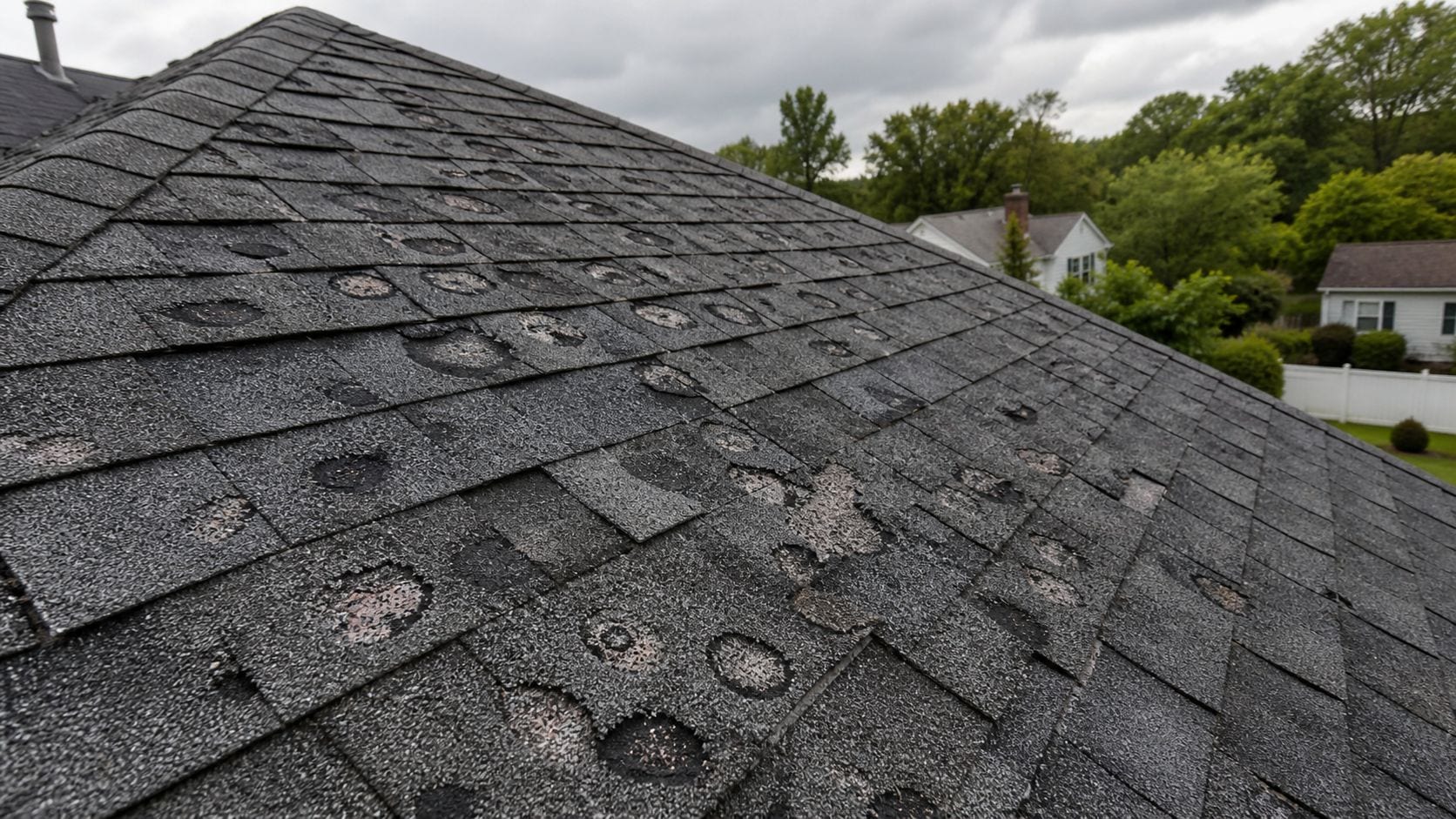
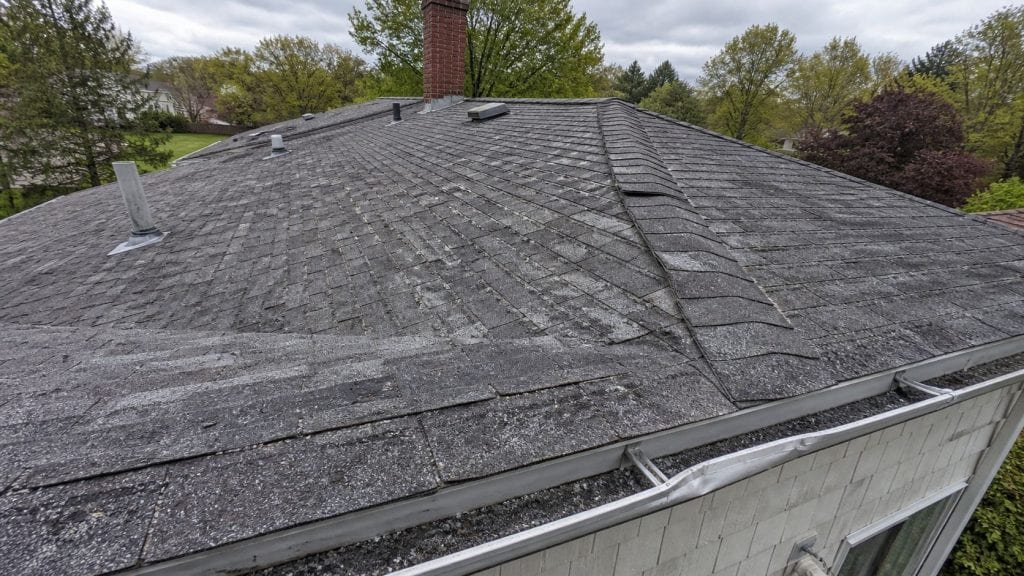
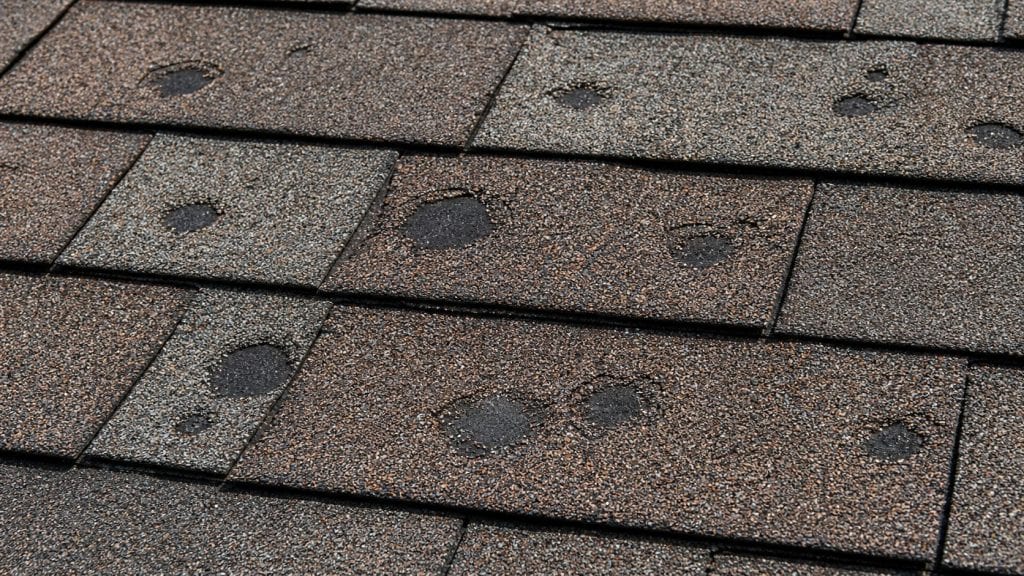
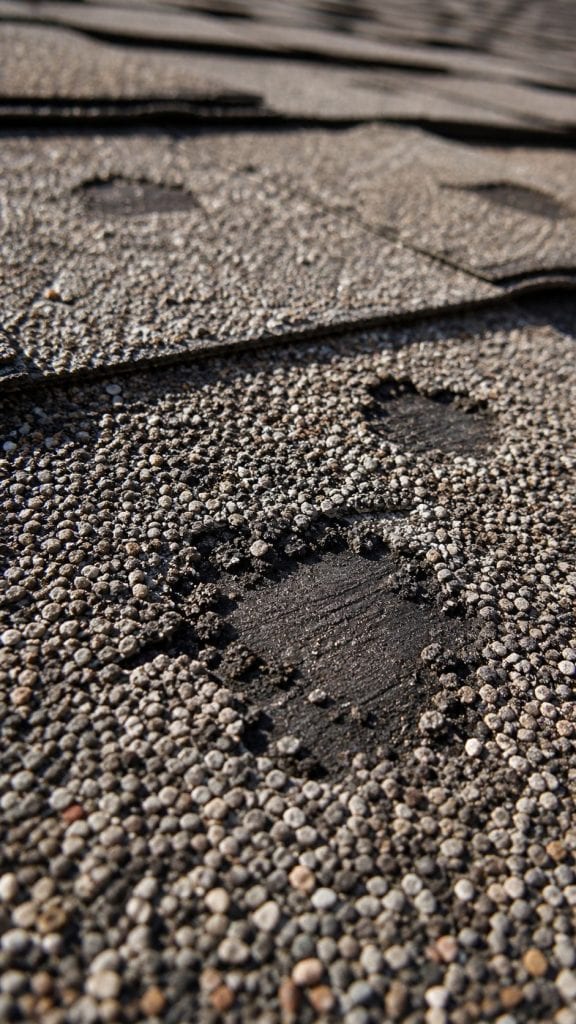
What's actually happening up there tells a different story. Hailstones strike asphalt shingles with enough force to knock off the granules that protect the underlying mat. Those granules aren't decorative. They're the layer that shields your shingles from UV radiation, moisture infiltration, and daily temperature swings. Once they're knocked loose, the exposed mat begins to degrade and your roof's lifespan starts counting down faster than it should.
In some cases, hail punches all the way through, creating small fractures or bruises in the shingle mat itself. These don't always look like holes. They can appear as soft spots or slight depressions, and they're nearly impossible to spot without getting on the roof and knowing what to look for. Left unaddressed, they become entry points for water, leading to decking rot, insulation damage, and interior leaks, sometimes months after the storm that caused them.
The other reason hail damage catches homeowners off guard is the timeline. You might not see a ceiling stain or feel a draft for six months to a year after the storm. By then, the connection between the event and the damage isn't obvious, and the window to file a valid insurance claim may have passed. Getting a professional inspection shortly after any significant storm is the most protective thing you can do for your home.
What Hail Actually Does to Different Parts of Your Roof
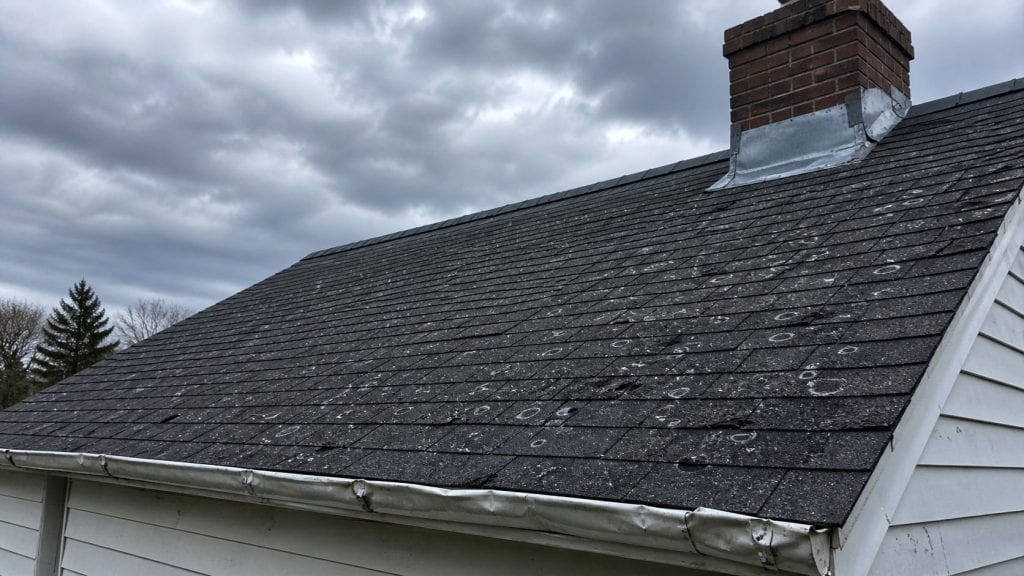
Hail doesn't just damage shingles. A serious storm affects multiple components of your roofing system at once, and each one has its own failure pattern. Understanding what to look for, and where, helps you have a more informed conversation with your contractor and your insurance adjuster.
Asphalt Shingles
The most visible damage shows up as circular impact marks, often with a dark center where the granule surface has been stripped away. On older or three-tab shingles, you may also see cracking along the edges. Hail impacts weaken the shingle's bond with the mat beneath it, and once that structural integrity is compromised, the shingle's ability to shed water reliably is gone.
Roof Flashing
Flashing is the metal that seals transitions between your roof and chimneys, skylights, vents, and walls. Hail can dent and distort flashing, breaking the tight seal those pieces depend on. Even small distortions can allow water to work its way underneath during rain, creating leaks at some of the most vulnerable spots on your roof.
Gutters and Downspouts
Aluminum gutters dent easily under hail impact, which is actually useful during a storm assessment. If your gutters show dents and dings after a storm, there's a strong probability your shingles took comparable hits. You may also find granule accumulation inside the gutters, another sign that shingle coverage has been compromised.
Skylights and Vents
Plastic or acrylic skylights can crack or cloud under hail impact, and metal vents can be dented in ways that affect their function. Damaged vent covers can allow moisture or pests to enter, and a cracked skylight lens creates an obvious water infiltration point that needs attention before the next rain event.
Roof Decking
In severe storms with large hailstones, the force can be enough to crack or dent the wooden decking beneath the shingles. This is less common but more serious when it occurs. Water that finds a way past damaged shingles into the decking layer causes wood rot and can compromise the structural support of your entire roof system over time.
Siding and Trim
A hailstorm that damages your roof often hits your siding at the same time. Vinyl siding develops small cracks or spider fractures on impact, and wood siding can show dents and exposed wood grain. Damaged siding allows moisture into your wall cavity, leading to mold, rot, and insulation problems that compound over time.
Our Hail Damage Assessment and Repair Process
When you call American Quality Roofing and Siding after a hailstorm, here's exactly what happens. There's no guesswork, no pressure, and no surprise findings at the end of the process.
- 1
Thorough On-Roof Inspection
Thorough On-Roof Inspection
We get on the roof and look at every surface, not just the obvious spots. We check shingles across all slopes, inspect flashing at every transition point, assess gutters and downspouts, and document everything with photos. We're looking for granule loss, impact bruising, cracking, fractures, and any signs of pre-existing wear that may affect how your insurance claim is evaluated.
- 2
Honest Damage Assessment
Honest Damage Assessment
After the inspection, we walk through what we found with you, section by section. We'll tell you whether the damage warrants a full replacement or whether targeted repairs will restore the roof's protective function. If the damage is borderline, we'll explain why, so you can make an informed decision. We don't push replacements when repairs will do the job.
- 3
Insurance Documentation Support
Insurance Documentation Support
If you're planning to file a homeowners insurance claim, we provide detailed documentation of every damaged area, including photographs and written descriptions organized in a format that's useful to adjusters. We can also be present during the adjuster's visit if you'd like another set of experienced eyes on site.
- 4
Material Selection and Scheduling
Material Selection and Scheduling
Once you've decided how to proceed, we help you choose materials that fit your budget, your home's existing look, and the climate demands of Connecticut winters and storm seasons. We work with quality shingle lines and can discuss impact-resistant options if upgrading makes sense. From there, we confirm the schedule and order materials to avoid unnecessary delays.
- 5
Repair or Replacement, Done Properly
Repair or Replacement, Done Properly
Our crew handles the work with attention to the details that protect your home long-term, including proper underlayment installation, secure flashing sealing, and correct nailing patterns that meet manufacturer specifications and Connecticut building codes. For full replacements, we remove existing shingles down to the decking, inspect and repair the decking as needed, and build the system back up from a clean foundation.
- 6
Final Walkthrough and Cleanup
Final Walkthrough and Cleanup
Before we consider the job done, we walk the property with you, review the completed work, and confirm that gutters and downspouts are clear of debris. We use magnetic sweeps across your lawn and driveway to pick up any nails. You shouldn't find our leftovers in your yard after we leave, and we take that seriously.
Navigating the Insurance Claim Without the Headache
Filing a homeowners insurance claim for hail damage is one of the more stressful parts of the whole experience. The good news is that you don't have to figure it out alone, and you don't need to have every piece of information before calling your insurance company.
The most important timing consideration is your state's deadline for filing storm-related claims. Connecticut homeowners should check their specific policy language, because the window can be shorter than expected, especially for storm events that occurred in a previous season. Filing too late can mean losing coverage for damage that would otherwise have been fully covered.
When the insurance adjuster comes out, their job is to document what they see and assign a value to the repairs or replacement. Having a contractor's independent inspection report in hand before that visit is genuinely useful. If the adjuster misses something or assesses damage more conservatively than your contractor did, you have documentation to support a supplement or dispute.
American Quality Roofing and Siding has worked alongside many homeowners through this process across Central and Western CT. We're not a public adjuster and we don't negotiate claims on your behalf, but we provide clear documented findings and can answer technical questions your adjuster or insurance agent may have. That kind of contractor-to-adjuster communication often helps move things forward more smoothly.
Why Delaying Hail Damage Repairs Costs More
There's a natural tendency to put off roof repairs when the damage isn't causing an obvious problem yet. The roof isn't leaking, the ceiling looks fine, and other things are competing for your attention and your budget. It's understandable. But with hail damage specifically, waiting has a compounding effect that ends up being more expensive than the original repair would have been.
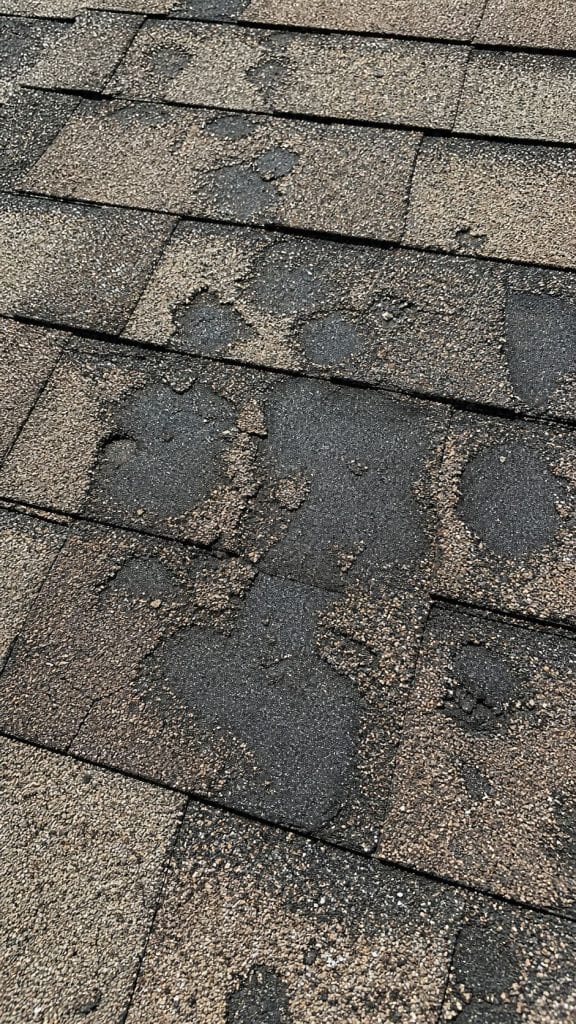
Granule loss exposes the asphalt mat to UV radiation, which causes the mat to dry out, become brittle, and crack. Once the mat cracks, water infiltration is almost inevitable. That water doesn't stay in one spot. It follows the path of least resistance through the roof deck, potentially into insulation, and eventually into the living space of your home.
By the time you see a ceiling stain, you're typically not looking at a shingle problem anymore. You're looking at a shingle problem plus decking damage plus insulation replacement plus potentially drywall repair. What started as a targeted repair has become a significantly larger project, and your insurance claim window may have already expired, leaving more of those costs on your side of the ledger.
Addressing hail damage promptly, even when it doesn't seem urgent, protects the long-term value of your home. A roof that's functioning properly also keeps your heating and cooling costs in check, protects your insulation, and holds up under whatever the next storm season brings.
What Sets American Quality Roofing and Siding Apart
There's no shortage of roofing contractors in Connecticut, and after a major storm, the number of companies knocking on doors in affected neighborhoods increases fast. Here's why homeowners in Central and Western CT trust American Quality Roofing and Siding with their hail damage repairs.
CertainTeed ShingleMaster PRO Credentialed
Our CertainTeed ShingleMaster PRO credential requires demonstrated installation standards and an ongoing commitment to proper roofing practices. For you, it means the work we do meets the requirements to back up manufacturer warranties, which matters when you're making a long-term investment in your home.
ShingleMaster CertainTeed Select Contractor
CertainTeed's ShingleMaster designation recognizes contractors with the training and installation track record to install CertainTeed products to full warranty standards. Working with a credentialed contractor protects your investment, especially given Connecticut's climate demands.
A+ Better Business Bureau Rating
An A+ BBB rating reflects a track record of resolved issues, honest business practices, and customer accountability. It's not an award you receive. It's a standing you maintain over time through consistent performance, and it gives you a reliable reference point when deciding who to trust with your home.
Licensed and Insured (CT HIC #0633301)
Every job we complete is done by a fully licensed and insured contractor. Connecticut license HIC 0633301 means we've met the state's requirements to operate legally and professionally. If anything goes wrong during a job, our coverage protects your property. With unlicensed contractors, that protection doesn't exist.
Rooted in Central and Western CT
We're not a national franchise or a storm-chasing crew that shows up after a disaster and leaves town. American Quality Roofing and Siding is a local company serving the communities we work in, which means we have a direct stake in the quality of every job we complete. Our reputation lives here, and we act accordingly.
Honest Assessments, No Pressure
We'll tell you when a repair is the right answer and when a full replacement makes more sense. We won't tell you that you need a new roof just because we'd like to sell you one. Our goal is a long-term relationship built on trust, and that starts with the very first inspection.
Hail Damage Questions CT Homeowners Actually Ask
Hailstones don't have to be golf-ball sized to cause meaningful damage. In Connecticut, stones as small as three-quarters of an inch can knock granules loose on older or weathered shingles, especially when driven by strong winds. The storm itself is only part of the equation. The age and condition of your shingles, the pitch of your roof, and the direction the storm came from all affect how much damage occurs. The only reliable way to know is to have someone who knows what to look for get on the roof and check.
Serving Central and Western Connecticut
American Quality Roofing and Siding provides hail damage inspection, repair, and roof replacement services across Central and Western CT, including Danbury, Brookfield, Fairfield, Wilton, Westport, Ridgefield, Southbury, and the surrounding communities. Our team is familiar with local building requirements, regional weather patterns, and the specific challenges Connecticut homeowners face in keeping a roof in good shape.
We know how storm seasons move through this part of the state, and we know what hail damage typically looks like in this region's housing stock, which skews toward older homes with varied roof ages. That local context matters when you're trying to get an accurate picture of what a storm actually did and what a realistic repair plan looks like.
If a recent storm has you wondering about the condition of your roof, the best next step is a professional inspection. We'll give you an honest assessment and clear documentation so you can make the right decision for your home.
Get Your Roof Inspected After a Hailstorm
Call us at (203) 470-0974 to schedule your inspection.
Ready for a Straight Answer About Your Roof?
Call (203) 470-0974 or request a free on-site estimate. Serving Central and Western Connecticut.