
Leaf Gutter Guards That Actually Keep Your Gutters Clear
Clogged gutters cause real damage to Connecticut homes. American Quality Roofing and Siding installs leaf gutter guards that stop debris before it ever reaches your gutters, so you spend less time on a ladder and more time doing everything else.
Stop Cleaning Your Gutters Every Fall
If you have trees near your home, you already know the routine. Every fall, leaves pack into your gutters and turn them into a soggy, overflowing mess. Every spring, you find yourself back up on that ladder pulling out compacted debris that spent all winter rotting in place. Leaf gutter guards break that cycle for good.
At American Quality Roofing and Siding, we install gutter guard systems designed for the specific conditions CT homes deal with: heavy leaf fall, wet winters, freezing temperatures, and the kind of storm season that sends twigs and seed pods into every corner of your roofline. When the right guard goes on correctly, your gutters stay clear and water flows where it's supposed to, away from your foundation, your fascia, and your home.
What Happens When Gutters Clog
Clogged gutters are rarely just a cosmetic problem. When leaves and debris dam up inside your gutters, water has nowhere to go. It backs up under your shingles, seeps into your fascia boards, and eventually finds its way into your attic or down your exterior walls. In winter, that standing water freezes and creates ice dams that pry shingles loose and split open seams.
At ground level, overflowing gutters pour water directly against your foundation. Over time, that repeated saturation leads to basement moisture problems, cracked masonry, and in older CT homes, serious structural issues that cost far more to fix than a set of gutter guards ever would.
And then there's the physical risk. Climbing a ladder to clean gutters on a two-story colonial is not a small thing, especially on a wet fall afternoon with leaves still coming down. Gutter guards reduce how often that job needs to happen, and for many homeowners, they eliminate routine cleaning almost entirely.
The goal of a leaf gutter guard system is simple: let water in, keep everything else out. How well a guard does that job depends on the type of guard, the quality of the material, and whether it was installed correctly along the full length of your roofline.
What You Get With Professional Gutter Guard Installation
The right gutter guard system does more than just block leaves. Here's what homeowners in Central and Western CT consistently see after installation.
Dramatically Less Maintenance
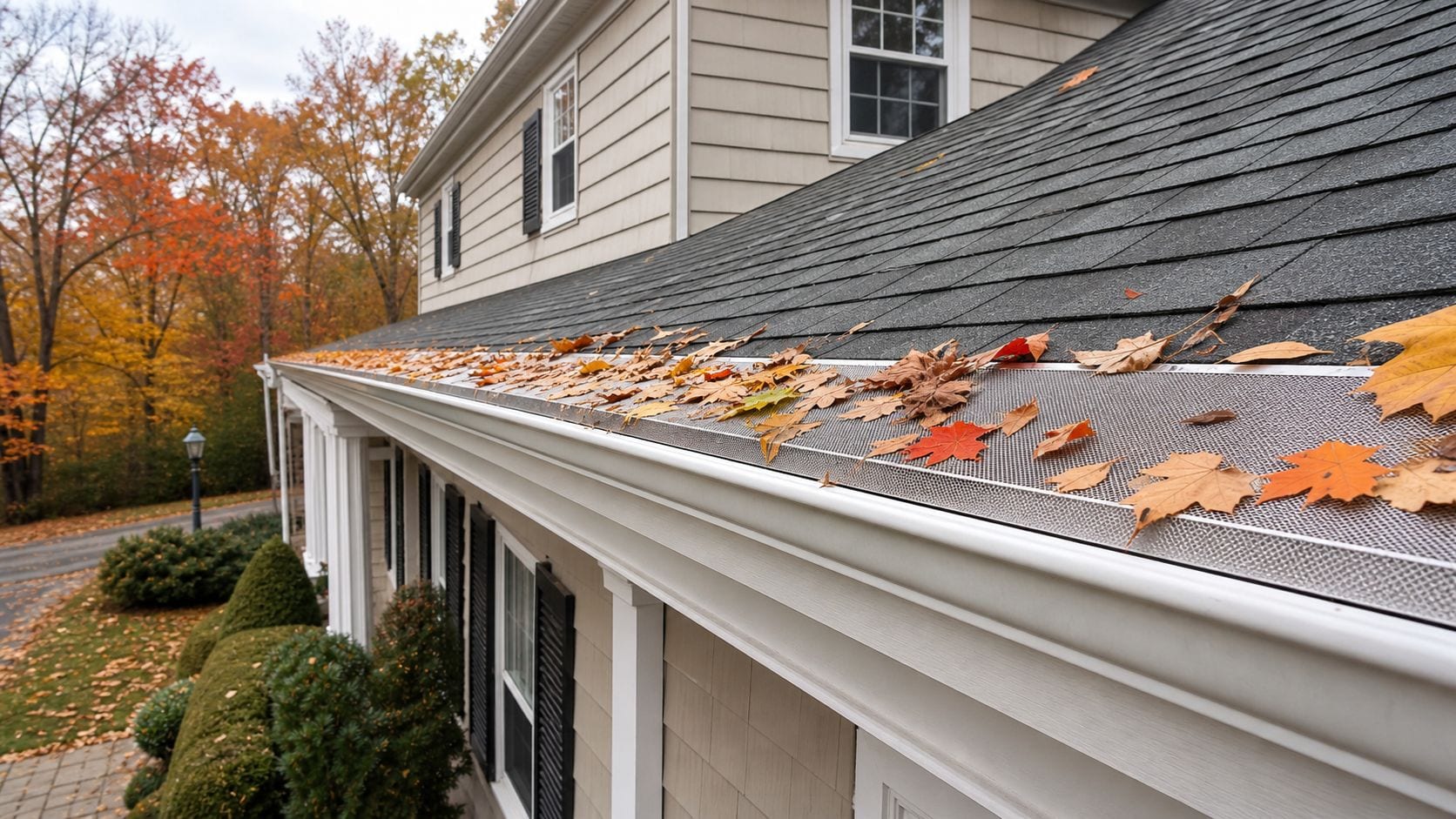
Professionally installed gutter guards handle the bulk of what used to be a twice-yearly chore. Leaves, twigs, seed pods, and even pine needles are directed off the edge instead of settling inside your gutter channel. You may still want an occasional rinse, but the days of scooping out packed debris by the handful are largely behind you.
Better Water Flow Year-Round
When nothing is blocking your gutters, water from a heavy rainstorm moves through them the way they were designed to work. That means faster drainage, less overflow along your foundation, and a roofline that sheds water cleanly instead of pooling it in places it shouldn't be.
Reduced Ice Dam Risk in Winter
Standing water in clogged gutters is one of the main contributors to ice dam formation in Connecticut winters. When your gutters drain freely and stay clear of debris, water doesn't get the chance to sit and freeze at the roofline. That's one less thing pushing moisture back under your shingles during a thaw-freeze cycle.
Protection for Your Fascia and Soffit
Overflowing gutters saturate the fascia boards they're mounted to. Over time, that moisture causes wood rot that weakens the board, pulls at the gutter hangers, and eventually forces a more expensive repair. Gutter guards keep your gutters draining properly, which keeps your fascia dry.
Pest and Mold Deterrence
Wet, decomposing leaves sitting in a gutter are an ideal nesting environment for insects and a breeding ground for mold. A gutter guard system that keeps debris out also eliminates that habitat, reducing the chance of pests working their way into your roofline from the gutter trough.
Curb Appeal That Holds Up
Overflowing gutters leave staining streaks down your siding and fascia. That dark, muddy runoff from clogged channels is one of the first things people notice on a neglected home. When your gutters work correctly, your exterior stays cleaner between washings and looks better through every season.
How the Installation Process Works
Getting leaf gutter guards installed is a straightforward process when you work with a crew that knows what to look for. Here's how American Quality Roofing and Siding handles it from start to finish.
- 1
Inspect Your Existing Gutters
Inspect Your Existing Gutters
Before any guard goes on, we check the condition of your gutters. We look at the pitch, the seams, the hangers, and the connection points at each downspout. If a gutter section is sagging, pulling away from the fascia, or has a damaged seam, that needs to be addressed before a guard is installed over it. Installing guards on compromised gutters just hides a problem rather than solving it. We give you an honest read on what's already there.
- 2
Clean Out Existing Debris
Clean Out Existing Debris
If there's already debris in your gutters, we clear it out completely before installation. Gutter guards are designed to keep new debris out, not to be installed over a layer of wet leaves and buildup. Starting with clean, clear channels means the guard system can do its job correctly from day one and water flows freely from the moment installation is complete.
- 3
Select the Right Guard System for Your Roofline
Select the Right Guard System for Your Roofline
Not every gutter guard works the same way on every home. Homes with steep pitches, heavy tree coverage, or larger gutters may need a different system than a home with minimal canopy and a shallow roof slope. We match the guard type and fit to your specific setup so the finished product works the way it's supposed to, instead of looking good on paper but underperforming in your first real rainstorm.
- 4
Install Across the Full Roofline
Install Across the Full Roofline
We fit guards to every section of gutter, not just the runs that are easiest to reach. Every joint, corner, and end cap gets proper attention during installation so there are no gaps where debris can sneak back in. The goal is a continuous, consistent barrier that works the same way whether we're on the front of the house or the back corner that backs up to the tree line.
- 5
Verify Flow and Review With You
Verify Flow and Review With You
Once installation is complete, we check that water flows correctly through the guard and moves cleanly to each downspout. We also walk you through what basic maintenance still looks like, because even the best gutter guard may occasionally need a rinse or a quick check after a major storm. You leave with a clear picture of what your system does, what it doesn't do, and how to keep it performing well.
Gutter Guard Types: What We Install and Why It Matters
There are several types of gutter guards on the market, and they don't all perform equally well in Connecticut's climate. Foam inserts and cheap screen covers from the hardware store tend to fail quickly. They either collapse under the weight of wet leaves, trap fine debris in their mesh, or pull free from the gutter lip when ice forms along the roofline.
The systems we install are built for actual performance in the conditions Central and Western CT homeowners deal with. Micro-mesh guards use a fine stainless steel mesh over a solid frame to let water through while blocking leaves, pine needles, and even shingle granules that wash off during a storm. They stay in place through freeze-thaw cycles and don't degrade in UV exposure the way foam and plastic products do.
Solid-cover or reverse-curve designs work well on steeper pitches where water velocity is high enough to follow the curve into the gutter trough while debris falls off the edge. These are a strong option for homes with significant tree coverage where leaf volume is high and fast shedding is a priority.
The guard type we recommend depends on your roof pitch, your gutter size, your tree coverage, and the kinds of debris that most commonly land on your home. A property surrounded by oak trees deals with a different load than one near a stand of white pines. We look at all of that before we make a recommendation so that what we install is actually suited to your situation.
Why Homeowners in Central and Western CT Choose American Quality Roofing and Siding
American Quality Roofing and Siding has been handling roofing, gutter, and exterior work for Connecticut homeowners for a long time. Here's what makes the difference when you hire us for gutter guard installation.
We Know Connecticut Rooflines
Homes in Central and Western CT range from older colonials with wide overhangs to newer construction with tighter rooflines and smaller gutters. We've worked across the region and understand the material, pitch, and debris conditions that are specific to this area. That local knowledge shapes every recommendation we make.
Factory Certified and Fully Credentialed
American Quality Roofing and Siding is CertainTeed ShingleMaster PRO credentialed, holds an A+ Better Business Bureau rating, and is a licensed Connecticut contractor (CT ID #HIC 0633301). We are fully licensed and insured. Those credentials matter because they hold us to a higher standard than a general handyman or an unlicensed crew.
Honest Assessments, Not Upsells
If your gutters are in good shape and just need guards, that's what we'll recommend. If we find a problem during inspection that needs to be fixed first, we tell you what it is and what it will cost before any work begins. You won't get a surprise invoice or a pressure pitch for a full gutter replacement when all you need is a repair and a guard install.
Part of a Bigger Picture
Because we handle roof replacement, roof repair, siding installation, and gutter installation alongside gutter guard work, we can look at your home's full exterior and flag anything that deserves attention. A gutter guard installation is often a good time to also check your downspouts, your fascia condition, and the first few courses of shingles above the roofline. We do all of that as part of how we work.
Frequently Asked Questions About Leaf Gutter Guards
These are the questions we hear most often from CT homeowners considering gutter guard installation. The answers here are specific to real-world performance, not marketing language.
Do gutter guards mean I never have to clean my gutters again?
Mostly, but not completely. High-quality gutter guards eliminate the heavy cleaning that accumulates when leaves and debris pack inside the channel, and they make the frequency much lower than without guards. That said, fine particles like pollen, shingle granules, and small seed debris can occasionally collect on top of the guard or near the downspout entry. An occasional rinse or quick visual check once a year is still good practice. What you're eliminating is the twice-annual dig-out that takes hours and requires a ladder.
Explore Do gutter guards mean I never have to clean my gutters again?Will gutter guards work on my gutters, or do I need new gutters first?
That depends on the current condition of your gutters. Guards can be installed on gutters that are structurally sound and properly pitched, even if they're a few years old. If your gutters are pulling away from the fascia, have significant rust or corrosion, or have seams that are separating, those issues need to be addressed before installation. We inspect your gutters before we recommend guards and give you a straightforward answer about what's there.
Explore Will gutter guards work on my gutters, or do I need new gutters first?What about pine needles? I've heard gutter guards don't handle them well.
Some types don't. Basic screen guards and cheap plastic covers often let pine needles slide right through or get caught in the mesh. Micro-mesh gutter guard systems with a fine stainless steel top layer are specifically designed to handle pine needle debris. If you have pine trees anywhere near your roofline, that's one of the most important factors in guard selection, and it's something we account for when making a recommendation for your property.
Explore What about pine needles? I've heard gutter guards don't handle them well.Do gutter guards help with ice dams?
Gutter guards help by keeping your gutters clear and draining freely, which reduces the standing water that contributes to ice formation at the roofline. However, they don't eliminate ice dams on their own. Ice dams are primarily caused by heat escaping through the roof deck and warming the snow above the eaves unevenly. Proper attic insulation and ventilation are the main defense against ice dams. Gutter guards are one contributing factor in keeping the roofline clear, but they work best as part of a properly maintained roof and attic system.
Explore Do gutter guards help with ice dams?How long do gutter guards typically last?
Quality aluminum and stainless steel micro-mesh guards can last as long as your gutters do, often 20 years or more, when properly installed. Cheaper foam inserts and basic plastic screens degrade significantly faster, sometimes within just a few seasons in Connecticut's climate. The upfront cost difference between a budget option and a quality guard system tends to close quickly when you factor in replacement and reinstallation costs over time.
Explore How long do gutter guards typically last?Can I install gutter guards myself, or should I hire a professional?
DIY kits exist, but the results vary significantly depending on your roof pitch, gutter type, and how well the guard fits at the edges and corners. A poorly fitted guard can actually direct water over the edge of the gutter instead of into it, which defeats the purpose entirely. Professional installation ensures the guard is correctly seated, that corners and end caps are handled properly, and that the system is tested for flow before the job is complete. For most homeowners, it's the kind of job where getting it right the first time is worth more than saving a few hours on a weekend.
Explore Can I install gutter guards myself, or should I hire a professional?Ready to Stop Dealing With Clogged Gutters?
If leaf-packed gutters are a recurring problem on your Connecticut home, gutter guards are a straightforward solution that pays for itself in reduced maintenance and protected exteriors. American Quality Roofing and Siding serves Central and Western CT and can walk you through the right system for your specific roofline, tree coverage, and gutter setup.
Ready for a Straight Answer About Your Roof?
Call (203) 470-0974 or request a free on-site estimate. Serving Central and Western Connecticut.