Roofing Guide
Gutter Installation in Connecticut: What to Expect
By Jose ZarumaPublished
- gutters
- gutter installation
- connecticut
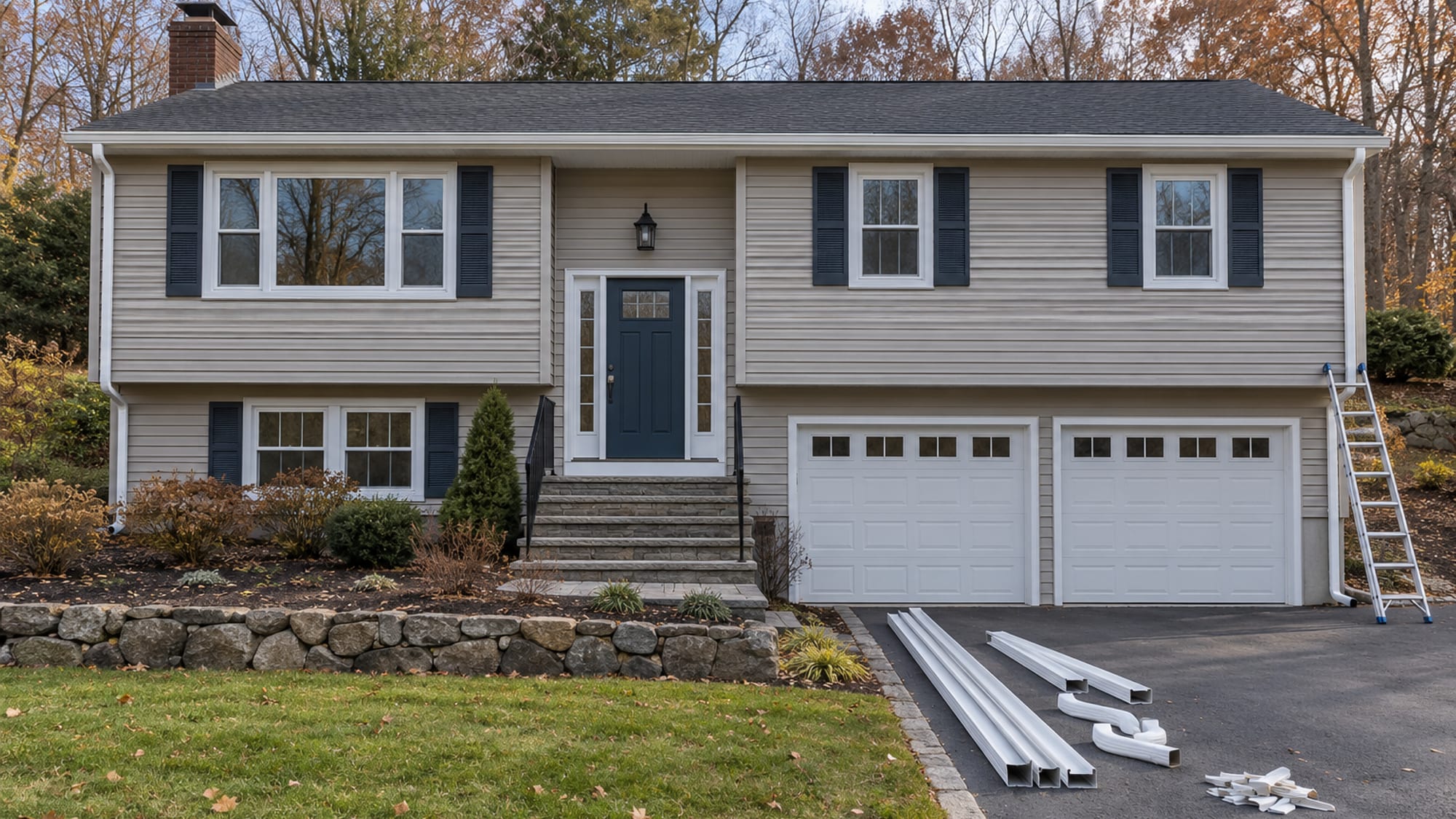
Five decisions come before a crew ever touches the roof edge: the scope of the job, the material and size, who removes and hauls away the old gutters, who pulls any town permit, and what the written contract says. Settle those and the installation itself follows a predictable order.
Most straightforward jobs finish in a day. Removal, fascia repairs, several stories or underground drainage can stretch that, and the estimate should tell you so before the start date, not after.
From estimate to final walkthrough, the Connecticut rules on permits, registration and contracts apply along the way. Your own roof edge, house and town set the details.
Key Takeaways
Decide five things first
Scope, material and size, removal and disposal, permit responsibility and the contract terms all come before the schedule.
Hangers need sound backing
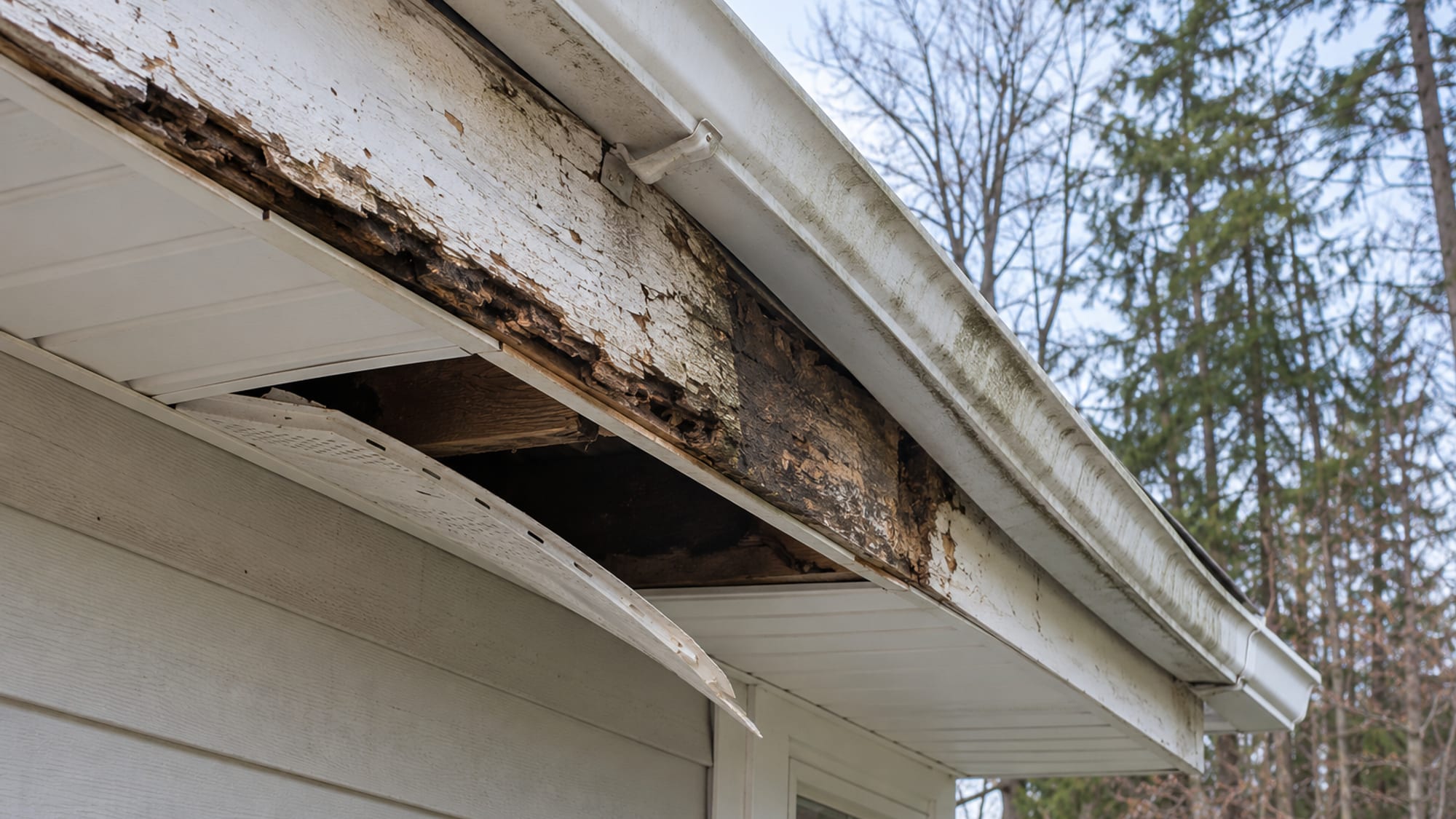
The crew checks the fascia and rafter tails before fastening anything, because fasteners in rotten wood do not hold.
One day is typical for simple jobs
A 2026 Connecticut cost guide describes a two-person crew installing about 150 to 200 linear feet of seamless gutter in a day, with repairs and complex rooflines adding time.
The final test is water
A good walkthrough covers a continuous fall, sealed joints, secured downspouts, discharge away from the house and water run through every section.
Settle Scope, Material and Paperwork Before You Pick a Date
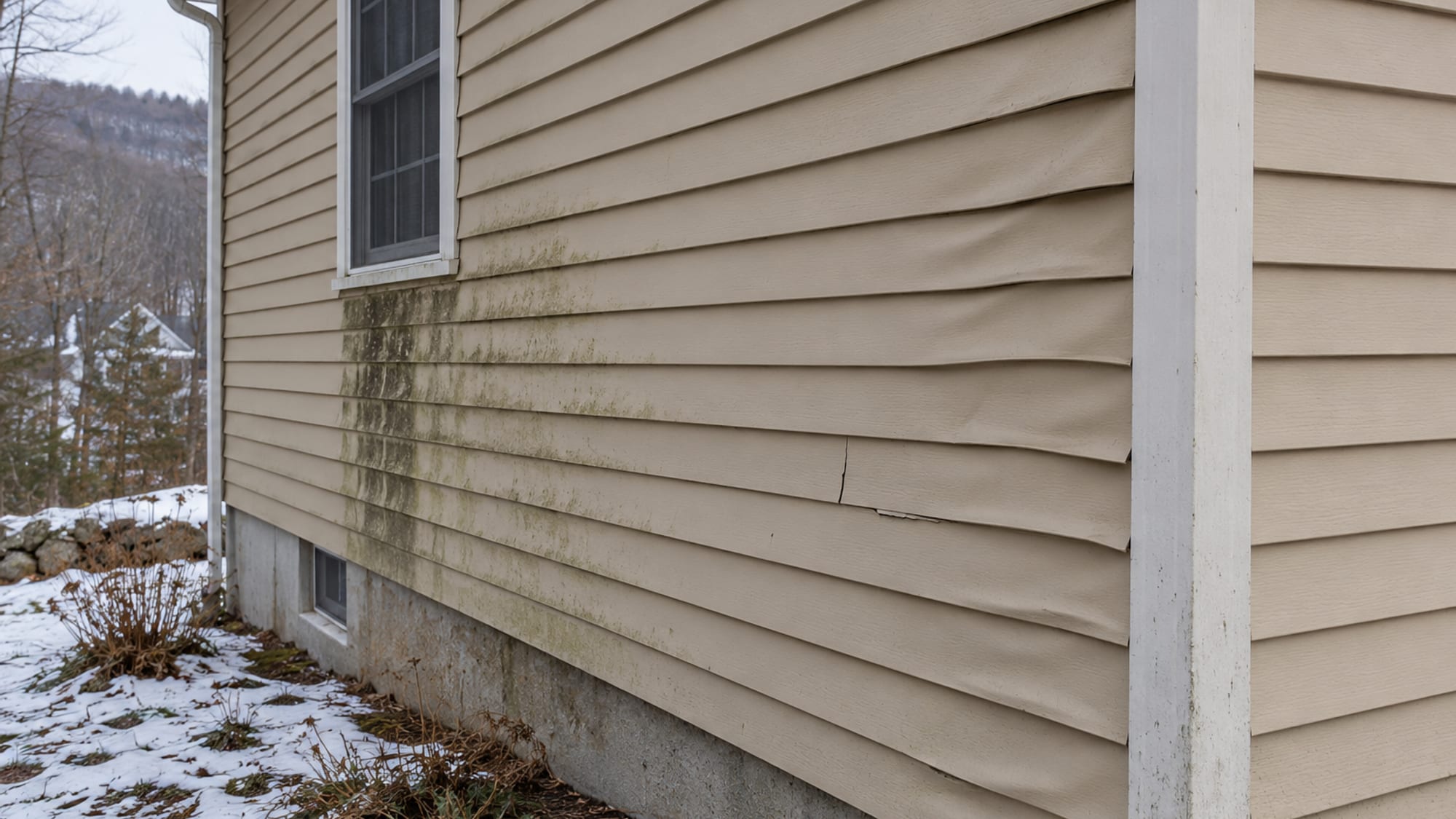
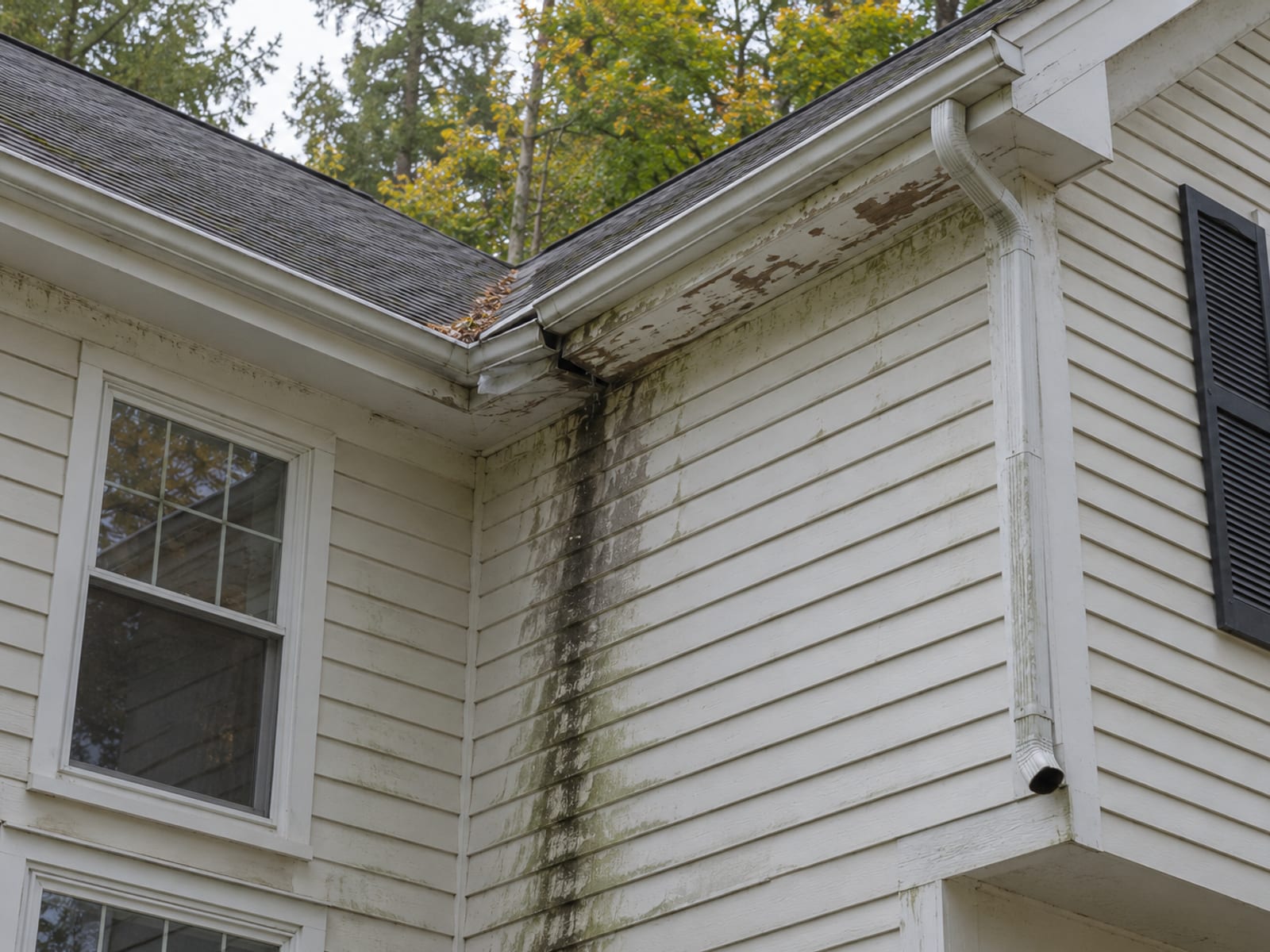
Start with what you are actually replacing. Photograph any sagging, separated joints, overflow marks, damaged fascia, stains and downspouts that empty beside the house. Count the gutter runs, corners and downspouts, note the number of stories and any trees overhead, and mark the roof areas where water seems to pour down in one spot. That list becomes the starting point for every conversation with a contractor.
Permits and money come last, but they matter just as much. Ask your town's building office whether the work needs a permit, decide who will apply, and plan for payments that follow progress instead of a large amount at the start.
A Good Estimate Reads Like a Work Order
Connecticut's Department of Consumer Protection recommends gathering several quotes for a home project, and a quote is only useful for comparison when it spells out the work. Ask each contractor to write down the gutter material, size and profile, the hanger method and spacing, the number and location of outlets and downspouts, where each downspout discharges, what happens to the old gutters, and who handles cleanup.
The estimate should also say what is separate. Fascia and trim repairs, underground drainage, leaf protection and warranty terms are often their own lines, and the estimate should name the person responsible for any permit. Price depends on footage, material and those extras, and what gutter installation costs in Connecticut is laid out line by line in its own guide.
Ask one more question that many homeowners skip: what happens if rot or hidden damage turns up once the old gutters come off? A fair answer names who inspects the backing, how a repair is priced and how the change gets written into the contract.
What a Written Gutter Scope Should Name
Aluminum, vinyl, steel or copper, and the gutter size and profile
Tap a factor to see how it moves the price.
The Crew Works in a Set Order, From Measuring to the Water Test
A replacement follows the same sequence on almost every house, even though the details change with the roofline. Knowing the order helps you spot a skipped step. The selected manufacturer's instructions control the specifics for your product.
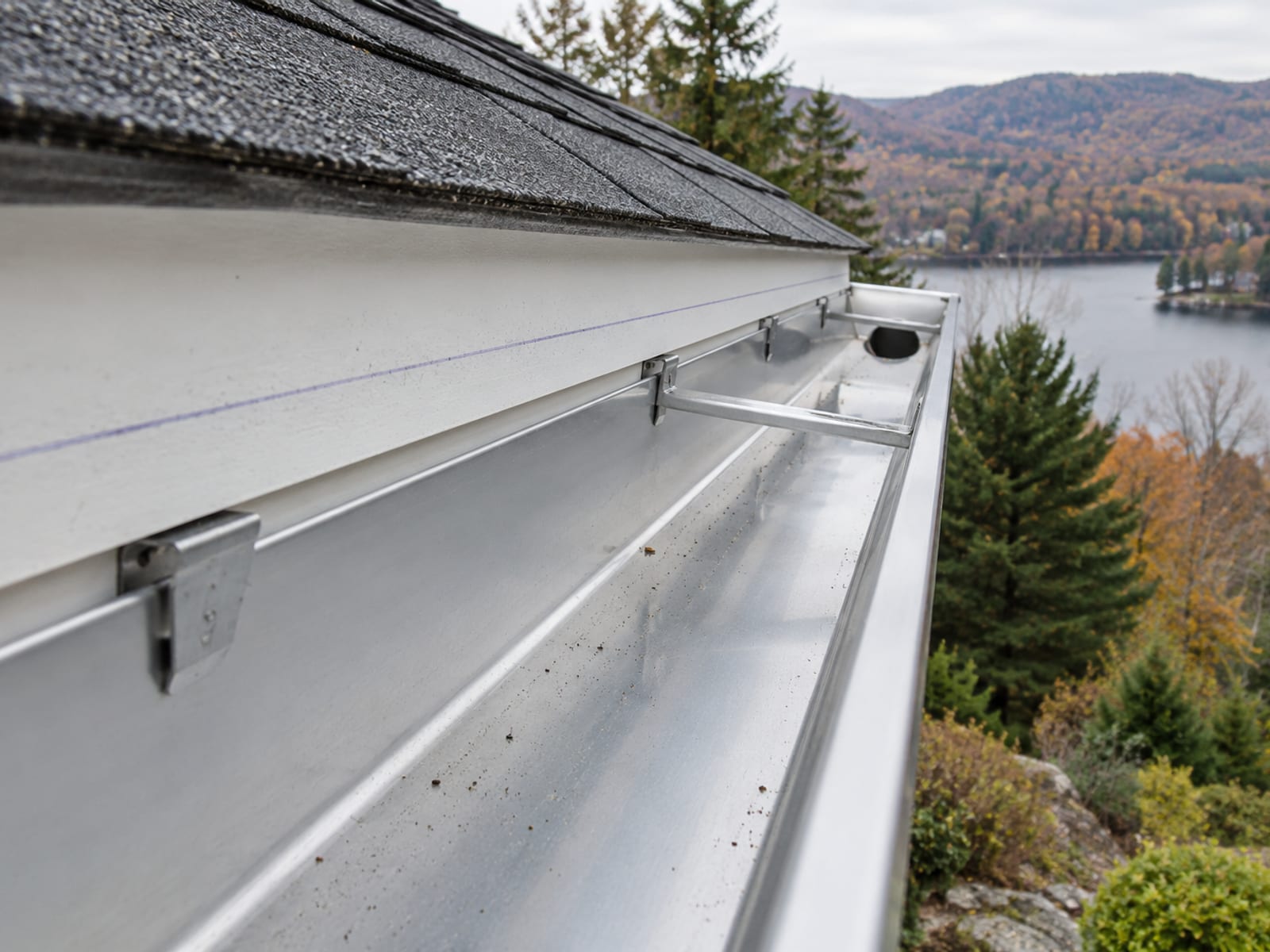
The crew measures the roof edges, corners, valleys, outlet and downspout locations and the discharge paths, and notes the number of stories. Then they look at what the gutter attaches to: fascia boards, rafter tails or brackets. This matters because hangers have to go into sound backing, not into soft trim or thin roof-edge material.
Remove the Old System and Repair the Backing
Old gutters, hangers, outlets, downspouts, sealant and debris come off. With the old system gone, the crew can see the fascia, the soffit edge and how the drip edge sits against the roof. Anything deteriorated gets replaced before the new gutters go on, since a repair after the fact means taking the new gutters back down.
Set the High and Low Points, Then Hang the Gutter
The crew sets the high point, the low point and the outlet locations first. Common guidance calls for a continuous fall toward each outlet of about 1/8 inch for every 3 feet, which is enough to keep water from standing without making the gutter look tilted from the yard. A long run may get an outlet in the middle, sloping both ways.
Hangers follow that line. One published manufacturer guide places brackets at rafter spacing, and another installation guide uses about 24-inch centers, with closer support at corners, outlets and seams. Spacing is product-specific, so ask the installer what the selected product calls for.
Seal, Secure the Downspouts and Run Water Through Every Run
Where the system is seamless, the sections are formed on site to the length of each run. Outlets, end caps, corners and joints go in, and the joints and end caps are sealed with compatible sealant. On systems with overlapped joints, the overlap faces the direction the water flows. Our seamless vs sectional comparison explains the difference.
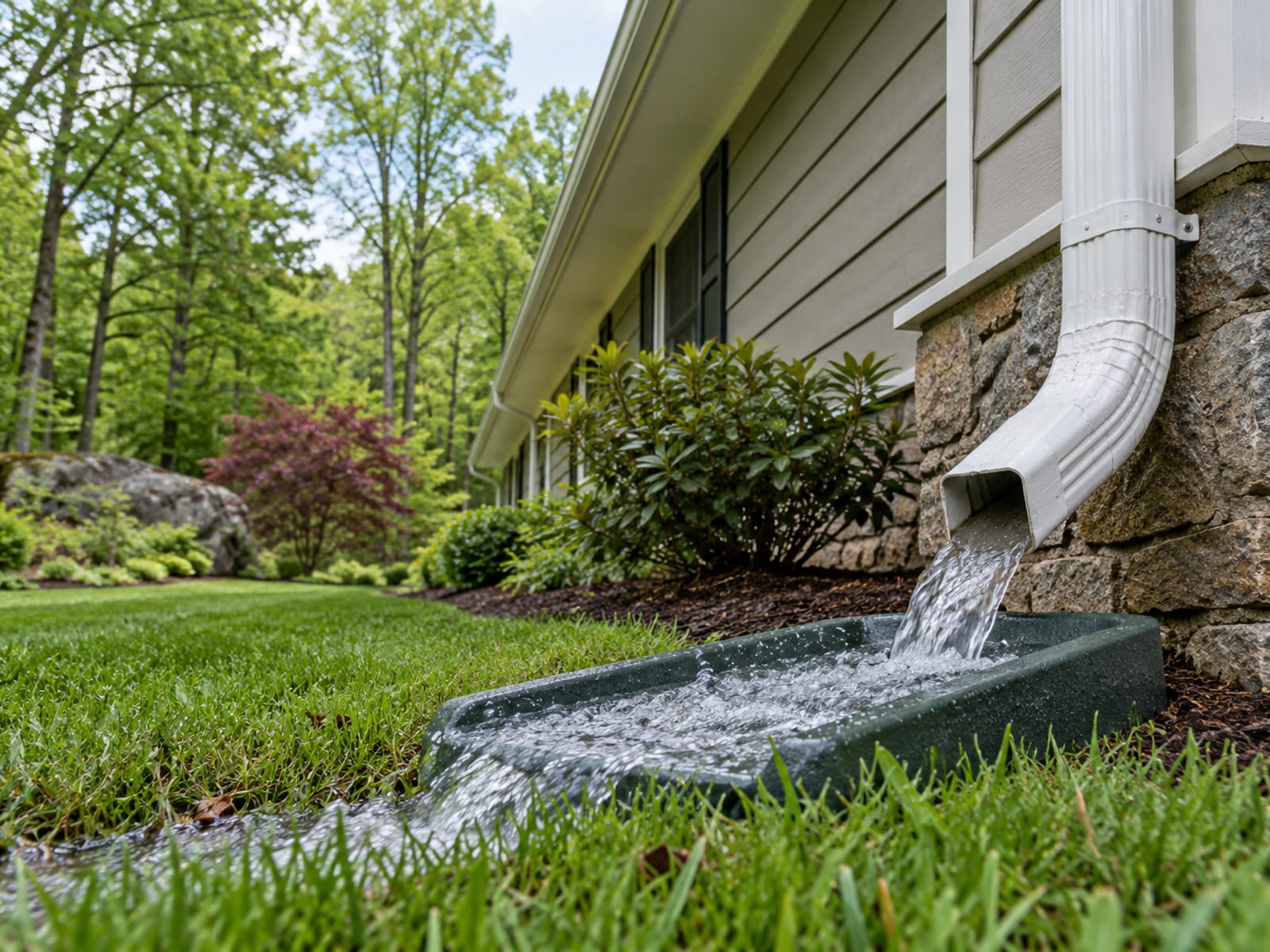
Downspouts get fastened to the wall, with elbows, extensions, splash blocks or underground connections added as designed. Then the crew runs water through each run, watching the flow, the joints, any ponding and the ground at every discharge point. Scraps and debris are removed and the job ends with a walkthrough.
One Day for a Simple Roofline, Longer When Something Turns Up
A 2026 ClearCost guide for Connecticut describes a two-person crew installing about 150 to 200 linear feet of seamless gutter in one day on a straightforward job. Treat that as a practice estimate, not a promise. A ranch with a few clean runs may fit inside a day, while a three-story colonial with a lot of corners will not.
Plenty can add time: removing the old system, fascia repair, difficult roof access, several stories, a complex roofline, underground discharge work, rain and snow, and waiting on a permit or inspection. None of these is unusual, which is why the contract should carry a start date and a completion date for your project rather than a general idea of a day or two.
What Can Stretch a Gutter Installation Schedule
Taking down, hauling and disposing of the old system is its own step
Tap a factor to see how it moves the price.
Winter, Roof Edges and Your Town's Building Office
Connecticut winters change how a gutter should be hung. Snow and ice can load a gutter, pull on its fasteners and bend the front edge. The EPA's moisture-control guidance calls for roof assemblies in snowy climates to be designed to reduce ice-dam risk, and it says gutters and downspouts should be sized for roof area, pitch and rainfall intensity.
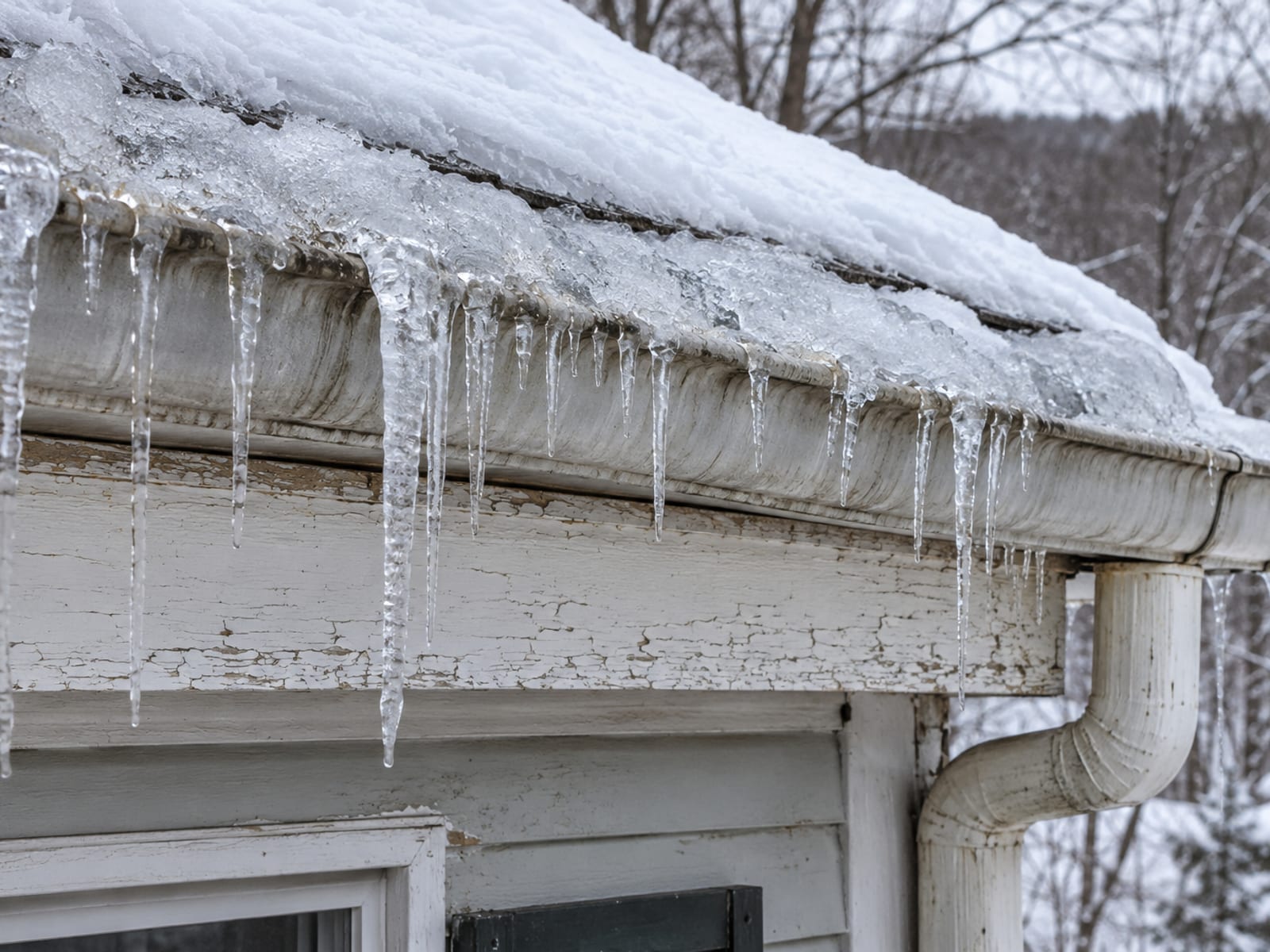
Older houses deserve a closer look at the fascia. The Census Bureau's 2024 American Community Survey reports a median year built of 1981 for Connecticut homes, which makes older trim and roof-edge details a fair thing to inspect, though a statewide median says nothing about your house in particular.
On permits, the Connecticut State Building Code applies statewide, and municipalities administer it through local building officials. The state says many home-improvement projects need a permit and that the homeowner remains responsible for confirming one is in place. Ask your town whether replacement-only work, fascia repair or underground discharge needs one, and if your contractor agrees to apply, confirm it with the building official yourself. The state keeps a list of local building officials.
Check the Registration, Insurance and Contract Before the Crew Arrives
Connecticut's Department of Consumer Protection includes gutter installers among the contractors who must hold a home-improvement registration for residential work. Look up the contractor's registration number on eLicense before you sign, and make sure it is active. The state's home-improvement registration information explains who must register.
Ask for proof of general liability insurance and confirm it with the insurer. Ask for references on similar gutter, fascia or roof-edge work, and ask whether the company follows the selected manufacturer's instructions for the system you chose.
The contract matters as much as either of those. Connecticut requires a written home-improvement contract that shows the contractor's registration number, the contract date, the start and completion dates, the cancellation date and a notice of your three-business-day cancellation right. Tie payments to progress and do not agree to pay the full amount before the work is done.
Homeowners doing work on their own property are excluded from the contractor registration requirement, but local permit and inspection rules still apply to them. The job also means ladder work at the roof edge, with accurate slope and sealed joints, and that work is best left to a crew that does it every day.
Walk the Finished System With the Foreman
The walkthrough is your chance to compare the finished job to the written scope. Do it in dry daylight, ideally while the crew is still there, and stay on the ground. Stand back from the house and look along each run for a visible, continuous fall toward the outlet, with no low spots holding water. The gutter should sit so roof runoff drops into the channel rather than shooting behind it or over the front edge.
Final Walkthrough Checklist
Water moves toward each outlet and does not stand in the gutter
Tap a factor to see how it moves the price.
Keep the contract, receipts, permit records, warranty papers and your photos together. If something shows up later, such as a drip at a joint or a downspout that works loose, that file tells you what was promised and what is covered.
Frequently Asked Questions About Gutter Installation in Connecticut
How long does gutter installation take?
A 2026 Connecticut cost guide describes a two-person crew installing about 150 to 200 linear feet of seamless gutter in a day on a straightforward job. Removal, fascia repair, several stories, a complex roofline, underground discharge, weather and permit scheduling can add time. Ask for a start date and a completion date in the contract.
Do I need a permit to put gutters on my house?
It depends on your town and the scope of the work. The State Building Code applies statewide, but the local building department administers permits, and the homeowner is responsible for confirming the right one is in place. Call your building office, and put the answer about who applies in the contract.
What slope should a gutter have?
A slight, continuous fall toward each outlet, commonly about 1/8 inch for every 3 feet. The installer sets the high and low points first and hangs the gutter along that line. A long run may have a center outlet with a fall in both directions.
Is there an alternative to gutters?
Some houses use rain chains, swales, dry wells or underground leaders to carry roof water away. They are not a match for a properly sized gutter on every house, and the EPA says leaders should discharge to an approved arrangement. Ask a contractor which fits your roof and lot.
Is gutter replacement covered by homeowners insurance?
Replacement because of age, corrosion or routine wear is generally not covered. Sudden damage from a covered peril such as wind may be, depending on the policy and deductible, and the Connecticut Insurance Department notes that flood damage is generally excluded from standard homeowners policies. Photograph the damage and call your insurer before permanent repairs.
Can I install my own gutters?
Connecticut's registration rules exclude a homeowner working on their own property, but permits, inspections and local rules can still apply. The work involves ladders, roof-edge access, accurate slope and sealed joints, so most homeowners hire a registered contractor for it.
Quick Gutter Installation Knowledge Check
1. Why does the crew check the fascia and rafter tails before hanging new gutters?
2. About how much fall toward each outlet does common guidance suggest?
3. Who is responsible for confirming the correct permit is in place?
4. What does a Connecticut home-improvement contract have to show?
5. What belongs in the final walkthrough?
Final Thoughts
A good gutter installation in Connecticut starts with decisions made at the kitchen table: the scope, the material, the removal plan, the permit and a contract with dates. Then it moves in a set order, from measuring and backing checks to a sloped, sealed, water-tested system that carries roof water away from the house.
Doing those things in order saves rework later. You know what is being installed, who answers for the permit, and what a finished job should look like when you walk it.
At American Quality Roofing and Siding, we install gutters across Central and Western Connecticut and have since 2006, under CT HIC #0633301. We check the fascia, remove the old system, fabricate seamless runs, set the slope, attach the downspouts and test the flow before we clean up. Financing options are available. Request a free estimate or call us, and we will walk you through the scope in writing.
Written by Jose Zaruma, American Quality Roofing and Siding.
← Back to the blog