Roofing Guide
Skylight Leak Repair or Replace? Start With the Cause
By Jose ZarumaPublished
- skylights
- roof leaks
- roof repair
- connecticut
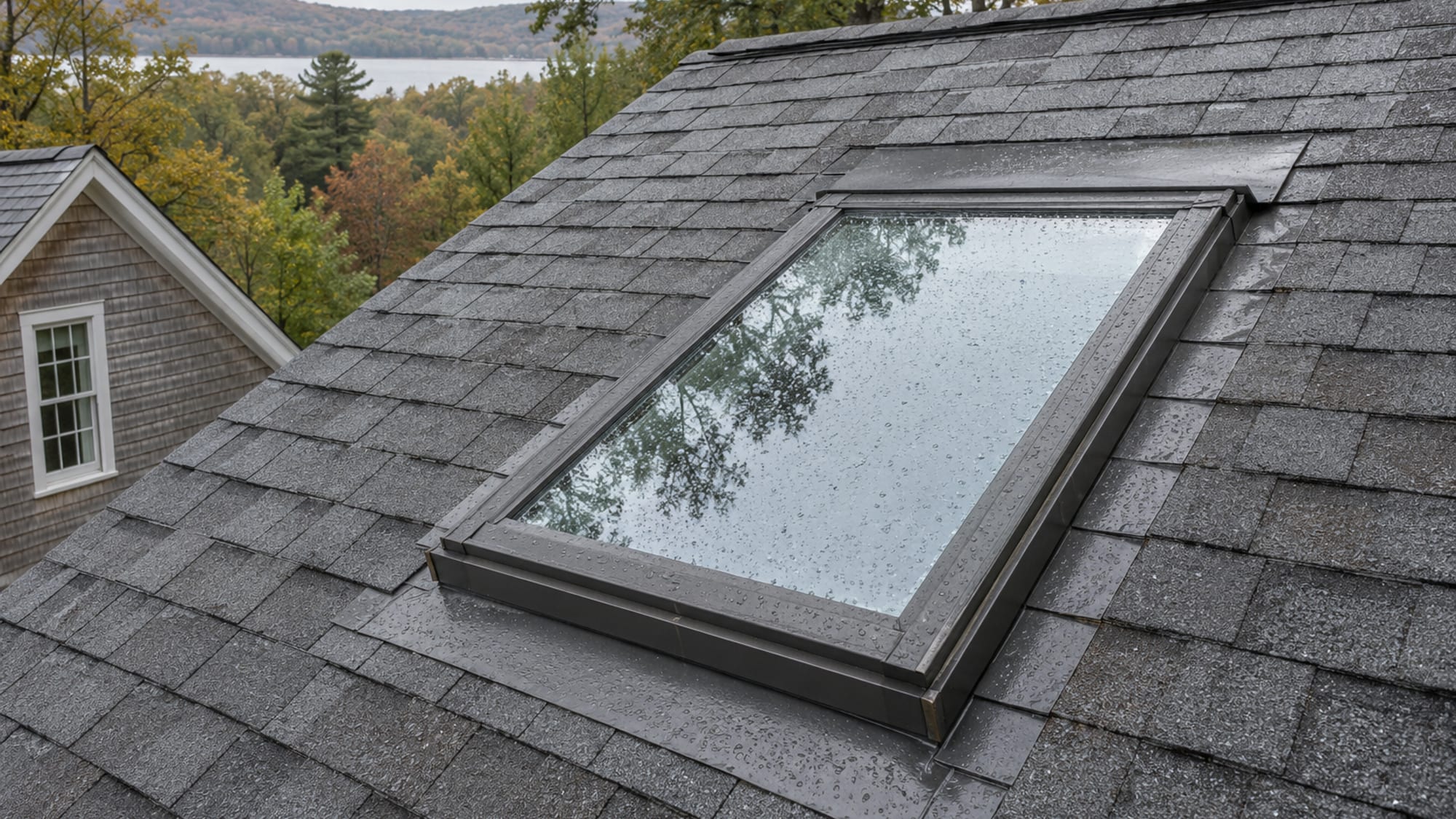
A skylight that drips, stains the shaft or fogs up does not always need a new unit. The right fix depends on which of three things is going on: rain or melting snow getting past the flashing, a failed seal or cracked glass, or condensation on cold glass that only looks like a leak.
The easiest first clue is timing. Water that shows up during or after rain, snowmelt or an ice dam points to the roof and the flashing around the frame. Water beading on the room side of the glass on a cold, humid morning points to moisture in the house, which is a different problem from a leak.
Whichever it is, there are safe steps you can take from inside the house today, and none of them involve the roof. After that, the cause decides whether you are looking at new flashing, a new unit or closing the opening for good.
Key Takeaways
Timing points to the cause
Water that follows rain, snowmelt or ice usually comes from the roof side. Water on the room-side glass during cold, humid weather is usually condensation.
Caulk is not the repair
A flashing problem is fixed with compatible flashing and ice-and-water protection, not a bead of exterior sealant.
Glass and frame problems point to replacement
Cracked glazing, a failed glass seal, a deteriorated frame or a unit that cannot get parts usually mean a new skylight.
Stay off the roof
Catch the water, move belongings, take photos and call for an inside and outside inspection.
Ask your insurer before permanent repairs
The policy and the cause decide the result, and many policies do not pay for ice-dam removal.
How Can You Tell Condensation From a Leak?
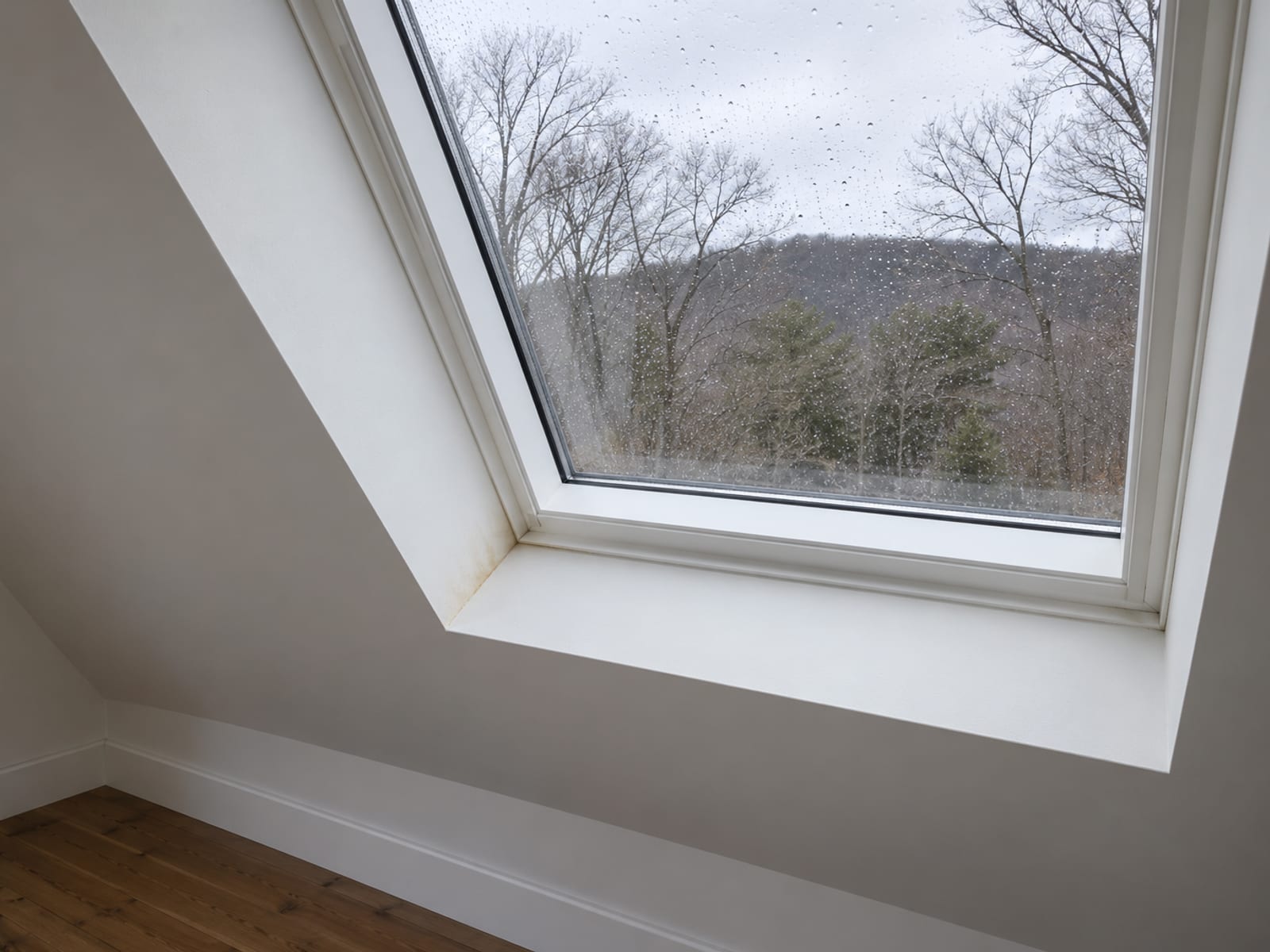
Condensation happens when warm, humid indoor air meets cold glass or a cold frame. FAKRO defines a leak as liquid water coming through the installed skylight or between the skylight and the roof deck, and it treats condensation from indoor humidity as a separate thing. VELUX's support guidance draws the same line and lists three possible sources for water around a roof window: condensation inside, damage to the exterior coverings, or the roofing and weathering around the frame.
Condensation or Leak? What to Notice
Points to Condensation: Cold, humid conditions, often in the morning
Points to a Roof-Side Leak: During or after rain, snowmelt or ice melting
Tap a factor to see how it moves the price.
Fogging or moisture between two panes of glass is a third pattern. A failed insulated-glass seal can cause it, and it is not a roof leak either. A surface bead of caulk does not restore a failed glass seal, so that one points toward replacement glazing, a new sash or a new skylight, depending on the product.
What Should You Do Today, From Inside the House?
Active dripping feels urgent, and the good news is that the first steps are simple and safe. The Connecticut Insurance Department's winter claim tips recommend reasonable steps to stop more damage and good records, and those same habits help any skylight leak. Here is the order that works for most homes:
- Catch the water: Put a container under the drip and a towel under the container.
- Clear the area: Move furniture, rugs, electronics and stored boxes away from the wet spot.
- Photograph everything: Get the ceiling stain, the shaft, the frame, the glass and any visible water path.
- Write down the weather: Note the date and whether it followed rain, wind, snow, ice or a cold, humid stretch.
- Hold off on caulk: Do not seal or take apart the skylight before it has been diagnosed, especially if an insurance claim may be involved.
Please do not climb onto the roof to look. Roof inspection, tarping and snow removal belong to people with the right equipment, and a wet or icy roof is dangerous. If you need someone to look at it, a qualified roofing or skylight contractor can check the unit from inside and the roof around it from outside.
When Is a Skylight Leak Dangerous?
Most skylight leaks are slow, annoying and fixable. A few signs mean you should treat the leak as urgent: a ceiling that sags or bulges, water near a light fixture or any wiring, water that is spreading quickly, framing or sheathing that looks weakened, or a skylight or ceiling section that might fall.
If you see any of those, keep people out of the room and call for emergency roof service. Do not wait for a daytime appointment, and do not stand under a bulging ceiling to take photos. Photos from the doorway are enough. The U.S. Department of Energy's skylight inspection guidance lists stains, peeling paint, damaged roof covering or underlayment and damaged sheathing or framing as the signs that call for a closer look.
If the opening itself has been damaged by a fallen branch or hail, the same rule applies. Water coming through a broken skylight can reach wiring and insulation fast, and a crew can cover the opening safely while you stay inside.
Which Cause Points to Which Fix?
Once the water has a name, the fix gets easier to pick. The answer is rarely "patch it or replace it" in the abstract; it depends on whether the unit itself is sound. If the frame, glass and curb are in good shape and the trouble is in the flashing or roofing around them, you are likely looking at a repair. If the unit has failed, a new one makes more sense. And if you no longer want the skylight, there is a third path.
When does reflashing fix it?
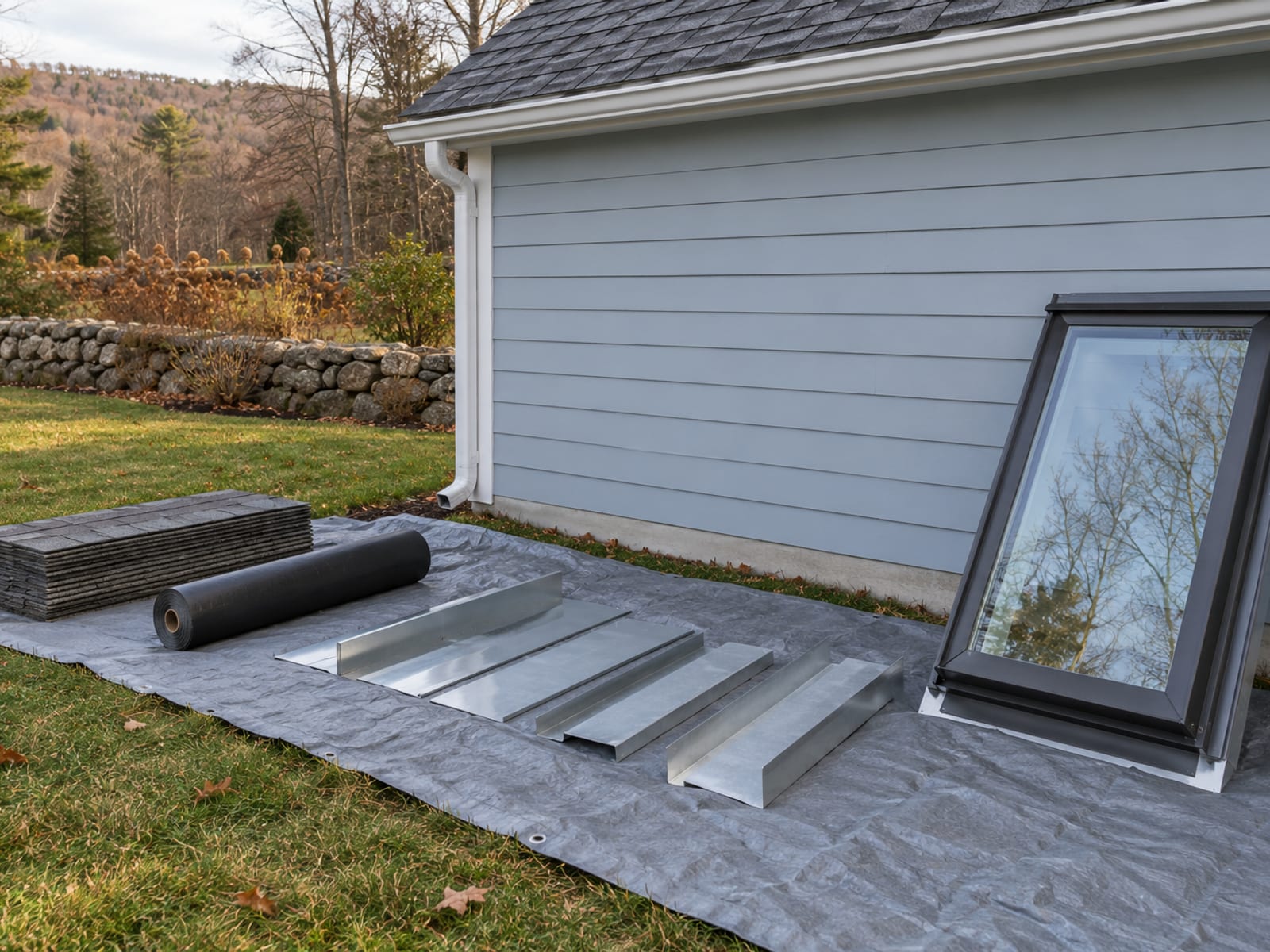
If the skylight frame, glazing, curb and roof opening are sound but the flashing or underlayment around them is damaged, badly integrated or not compatible with the roof covering, a new flashing system may be the answer. The repair should use the manufacturer-compatible flashing kit and proper ice-and-water protection, not just exterior caulk.
This Old House's skylight replacement procedure describes the same approach for a proper job: removing the surrounding shingles, checking the opening for rot, installing a waterproof membrane and integrating new flashing. A caulk-only fix tends to hide the problem for a season. If a proposal contains nothing but sealant and no diagnosis, ask what is being sealed and why.
When does replacing the skylight make more sense?
Replacement becomes more likely when the glazing is cracked, the insulated-glass seal has failed, the frame or curb has deteriorated, or the unit is old enough that compatible parts are no longer made. It also makes sense when leaks continue after correct flashing work, or when the roof itself is already being replaced and the skylight sits in the exposed area.
The new unit has to match the existing opening, the roof pitch, the roof covering and the flashing requirements. Coordinating a skylight swap with a roof replacement can cut down on duplicate tear-out, because the shingles, underlayment and flashing are already open. The unit's condition, size and warranty still decide whether that works for your house.
What does it mean to remove the skylight?
Taking a skylight out for good is a roof alteration, not a surface patch. The crew removes the unit, repairs the opening, adds structural deck material or framing as needed, restores the underlayment and roof covering, and repairs the ceiling or shaft inside. It also means giving up the daylight, ventilation and view the skylight provided.
Because it changes the roof structure, ask your building department whether the work needs a permit before anyone starts. Whether removal costs less than replacement depends on the opening, the roof condition, the interior finish and whether a reroof is already planned.
Why Does It Only Leak in Heavy Rain?
A leak that shows up only in a downpour still means water is getting somewhere it should not. Heavy rain can expose failed flashing, damaged roofing, blocked drainage, loose coverings, failed seals or a gap between the skylight and the roof deck. VELUX names the roofing material and weathering around the frame as a common source when the unit itself is installed correctly.
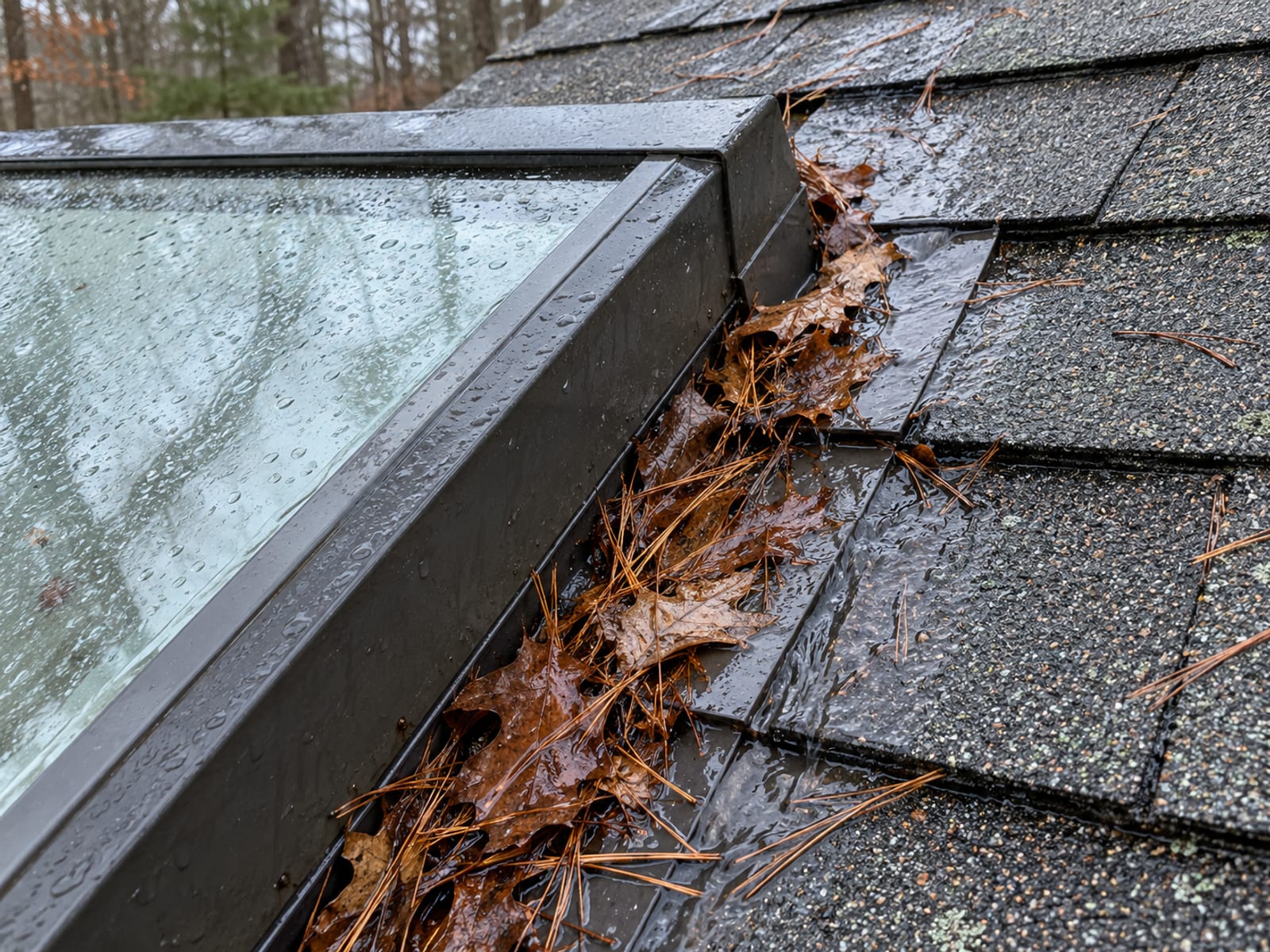
If your leak shows up in rain but not in every rain, jot down the wind direction and the rainfall when you take your photos. A crew can use that detail to narrow down which side of the opening to check first. It is also one more reason to book the inspection while the staining is still fresh, so the notes and the evidence line up.
What Happens if You Wait on a Skylight Leak?
Persistent liquid water can damage ceiling finishes, shaft framing, roof sheathing and the framing around the opening. Continued moisture can also make the interior repair bigger and may create conditions where mold can grow. A stain you can cover with paint this month can turn into a section of drywall and decking by spring.
That does not mean you need to panic. It means the inspection is worth scheduling this week and not next season. The Department of Energy's guidance treats stains and peeling paint as signs worth investigating, and a wet shaft that never dries out is a clear sign the water is still getting in.
Waiting also changes the repair choices. A leak caught early may need only reflashing and a patch of drywall. A leak left for several seasons may mean replacing rotted decking or framing around the opening, and at that point replacing the unit may be the sensible move because the opening is exposed anyway. Fixing the cause early keeps more of your options open.
Will Insurance Pay for a Skylight Leak?
It depends on your policy and on what caused the leak. The Connecticut Insurance Department's homeowners insurance FAQ explains that policies differ by language, deductible, covered peril, exclusions and endorsements. Damage from age or pre-existing conditions may be denied, while sudden and accidental events are treated differently.
The department also says interior or exterior damage from an ice dam is generally covered, but many policies do not pay for ice-dam removal. Applied to a skylight, storm-cracked glass, wind or hail damage and ice-dam water may raise a coverage question. Worn flashing, long-term seepage, condensation and deferred maintenance may be treated differently. An insurer may cover the resulting ceiling damage while excluding the failed part itself.
Call your insurer early if a storm or ice dam may be involved. The department's winter claim tips advise prompt contact, photos or video, reasonable steps to prevent further damage, saved receipts and, where practical, waiting on permanent repairs until the insurer has had a chance to inspect. Ask how your policy treats the skylight unit, the flashing, the roof covering, the ceiling, your deductible and temporary protection.
What Does Skylight Work Cost, and Why Do Quotes Differ?
National cost guides give a rough sense of the range, but they are not Connecticut bids. HomeAdvisor's 2026 national cost guide puts typical skylight repair at $454 to $1,514, with an average of $961. It lists simple fixes starting around $150 and complex work reaching $3,000. For installation, it lists averages of $350 to $900 for fixed skylights, $300 to $500 for tubular ones and $500 to $1,200 for ventilated units, with permits listed at $50 to $250.
Because those are national numbers, the best price check for your house is two or three itemized local estimates written on the same basis. Here is what makes them differ:
What Moves the Price of Skylight Work
Fixed, vented, solar and tubular units differ, and a standard replacement has to fit the existing opening.
Tap a factor to see how it moves the price.
An estimate that gives one number with no breakdown makes it hard to compare repair, replacement and removal. Ask for each option priced on the same scope. Our guide to reading a roofing estimate explains the common line items.
Does Skylight Work Need a Permit in Connecticut?
Connecticut's current State Building Code is the 2022 Connecticut State Building Code, which applies to permit applications filed from October 1, 2022 and adopts the 2021 International Residential Code. It covers alterations to existing buildings, and your town's building department enforces it and runs the permits and inspections.
Permit requirements can differ with the kind of work. A replacement that touches the roof covering, framing, the structural opening or electrical controls may be handled differently from a simple flashing repair, and removal is a roof alteration. Brookfield's Building Department, for example, directs residents to an online permit center and enforces the state code. Whatever town you live in, call its building department before you sign and ask whether your specific repair, replacement or removal needs a permit.
Also ask who pulls the permit. Your contract should say, and the answer should not be left to a verbal promise.
How Do You Choose Who Inspects and Fixes It?
Roof work is home improvement under Connecticut law, so a contractor doing residential roof work has to be registered with the Department of Consumer Protection. You can confirm registration through the state's eLicense lookup, and the DCP home improvement page explains what a written contract must contain: the registration number, a project description, the schedule, price and payment terms, and cancellation information. A three-business-day cancellation right applies to qualifying home-improvement contracts.
Beyond the registration, a few questions separate a real diagnosis from a quick sealant job:
- How will you tell condensation from a leak? The answer should involve looking at the room and the roof.
- Which flashing kit will you use? It should match the skylight and the roof covering.
- What is included and excluded? Deck, curb, framing, shaft and interior finish are all fair questions.
- Who gets the permit, and who schedules inspections? Get it in writing.
- What does the warranty cover? Ask about the unit, the flashing, the labor and the interior repair, and what could void it.
Ask for proof of current general liability insurance and a payment schedule that does not demand the full amount up front. DCP lists demands for full upfront payment, cash or peer-to-peer payments, and a refusal to share insurance information as red flags.
What Should You Do This Week, and Before You Sign?
This week, gather what you know about the skylight: the brand, model, installation date, receipts, warranty papers and any past repair records. FAKRO's U.S. limited warranty, for example, offers a 10-year leak-proof installation warranty for qualifying skylights installed with original flashing and ice-and-water protection, and it excludes condensation, wrong flashing and missing ice-and-water protection. Your own unit may have different terms, so find the paperwork before you decide.
Then ask for a diagnosis that separates the flashing, the roofing, the glazing, condensation and the structure. Before signing, make sure the written scope spells out tear-out, flashing, ice-and-water protection, the unit installation, roof restoration, interior repairs, permits and inspections, warranty, price, payment schedule and exclusions. Put repair, replacement and removal side by side on the same scope so the numbers mean something.
American Quality Roofing and Siding can do the inside and outside inspection and write that scope for you, including separate prices when more than one option makes sense. If a roof inspection finds the leak is not the skylight at all, our leaky roof repair work covers tracing it to the real entry point. After a hailstorm or a fallen branch, our storm damage work covers documenting what happened for your insurer.
How Do You Keep a Skylight Dry Through a Connecticut Winter?
A skylight that has been flashed correctly still needs a little attention. FAKRO recommends annual cleaning of leaves and debris and annual lubrication of hinges on venting units. It also recommends authorized maintenance every 10 years, which includes replacing the glazing-unit sealant and resealing with new flashing and ice-and-water protection. That is a maintenance interval, and it is not a promise of how long a skylight will last. How long yours lasts depends on the glazing, frame, installation, roof exposure, weather and any damage.
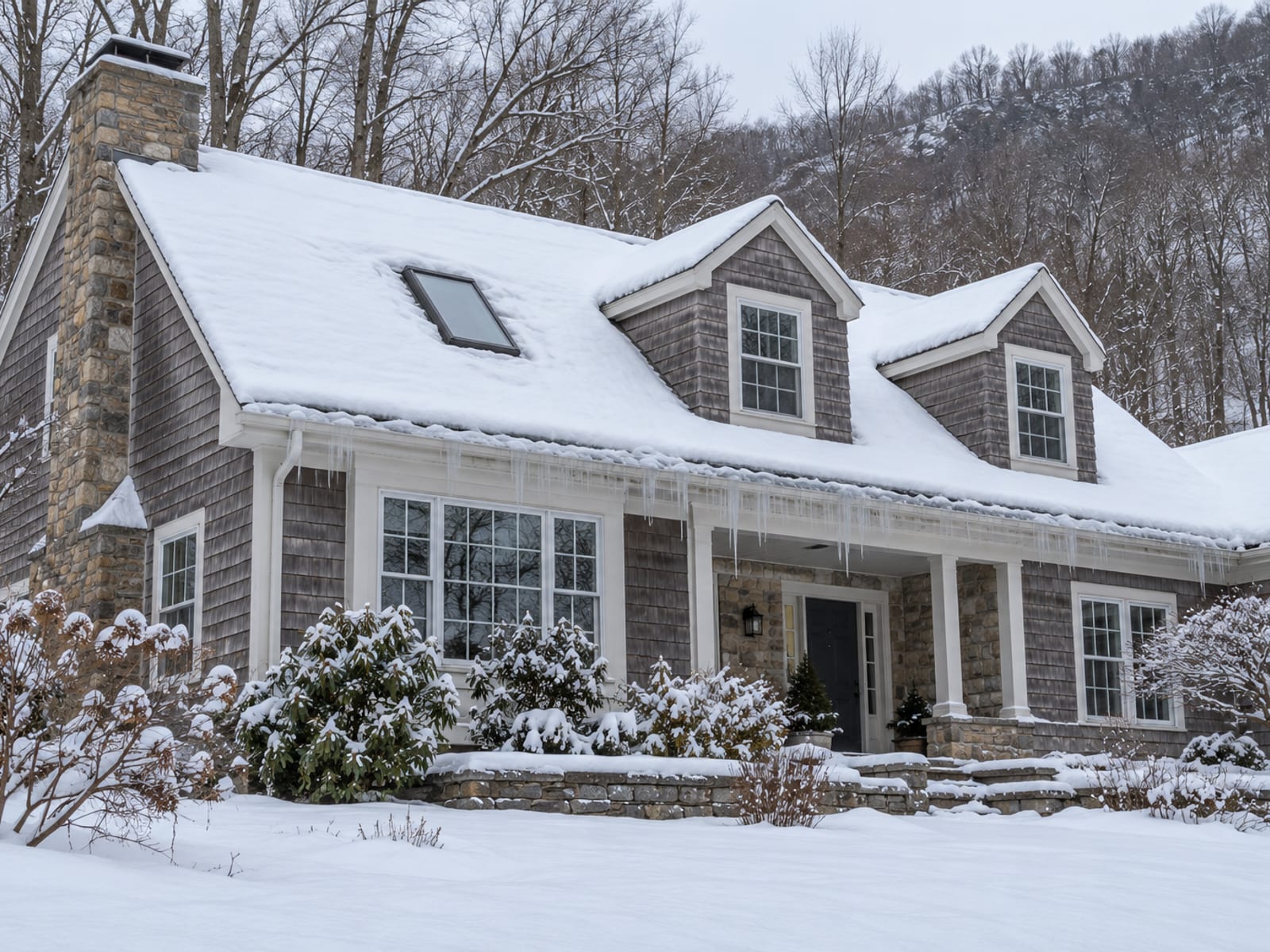
After a heavy snow or an ice storm, look at the ceiling and shaft from inside for new staining, and take a photo each time. Catching a stain early is far cheaper than finding it after the drywall softens.
Frequently Asked Questions About Skylight Leaks
Can a leaking skylight be resealed with caulk?
Caulk alone is not a lasting fix for a flashing problem. The repair should use compatible flashing and ice-and-water protection. If the problem is a failed insulated-glass seal, a surface bead of caulk does not restore it, and the remedy may be replacement glazing, a new sash or a new skylight, depending on the product.
Are skylights known for leaking?
A properly installed skylight is not expected to leak. Manufacturers put much of the weight on the whole installation: compatible flashing, ice-and-water protection, correct integration with the roof and proper unit installation. FAKRO's warranty, for example, excludes leaks from missing ice-and-water protection, incorrect flashing and improper installation.
Is it cheaper to replace or remove a skylight?
It depends on the opening, the roof condition, the interior finish and whether a reroof is already planned. A targeted repair is usually less work than replacement when the unit is sound and the problem is limited to flashing or roofing. Removal means framing and decking the opening, restoring the roof covering and repairing the ceiling, so it is not automatically the cheaper path.
How long does a skylight last?
Product life depends on the glazing, frame material, installation, roof exposure, maintenance, weather and any damage. Ask the contractor to assess the unit's age, frame, glazing, flashing, parts availability and the roof's condition together.
Is a skylight leak covered by homeowners insurance?
Coverage depends on your policy and the cause. The Connecticut Insurance Department says ice-dam damage is generally covered while ice-dam removal often is not, and that damage from age or pre-existing conditions may be denied. Ask your insurer before permanent repairs.
Why does my skylight drip only when it is cold and humid?
Warm, humid indoor air meeting cold glass can form water that looks like a leak, especially in winter. If the water shows up in cold, humid weather and not after rain, condensation is a likely suspect. An inspection can confirm it and rule out a hidden leak.
Quick Skylight Leak Knowledge Check
1. Water beads on the room-side glass on a cold, humid morning and nothing drips after rain. What is the most likely cause?
2. What should a flashing repair include?
3. Which sign means a skylight leak should be treated as urgent?
4. What should you do about the roof while a skylight is leaking?
5. When is the best time to ask your insurer about permanent repairs?
Final Thoughts
A skylight leak gets easier to solve once you know the cause. Timing and location tell you whether you are dealing with condensation, water getting past the flashing, or a unit that has failed, and each one points to a different fix. In the meantime, the safe steps stay the same: catch the water, protect your belongings, take photos and stay off the roof.
Getting the cause right the first time protects your ceiling, your decking and your budget, and it gives you a written scope you can compare. A repair that fixes the real entry point should hold through the next Connecticut winter.
If your skylight is dripping, staining or fogging, American Quality Roofing and Siding can inspect it from inside and outside, explain what we find and write up each option on the same scope. We serve homeowners across Central and Western Connecticut from Brookfield, and our skylights and sun tunnels page covers the work we do. Call us or request a free estimate, and if water is coming in right now, our 24/7 emergency roof services are available.
Written by Jose Zaruma, American Quality Roofing and Siding.
← Back to the blog