Roofing Guide
How Much Gutter Installation Costs in Connecticut
By Jose ZarumaPublished
- gutters
- gutter installation
- connecticut
Your gutter price starts with one measurement: the length of your roofline in feet. Multiply that by a per-foot price and you have the core of the quote. ProMatcher's 2026 Connecticut report lists aluminum gutter installation at $4.85 to $8.79 per linear foot, with an average of $6.82. Downspouts, removal and repairs come on top.
A house size will not get you there. A 1,500 or 2,000 square foot floor plan does not fix how many feet of gutter the roof needs, because a compact two-story and a long one-story with the same floor area can have very different rooflines. Measure the edges, or have a contractor measure them, before you compare any price.
For a whole-project view, ClearCost's Connecticut guide, updated April 2026, estimates installed gutters at $1,075 to $3,800, with an average of $2,275. ClearCost builds that estimate from national data adjusted for Connecticut price levels, so treat it as a planning range, not a contractor quote.
Key Takeaways
Footage first
Your price is measured roofline footage times a per-foot price, plus separately quoted downspouts, removal, fascia repair, extensions, guards and access.
Aluminum runs $4.85 to $8.79 per foot
That is ProMatcher's 2026 Connecticut range, with vinyl at $4.94 to $5.98, galvanized steel at $8.28 to $9.07 and copper at $34.79 to $37.18.
The whole-project range is wide
ClearCost's April 2026 Connecticut estimate is $1,075 to $3,800, or $6 to $25 per linear foot, and it is not a contractor quote.
Compare on the same scope
Ask every contractor to price the same footage, material, size, downspouts and removal as separate lines.
Check before you sign
Verify the Connecticut home-improvement registration, ask for proof of liability insurance, confirm who handles any town permit and never pay everything up front or in cash.
Measured Footage Times a Per-Foot Price Gives You the Starting Number
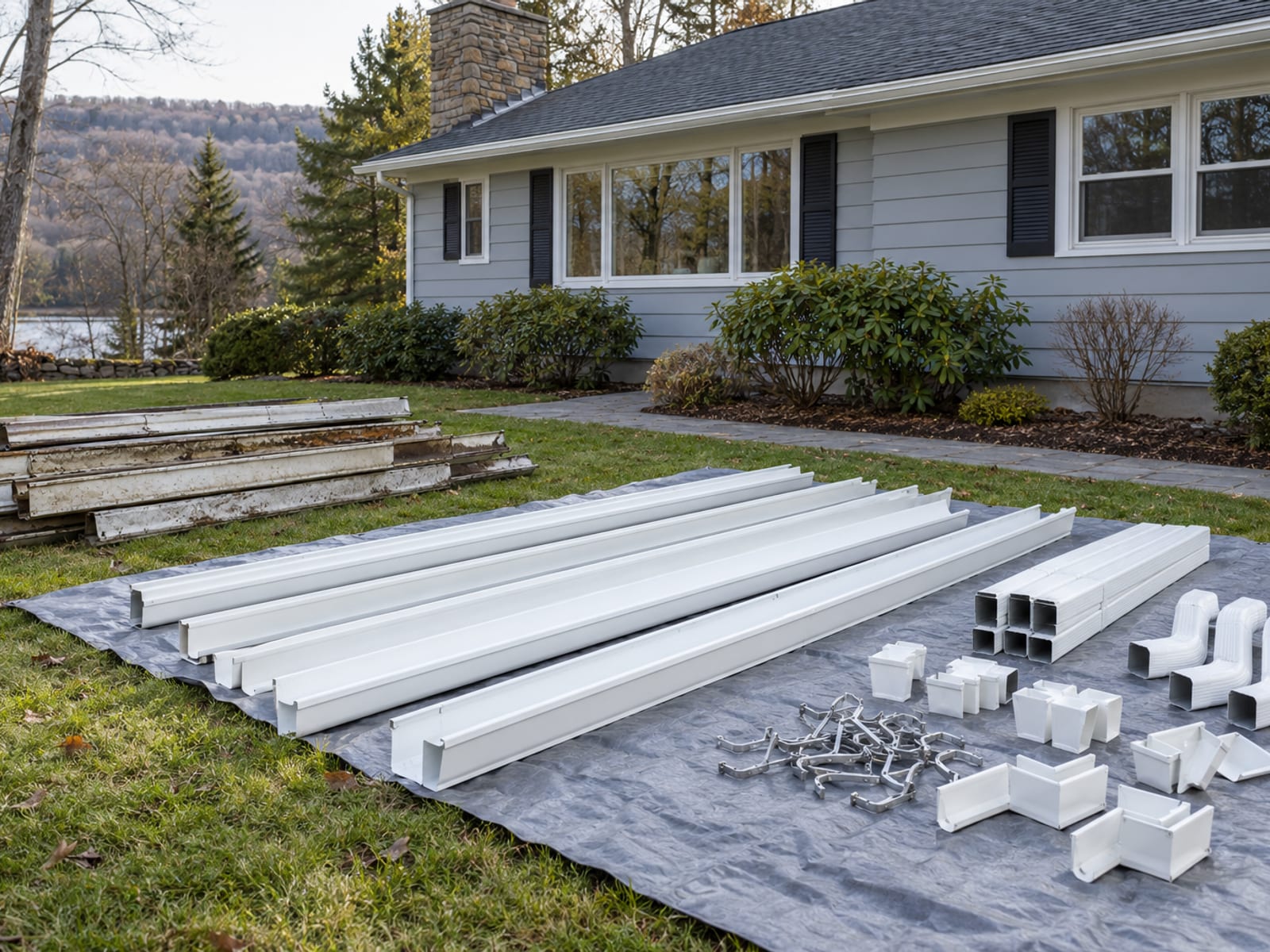
The working method is short. Measure the total length of gutter your roof edges need, choose a material, multiply the footage by that material's per-foot price, then add the items a contractor prices separately. Those add-ons are downspouts, old-gutter removal and disposal, fascia repair, outlets, extensions, guards and extra labor for height or tight access. Each one belongs on its own line.
Connecticut Gutter Prices per Linear Foot (ProMatcher, 2026)
Published Range: $4.85 to $8.79
Average: $6.82
Listed For: Installed gutter
Tap a factor to see how it moves the price.
Those prices may not all cover the same downspouts, removal, fascia work or access conditions. That is why the first question for any contractor is what the per-foot number covers. A low per-foot price with downspouts and removal listed separately can end up above a higher price that includes them.
ClearCost's guide frames the same idea at the project level: $6 to $25 per linear foot installed. At 300 feet, that spread works out to $1,800 on the low end and $7,500 on the high end. A gap that wide tells you the footage matters less than the scope behind it.
Footage Times Price: Arithmetic Examples
Math: 40 x $4.85 to $8.79
Gutter Only, Before Add-Ons: $194 to $352
Tap a factor to see how it moves the price.
A Complete Quote Covers More Than the Gutter Itself
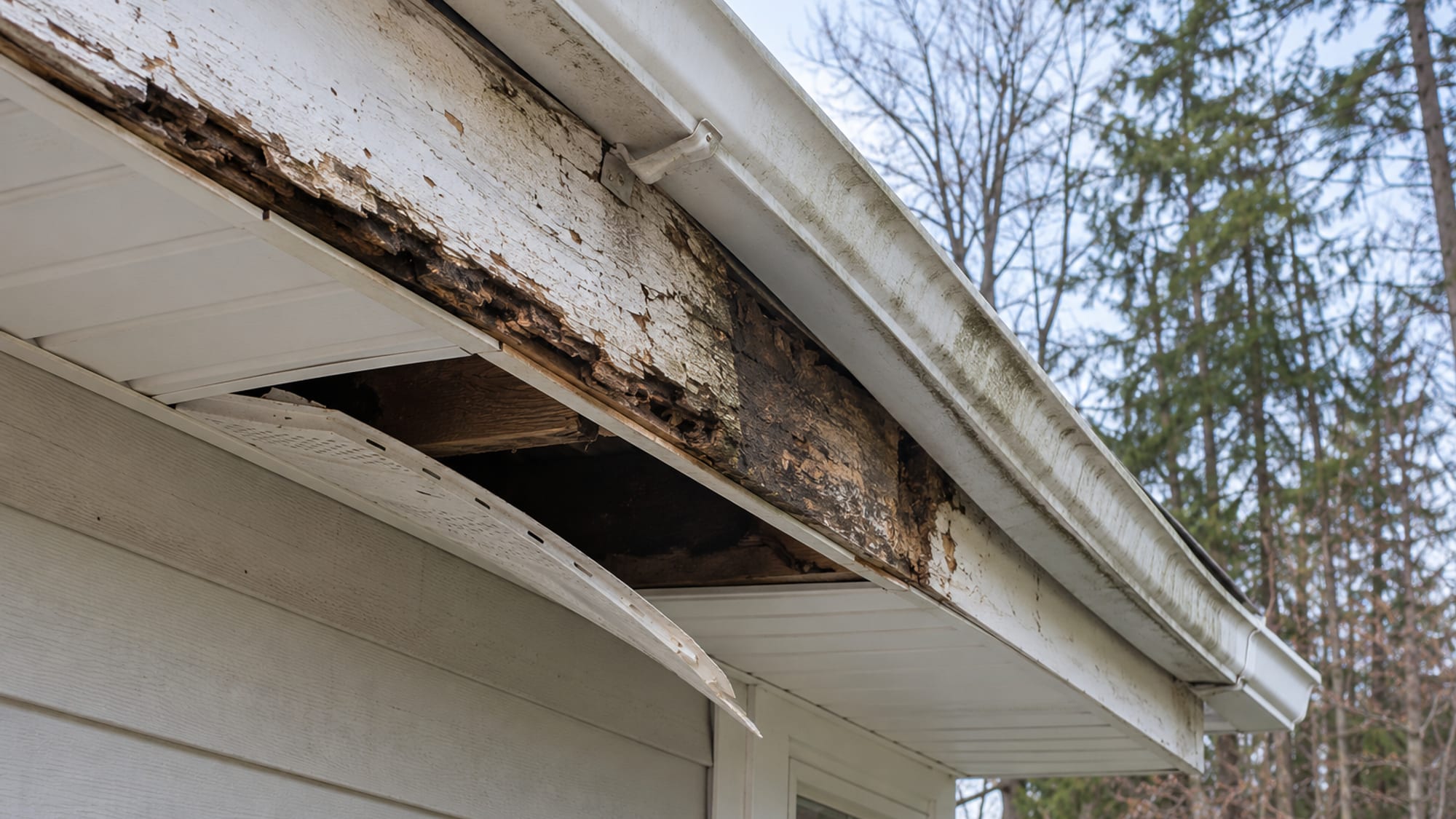
A gutter that hangs on rotten wood is a gutter that comes down again. So, a complete installation price also pays for the work around the channel: measuring the roof edges, reviewing roof pitch and drainage zones, removing the old system, checking the fascia, fastening hangers, setting the slope, attaching downspouts, running water through the system and cleaning up. At American Quality Roofing and Siding, gutter installation follows that same order, with seamless fabrication on the job.
Size matters to the bill as well. Common residential profiles are 5-inch and 6-inch. A larger roof area or steeper pitch sends more water to each section, and a 6-inch gutter may be the better match even though the material costs more. The size should be written into the estimate, not assumed. Our guide to 5-inch vs 6-inch gutters shows how that size is calculated.
Hangers and fascia are the less obvious cost drivers. If the fascia board behind the gutter is soft, it needs repair before new hangers can hold anything. Corners, end caps and outlets each add fabrication and sealing work, so a roofline with many jogs costs more per foot than a plain rectangle.
Downspouts deserve their own line: how many, what size, where they sit and where they empty. Guards are separate too. ProMatcher's 2026 Connecticut range for guards is $8.82 to $9.39 per foot, and they need to suit both the gutter and the roof. If tree cover is heavy, ask about gutter guards as a priced option instead of an afterthought. Our post on whether gutter guards are worth it can help you decide.
Aluminum, Vinyl, Steel and Copper Price Out Differently
Material is the biggest single choice after footage. Aluminum is light, does not rust and can be fabricated as a seamless run, which is why it is so common. Vinyl also does not rust and usually comes in sectional lengths, with a lower price floor than most metals. Galvanized steel costs more per foot than either. Copper sits in its own price tier at roughly five times aluminum.
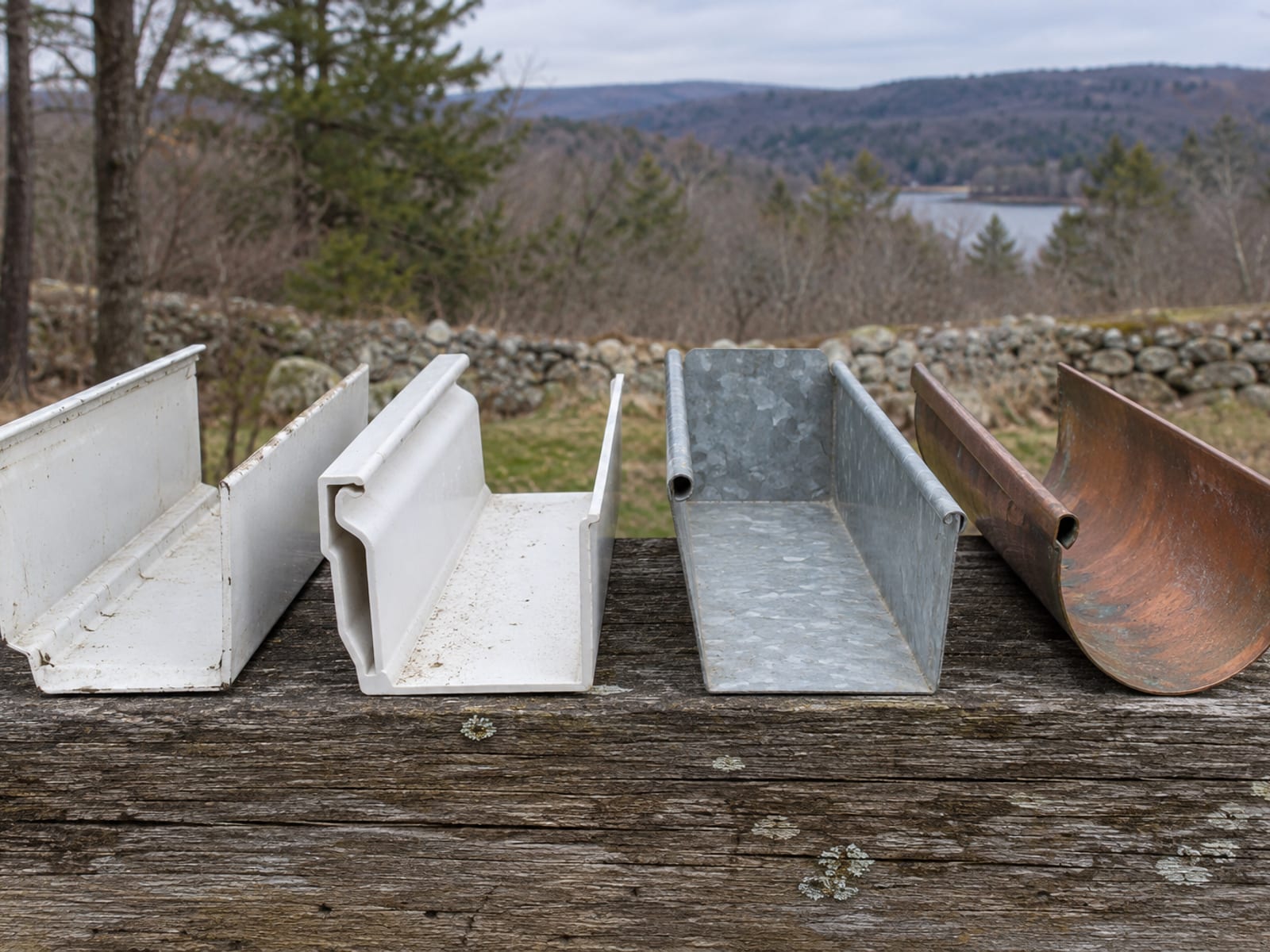
Warranties tell you less than they seem to. Senox's published terms, for example, cover finish defects on painted aluminum for up to 50 years, subject to proration, annual cleaning and exclusions, and a 25-year limited warranty on certain galvalume steel products. Read those at Senox's warranty page as an example of how a manufacturer limits its promise to the finish or the material, not the whole installed system.
So, ask for two documents: the manufacturer's warranty for the product, and the contractor's own written workmanship warranty. They cover different failures, and a leaking joint is usually a workmanship matter.
Your Roofline Sets the Footage, and Connecticut Weather Sets the Details
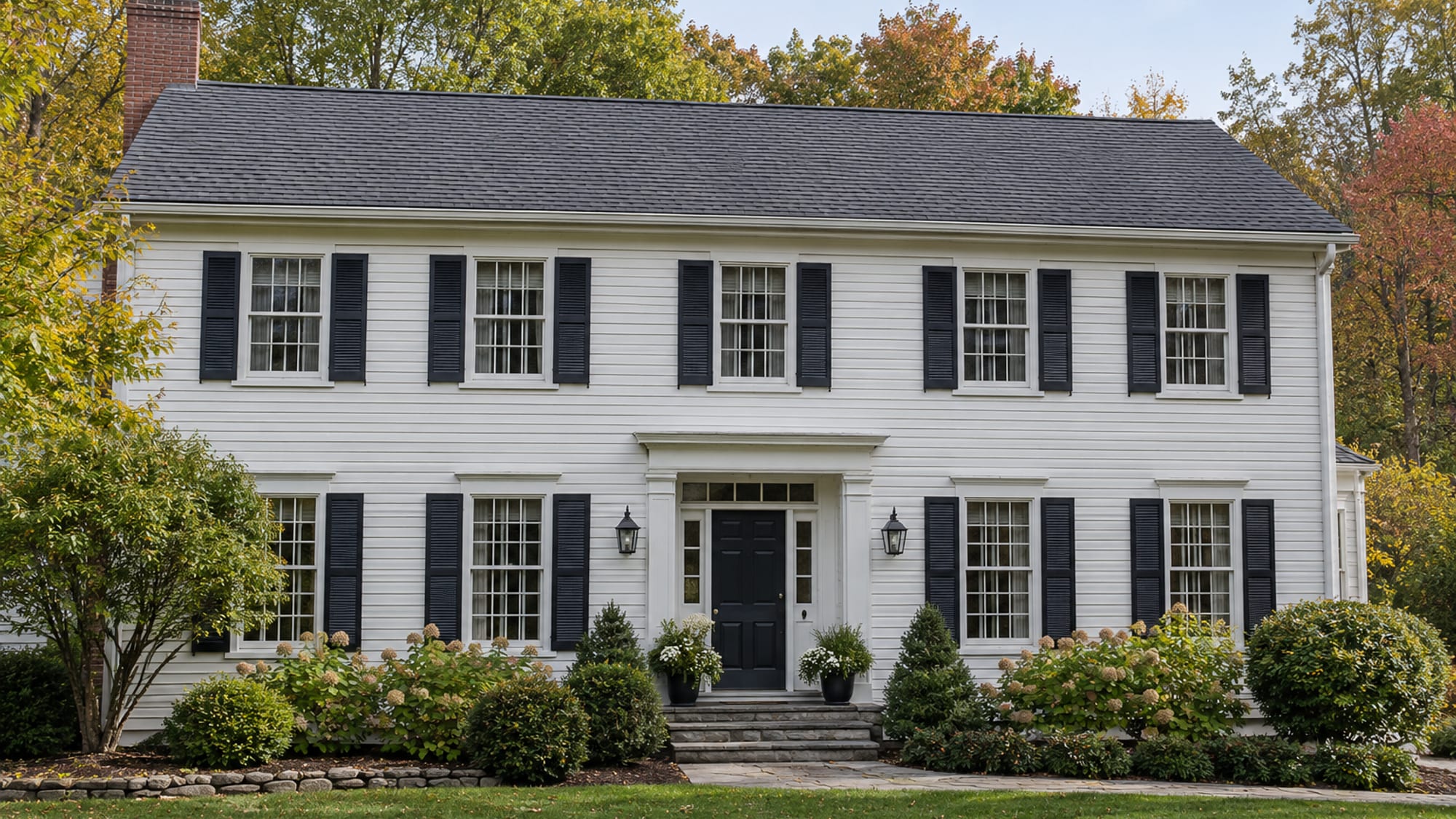
Rooflines in Central and Western Connecticut are rarely plain. Capes with dormers, colonials with garage wings and ranches with additions all add corners, valleys and short runs, and every one of those raises the work per foot. Two houses with the same total footage can price quite differently because one has eight corners and the other has two.
Height and access change the labor. A second-story edge, a steep pitch, shrubs under the eaves or a tight side yard all mean more setup time and more safety work for the crew. That is part of why ClearCost's range stretches from $6 to $25 per foot and why a phone quote without a roof visit is only a guess.
Weather is the other half. The National Weather Service's 2025 Hartford climate summary recorded 27.5 inches of snowfall, 127 days with measurable precipitation and 129 days with minimum temperatures at or below freezing. The NWS also describes nor'easters as East Coast storms that commonly bring heavy rain or snow and gale-force winds, most often between September and April.
Snow and ice load a gutter, pull on its fasteners and can bend the front edge, so hanger type, spacing and fascia condition matter more here than in a mild climate. Ask the contractor to state the hanger spacing in the estimate, and to explain any closer spacing for snow exposure.
Permits and Downspout Discharge Can Add Lines to the Estimate
Connecticut's current State Building Code applies to permit applications filed from October 1, 2022 and adopts the 2021 International Residential Code. The code is statewide, but your town's building official decides how it applies to a particular job. The state's building permit guidance places responsibility for having the correct permit on the homeowner, even when the contractor applies as your agent.
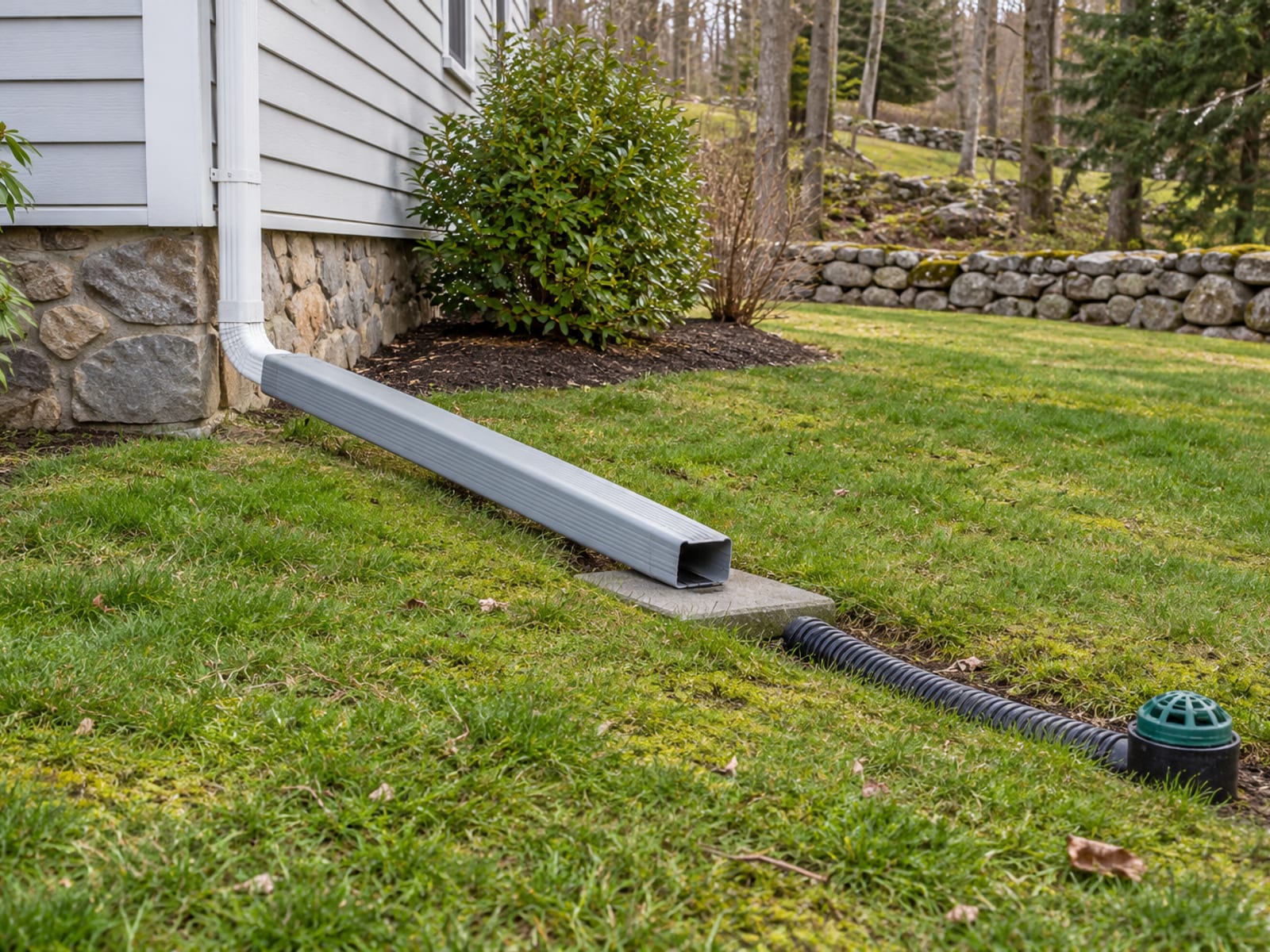
Discharge is where water goes after it leaves the downspout, and it can add cost. The U.S. Department of Energy's building science guidance recommends directing gutter and downspout water at least 5 feet from the foundation, or at least 10 feet when an underground catchment system is used.
Extensions, splash blocks and underground piping are priced as add-ons. Our downspouts and extensions work covers that part of the system, and it is worth pricing even if the old downspouts looked fine.
Same Scope, Same Footage: Comparing Quotes Fairly
Three quotes are only comparable if they describe the same job. Connecticut's Department of Consumer Protection recommends getting several quotes, and the way to make them useful is to hand each contractor the same measured footage and ask for the same line items. Then differences in the totals point to real differences in material, size, labor or scope.
Line Items to Ask For in Every Gutter Estimate
The measured roofline length sets the base for every other number.
Tap a factor to see how it moves the price.
Watch for a quote with one lump sum and no footage. A price you cannot divide by feet cannot be compared to anything. Also watch for estimates that skip fascia, because the cheapest quote is often the one that leaves out the board the gutter hangs on.
Do gutters add value to a house? No dollar or percentage return at resale can be promised, so the safest way to think of them is as drainage protection. They carry roof water away from the foundation, siding and plantings, which is the damage you are paying to prevent.
Check the Contractor Before You Sign
Connecticut requires gutter installers doing residential work to hold a home-improvement contractor registration. Look the contractor up in the state's eLicense system before you sign, and write down the registration number. The Department of Consumer Protection's contractor information explains the registration and the Home Improvement Guaranty Fund. For what happens once the crew arrives, see gutter installation in Connecticut: what to expect.
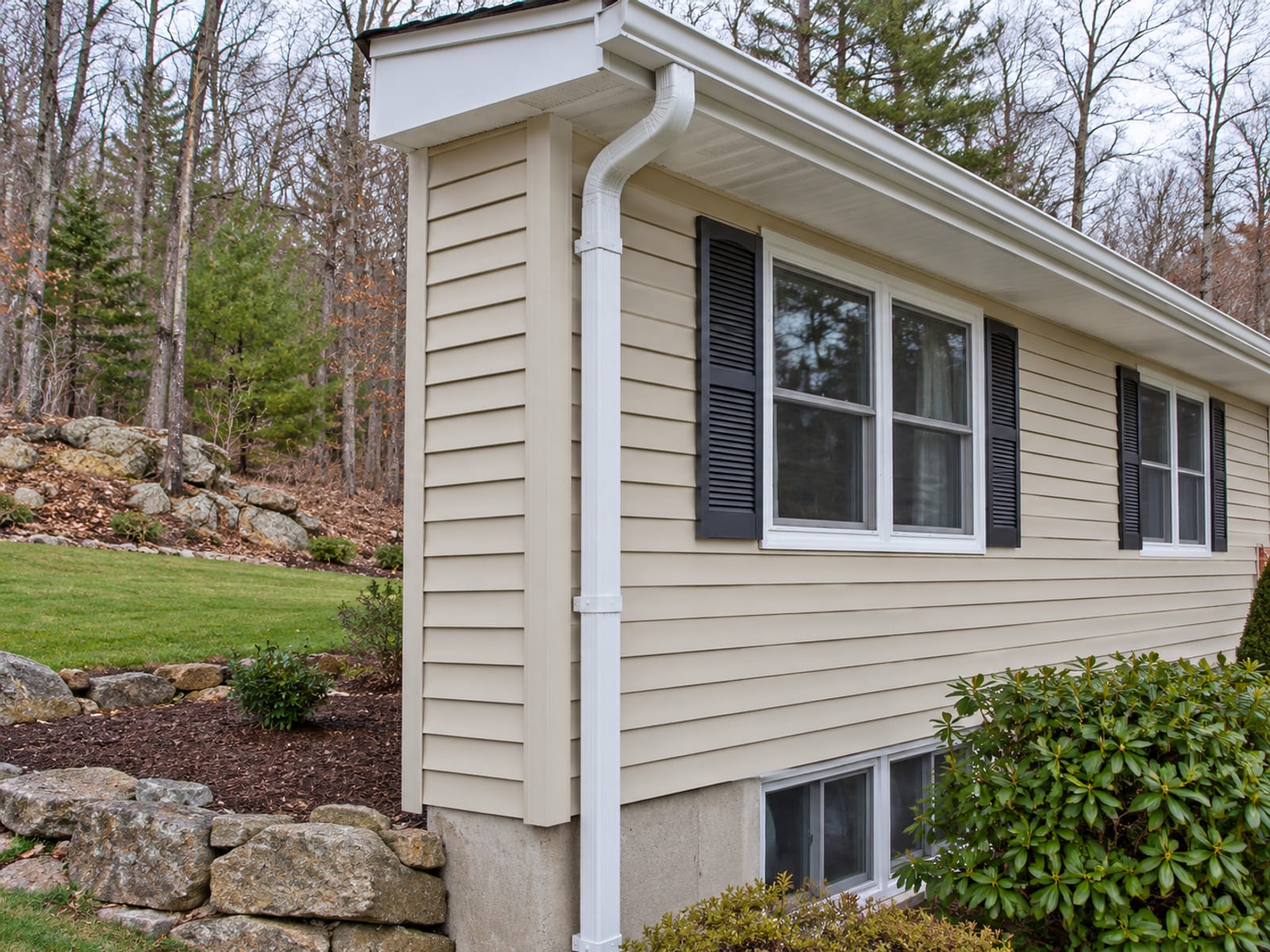
The state's home repair tips advise against paying the full amount up front, and against paying in cash. Tie payments to progress, keep your contract and receipts, and keep photos of the work. If the contractor says they will pull the permit, confirm it with the building official yourself.
If a storm damaged the old gutters, coverage depends on your policy. The Connecticut Insurance Department says flood damage is generally excluded from standard homeowners insurance, and windstorm or hail deductibles may apply if your policy includes them. Replacement because of age, corrosion or routine wear is generally not covered, so ask your agent before you count on a claim.
Frequently Asked Questions About Gutter Installation Cost in Connecticut
How much do new gutters cost for a 1,500 or 2,000 square foot house?
Floor area does not set the price. The length of the roofline, the number of stories, the material, the downspouts, the fascia condition and the access do. Measure the roof edges, then multiply that footage by the per-foot price of the material you choose and add the separately quoted items.
How much does it cost to install 40 feet of gutter?
As arithmetic, 40 feet of aluminum at ProMatcher's 2026 Connecticut range of $4.85 to $8.79 per foot is about $194 to $352 for the gutter alone. Vinyl at $4.94 to $5.98 per foot works out to about $198 to $239. Downspouts, removal and repairs are extra.
How much is a 60-foot seamless gutter?
ProMatcher lists its Connecticut prices by material, not by seamless or sectional. Sixty feet of aluminum at $4.85 to $8.79 per foot is about $291 to $527 as arithmetic. Ask the contractor for the seamless price in writing, along with what it includes.
How much does 300 feet of gutter cost?
Multiply the footage by the material's per-foot price. At 300 feet, aluminum comes to about $1,455 to $2,637 and copper to about $10,437 to $11,154 for the gutter alone. Downspouts, removal, fascia repair, guards and access are separate lines.
Is the price per foot or per meter in Connecticut?
Connecticut cost reports publish per-linear-foot prices. One meter is about 3.28 feet, so multiply a per-foot price by 3.28 to see the per-meter equivalent. Either way, the number only means something when you know what it includes.
Do gutters add value to my home?
No dollar or percentage return can be promised. Gutters protect the foundation, siding, plantings and drainage, and that protection is the reason to install them. A written estimate for your own roofline tells you what that protection costs.
Quick Gutter Cost Knowledge Check
1. What sets the starting price for gutter installation?
2. What is ClearCost's April 2026 Connecticut range built from?
3. Which item is usually priced as a separate line from the gutter itself?
4. How far does the U.S. Department of Energy recommend discharging water from the foundation?
5. Which payment practice should you avoid before signing a gutter contract?
Final Thoughts
Gutter pricing in Connecticut comes down to a measured roofline, a per-foot price and a list of add-ons that each get their own line. ProMatcher's 2026 ranges and ClearCost's April 2026 estimate give you a way to sanity-check a quote, and the arithmetic shows how footage and material move the total. A quote you cannot divide by feet or compare line by line is the one to question.
Measure first, use that number in every estimate and ask for itemized written quotes on the same scope. Done that way, you are comparing contractors instead of guessing at totals, and you end up with drainage that protects the foundation, siding and plantings through the next Connecticut winter.
At American Quality Roofing and Siding, we have installed gutters across Central and Western Connecticut since 2006, and we work under CT HIC #0633301. We measure the roofline, review the roof pitch and drainage zones, remove the old system, inspect the fascia, fabricate seamless runs, set the hangers and slope, attach the downspouts, test the flow and clean up. Financing options are available. Request a free estimate or call us, and we will put the footage and every line item in writing.
Written by Jose Zaruma, American Quality Roofing and Siding.
← Back to the blog