Roofing Guide
Are Gutter Guards Worth It in Connecticut?
By Jose ZarumaPublished
- gutter guards
- gutters
- connecticut

On a wooded Connecticut lot, gutter guards are often worth it. They tend to pay off when oaks, maples or pines overhang the roof, when you pay for cleanings every year, and when the gutters and roof behind them are still in good shape.
The payoff is less cleaning, not no cleaning. A guard keeps much of the debris out and cuts the trips up the ladder, but pine needles, seeds, pollen and wet leaves can still get through or pile up on top.
If your yard has only a few trees, the gutters are close to replacement, or the roof is due for new shingles, the money may go further somewhere else. Look at which side of that line your house sits on before you spend anything.
Key Takeaways
Where guards pay off
Overhanging trees, repeated paid cleanings, sound gutters, hard-to-reach rooflines and a roof with years left.
Where they do not
Few trees, gutters or a roof near replacement, rotted fascia, failing hangers, or downspouts that are too small.
Cleaning shrinks, it does not vanish
Guards still need inspection after leaf fall and storms, and the guard surface and downspouts still need attention.
Winter is not solved by a guard
Ice dams come mainly from roof heat loss, so attic insulation and ventilation matter more than the cover on the gutter.
Cost depends on the whole proposal
National guides publish very different per-foot figures, so ask for an itemized Connecticut quote.
Are Gutter Guards Worth It for a Connecticut Home?
Start with the trees, because they drive almost everything else. A house sitting under mature oak, pine, maple or mixed woodland sends a steady load of leaves, needles, seed pods and twigs onto the roof, and the roof sends it to the gutters. A house with a single ornamental tree has a very different job ahead of it.
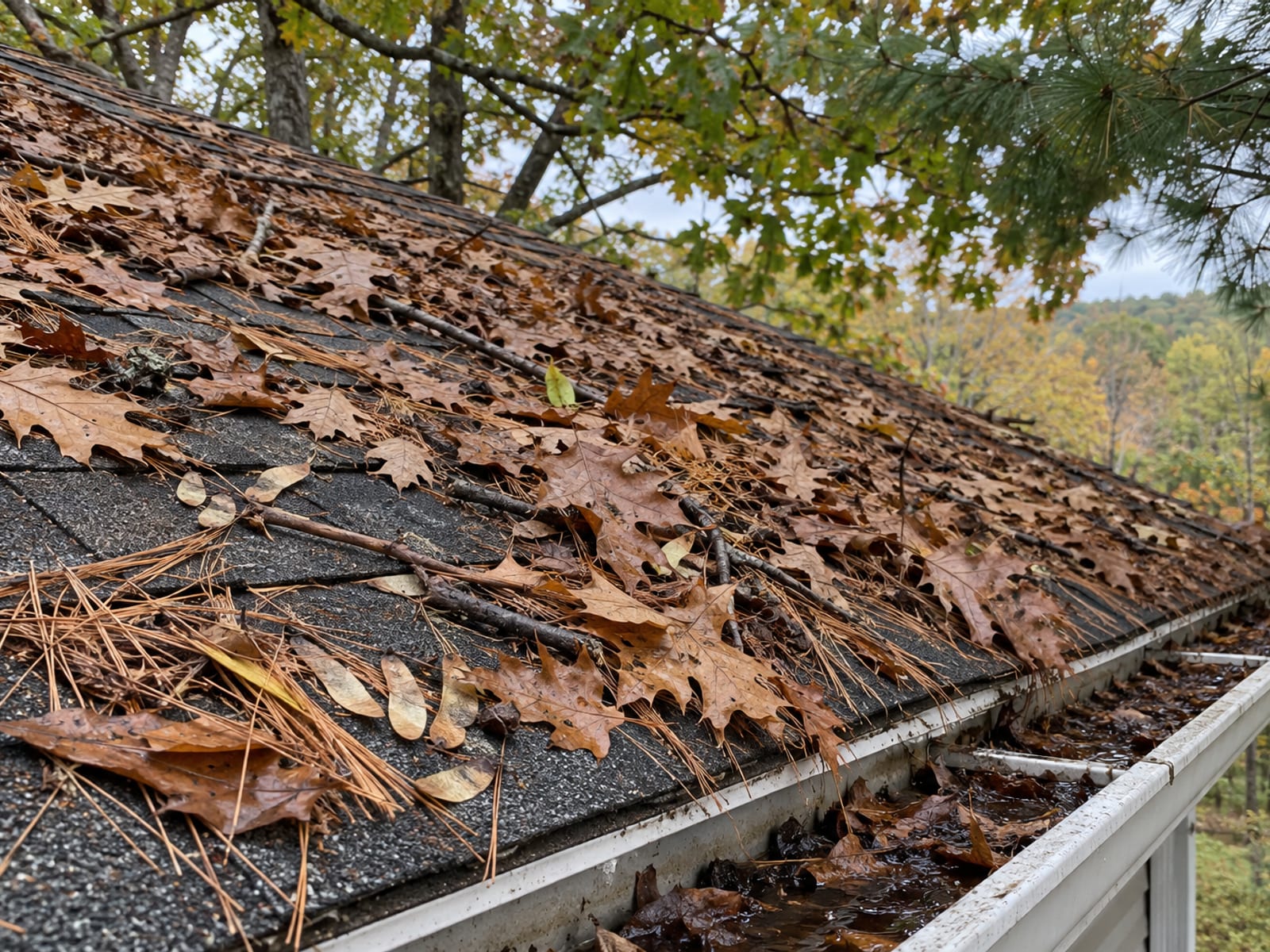
- Trees overhang the roof or drop debris onto it.
- You pay for gutter cleaning more than once a year, or you put it off because the roofline is high.
- The gutters are sound and pitched correctly, so water already runs to the downspouts.
- Access is hard because of height, a steep roof, landscaping or several levels.
- The roof has years of life left.
- You accept a periodic look at the guards.
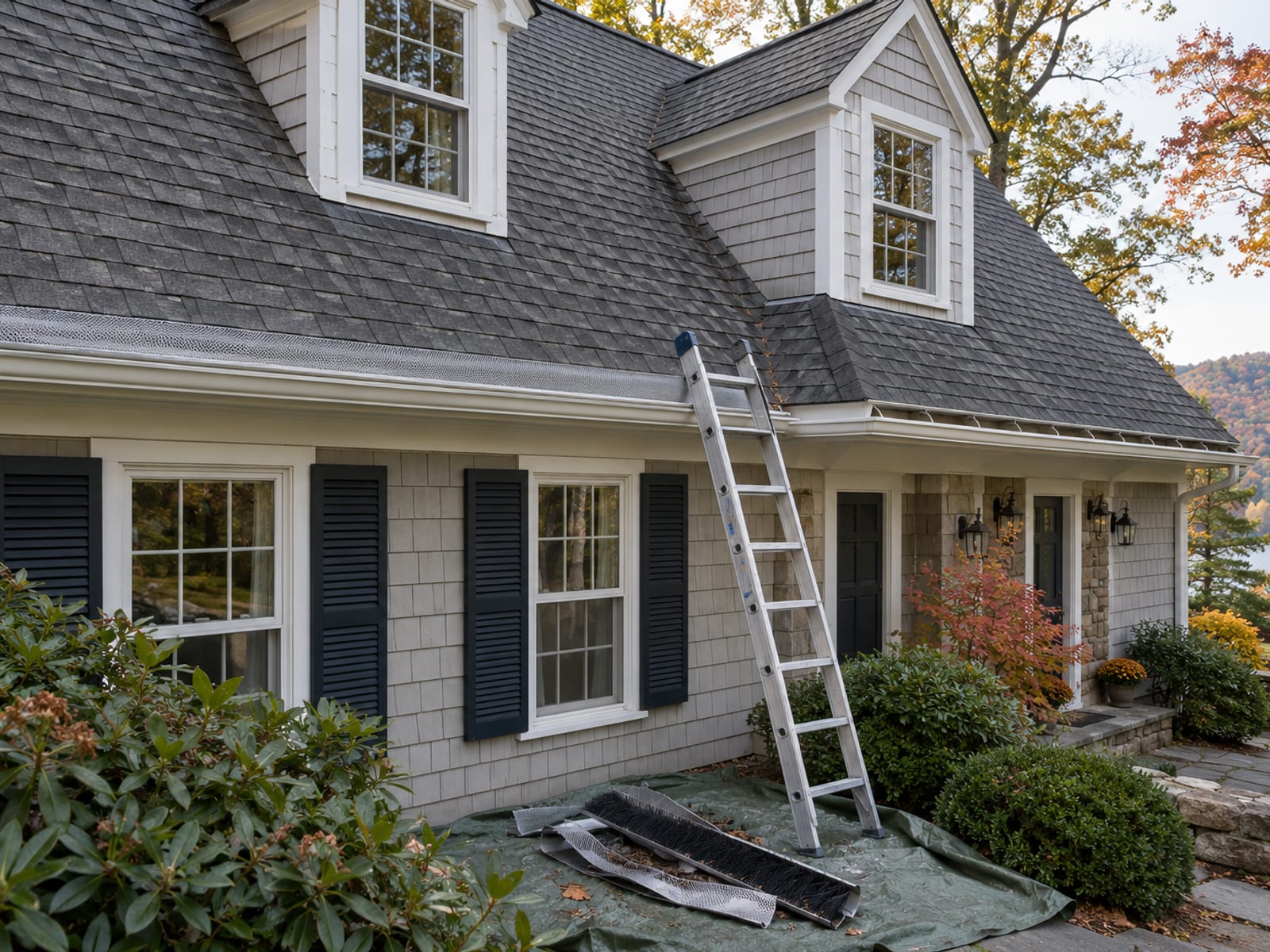
They are less often worth it when those answers flip. Few trees means little debris to block. Gutters that are close to replacement mean you would pay to protect something you are about to remove. A roof due for replacement makes the same point, because guard work and roofing work often need to be planned together. Rotted fascia, failing hangers and downspouts that are too small or dump water next to the foundation are separate problems that a guard will not fix.
One more check is cheap and useful: the cost of cleaning against the cost of guards. If a yearly or twice-a-year cleaning runs modest money and the roofline is easy for a trained crew to reach, the math may favor staying with seasonal cleaning. If you are paying for several visits a year, the math shifts.
What Do Gutter Guards Handle Well, and What Still Gets Through?
Product and retail guidance describes guards as debris barriers that reduce gutter cleaning rather than eliminate it. That matches how they behave on a wooded lot. Broad leaves are the easy part. Large oak and maple leaves tend to sit on or slide off the cover, and the gutter underneath stays open.
The harder debris is the small stuff. Retail and product guidance lists pine needles, small leaves, seed pods, pollen and wet leaf buildup as maintenance problems even with a guard installed. Needles are narrow and light, so they can slip through openings or lie across the surface. Wet oak leaves can form a mat that covers a guard from end to end.
Debris also collects in predictable places. Inside corners and roof valleys concentrate both water and leaves, and a guard over a valley can send water past the gutter during a hard rain. A guard can also hide a gutter that has started to sag, leak or pull away from the fascia, since nobody sees it until the damage shows up on the siding or at the foundation.
Here is how the common problems line up:
- Surface clogging: Wet leaves, pollen and roof grit coat the top of the guard and slow how much water enters.
- Pass-through: Needles, seeds and small leaves slip in through larger openings.
- Bypass: Concentrated runoff from a valley or a large roof section skips the gutter.
- Hidden damage: A sagging run or loose hanger sits out of sight under the cover.
- Harder cleaning later: If the guard has to come off to reach the gutter, the job takes longer.
None of this means guards fail. It means the question is which debris you have and which design matches it.
Which Guard Design Fits Leaves, Pine Needles and Seeds?
There are five common designs, and each handles a different debris problem. No one of them is best for every Connecticut property. The match depends on the dominant debris, roof drainage, gutter size, roof pitch, tree exposure and how much upkeep you will actually do.
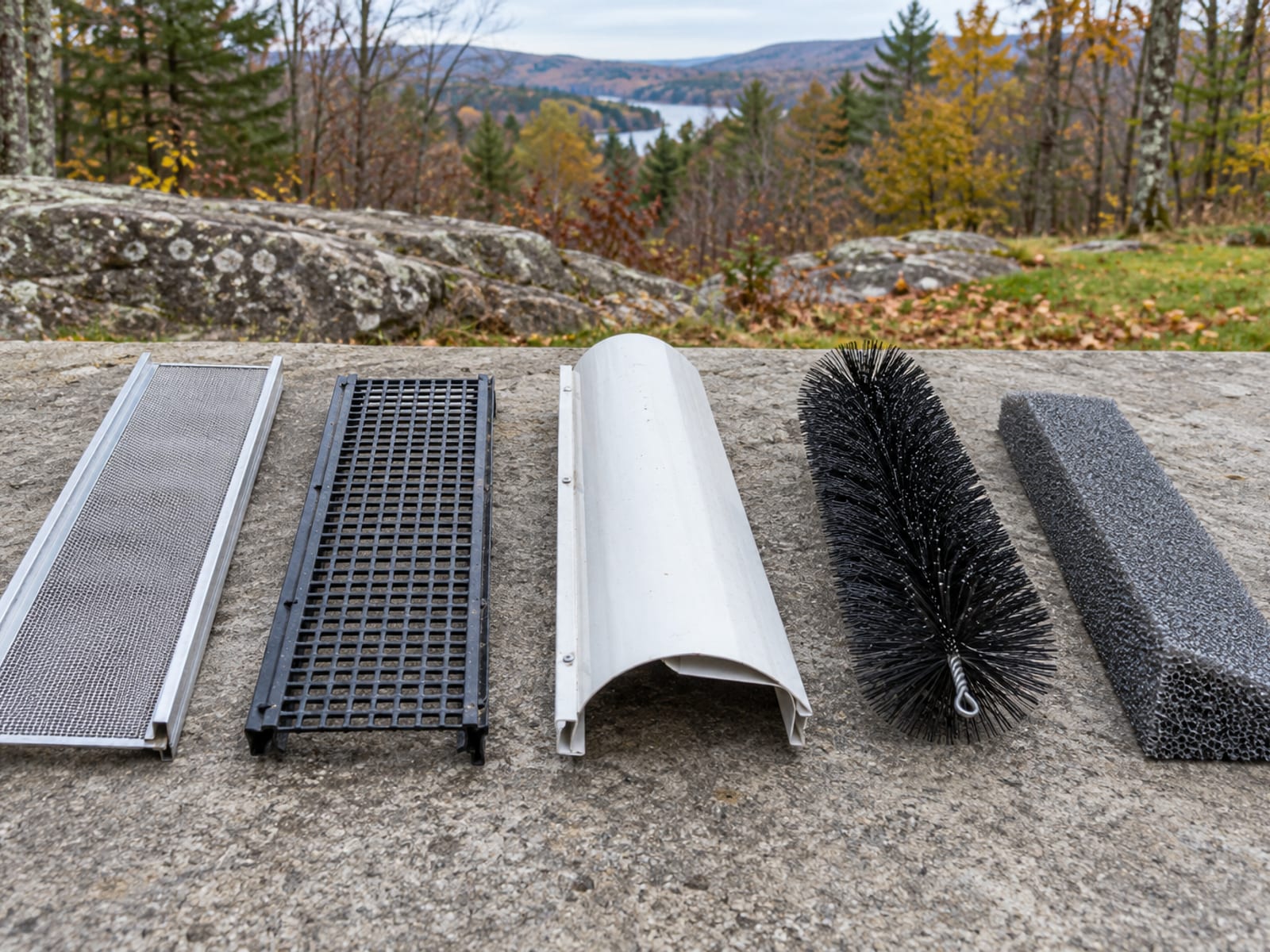
Screen is a plastic or metal grid with larger openings. It is simple and usually the least expensive, and it keeps out large leaves. Small leaves, seeds, needles and roof grit can pass through depending on the opening size.
Reverse-curve hood is a solid cover that sends water around a curved edge into the gutter while leaves fall away. It needs accurate alignment and can struggle where debris, roof pitch or valley flow disrupts the water path. Needles may collect at edges and seams.
Brush uses bristles that fill the gutter. Water passes around them, and debris collects among the bristles until someone removes it.
Foam is a porous insert that sits in the gutter. Seeds, algae and decomposed material can collect in the foam and restrict flow, and freeze-thaw cycles can leave trapped moisture behind.
If your roof has a long valley or an unusual shape, the layout of the gutter and the path of the water can matter more than the category of guard. Walk the proposal through your roof one section at a time. Our gutter guards page has current products and terms, our comparison of LeafGuard and other gutter guard designs goes design by design, and a written design comparison for your house is worth asking for from anyone you hire.
How Do Guards Handle Heavy Rain?
Heavy-rain performance depends on the opening size, slope, condition, installation, roof pitch, the roof area draining to each section, valley concentration, gutter capacity and how much debris is sitting on the guard.
What you can ask is how the proposal handles valleys, concentrated discharge, gutter capacity and overflow. Are the gutters large enough for the roof area above them? Are there enough downspouts, and do they carry water away from the foundation? A guard cannot make an undersized gutter system bigger.
What Can't Guards Fix in a Connecticut Winter?
A guard does not stop snow or ice from forming on the roof or in the gutter. Snow and ice can add weight to a gutter and its cover, and meltwater can refreeze at the eave or inside a gutter full of debris. A guard can also make it harder for a contractor to reach ice-related buildup.
Ice dams are a roof problem first. They form mainly from roof heat loss, snow cover and uneven roof temperatures, so attic insulation, air sealing and ventilation are what change them. A gutter cover does not correct any of that.
Connecticut winters can be rough. The National Weather Service describes nor'easters as capable of heavy snow and strong northeast winds, and its summary of the January 28 and 29, 2022 storm recorded 6 to 10 inches in southwestern Connecticut, 12 to 18 inches in south-central Connecticut and 18 to 24 inches in southeastern Connecticut, with gusts of 40 to 60 mph in affected areas. Snow load and wind are reasons to ask how a guard is attached and supported.
If ice does cause damage, read your policy before you count on a payout. The Connecticut Insurance Department says ice-dam damage is generally covered by homeowners insurance, but many policies do not cover ice-dam removal. Coverage depends on your policy, so your insurance agent is the person to ask.
Many Connecticut homes are decades old, so fascia, hangers, roof edges and shingle details deserve a look before anything is attached. Have the installer check the wood your guards will hang from rather than assuming an older house can take any attachment method.
What Does Gutter Guard Installation Cost?
National guides publish very different numbers, and none of them is a Connecticut bid. They are useful for scale and for questions, not for budgeting a specific house.
HomeAdvisor reported about $6 to $13 per linear foot for professional installation, including materials and labor, in a page updated in June 2026. HomeGuide reported $15 to $45 per linear foot in February 2026, which works out to $3,000 to $9,000 for 200 linear feet. The two ranges barely overlap, which shows how much scope changes the number. The material-only figures in the table do not include labor.
Total footage depends on your footprint and roof shape, so have it measured rather than guessed. What moves the price on a real quote:
- Total gutter length, and the number and size of downspouts.
- Gutter condition, and whether the gutters stay or are replaced.
- Fascia, soffit and roof-edge repairs.
- Roof height, number of stories, pitch and access.
- Dormers, valleys, inside corners and unusual roof shapes.
- Guard type and material.
- Removal and disposal of an existing guard.
- Tree density and debris load.
- Whether the work is bundled with gutter or roof replacement.
- Permit and inspection requirements.
- Warranty terms and future service.
Ask for an itemized local quote that separates cleaning, repairs, guard material, installation, disposal, permits and inspections. A quote that lumps everything into one number makes it hard to see whether a high price comes from the guard or from unneeded gutter or roof work. Compare two or three quotes by linear footage, not total price alone.
What Should the Permit, Contract and Registration Look Like?
Start with the contractor. Connecticut requires home-improvement contractors working on residential property to hold state registration, and you can verify an active registration in the state's eLicense system. The registration application requires general-liability insurance of at least $20,000. Ask for proof of current coverage and confirm it with the insurer. Confirm the legal business name on the quote and contract matches the registration.
Then the paper. Connecticut requires a written, signed and dated contract for every home-improvement job, and the Department of Consumer Protection's contractor guidance says it must identify the contractor and registration number, describe the work and materials, give start and completion dates, state who handles permits, set payment terms and include the three-business-day cancellation notice. For guards, also require the contract to name:
- The guard type, material and attachment method.
- The warranty, in writing, and what it excludes.
- Who is responsible for cleaning after installation.
- Who is responsible for any permit.
- The payment schedule.
Ask whether the system sits over or under the shingle edge, or requires lifting shingles, and whether that method fits the roof manufacturer's installation requirements. A guard warranty is a separate document from a roof warranty, so ask how installation may affect the roof's coverage. Ask who handles valleys, inside corners, downspouts, snow, ice and any warranty claim.
The state's 2022 Connecticut State Building Code adopts the 2021 International Residential Code, and your town's building department applies it to a given job. East Haven says a new roof requires a building permit, and Bridgeport requires a permit to alter or repair a building, with the owner responsible for confirming permits are in place. Stamford's building FAQ separates ordinary repairs from structural or drainage work. So, call your town's building department and describe the scope, especially if new gutters, roof work, fascia repair or structural attachment are involved. The homeowner remains responsible for confirming the permit even when the contractor agrees to pull it.
On payment, avoid paying most or all of the price up front. The Department of Consumer Protection's 2025 consumer notice advises against cash and demands for full payment in advance, and a deposit above one-third of the project cost is a warning sign.
How Do You Keep Guards Working After Installation?
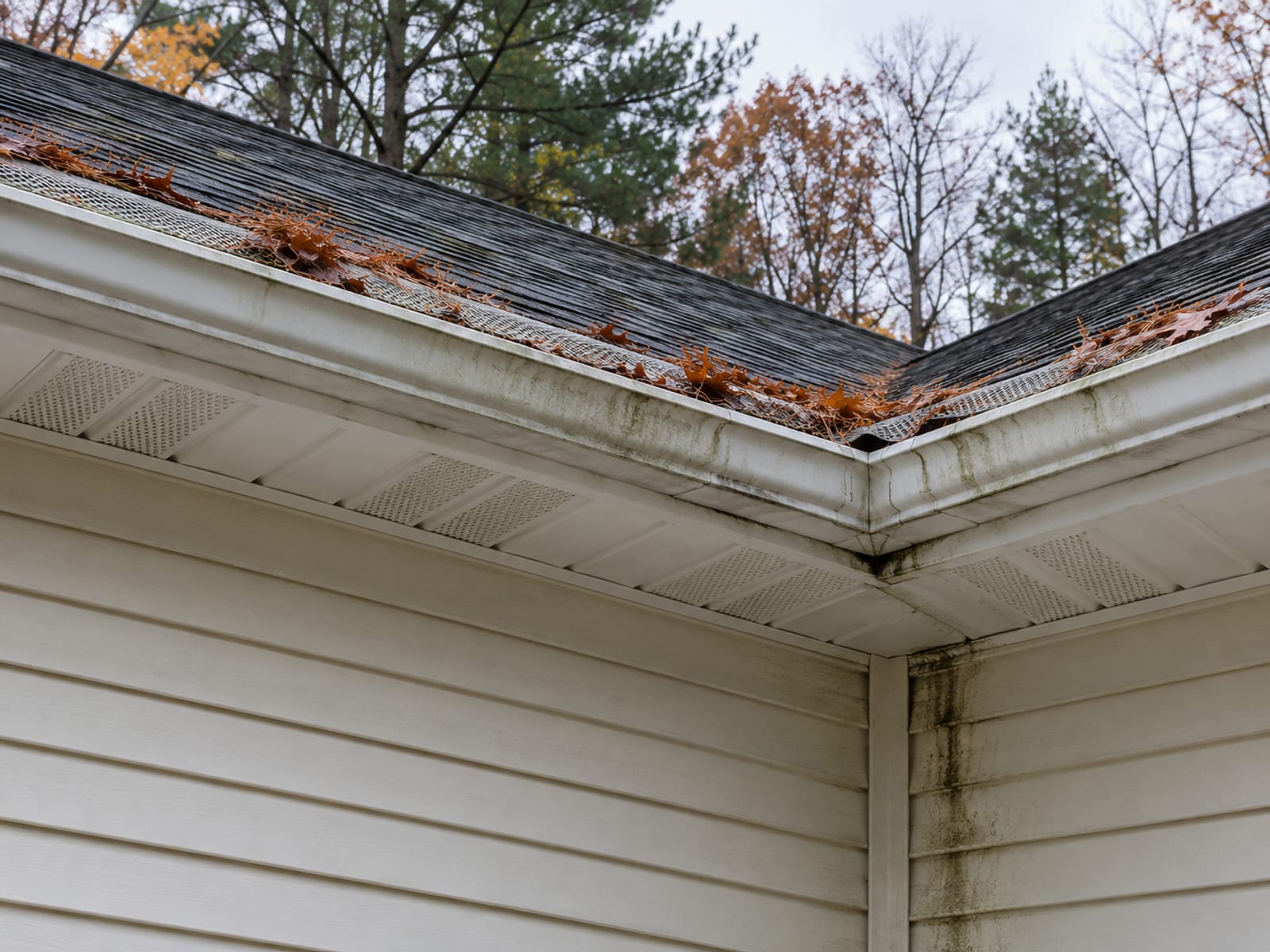
Plan on a short routine. After leaf fall and after major storms, look at the guards from the ground for overflowing corners, sagging runs, loose hangers, stained siding and water running down the wall. Overflow during rain, or a gutter run that hangs lower than the one beside it, is a reason to call someone to look closer.
- Remove leaves, needles, seeds, pollen and roof grit from the guard surface.
- Clean inside the gutter where material has passed through or decomposed.
- Check downspouts for flow.
- Check fasteners, seams, corners, end caps and attachment points.
- Inspect after falling branches, hail, heavy snow or ice.
- Look for sagging, fascia deterioration and leaks.
Ask any installer for a maintenance plan in writing, covering what you should watch for, what they will inspect, and what follow-up is available after the first winter. If your trees are close enough to drop branches onto the roof, tree pruning by a qualified professional is part of the plan too, since heavy branches can dent guards and damage shingles.
Whoever you hire, ask for the exact product, installation method, warranty and maintenance plan in writing. Our leaf gutter guard installation page describes the installation service if you want it handled for you.
Frequently Asked Questions About Gutter Guards in Connecticut
Do I still need to clean my gutters if I have gutter guards?
Yes, though less often. Leaves, needles, seed pods, pollen, roof grit and decomposed material can build up on the guard or inside the gutter, and downspouts still need to stay clear. Plan on inspection after leaf fall and storms.
What are the disadvantages of gutter guards?
They cost money up front and fine debris or wet leaves can clog them. They may make future cleaning harder, hail or branches can damage them, and a poor fit causes problems. They also do not repair sagging gutters, bad pitch, blocked downspouts or weak fascia.
Do gutter guards work in heavy rain?
It depends on the design, installation, roof pitch, the roof area draining to each section, valleys, gutter capacity and debris load. Ask how the proposal handles valleys and overflow.
Do gutter guards add value to a house?
They can add practical appeal by reducing debris and ladder work, but their financial value depends on installation quality, condition, appearance, warranty transfer and what a buyer expects. Treat them as a maintenance feature, not a guaranteed resale gain.
What are the alternatives to gutter guards?
Seasonal professional cleaning, downspout screens, better downspout discharge, gutter repair or replacement, tree pruning by a qualified professional, and correcting valley or drainage problems. None of these removes maintenance entirely.
Do I need a permit to install gutter guards in Connecticut?
Your town's building department decides. Ask it, especially if the job includes new gutters, roof work, fascia repair or structural attachment.
Are guards covered by my homeowners insurance if ice damages them?
Coverage depends on your policy. The Connecticut Insurance Department says ice-dam damage is generally covered, while ice-dam removal often is not, so read your policy and ask your insurer.
Quick Gutter Guard Knowledge Check
1. Which situation makes gutter guards more likely to be worth the cost?
2. What is a realistic expectation after guards are installed?
3. What mainly causes ice dams?
4. What does Connecticut require in a home-improvement contract?
5. Who decides whether a gutter guard job needs a permit?
Final Thoughts
For a Connecticut house under mature trees, with sound gutters and a roof that has years left, guards are often worth the cost because they cut the repeated cleanings and the trips up a ladder. For a house with few trees, aging gutters or a roof near replacement, the money is better spent on cleaning, repairs or the roof itself.
Choose the design for the debris you really have, read the contract line by line, and check the contractor's registration before you sign. A good installation, a clear maintenance plan and a look after leaf fall and storms are what let a guard do its job year after year.
If you are deciding about gutter guards on a wooded Connecticut lot, American Quality Roofing and Siding can look at your gutters, fascia, roof edge, downspouts and trees and give you a free estimate. We serve Central and Western Connecticut from our base in Brookfield, and financing options are available. Request a free estimate or call us to talk it through.
Written by Jose Zaruma, American Quality Roofing and Siding.
← Back to the blog