Roofing Guide
LeafGuard vs Other Gutter Guards: How the Designs Compare
By Jose ZarumaPublished
- gutter guards
- gutters
- connecticut
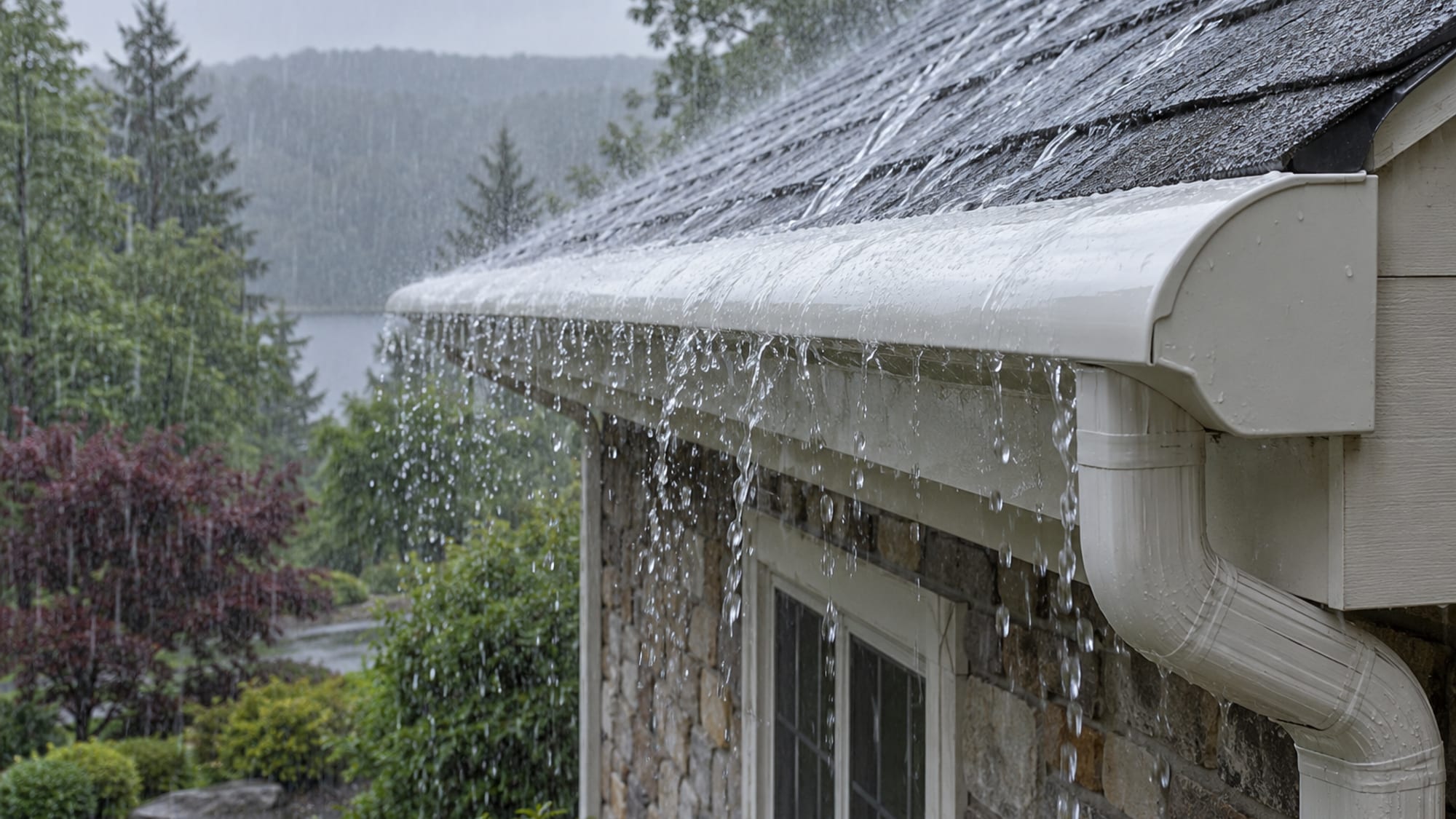
A one-piece hooded gutter like LeafGuard works differently from the micro-mesh, screen, brush and foam guards you will see in other proposals, and each design has its own strength and its own weak spot. The hood keeps much of the debris out of the gutter and can overshoot in an intense downpour. Micro-mesh blocks finer debris and can clog with pollen, grit and needles until it is cleaned.
Screens pass the fine material that mesh holds back. Brushes and foam sit inside the gutter, and both restrict flow as debris builds up in them.
So, the better question for a Connecticut house is which design fits your trees, your roof and how much upkeep you will do. A product name on a truck or a mailer tells you little about that. The same goes for LeafFilter, a micro-mesh product you may have seen advertised alongside it: what matters is the design behind the name.
Key Takeaways
The hood
A solid cover with a narrow water-entry opening sheds leaves, and independent testing reports overshoot in intense simulated downpours.
Micro-mesh
A 2026 This Old House test found stainless micro-mesh blocked fine debris most effectively, though pollen and grit can slow it until it is cleaned.
Screens, brushes and foam
Screens and brushes let more needles, seeds and grit through, and foam can restrict as it fills.
Cost
Published figures are national and cover different scopes, so a measured Connecticut proposal is the number that counts.
Any design needs upkeep
Inspection after leaf fall and storms, surface cleaning, downspout checks and fastener checks still apply.
Choosing Between a Hood, a Mesh, a Screen, a Brush and Foam
Most Connecticut homeowners comparing guards are really answering four questions. Is the existing gutter system sound enough to keep, or does it need repair first? Is the main trouble large leaves, pine needles, roof grit, pollen, ice or the sheer volume of rain? Are you comparing a replacement gutter with a one-piece hood against an add-on guard for the gutters you have? And is the quote buying a design that fits your roof, or mostly a brand, a warranty and a sales package?

The best design depends on four things: the dominant debris, the roof geometry, the rain exposure and the maintenance you will actually do. No design in this comparison removes the last one.
Before anyone visits, photograph the gutter lines, downspouts, fascia, roof edges, nearby trees and any overflow or ice buildup. Note whether the debris is mostly broad leaves, needles, seeds, pollen or shingle granules. That one list does more to narrow the choice than any brochure, and it gives each installer the same starting point.
How Each Design Keeps Debris Out
Here is what each design does in plain terms, with the weak spot that comes with it.
One-piece reverse-curve hood. A solid cover sits over the gutter and leaves a narrow opening at the front edge. Rain follows the curve of the hood by surface tension and drops into the gutter, while leaves and larger debris pass over the top and fall to the ground. LeafGuard's own published specifications describe .032-inch aluminum, internal hanging brackets attached to the fascia about every 2 feet, and fabrication on site. LeafGuard also states the design works on any roof pitch and has been tested for rainfall up to 32 inches per hour. Those are the manufacturer's published claims, not a Connecticut field test.
Micro-mesh. A fine metal mesh sits over an existing gutter and lets water through while holding back small particles. LeafFilter is a professionally installed micro-mesh product. In independent testing, micro-mesh blocked pine needles, seeds and shingle grit better than larger screens and brushes.
Screen. A grid with larger openings. It passes water readily and blocks broad leaves, while small seeds, needles and roof grit can drop into the gutter.
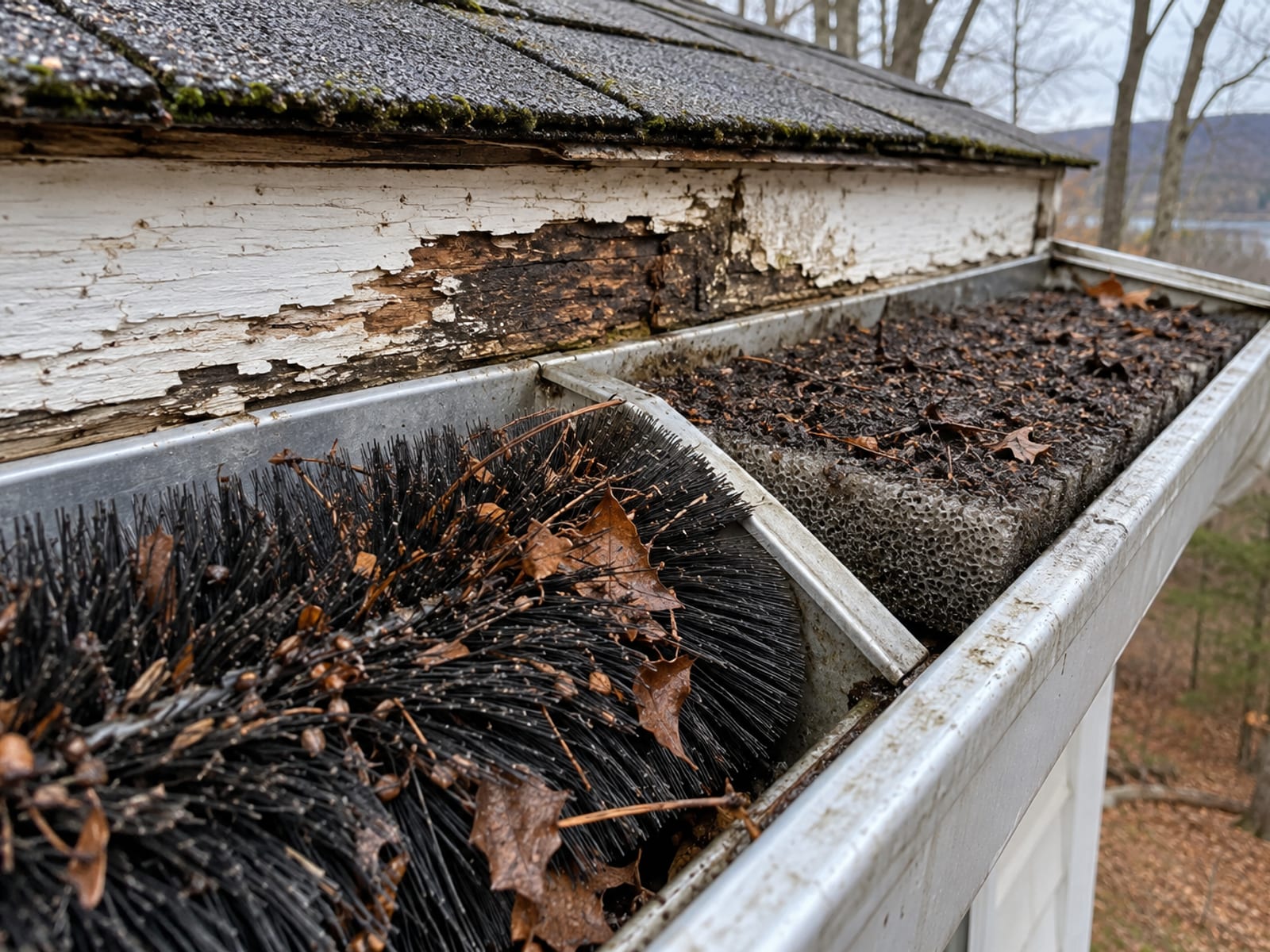
Brush. Cylindrical bristles fill the gutter. Water passes between the bristles, and debris stays caught in them, which slows drainage as it accumulates.
Foam. A porous insert fills the channel. It filters larger debris and can become saturated or restricted by dirt and organic matter.
How the Five Designs Compare
Where it sits: Replaces the gutter
Main strength: Leaves pass over the top
Main limit: Can overshoot in intense rain; debris can rest on the hood
Tap a factor to see how it moves the price.
The 2026 This Old House test of the best gutter guards is where the micro-mesh finding comes from. It is a published product test, not a Connecticut field study, so treat it as a guide to how the designs behave rather than a promise for your house.
Where Each Design Reaches Its Limit in Rain, Needles, Pollen and Snow
Every design has a point where it stops keeping up. Knowing yours helps you ask the right question of a proposal.
Roof area, pitch, gutter size, downspout capacity, installation angle and debris sitting on the hood all play a part. A steep roof sending a lot of water to one corner is a harder job than a small roof with several downspouts.
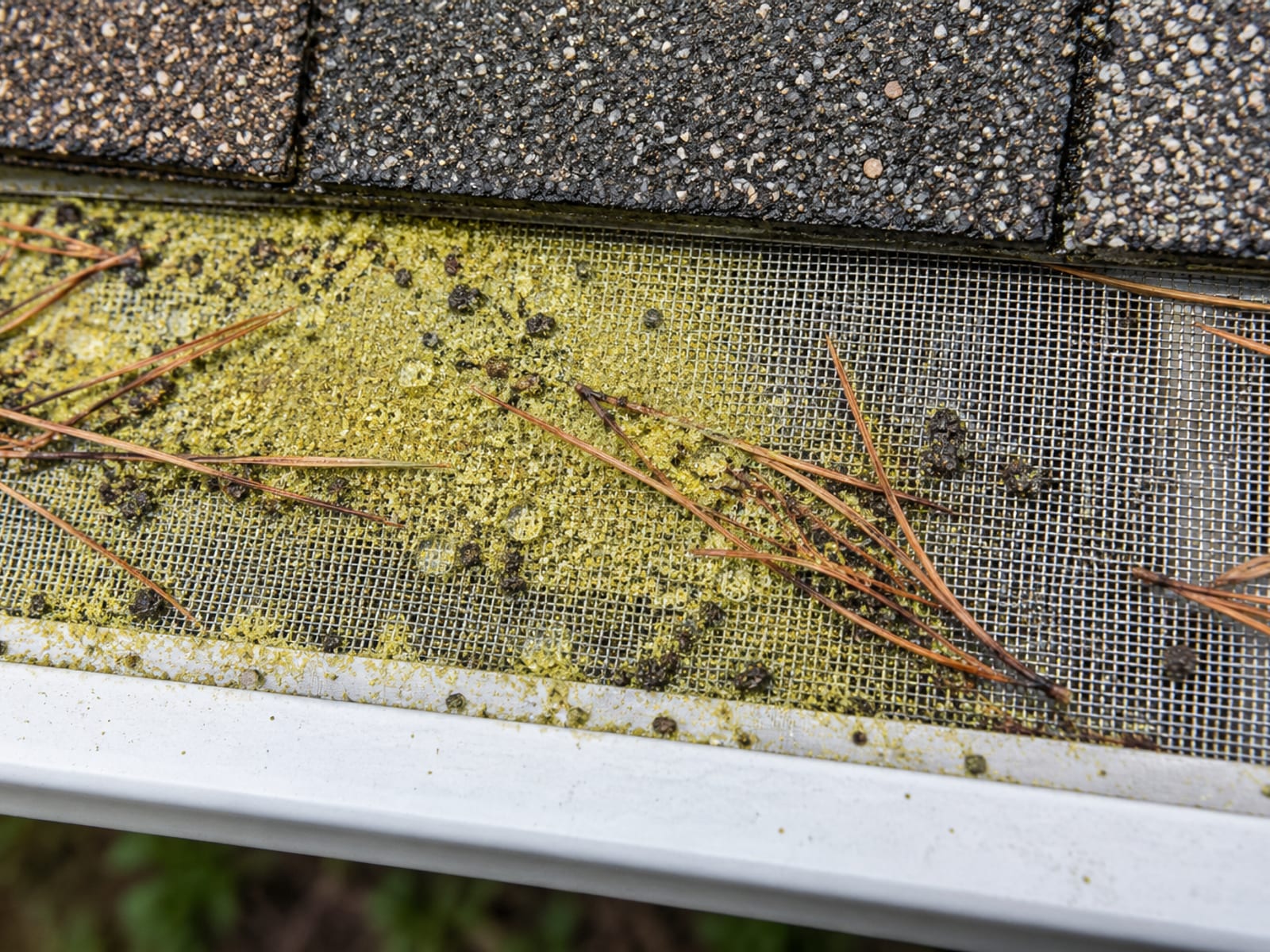
Needles and fine debris are where mesh earns its place. The 2026 test reported that stainless micro-mesh blocked fine debris most effectively, while screens and brushes let more needles, seeds and shingle grit through. Mesh has its own failure mode, though. Pollen and fine organic material can coat it, needles and small leaves can lie across it, and shingle granules can restrict the openings. Flow drops until someone cleans the surface.
Winter adds its own limits. The same test reported that snow can freeze on top of guards and that spring pollen can slow flow. Ice and freeze-thaw cycles can also add load to gutter and guard parts.
Connecticut's weather gives these limits real meaning. NOAA's 1991 to 2020 normals for Burlington, Connecticut show 53.46 inches of precipitation and 38.6 inches of snowfall in a year. The National Weather Service says nor'easters are most frequent and violent from September through April, bringing heavy rain, snow and gale-force winds.
What Each Design Costs Before You Compare Quotes
The published numbers are national and they measure different things, so they are a way to compare designs against each other, not a bid for your house. Angi's 2026 national data puts professional gutter guard installation at $6 to $13 per linear foot, materials and labor combined.
Angi's 2026 category estimates break the designs out like this:
Angi 2026 National Gutter Guard Estimates
$1 to $4 per linear foot
Tap a factor to see how it moves the price.
A one-piece custom system usually costs more installed than many basic screens, brushes or foam inserts. That makes sense, since it replaces the gutter rather than covering it. It does not by itself tell you whether a quote is high. The contents of the proposal do: whether it includes new gutters, fascia repair, downspout changes, roof access, second-story work, cleanup, permits and warranty coverage.
Because a quote for new gutters with a hood and a quote for a mesh over your existing gutters are not the same product, a price per foot alone can mislead you in either direction. Ask what is in each line before deciding which is higher.
Reading Your Contract and the Cancellation Rules Before You Sign
Connecticut requires a written home-improvement contract. According to the state's guide to home-improvement contracts, it must include the contractor's registration number, the contract date, the start and completion dates, the cancellation deadline and signatures, along with a three-business-day cancellation notice. Saturday counts as a business day under the Home Solicitation Sales Act, so count carefully. Read the notice before you sign, especially if the pitch came from a door-to-door visit.
Next, the permit. The 2022 Connecticut State Building Code applies to permit applications filed on or after October 1, 2022, and is based on the 2021 International Residential Code. Permits are handled by the town where the work happens. The Department of Consumer Protection says many home-improvement projects need a municipal building permit that must be in place before work starts, and the homeowner remains ultimately responsible for confirming it.
For gutter replacement, fascia work or roof-edge changes, the contract should say who applies for the permit. Call the town building official to confirm the requirement for your scope, because treatment can differ by job.
Comparing Proposals Line by Line
Get two or three itemized proposals. Each one should name the design, the gutter size, the linear footage, the material and the attachment method, plus any cleaning or repair work, the warranty exclusions, the payment schedule and who pulls the permit.
- Total price compared without comparing linear footage.
- A replacement hood gutter set against an add-on mesh as though they were equivalent.
- Fascia and roof-edge condition left out of one quote and included in another.
- Downspout capacity ignored.
- Verbal promises about permits or warranties that are not in the contract.
Ask each proposal what it does at the points where designs struggle. What happens during a severe downpour? How does the system handle pine needles and pollen? Can the guard be cleaned without being removed? Does snow or ice sit on top of it? Who repairs leaks or fascia damage? What is excluded from the warranty? How many linear feet are included, and what is the price before and after repairs?
Written answers make comparison fair. A contractor who can answer in writing for your roof, your trees and your gutters is describing a design. A contractor who answers only with a brand name is describing a package.
Checking the Installer Before You Say Yes
Start with the registration. Connecticut requires home-improvement contractors working directly for residential customers to be registered, and the application requires at least $20,000 in general-liability insurance, as listed on the Department of Consumer Protection's home-improvement application page. Verify active registration in eLicense, match the legal name to the contract and to whoever receives your payment, and confirm the insurance with the insurer.
Ask for references on similar roof heights, similar guard designs and similar tree conditions. If the proposal depends on manufacturer training or certification, ask what that certification covers.
The state's checklist before you hire a contractor recommends getting multiple quotes and proof of insurance. Its 2025 guidance, in a consumer notice on contracts, suggests a payment schedule that follows progress: one-third for the deposit and initial materials, one-third during the work and one-third after completion. Avoid cash and peer-to-peer payment apps, and walk away from demands for most or all of the money up front.
If you want the installation handled for you, see our leaf gutter guard installation service, and our gutter guards page for micro-mesh and reverse-curve options. Ask any installer for the exact product and warranty in writing, and expect a site-specific look at your gutters, fascia, roof edge, downspouts, pitch, tree cover and access first.
Keeping Any Design Working Year After Year
No design takes upkeep to zero. After leaf fall and after major storms, plan for an inspection, a cleaning of the guard surface, a check of the downspouts and a check of the fasteners and attachment points. A hood needs its entry edge kept clear. Mesh needs its surface cleaned. Brush and foam need to be cleaned out, and older fascia deserves a close look before anything new is hung from it.
Frequently Asked Questions About Gutter Guard Designs in Connecticut
Which is better, a one-piece hood or an add-on guard?
Neither wins on every house. A one-piece hood replaces the gutter and sheds leaves well but can overshoot in intense rain. An add-on micro-mesh keeps your existing gutters and blocks finer debris but needs its surface cleaned. Match the design to your debris, roof and rain exposure.
What are the downsides of a reverse-curve hood?
Published limits include a higher installed cost than many basic screens, brushes or foam inserts, possible overshoot in severe rain, and debris or grit collecting on the hood. Access for cleaning or repair is harder than with an open gutter, and the system depends on accurate installation and sound fascia.
Do hooded gutters work in heavy rain?
The manufacturer states its system has been tested for up to 32 inches of rain per hour. Independent tests reported overshoot in intense simulated downpours, so roof area, pitch, gutter size and downspouts all matter. Ask how the proposal handles your steepest roof sections.
Which design is best for pine needles?
The 2026 test reported that stainless micro-mesh blocked fine debris most effectively, while screens and brushes let more needles through. Needles can still collect on the surface, so plan to clean it.
Is a one-piece system overpriced?
It usually costs more installed than basic add-ons because it replaces the gutter. Whether a given price is high depends on what the proposal includes, such as new gutters, fascia repairs, downspouts, cleanup, permits and warranty.
Do I need a permit?
Permit decisions are made by the town. Ask your building department about your scope, and confirm the permit is in place, since the homeowner remains responsible.
Quick Gutter Guard Design Check
1. How does a reverse-curve hood move water into the gutter?
2. Which design did the 2026 This Old House test report as best at blocking fine debris?
3. What do independent tests report about reverse-curve guards in intense rain?
4. How many business days does a Connecticut home-improvement cancellation notice give, and does Saturday count?
5. What should every design come with after installation?
Final Thoughts
A one-piece hood, a micro-mesh, a screen, a brush and a foam insert each solve part of the debris problem and each has a limit. The hood sheds leaves and can overshoot in intense rain. Mesh blocks finer debris and needs its surface cleaned. Screens, brushes and foam trade lower cost for more debris getting through or building up.
The good news is that you can choose with facts. Match the design to your trees, your roof and your rain exposure, compare itemized proposals by linear footage, and read the contract and the cancellation notice before you sign.
If you are comparing guard designs for a Connecticut house, American Quality Roofing and Siding can inspect your gutters, fascia, roof edge, downspouts, pitch, tree cover and access, then measure the footage and put the repairs and a written comparison of designs in front of you. We serve Central and Western Connecticut from Brookfield, and financing options are available. Request a free estimate or call us to get started.
Written by Jose Zaruma, American Quality Roofing and Siding.
← Back to the blog