Roofing Guide
Vinyl Siding Cost in Connecticut and What Goes Into the Price
By Jose ZarumaPublished
- siding
- vinyl siding
- siding cost
- connecticut
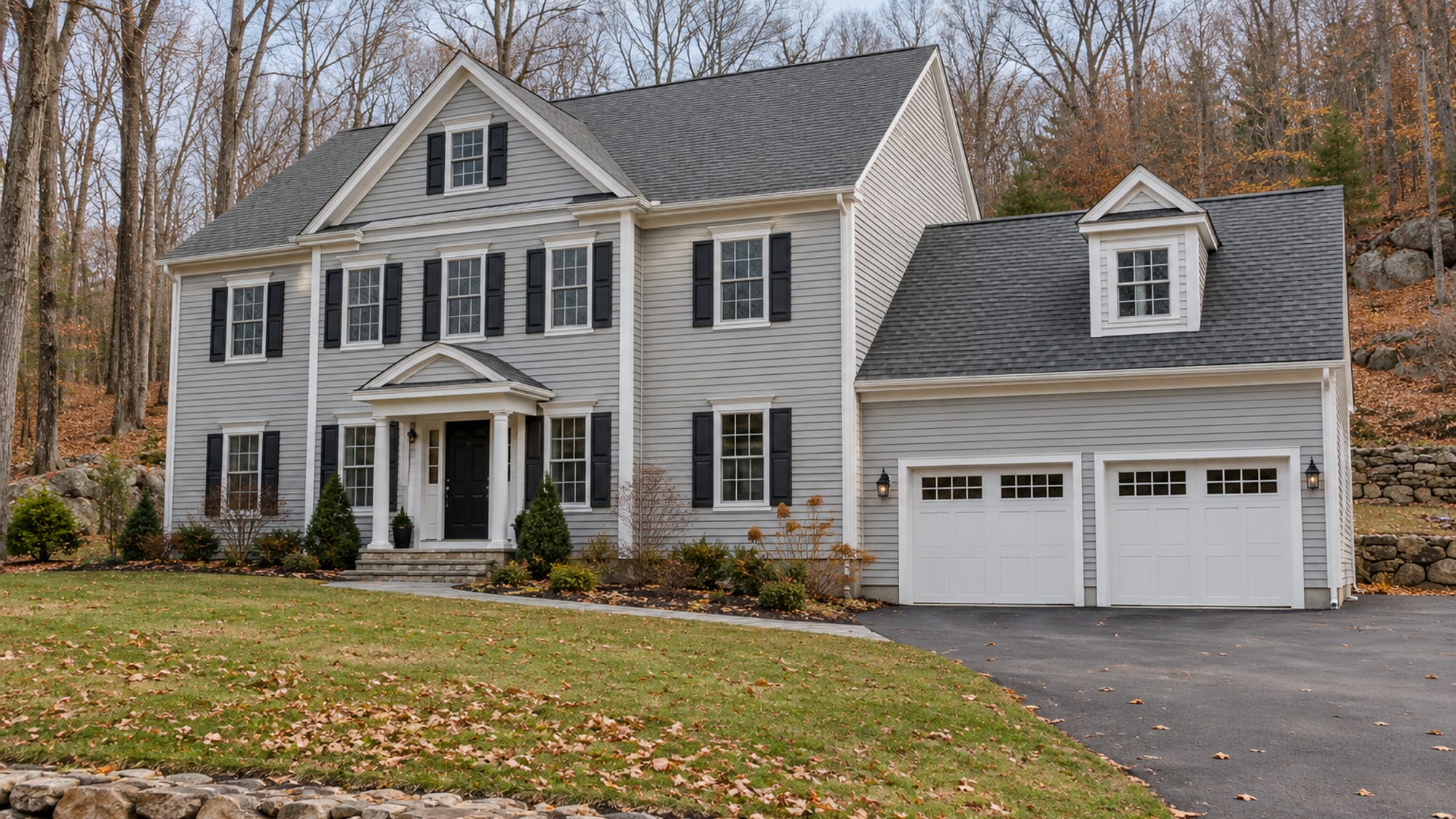
A 2,000-square-foot house does not automatically mean a 20-square siding job. Vinyl siding is priced on the measured area of your exterior walls, and that number can come out well above or well below the square footage on your floor plan.
Before you can judge any total, you need three pieces of information: how many square feet of wall the crew will cover, what the price includes beyond the panels, and what the published cost figures actually describe.
The published figures are national or regional, and none of them is a Connecticut quote. Used with that in mind, they give you a range to hold an estimate up against.
Key Takeaways
Wall area sets the price
Contractors measure your exterior walls, not your floor space, and price in squares of 100 square feet each.
The benchmarks are not Connecticut quotes
The 2025 New England Cost vs. Value figure is $17,590 for about 1,250 square feet of siding with trim, and Angi's 2026 national range is $3 to $12 per square foot installed.
Panels are only part of the job
Trim, house wrap, flashing, tear-off, disposal, soffit, permits and hidden repairs each belong on a separate line.
You stay responsible for the permit
Connecticut homeowners confirm that required permits are in place, even when the contractor pulls them.
Siding Is Priced on Wall Area, Not on the Size of Your Floor Plan
When someone says a house is 2,000 square feet, they usually mean the living space inside. Siding goes on the outside, and the wall area depends on the footprint, the height, the number of stories, the gables, the dormers, a garage and any porches. A tall, narrow two-story house and a long, low ranch with the same floor area can need very different amounts of siding.
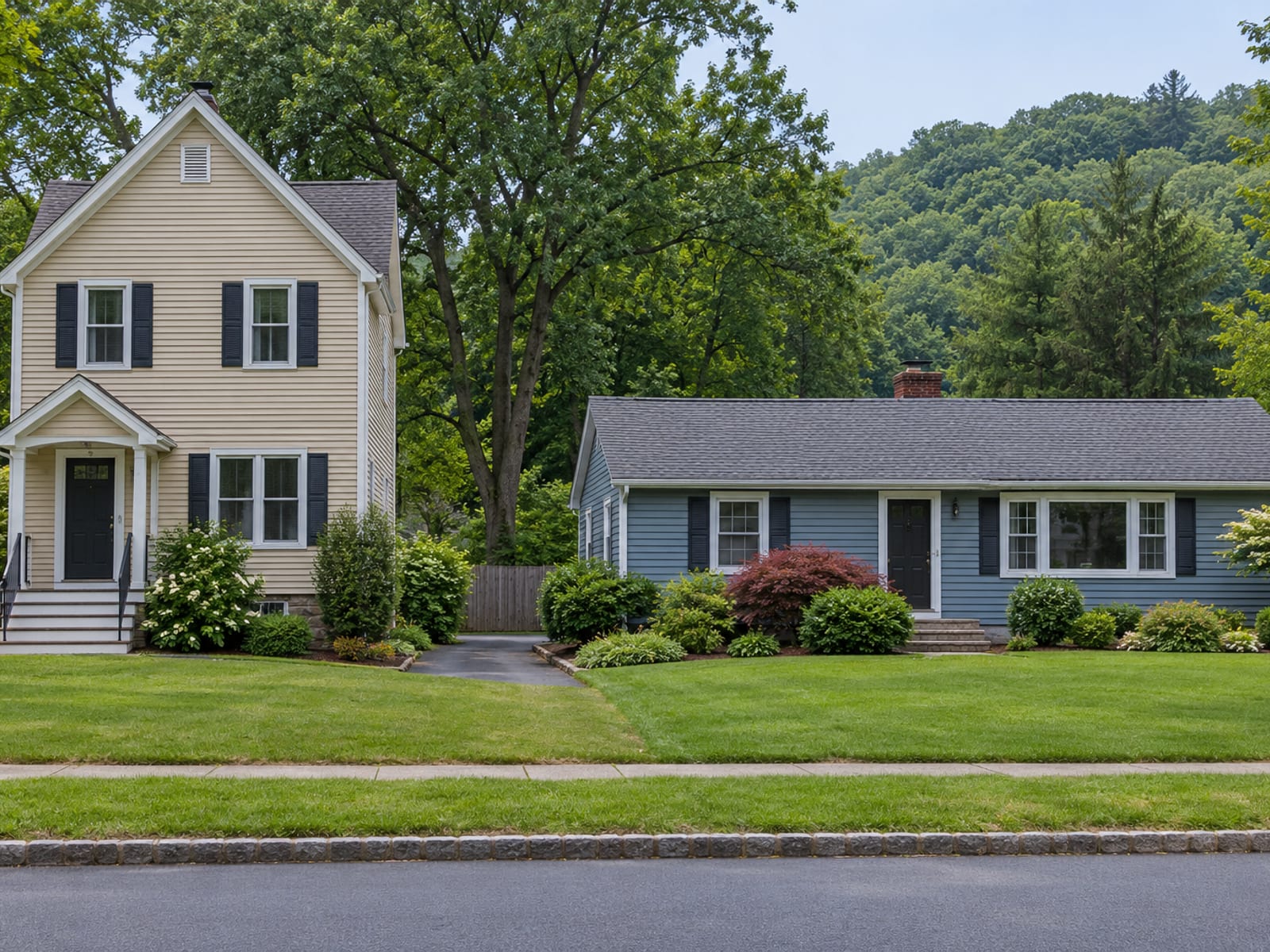
So, where do you start? With measurements of the outside of your own house. Write down the exterior dimensions, the number of stories, the approximate wall height, and how many windows and doors you have. Count the gables, dormers, porches and attached garages, and note any spots that are hard to reach, such as a steep grade or a narrow side yard.
Take photographs of cracked, loose, warped, faded or missing panels. Note water stains, soft spots in the sheathing, interior paint that is peeling, a musty smell, or gaps around windows and doors. Those clues tell the estimator whether the job is panels only or panels plus repairs.
Finally, write down the year the house was built. A home built before 1978 can trigger lead-safe work rules, which come up again below.
A Square Is 100 Square Feet of Wall, and Trim Is Counted Separately
The trade unit for siding is the square. One square covers 100 square feet of wall, so 1,000 square feet of measured wall is 10 squares. Some Spanish-speaking homeowners know it as an escuadra, and it means the same thing: 100 square feet. A square is a unit of measure, not a price, because what you pay for it depends on the product.
Here is how the Vinyl Siding Institute's 2020 installation manual breaks a house down. A rectangular wall is its height times its width. A gable, the triangle under a peaked roof, is counted as one-half of its height times its width. The estimator totals every wall and projection.
Here is a simple example. A wall 30 feet wide and 9 feet high is 270 square feet. A gable on that same end that is 30 feet wide and 8 feet tall counts as half of 240, or 120 square feet. The two together come to 390 square feet, or 3.9 squares.
Windows and doors are generally left in the initial measurement. The manual explains that this gives an allowance for cutting and waste. Very large openings, such as a garage door or sliding glass doors, may be taken out. Waste on top of that depends on roof pitch, gables, dormers, corners, openings, panel length, profile and the direction the siding runs. The manual tells estimators to add material for waste but does not set one percentage, so ask your contractor to show the waste allowance on paper.
Trim is measured differently. It is counted in linear feet or in pieces, and it shows up as its own set of materials: starter strip, J-channel, corner posts, undersill trim and soffit trim, among others. If an estimate gives you one price per square and says nothing about trim, ask where the trim is.
How a Siding Estimate Is Measured
Height times width, in square feet
Tap a factor to see how it moves the price.
Boxes of siding are labeled in squares too, but the coverage differs from product to product. One 2026 CertainTeed CedarBoards listing shows one square per carton, and a 2026 Encore listing shows two squares per carton. Read the label instead of assuming.
A Full Siding Price Covers More Than the Panels
A complete project usually has more steps than putting up new panels, and each one can show up as its own line. Old siding comes off and gets hauled away. The crew inspects the sheathing underneath, repairs whatever is damaged, and then installs a water-resistive barrier (often called house wrap) with flashing at windows, doors and penetrations. Trim, soffit and fascia details finish the walls, and then comes cleanup.
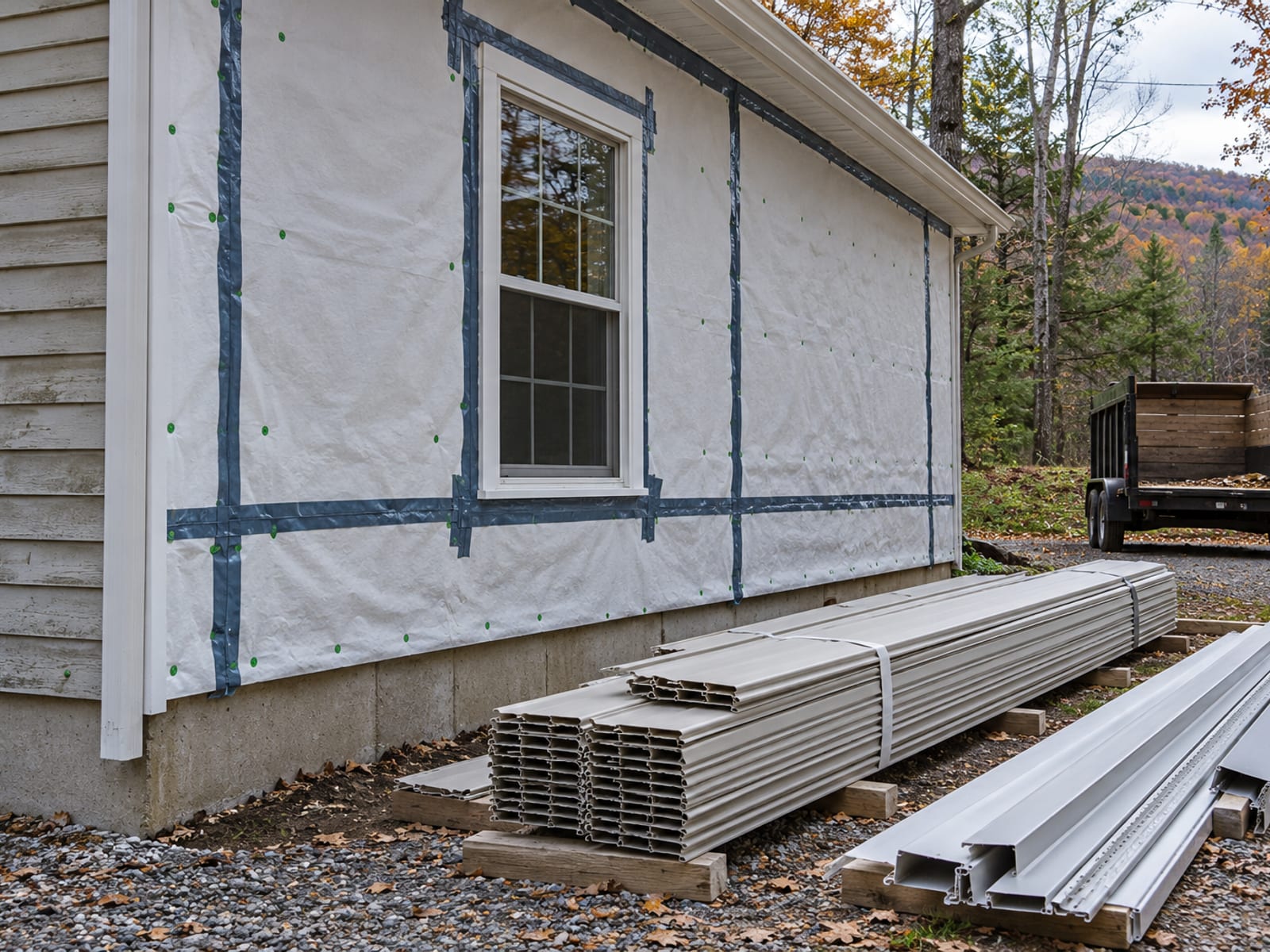
Hidden damage is the line that changes after the work begins. Rotted sheathing, damaged framing, wet insulation, failed flashing and insect damage only become visible once the old siding is off. The contract should state unit prices or allowances for those repairs so you know what a surprise would cost before you sign. Rot found in trim or boards is a wood rot repair item, so ask whether it is priced inside the siding job or separately. If you plan to borrow, our guide to paying for new siding compares the usual options.
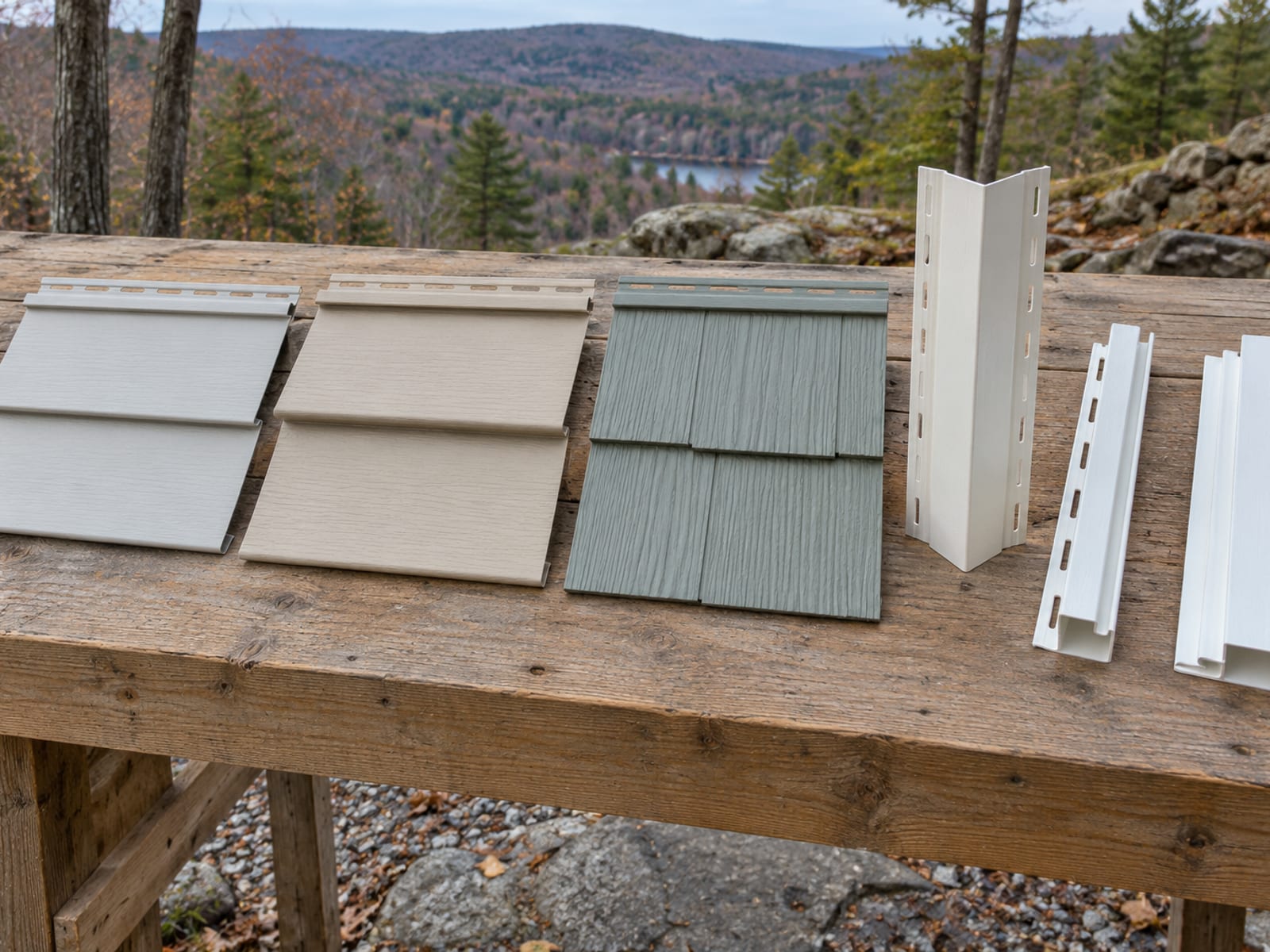
Insulated vinyl adds a foam backing and may call for different starter strips, trim and mounting blocks. It can improve rigidity and thermal performance, and it costs more than standard panels. Thicker panels, deeper profiles, shakes, shingles, board-and-batten and specialty colors generally affect the material cost, waste and installation time as well.
If you are comparing quotes for the walls, hold each one up against the full list of siding installation steps above. Many homeowners are pricing siding next to a roof, new gutters or storm repairs, and a project that includes gutter installation should say whether gutters come down and go back up around the siding work.
Connecticut's contract rules apply to all of it. The Department of Consumer Protection explains what a home-improvement contract must include: the contractor's HIC registration number, the scope, materials, dates, price, payment schedule, who is responsible for the permit, who handles cleanup, and your three-business-day right to cancel.
Price Benchmarks Give a Range, Not a Connecticut Quote
Every price figure below comes with its year and its geography. None of them is a Connecticut quote, and none of them replaces a measured estimate for your walls.
The most specific is the 2025 Cost vs. Value report for New England, which models a vinyl siding replacement at $17,590. The modeled job covers about 1,250 square feet of existing siding, replaced with vinyl, trim included. That works out to about $14.07 per square foot of wall, or roughly $1,407 per square, and the report lists 92.7% of the cost recouped at resale. It is a regional benchmark for a defined project, not a price for any one Connecticut house.
On the national side, Angi's 2026 cost guide reports $3 to $12 per square foot for professional vinyl-siding installation, a national average of $12,303 and a typical range of $6,368 to $18,377. Angi also says labor commonly makes up 30% to 50% of the total. This Old House's 2024 national guide reports an average installed cost of $15,315 and $12,252 for a 2,000-square-foot house, though it does not say that second figure is measured wall area.
Notice how wide the Angi per-square-foot range is. Applied to 1,250 square feet of wall, it would run from $3,750 to $15,000, which tells you why a figure from a national guide cannot stand in for a measured Connecticut estimate.
Vinyl Siding Cost Benchmarks and What Each One Describes
Figure: $17,590
Geography and Scope: New England; about 1,250 sq ft of siding replaced with vinyl, trim included
Tap a factor to see how it moves the price.
If the benchmark leaves out something your house needs, such as heavy sheathing repair, major soffit and fascia replacement, unusual access or lead-safe work, your own estimate will be higher than the model. Whatever number you are quoted, ask for a proposal measured at your house that separates field siding, trim, removal, disposal, house wrap, flashing, repairs, permits and cleanup.
Two Houses of the Same Size Can Land Far Apart
Once the wall area is set, the other factors decide where in the range a job falls. Start with what is under the old siding. Tear-off of vinyl is usually quicker than wood, masonry or stucco, and the amount of damage uncovered after removal can change the scope more than any other factor.
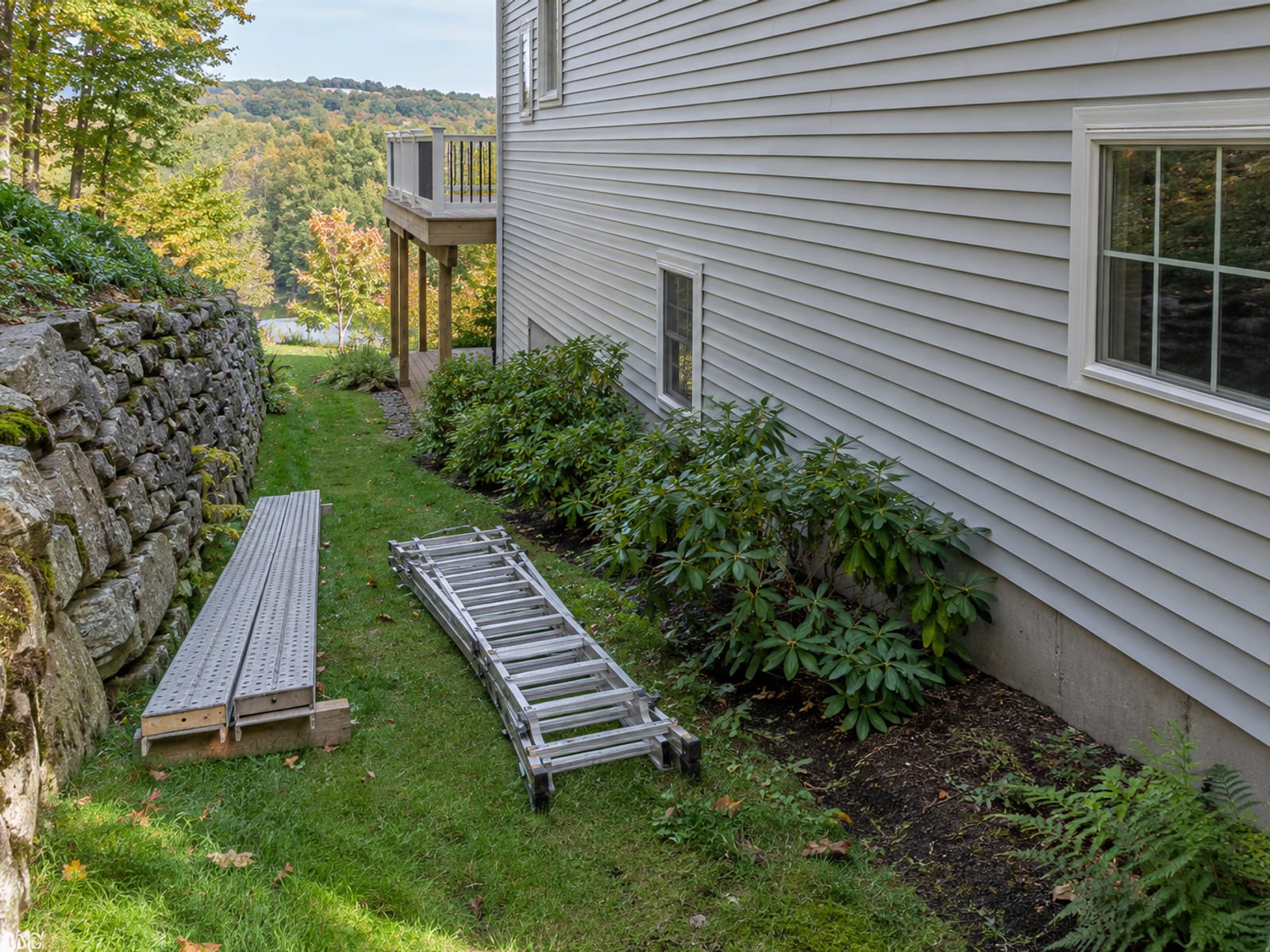
Material choices come after that. Standard or insulated, thin or thick, plain horizontal or shakes and board-and-batten, a stock color or a specialty one: each choice moves the material cost and the installation time. The CertainTeed listings mentioned earlier show how the 4-inch and 5-inch profiles differ in exposure, panel count, thickness and coverage. Neither width is better in every case, and wind resistance depends on the full certified product and the installation rather than the width alone.
Older houses carry another variable. Many Connecticut homes were built before 1978, so it is worth asking about lead-safe work early, before the estimate is final.
For paid exterior work that disturbs more than 20 square feet of painted surface in a pre-1978 home, the EPA's Renovation, Repair and Painting Rule calls for a certified firm, trained renovators, lead-safe work practices and consumer education. The EPA's frequently asked questions on the rule explain what counts as covered work. That adds containment, cleaning and recordkeeping to the job.
Permits are the last piece. The Connecticut Department of Consumer Protection says many home-improvement projects need a town building permit, that the permit must be in hand before work begins, and that you remain responsible for confirming it is in place even when your contractor pulls it. The rules differ by town. East Haven lists siding installation among the work that needs a permit, and says the owner, agent or contractor must schedule inspections. Madison's permitting page says substantial residing requires a permit. Westport's building department guidance exempts repairs limited to 25% of the roof covering and siding within one calendar year, with larger work needing a permit. Hartford's permit guidance says new siding cannot go over rotted wood.
Your own town's building department has the final word. Permit fees should be named in the written proposal, and the 2022 Connecticut State Building Code, based on the 2021 International Residential Code, applies to applications filed on or after October 1, 2022.
Connecticut Weather Tests Vinyl in Heat, Cold and Moisture
A Connecticut year runs from hot sun to hard freezes, and vinyl has documented limits at both ends. Knowing them helps you ask better questions about the product and the installation.
Heat is the best known. A Lawrence Berkeley National Laboratory report notes that darker colors generally absorb more solar energy. It lists heat-deflection temperatures for the vinyl compounds it cites from 142°F to 192°F, with an average of 166°F. Those are comparative laboratory measures rather than one failure temperature. Sunlight reflected from some low-emissivity windows or from nearby reflective surfaces can also warm one spot enough to distort panels.
Installation matters as much as the material. The Vinyl Siding Institute's manual requires clearance at openings and loose fastening so panels can expand and contract with temperature. Nails driven tight can cause buckling.
Cold is the other side. Vinyl can become more brittle in severe cold and may crack when something hard hits it. The exact resistance depends on the formulation, thickness, temperature and product certification.
Over the years, sun, heat, rain, wind, dust and pollutants affect color and gloss. A 2024 NIST technical note says weatherability depends on formulation, ultraviolet exposure, pigment, thickness, profile and installation. Service life follows the same pattern. The Vinyl Siding Institute's 2022 environmental product declaration uses a 50-year reference service life, which is an industry assumption and not a guarantee for any one house.
NIST also reports that weathered or burning vinyl siding can melt, shrink and expose the foam backing on insulated products, so vinyl should not be treated as an exterior fire barrier. And siding does not fix a wet wall. Poor flashing, wet sheathing or weak wall insulation need their own repair first.
After a storm, look over the siding for cracked, loose or missing panels. If you find damage, have the fastening, flashing and moisture conditions checked before you decide on a repair or a replacement. Our guide to common siding problems explains what each sign means.
A Good Estimate Names Every Measurement and Every Line Item
A siding estimate you can trust shows its math. Look for the measured wall area, the number of squares, the openings, the profile and the waste allowance. If those are missing, the total is hard to compare with anyone else's.
Siding Estimate Checklist
Confirms the price rests on your walls, not your floor plan
Tap a factor to see how it moves the price.
Next, check the contractor. Connecticut's Department of Consumer Protection has a license lookup for Home Improvement Contractor registrations, and its guide to hiring a contractor for home repairs is worth a read. Ask for a current certificate of liability insurance, proof of workers' compensation coverage, and references on comparable siding jobs. The state's Smart Consumer home repairs guide covers the same ground.
The mistakes that cost homeowners the most are choosing on the lowest price alone, comparing bids with different scopes, accepting a floor-area estimate in place of a wall measurement, signing without the permit responsibility in writing, overlooking trim and disposal, skipping the lead-safe question, and allowing changes without paperwork. Ask how the crew will protect landscaping, windows, doors, decks and walkways, and what documents you receive when the job is done, including permits, inspection approvals and warranties.
Frequently Asked Questions About Vinyl Siding Cost in Connecticut
How much does it cost to side a 2,000-square-foot home?
Floor area does not tell you the siding area, so the answer depends on the measured walls. For reference, Angi's 2026 national range is $3 to $12 per square foot installed, and the 2025 New England Cost vs. Value model is $17,590 for about 1,250 square feet with trim. Neither is a Connecticut quote.
How much is vinyl siding for a 1,500-square-foot two-story house?
The story count and floor area do not set the wall area. A two-story house can have less wall than a long one-story house, but it may cost more to reach. A measured estimate with a full scope is the only reliable way to get a total.
How much is a square of vinyl siding?
A square, which some Spanish-speaking homeowners call an escuadra, is 100 square feet of wall coverage. It is a unit of measure, not a price. The cost of a square depends on the profile, thickness, color, manufacturer, insulation, trim package and installation.
How much does a box of vinyl siding cover?
It varies by product. One 2026 CertainTeed CedarBoards listing covers one square per carton, and a 2026 Encore listing covers two squares. Check the label on the box you are buying.
Is 4-inch or 5-inch siding better?
Neither is better for every house. The choice affects the look, panel layout, waste and how well the siding matches existing trim, and performance depends on the whole certified product and the installation.
How long does vinyl siding last?
The Vinyl Siding Institute's 2022 declaration uses a 50-year reference service life. Actual life depends on the product, sun and weather exposure, installation, impact, moisture control and maintenance.
Does vinyl siding add value to my home?
The 2025 Cost vs. Value report lists 92.7% of the cost recouped for the New England vinyl siding project. That is a remodeling average, not a promise for a particular Connecticut home, where condition, appearance, neighborhood and installation quality all play a role.
Vinyl Siding Cost Check
1. What do contractors use to price vinyl siding?
2. How much wall does one siding square cover?
3. How is a gable counted when measuring for siding?
4. The 2025 New England figure of $17,590 for about 1,250 square feet of siding with trim is what kind of number?
5. Who stays responsible for confirming the required permit is in place?
Final Thoughts
Siding is priced on measured wall area, counted in squares of 100 square feet, with trim, tear-off, disposal, house wrap, flashing and repairs on their own lines. The published figures give you a range to compare against, and each one comes with a year and a geography, so none of them stands in for a measurement of your own walls.
A written estimate that shows its measurements and its line items lets you compare bids fairly and spot a missing piece before it turns into an extra charge. It also leaves you with a record of the permit, the materials and the warranty.
If you are pricing vinyl siding anywhere in Central or Western Connecticut, American Quality Roofing and Siding can help. We are licensed and insured, based in Brookfield, and registered in Connecticut as HIC #0633301. Request a free estimate or call us, and ask for the walls to be measured and every item written out.
Written by Jose Zaruma, American Quality Roofing and Siding.
← Back to the blog