Roofing Guide
Common Siding Problems on Connecticut Homes, Explained
By Jose ZarumaPublished
- siding
- siding repair
- vinyl siding
- connecticut
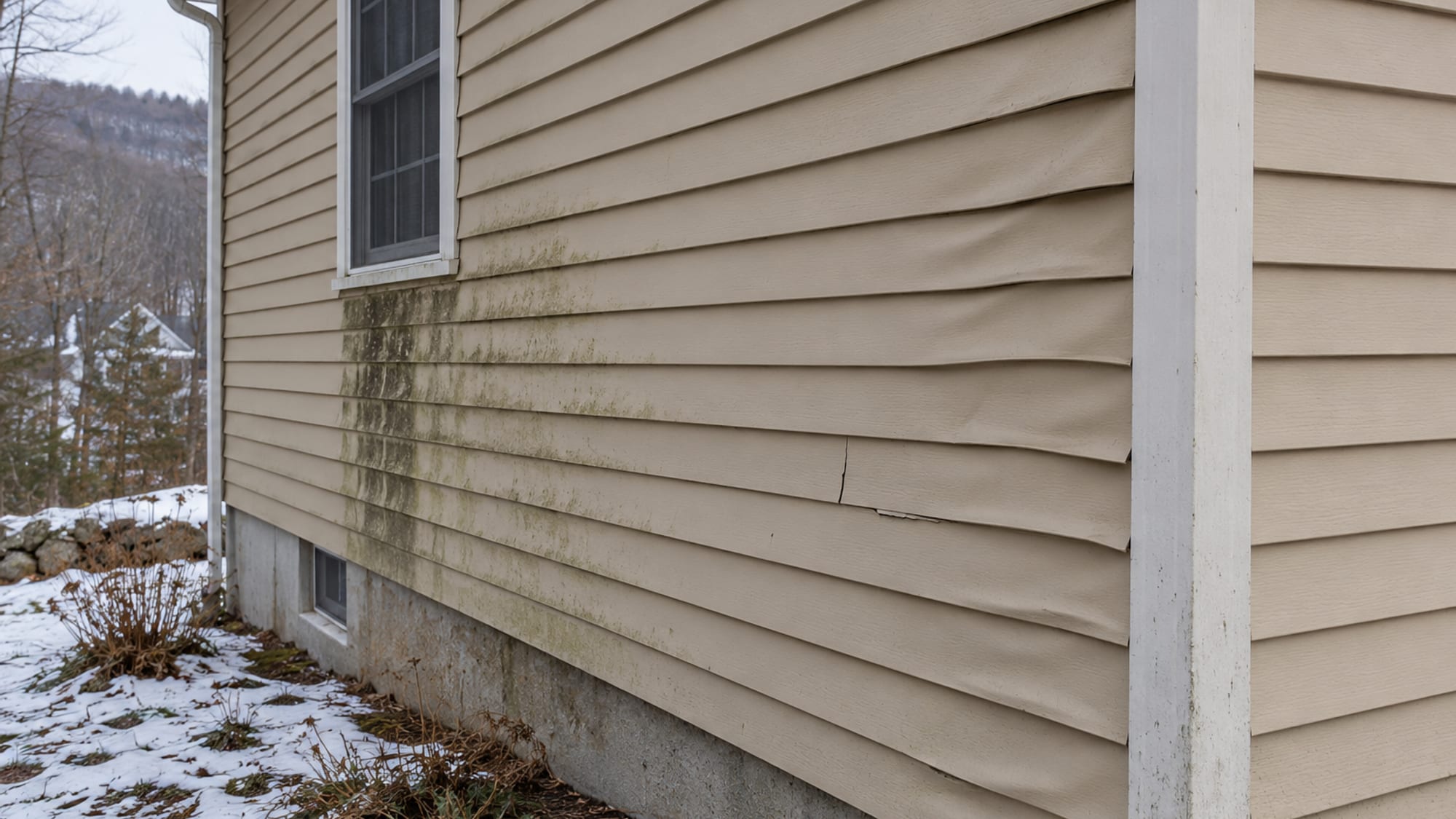
A rippled panel, a crack, a loose piece, a dark streak or a soft spot on a Connecticut house usually comes from one of four causes: a panel installed with no room to move, an impact or cold snap that made the material brittle, wind working a lock loose, or water getting behind the wall. Which one you have decides whether a few panels will fix it.
Most of these signs start small, and the first thing worth knowing is that one look can have more than one cause. A wavy wall might be tight nailing, or it might be a framing problem underneath. A black streak below a window might be harmless shade or a sign of moisture inside the wall.
Start by naming the sign you see. Once you know the likely cause, how serious it is and what to do today get much easier to answer.
Key Takeaways
Rippled or buckled vinyl
often a panel nailed too tight or jammed into trim, because vinyl has to expand and contract with the weather.
Cracks and loose panels
usually impact, cold brittleness or wind, and a few damaged panels can often be replaced one at a time.
Mildew, peeling paint and soft spots
these point to moisture, so the water source has to be fixed before anything is cleaned or painted.
Time to look at replacement
widespread buckling, separation across several walls, brittle material or soft sheathing.
Permit rule
Connecticut's code exempts siding repairs limited to 25% of the building's siding in one calendar year, but the local building official confirms what applies before work starts.
Each Siding Sign Points to a Short List of Causes
Siding is the outer layer of the wall, and it shows the first symptoms of problems that begin somewhere else. What you can see on the wall usually matches a few likely causes. Treat the list as a screening guide, since a contractor still has to open the wall before anyone can be sure.
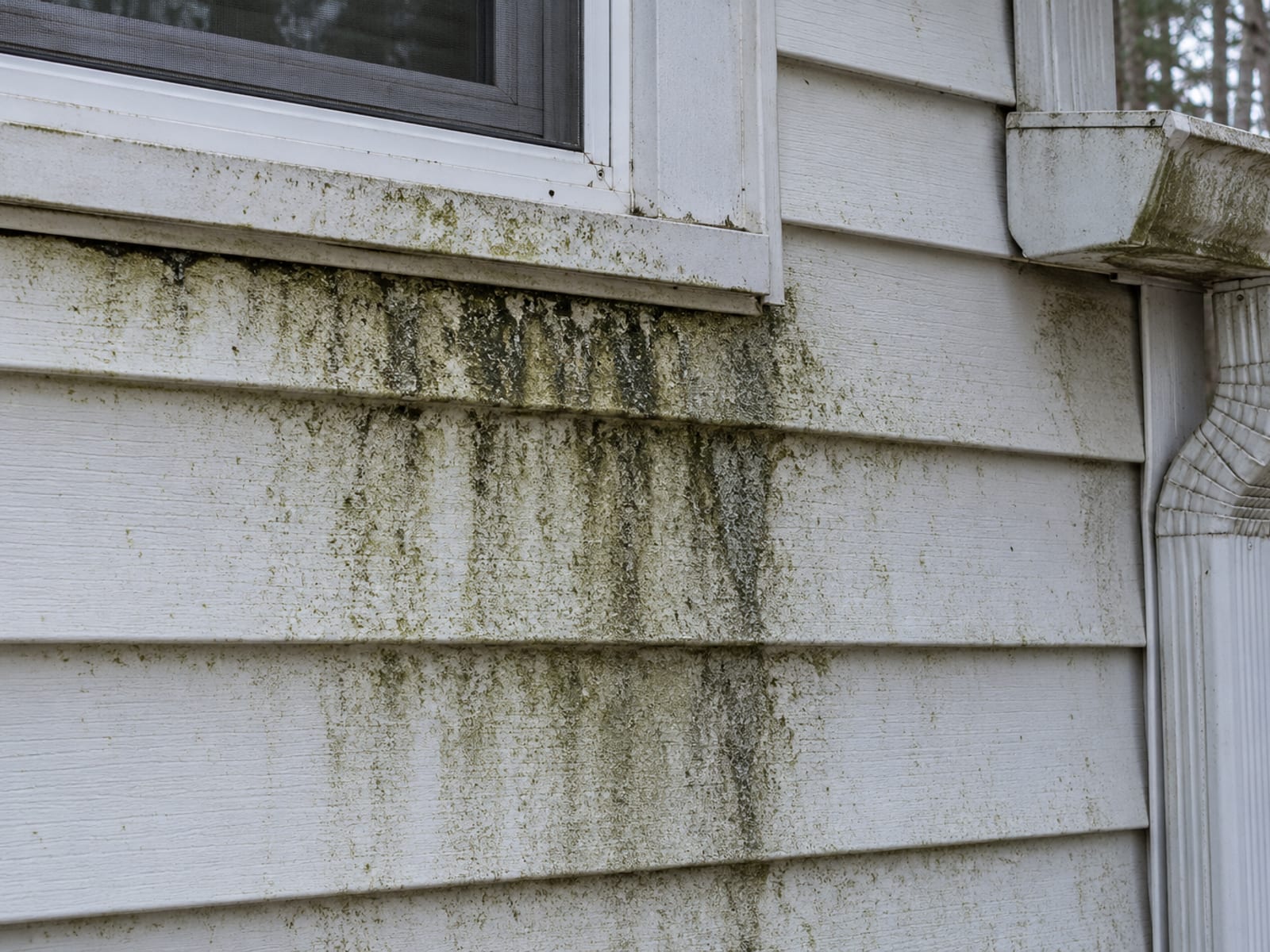
Notice how often water shows up. Siding is a covering, not a seal. The Vinyl Siding Institute's installation manual describes vinyl as cladding rather than a water-resistive barrier, and manufacturer installation guidance says a weather-resistant barrier and flashing around windows and doors belong in the wall behind it. When those pieces are missing or poorly installed, the symptoms tend to appear on the surface months or years later.
Buckling, Cracks, Loose Panels and Gaps Have Causes You Can Spot from the Ground
You can learn a lot by walking around the house and looking, without a ladder and without touching anything above ground level. Stay on the ground, and look at the same wall in morning and afternoon light if you can, because ripples show best at an angle.
Buckling and rippling usually trace back to the installation. Vinyl expands in summer heat and shrinks in cold, so each panel is supposed to hang loosely, with room to slide. One major manufacturer specifies a quarter inch of clearance at receiving channels when it is above 40°F and three-eighths of an inch below 40°F, and says fasteners should not be driven tight. A wall that ripples on the sunny side, or panel ends jammed into corner posts and J-channel, suggests that room for movement is missing.
Cracks and splits come from a different place. Cold makes vinyl more brittle, so a ball, a branch or a lawn mower that would only dent a panel in July can crack it in January. Hail does the same. A single cracked panel is a small job, though the gap can let water in until it is replaced.
Loose panels usually come from wind. The panel's lock fails, or the fasteners were too few or placed wrong, and the panel starts to move on a breezy day. Watch for loose pieces below windows, at corners and near roof and deck edges.
Other signs that point toward installation rather than damage:
- Wavy courses: uneven overlaps or a wall that looks irregular, often from siding hung over an uneven surface.
- Face-nailed panels: nail heads driven through the front of a panel or visibly clamping it.
- Crooked trim: corner posts and trim that are not plumb.
- Open gaps: spaces around windows, doors, lights or utility lines, with house wrap or dark openings showing.
None of these proves the cause by itself. They tell you what to point out when someone looks at the wall.
Water Behind the Wall Is the Problem That Costs the Most
Mildew, peeling paint, rot and staining below windows all share one cause: moisture that stays too long. The EPA's guide to mold and moisture says moisture control is the key to mold control, and that wet materials should be dried within 24 to 48 hours where possible. Scrubbing a green streak off the siding does not change why it grew there.
Water usually reaches the wall assembly through a short list of weak points. A missing or damaged weather barrier lets it pass through seams. Failed flashing at a window or door lets it run in. A roof-to-wall joint without kick-out flashing sends roof runoff down behind the siding. An overflowing gutter soaks the same stretch of wall every storm. Open seams and unsealed penetrations, like a hose bib or a light fixture, add to the list.
On wood siding and trim, repeated wetting leads to soft spots and rot. If you have wood trim or boards that feel spongy, a dedicated wood rot repair usually has to come before any new siding or paint, because new material nailed over wet framing only hides the problem.
Look for clues inside the house on the same wall: staining, peeling paint or wallpaper, a musty smell, damp spots or soft drywall. Interior signs plus an exterior symptom make a stronger case for opening the wall.
Panel Repair, Partial Replacement or Full Replacement Depends on How Far the Problem Spreads
Think of the decision in two piles. The first pile is limited problems that often get fixed panel by panel. The second is spread-out problems that point toward partial or full replacement.
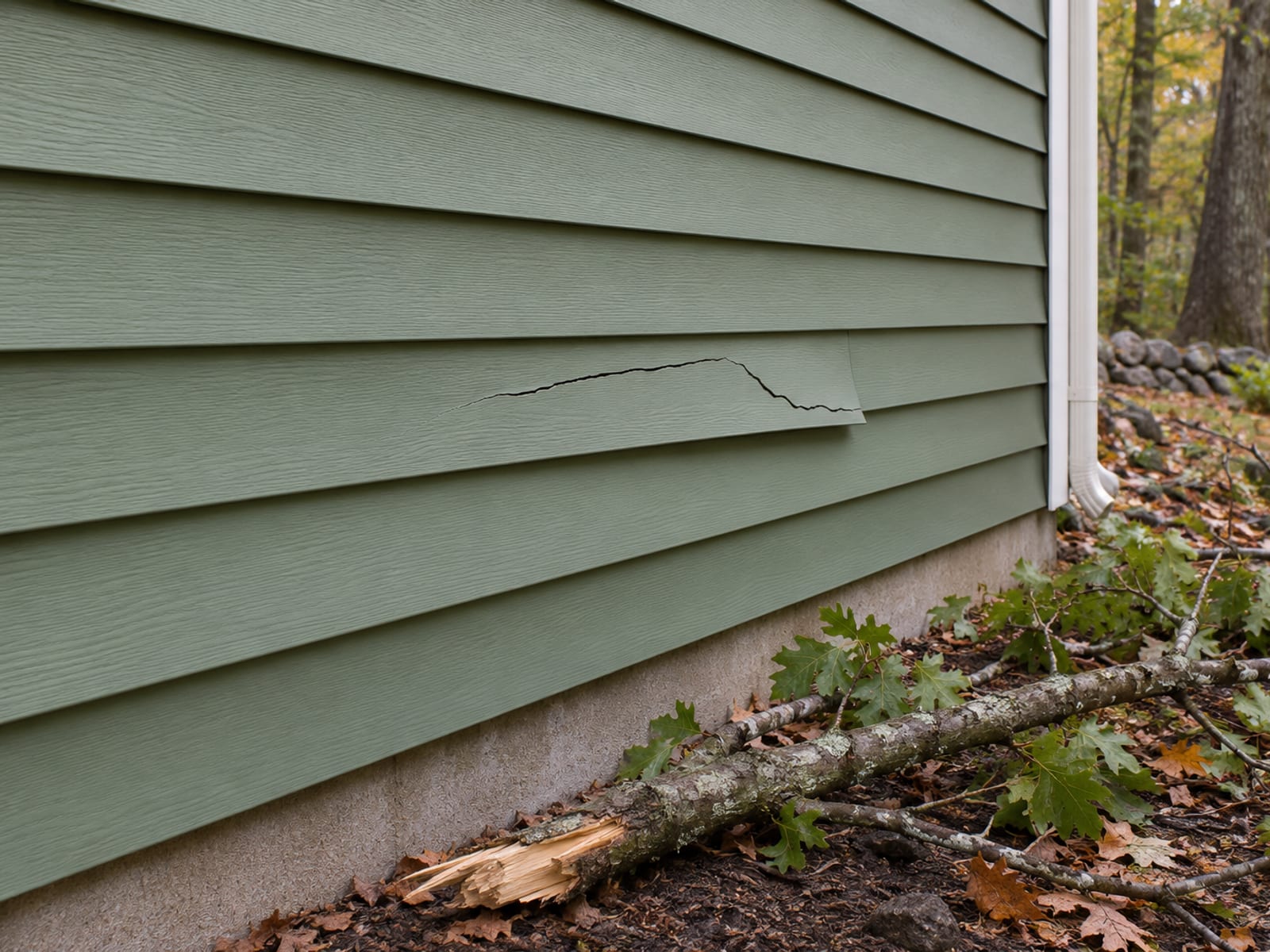
Problems that lean toward replacement are the spread-out ones. Widespread buckling from incorrect installation, panels that keep separating on more than one wall, and siding that is brittle, cracked or chalking over a large area all point that way. So do rot or soft sheathing behind a broad stretch of wall, a weather barrier or flashing that was never installed correctly, a discontinued product that cannot be matched, and a repair scope that is creeping toward the cost of a new wall.
Age alone does not settle it. There is no code-set replacement interval for vinyl, and an intact, properly installed system does not need replacing just because a certain number of years has passed. The condition of the material, the installation and the wall behind it decide the question.
One more point matters here. A repair proposal and a replacement proposal should both be on paper for a wall that sits between the two piles, so you can see the difference in scope and decide with real numbers. For a look at what a full job involves, our siding installation page describes the process. For the decision itself, see siding repair or replacement.
What to Do Today, Before Anyone Calls
A few steps help whatever the cause turns out to be, and none of them need you off the ground.
- Photograph each problem from several distances: one wide shot of the wall, one closer, one tight on the damage. Date-stamped photos help a contractor and an insurer.
- Check for loose or missing pieces after wind, hail, ice or a fallen branch, looking from the ground only.
- Look inside along the same wall for stains, peeling paint, musty smells or damp spots.
- Check where gutters and downspouts send water. If they pour onto the siding, that is worth correcting soon.
- Do not seal over wet or moldy material. Caulk or paint over a damp surface traps the moisture, and the EPA says the water source has to be corrected and wet areas dried.
- Write down the siding material and, if you know it, the product name and installation date.
For sudden storm damage, protect any opening temporarily, photograph before permanent repairs, notify your insurer and keep receipts. The Connecticut Insurance Department says wind-related damage may be covered under a homeowners policy, but coverage, exclusions, limits and deductibles vary by policy, and flood or storm-surge damage generally needs separate flood coverage. Your policy and your agent give the answer for your house.
Siding Costs in Connecticut Depend on the Wall, Not the House Size
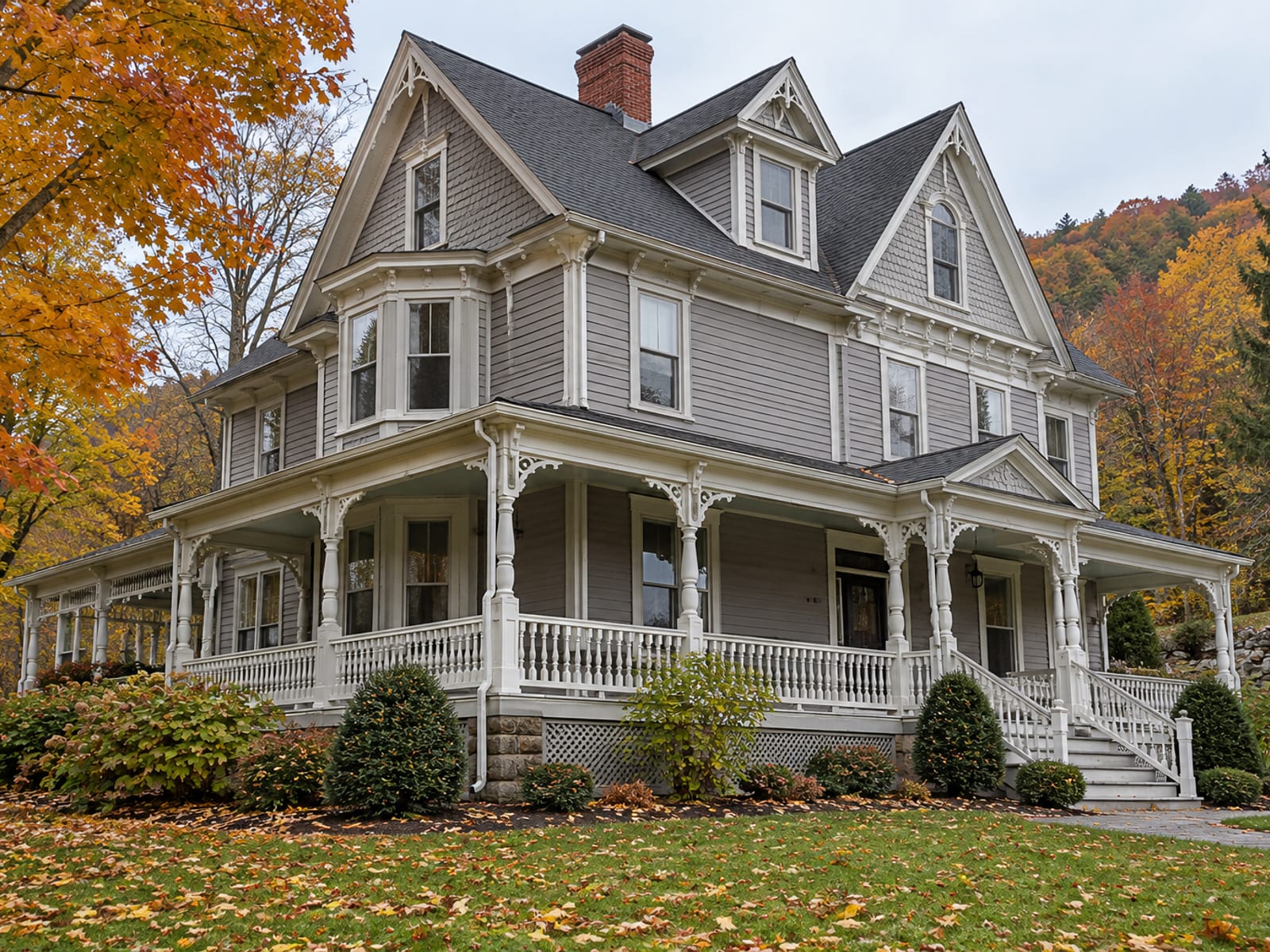
Siding is priced by the wall area being covered, not by the interior square footage you see on a listing. A two-story house with gables, dormers and a porch has far more exterior to cover than a ranch of the same floor area. That is why a number quoted over the phone tells you very little.
Published National Siding Replacement Figures
Range: $5,559 to $17,728
Average: $11,590
Tap a factor to see how it moves the price.
What moves the price on a Connecticut house is mostly what the wall needs beyond new panels. Wall area, stories and access come first, since gables, dormers, porches and tight or sloped lots add labor. Removal and disposal follow, then wall repairs such as house wrap, flashing, trim, sheathing and framing where they are damaged. Windows, doors, decks, roof lines, gutters and utility lines all add detail work, and the product grade, profile, color and trim package set the material cost. Permits and inspections apply in many towns.
The most useful estimate lists these separately: removal, disposal, wall repairs, weather barrier, flashing, trim, siding, permits and cleanup. Compare scope line by line before you compare totals, because a lower number sometimes just leaves out the part where the wall gets inspected.
Permits, Storms and Older Homes Shape the Job in Connecticut
Connecticut's current building rules are the 2022 State Building Code, which applies to permit applications filed on or after October 1, 2022 and adopts the 2021 International Residential Code. Every town, city and borough appoints a building official to administer it.
The code's text exempts repairs limited to 25% of a building's siding within one calendar year from the state permit requirement. That exemption does not authorize work that breaks other codes, ordinances or local requirements. Full re-siding, work that touches sheathing or structure, changed openings and insulation changes should be reviewed with your building department first. Your contract should say who pulls the permit, and the Department of Consumer Protection advises homeowners to confirm with the local building official that the permit is in place.
Connecticut weather puts steady demand on a wall. Freeze-thaw cycles stress joints and caulk, nor'easters and thunderstorm winds test locks and fasteners, and hail and falling branches break brittle panels. NOAA's Storm Events Database records hail, thunderstorm wind, winter storms and other events by county, which helps you see what your area has experienced, though it does not capture every event at every address.
Connecticut has houses from every era, and the Census Bureau's year-built table for housing shows how the housing stock breaks down from before 1940 to the present. On an older home, the wall behind the siding may differ from what a newer house has, so ask what the contractor will do if the tear-off exposes something unexpected.
Checking a Siding Contractor Takes About Twenty Minutes
Before you sign, the checks are short and public.
- Registration: Connecticut requires contractors doing residential siding work to register with the Department of Consumer Protection. The DCP home improvement page explains how to look up a registration, and the name on your contract should match the name on the registration.
- Insurance: registered contractors must carry at least $20,000 in general liability insurance, according to the DCP's registration requirements. Ask for proof and confirm it is active.
- A written contract: DCP's contract guidance says it must identify the work, give timing and payment terms and include the three-business-day cancellation notice.
- Payment: DCP recommends traceable payment and warns against cash or peer-to-peer app deposits. Do not pay the full amount up front.
- The manufacturer's instructions: ask whether the crew follows the installation manual for the product you choose, including movement clearance and the weather barrier.
- Hidden damage: ask who inspects the sheathing after the old siding comes off and how rot will be priced before any work begins.
References from jobs with the same siding material and similar repairs are worth a phone call.
Cleaning and Care Keep New Siding from Repeating the Old Problems
Gentle cleaning is the safe default for vinyl. The VSI manual recommends rain or a garden hose and a long-handled soft-bristle brush, and it warns against stiff brushes and abrasive cleaners. For mildew it lists cleaning solutions and points to the product-label precautions, and it reminds you to protect shrubs.
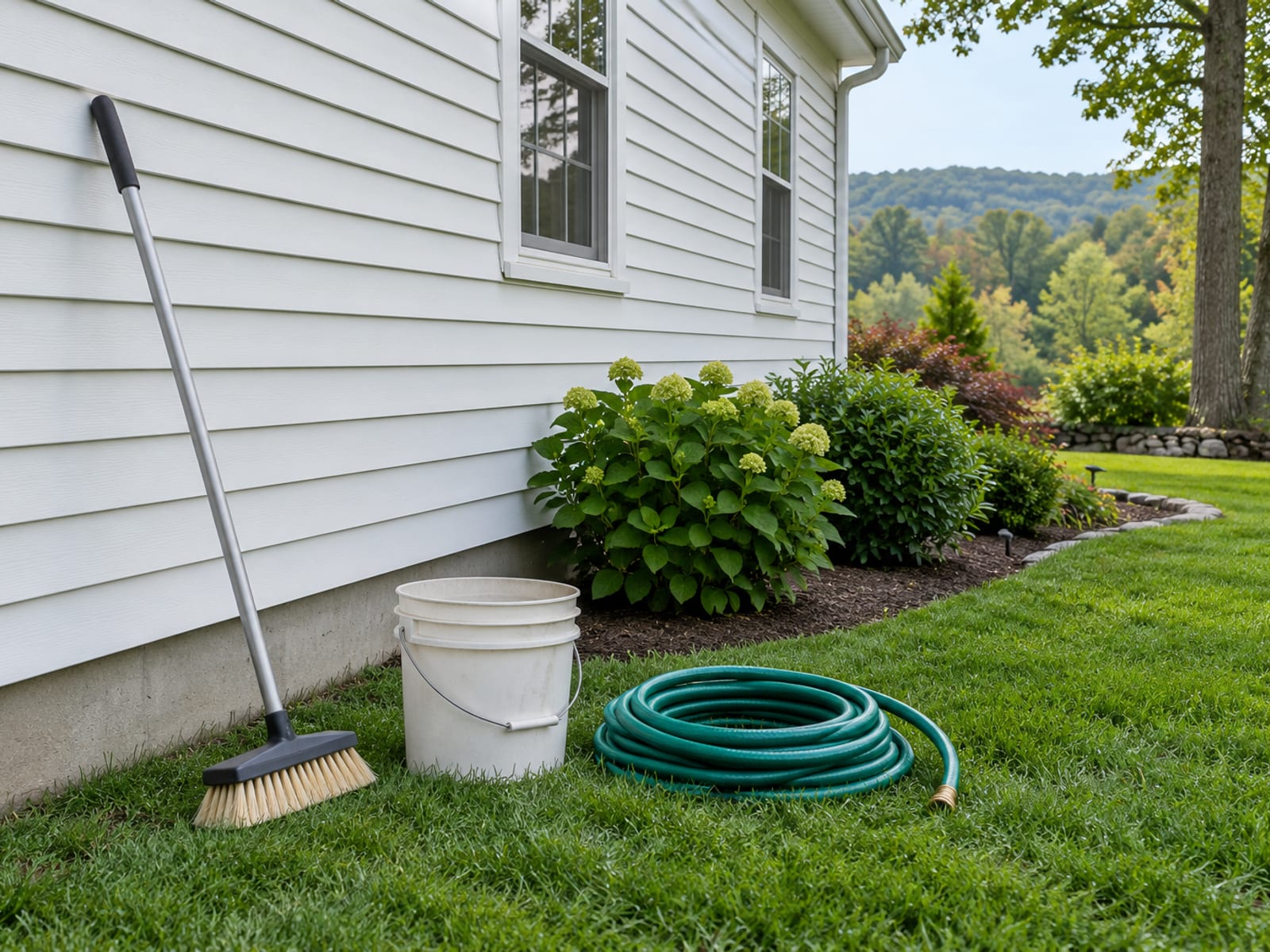
Care also means watching water. Keep gutters and downspouts working, trim plants back from the wall so it can dry, and look over each wall from the ground once or twice a year. Catch a loose panel in October and it stays a small job.
Quick Siding Problems Knowledge Check
1. A vinyl wall ripples on the sunny side and panel ends are jammed into the corner posts. What is the most likely cause?
2. What should you do first if you see mildew on siding below a window?
3. Which sign most strongly points toward replacement instead of repair?
4. Under Connecticut's 2022 building code, what is exempt from the state permit requirement?
5. What is the safest way to document siding damage?
Frequently Asked Questions About Common Siding Problems in Connecticut
Is vinyl siding bad for a house?
No. Vinyl is a cladding system, and how it performs depends on the wall behind it, the weather barrier, flashing, fasteners and movement clearances. Poor installation causes buckling, loose panels and water problems, and those are fixable or avoidable with correct installation.
How long does house siding last?
It depends on the material, exposure, maintenance, installation quality and moisture. As a general guide, vinyl often lasts 20 to 40 years, fiber cement 30 to 50 years or more, and well-maintained wood 20 to 40 years. The condition of your wall matters more than any number.
How often should vinyl siding be replaced?
There is no code-set interval. Replace it when brittleness, cracking, recurring failures or moisture damage are widespread, or when repair costs approach replacement. Intact, properly installed siding does not need replacing because of age alone.
Is it okay to pressure wash vinyl siding?
Follow the manufacturer's instructions for your product. The safer routine is a garden hose and soft brush. Keep water away from seams, openings and trim, and avoid spraying upward behind panels.
Which is better, vinyl or fiber cement?
Neither wins every time. Vinyl is lighter, lower maintenance and easier to clean and replace by the panel. Fiber cement is heavier, needs more specialized cutting and fastening and usually needs repainting, but resists rot and insects. Your budget, wall and upkeep habits settle it.
Can I tell which siding brand is the problem?
Brand alone rarely explains a failure. The product's installation manual, wind rating, warranty, color availability and how closely the installer followed the instructions tell you far more. Ask for the manufacturer's documents for the exact product on your house.
Who checks for rot after the old siding comes off?
Ask before you sign. The contract should say who inspects the sheathing and framing and how concealed rot or flashing failures will be priced.
Final Thoughts
The sign you see on the wall is a clue, not a verdict. Buckling often means installation, cracks and loose panels often mean impact or wind, and mildew, peeling paint and soft spots usually mean moisture. A few damaged panels can often be fixed one at a time, while widespread buckling, repeated separation, brittle material or soft sheathing points toward a bigger job.
Acting while the problem is small protects the wall behind the siding, which is where the expensive damage hides. Photos, a working gutter and a written scope with a permit answer put you in a good spot to compare options.
If you want someone to look at your siding, American Quality Roofing and Siding serves Central and Western Connecticut from Brookfield and has done so since 2006. We are licensed and insured under CT HIC #0633301, and our work covers siding, wood rot repair and roofing. Request a free estimate or call us, and we will check the wall behind the sign before we recommend a repair or a replacement.
Written by Jose Zaruma, American Quality Roofing and Siding.
← Back to the blog