Roofing Guide
Siding Repair or Replacement? How to Decide in Connecticut
By Jose ZarumaPublished
- siding
- siding repair
- wood rot
- connecticut
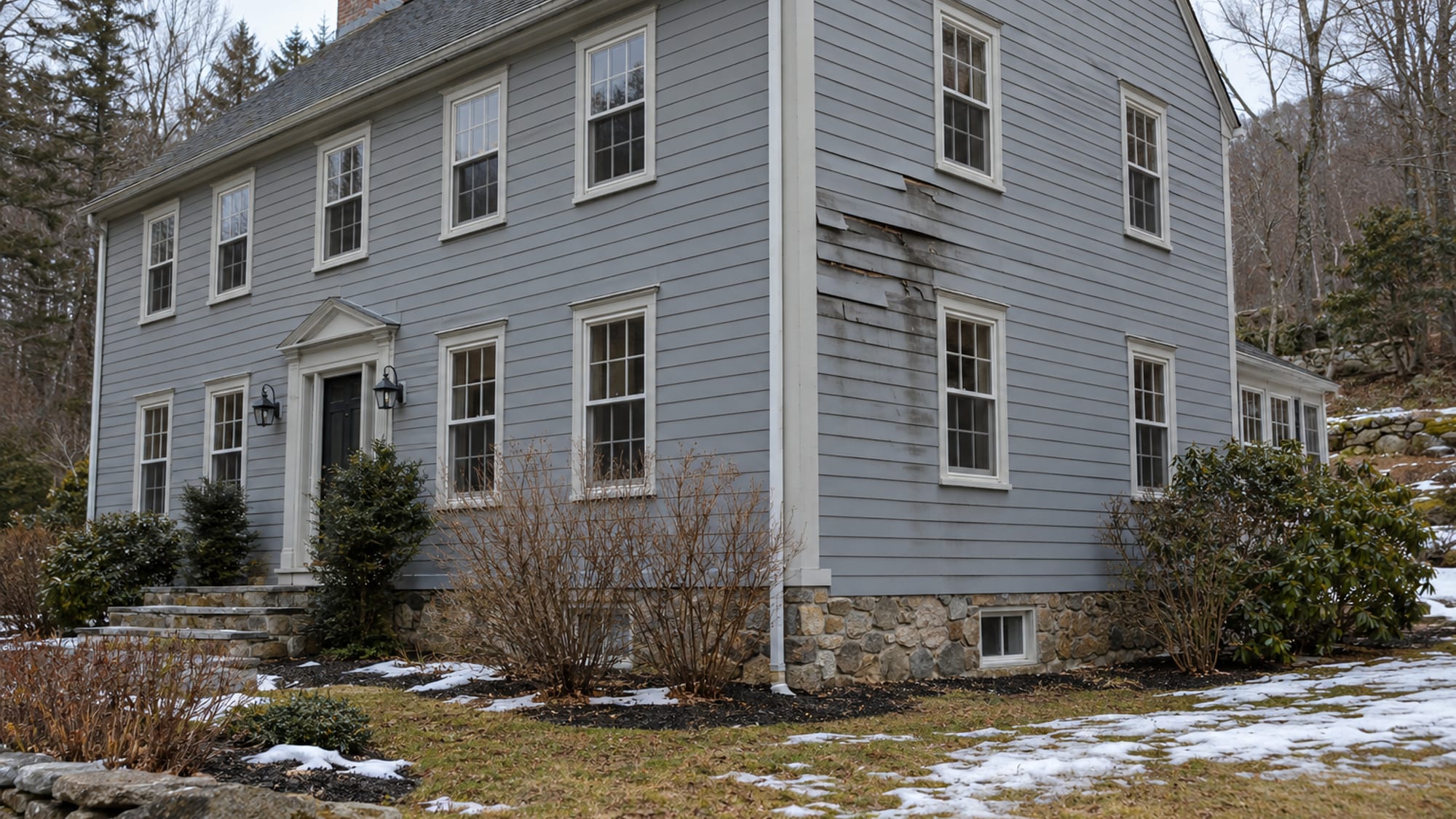
A siding repair is usually enough when the damage is limited to a few pieces, the siding around it is still sound, the wall behind it is dry, and a matching piece can be found. Replacement is the better move when the damage is spread out, keeps coming back, or has let water reach the sheathing or framing underneath.
Notice that there is no percentage in that answer. No Connecticut rule says to replace the siding once a certain share of it is damaged. The decision follows the condition of the siding, the condition of the wall behind it, and what can be matched.
Connecticut houses take a lot of weather. The National Weather Service says nor'easters, the East Coast storms that bring heavy rain or snow and gale-force winds, are most frequent and most violent from September through April. Siding that has been loosened by one winter often shows it by the next.
Key Takeaways
Repair fits limited damage
A few cracked or loose pieces, sound siding nearby, a dry wall behind and a compatible replacement point to a repair.
Moisture changes the answer
Water in the sheathing or framing, or rot that returns, usually calls for opening up the wall and replacing more than the visible siding.
There is no percentage rule
Connecticut's 25 percent figure is a permit exemption for small repairs, not a line that says when to replace.
Ask for three prices
Request separate written prices for isolated repair, partial replacement and full replacement.
Insurance depends on the cause
Sudden damage from wind, hail or impact may be covered; age and wear are generally treated differently.
When Is a Siding Repair Enough?
A repair holds when the problem is small and the reason for it is understood. Think of a vinyl panel cracked by a thrown ball, a few clapboards split by a fallen branch, or one loose piece that lost its fasteners in a windstorm. In each case the rest of the wall is doing its job.
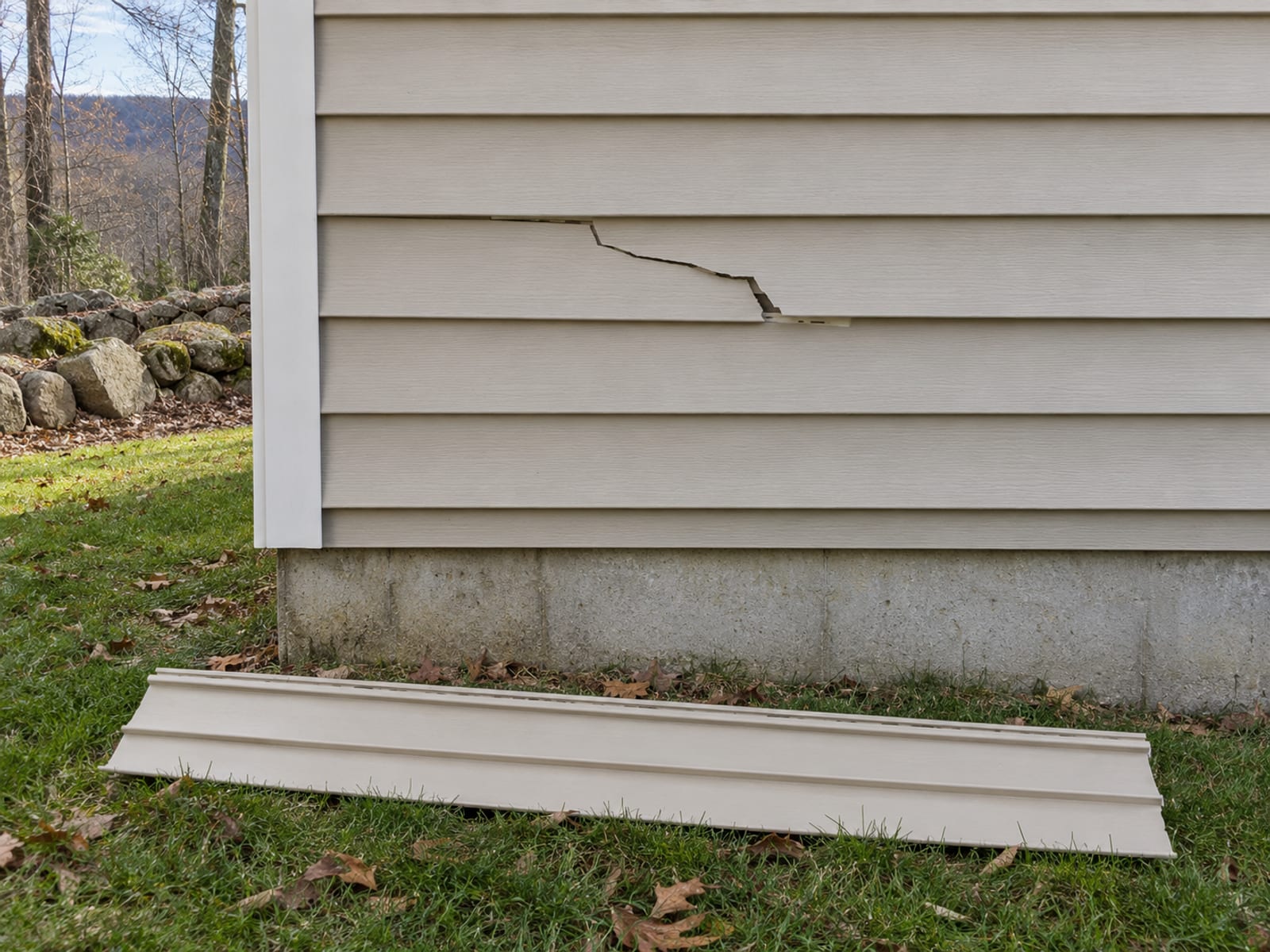
- Limited damage: A few cracked, loose, punctured or impact-damaged pieces.
- Sound siding nearby: The surrounding siding is not brittle, warped or broadly worn.
- A dry wall behind it: The sheathing is firm and there is no staining, musty smell or soft trim.
- A fixable cause: The moisture source, such as a failed gutter or open flashing, can be corrected.
- A compatible piece: The profile, size and texture can be matched closely enough to look right.
Repairs also work well on a newer wall. A ten-year-old house with one damaged section is a very different case from a fifty-year-old house with the same damage on every side.
What Pushes the Answer Toward Replacement?
Replacement moves to the front when the siding itself is failing across a wide area. Warping, buckling, cracking or brittleness on several walls means the material is near the end of its life, and fixing one section just moves the problem a few feet over.
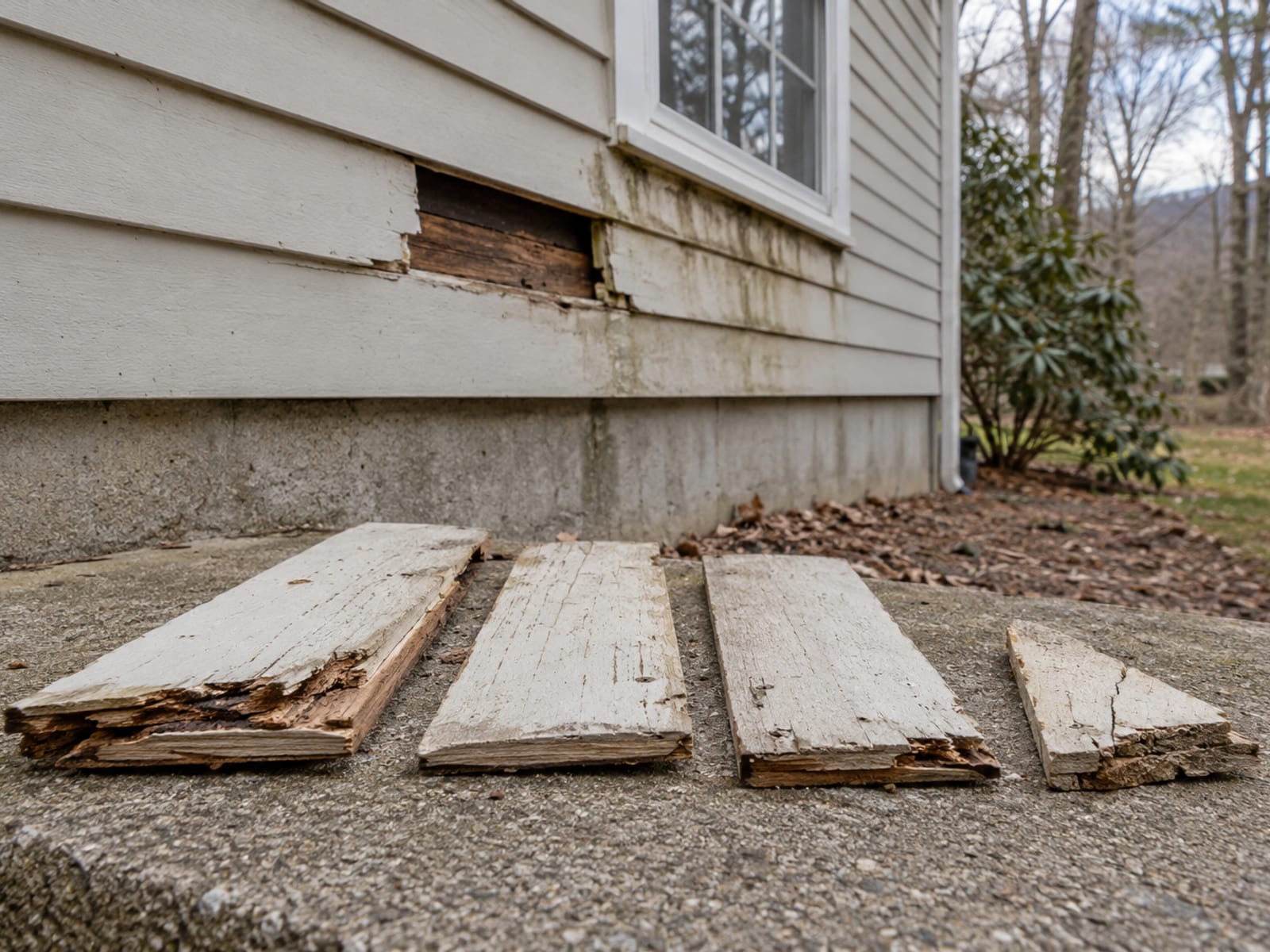
Water is the other big trigger. Staining on an interior wall below a window, a musty smell, mold, soft trim or spongy sheathing all say the wall has been wet for a while. Fixing the siding alone will not help if the wood behind it is rotting. In that case the siding comes off, the wall gets repaired, and new siding goes back on. Our wood rot repair work often starts exactly this way, with a small siding complaint that turns out to be a wet wall.
Other signs lean the same direction:
- Repeat repairs: You have paid for fixes on more than one wall, or the same spot keeps failing.
- A discontinued product: The profile or color is no longer made, so a patch will stand out.
- Hidden defects: Missing house wrap or poor flashing around windows can only be corrected with the siding removed.
- Cost creep: Several repairs together are approaching the price of a larger job.
New siding should never be installed over rotted wood. Hartford's building department states this directly, and it is sound practice anywhere in the state.
What Should an Assessment Look at Behind the Siding?
A siding problem is rarely only about siding. A typical exterior wall has layers, and any of them can be the reason the outer layer is failing. From the outside in, you will usually find the siding, trim around corners, windows and doors, a water-resistive barrier such as house wrap, flashing at openings, sheathing, framing and then insulation.
A good assessment looks at the siding and also at the wall behind it. When a section is removed, the contractor should inspect the exposed barrier, the flashing, the sheathing and the framing for moisture damage before anything new goes on. That is also the moment to find out whether the problem is a cracked piece or a leak at a window head.
Questions to ask the person doing the assessment:
- What is behind the damaged area? Ask to see it, with photos if the wall is opened.
- Where is the water coming from? A repair that leaves the moisture source in place will fail again.
- What happens if concealed damage turns up? Get the answer in writing before work starts.
- Is house wrap and flashing included? These are cheap compared to repeating the job.
Our siding installation process includes the same checks of the wall assembly, because new siding is only as good as the wall under it.
What Can You Do From the Ground Before Anyone Arrives?
You can build a clear record without touching a ladder. Stay on the ground, and leave roof work and any high wall to a qualified crew once conditions are safe.
If water is getting in, add temporary protection from a safe spot, such as a tarp or sheeting held in place from the ground or from inside, or call a contractor to place it. Do not climb up to do it, and do not work near the roofline in wind or rain. A short delay is better than a fall.
Finally, note anything you see indoors, like new ceiling stains, peeling paint near an exterior wall or a damp smell in a closet. These details tell the person assessing the wall where to look first.
How Long Does Siding Last, and Does Age Settle It?
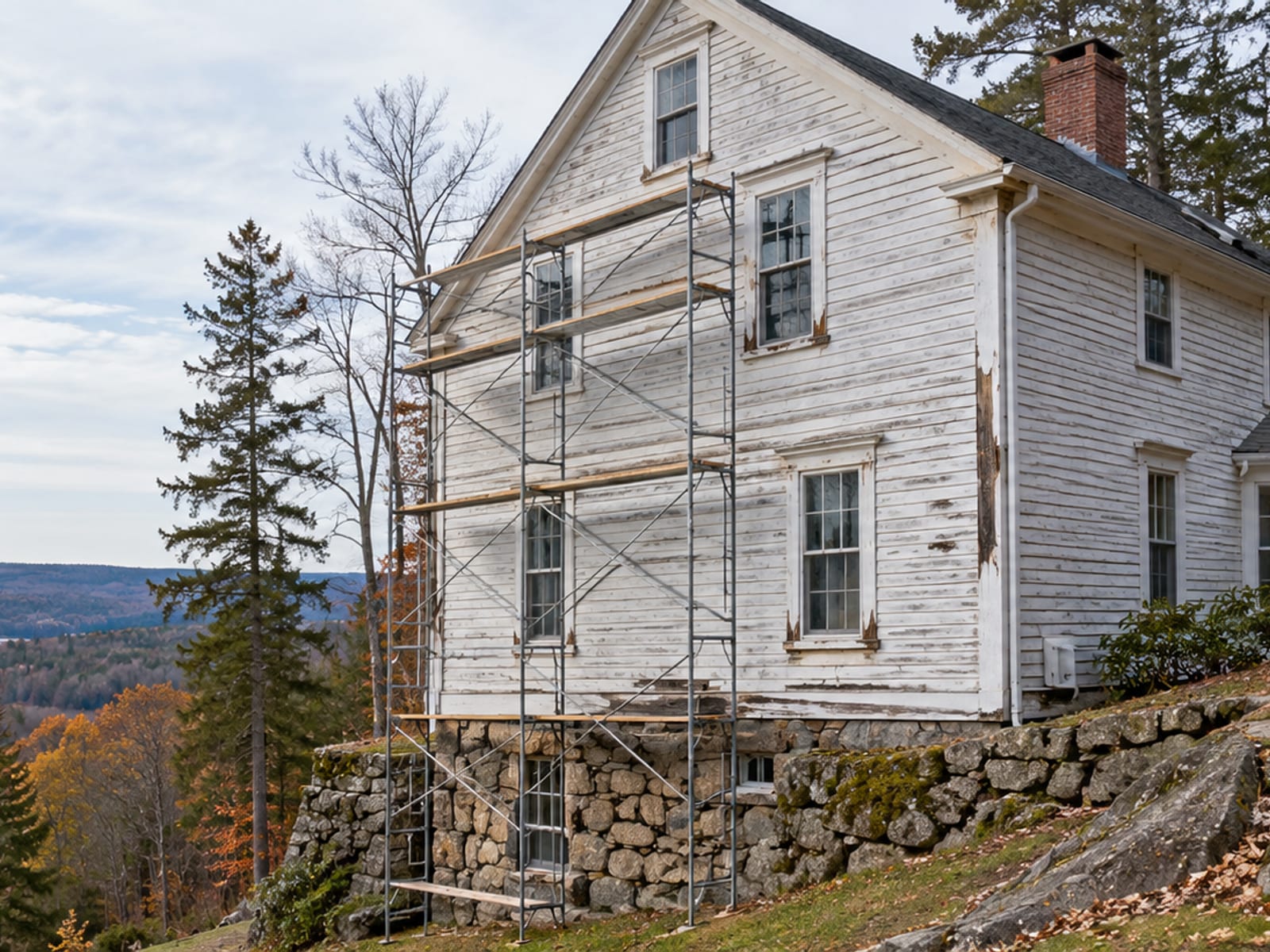
Age matters, but it does not settle the question alone. James Hardie, a siding manufacturer, publishes general lifespan ranges that give a sense of where a wall might be in its life. They are material expectations, not guarantees, and they are not specific to Connecticut.
Published General Siding Lifespans (James Hardie)
20 to 40 years
Tap a factor to see how it moves the price.
Connecticut freeze-thaw cycles, humidity, wind-driven rain, snow, ice and sun can all shorten those numbers. So can poor flashing, trapped moisture and years without maintenance. Installation quality counts too. A well-installed wall that has been kept dry can outlast the range, and a poorly flashed one can fall short.
Use age as one clue. A 35-year-old vinyl wall with cracks in several places is near the end of the range and likely to keep failing. A 12-year-old wall with one storm-damaged panel is a repair candidate. Our guide to common siding problems explains what each sign usually points to.
Will New Pieces Match the Old Siding?
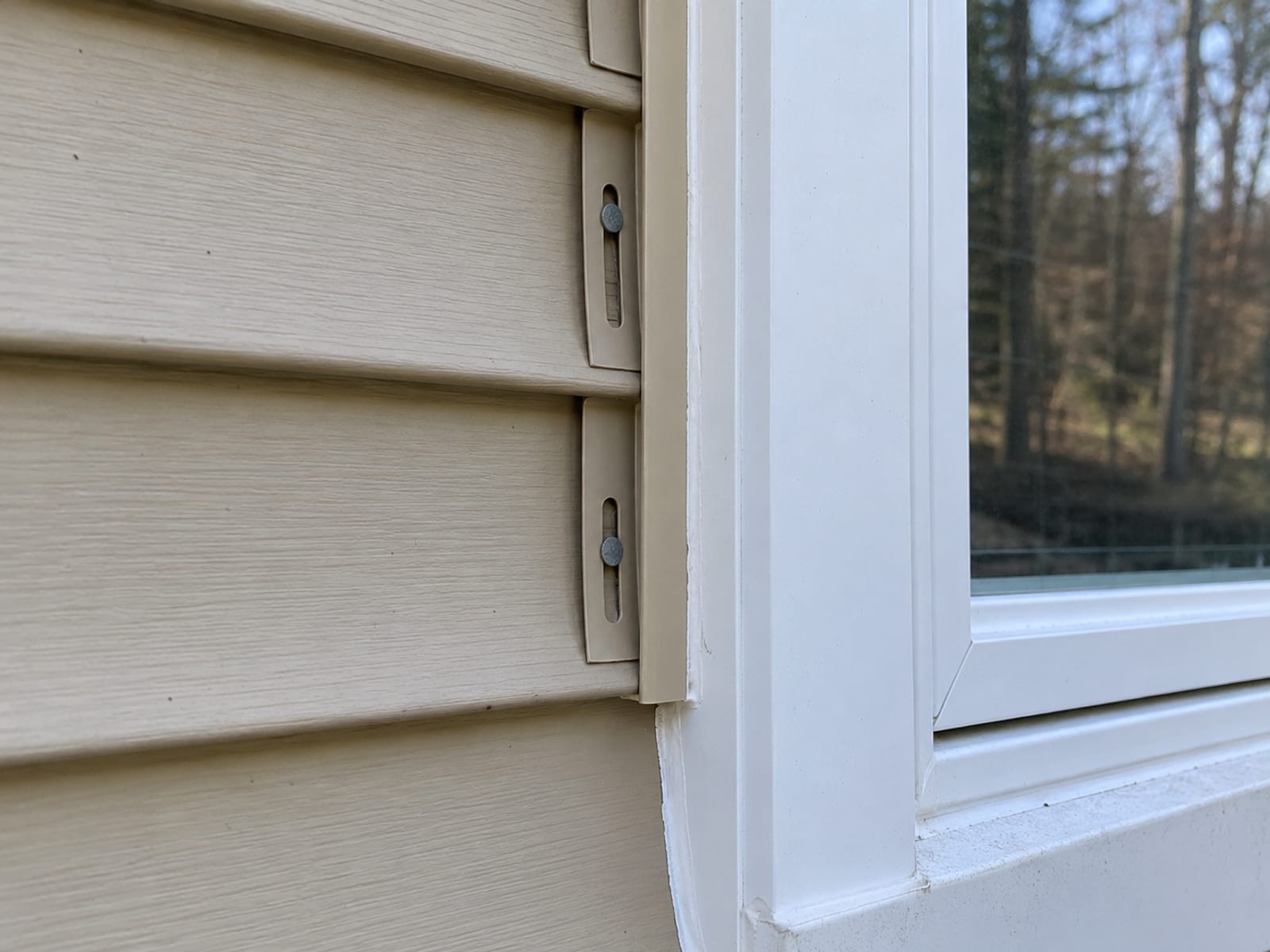
Matching is where many repairs get complicated. A color name is only part of it. The new piece also has to match the material, the manufacturer, the profile, the exposure, the texture, the thickness and the finish.
Old siding rarely looks like new siding of the same color. Sun fades it, paint ages, dirt and mildew build up, and manufacturers change product lines over the years. Vinyl is susceptible to ultraviolet fading, as James Hardie notes, and colors and profiles do get discontinued. Different production batches can vary slightly too. At American Quality Roofing and Siding, we tell customers that an exact match may be impossible for older or discontinued siding.
Ask the contractor to hold a sample against an inconspicuous spot, such as the back of the house or under a deck, and to say plainly which of three results to expect:
- An exact match: The new piece is indistinguishable at a normal viewing distance.
- A close match: A small difference in tone that may soften with weathering.
- A deliberate wall-section replacement: A whole wall is replaced so the change falls at a corner, where it looks intentional.
If you have a spare piece or one that came off, keep it. It is the best sample you can give.
What Do Siding Repairs and Replacements Cost?
Cost depends on the scope, and the published numbers are national, not Connecticut bids. As a national reference point only, Angi reported in 2025 that complete siding replacement averaged about $11,535 across the country, with a reported range of $5,565 to $17,647 for materials and installation. Those figures leave out many Connecticut variables, including permit fees, concealed wall damage, lead-safe work, historic-district rules, difficult access and extra trim.
What Moves the Price of Siding Work
More square footage and height mean more material, labor and access equipment.
Tap a factor to see how it moves the price.
Ask for separate prices for isolated repair, partial replacement and full replacement whenever all three are realistic. Seeing them side by side makes the comparison simple. Also ask how concealed damage will be handled, so a surprise behind the siding does not become an argument. For vinyl in particular, how vinyl siding is priced walks through the measurements.
Does a Siding Repair Need a Permit in Connecticut?
Sometimes. The 2022 Connecticut State Building Code applies to permit applications filed since October 1, 2022, and it adopts the 2021 International Residential Code. The code lists repairs limited to 25 percent of the building siding within one calendar year as exempt from a permit. Westport publishes the same exemption.
That is a permit rule only. It does not say a wall must be replaced above 25 percent, and it does not allow work that breaks the code or a local ordinance. Local departments can also require permits for siding installation or replacement. East Haven, for example, lists siding installation among the work that needs a building permit and assigns the owner, agent or contractor responsibility for arranging inspections.
The practical step is to call your town's building department, describe the scope and ask. Then make sure the contract says who pulls the permit. Connecticut law requires the written home-improvement contract to state permit responsibility, and you should be able to confirm with the building official that the permit exists.
If your house was built before 1978, add one more question. The EPA's lead-safe renovation rules apply to renovation, repair and painting work that may disturb lead-painted surfaces in older housing, so ask whether the firm is EPA lead-safe certified.
Does Homeowners Insurance Help With Siding Damage?
It can, depending on the cause and your policy. The Connecticut Insurance Department's homeowner insurance guidance separates the cause of a loss from the amount of the loss. Sudden damage from a covered event, such as wind, hail, a falling tree or impact, may qualify under the policy. Age, ordinary wear, deterioration and neglect are generally treated differently.
Your deductible, exclusions and any endorsements decide the rest, and no one can tell you the outcome without the policy in hand. Report the loss to your insurer promptly, keep your photos and invoices, and ask for a written explanation of coverage and the scope of repair.
One point is worth knowing for a covered loss. The Department says the insurer must repair or replace the damaged portion to achieve a reasonably uniform appearance with adjacent materials. If an exact match is not available, like-kind adjacent materials may also be replaced. If you and the insurer agree on what is damaged but not on the cost, an appraisal addresses the amount of loss. It does not decide whether the loss is covered.
A claim does not guarantee full replacement. Ask your agent what your policy says before you plan around it.
How Do You Check a Connecticut Siding Contractor?
Start with registration. Connecticut home-improvement contractors must register with the Department of Consumer Protection, and you can look up the registration in the state's eLicense system. Confirm that it belongs to the business named on the proposal, since an individual and an LLC can hold separate registrations. Ours is CT HIC #0633301.
The contract matters as much as the person. Under the DCP's home-improvement guidance, it must be written, signed and dated, and it should identify the contractor, registration number, work dates, materials, price, payment schedule, permit responsibility and cancellation rights. You generally have until midnight on the third business day after signing to cancel, and Saturday counts as a business day.
Watch for warning signs. DCP's 2025 guidance says a legitimate contractor should not ask for more than one-third of the project cost up front, and it recommends progress-based payments. Be wary of cash or peer-to-peer deposits, pressure to pay a large amount right away, and any refusal to share insurance details.
Also ask about manufacturer installation instructions, product warranties and workmanship warranty terms, and get them in the contract.
Frequently Asked Questions About Siding Repair and Replacement in Connecticut
Can you replace just a few pieces of siding?
Yes. Individual panels, boards or sections can often be replaced when the surrounding siding is serviceable. The new piece has to match the profile, exposure, texture, installation system and color as closely as possible.
How do you tell if siding needs replacing?
Replacement is more likely when siding is widely warped, buckled, brittle or crumbling, keeps coming loose, or lets water behind it. Interior stains, musty odors, mold, soft sheathing and failed flashing mean the wall needs to be looked at before any new siding goes on.
Is there a percentage of damage that means I must replace my siding?
No. Connecticut has no such rule. The decision rests on condition, moisture, the wall behind the siding, material availability and project scope.
How much does it cost to replace rotted siding?
There are two parts: removing and replacing the visible siding, and repairing any damaged sheathing, framing, trim or flashing behind it. A written estimate that separates the two is the only reliable way to know the total for your house.
Does homeowners insurance cover siding replacement?
It depends on the cause of the damage and your policy. Sudden damage from a covered event may be covered, while age and wear are generally treated differently. Report the loss promptly and ask your insurer for a written explanation of coverage and scope.
What is the typical lifespan of house siding?
James Hardie publishes general ranges of 20 to 40 years for vinyl and natural wood, 20 to 30 years for engineered wood, and 50 years or more for fiber cement. Exposure, installation quality, maintenance and water control all affect real service life.
Do I need a permit for siding work?
Repairs limited to 25 percent of the siding within one calendar year are listed as permit-exempt in the state code, but towns can require permits for siding installation or replacement. Call your building department and confirm who pulls the permit in your contract.
Siding Repair or Replacement Knowledge Check
1. Which situation most clearly favors a siding repair?
2. What does Connecticut's 25 percent figure for siding repairs describe?
3. What should you do from the ground after siding is damaged?
4. Why ask for three separate prices?
5. Does a covered insurance claim always mean full siding replacement?
Final Thoughts
The right answer for your wall comes from three things: the condition of the siding, the condition of the wall behind it, and whether new pieces can be matched. Limited, dry, fixable damage points to a repair. Spread-out damage, repeat failures or water in the sheathing point to a bigger job.
Getting the decision right early protects the framing and sheathing behind the siding, which cost far more to fix than the siding itself. Written prices for each option, a clear permit plan and a signed contract keep the project from turning into a dispute.
If you are looking at cracked, warped or rotting siding anywhere in Connecticut, American Quality Roofing and Siding can look at the siding and the wall behind it and give you separate written prices for repair, partial replacement and full replacement. We are based in Brookfield and have served Central and Western Connecticut since 2006. Request a free estimate or call us, and bring your photos.
Written by Jose Zaruma, American Quality Roofing and Siding.
← Back to the blog