Roofing Guide
How Siding Installation Is Priced in Danbury, CT
By Jose ZarumaPublished
- siding installation
- danbury ct
- connecticut
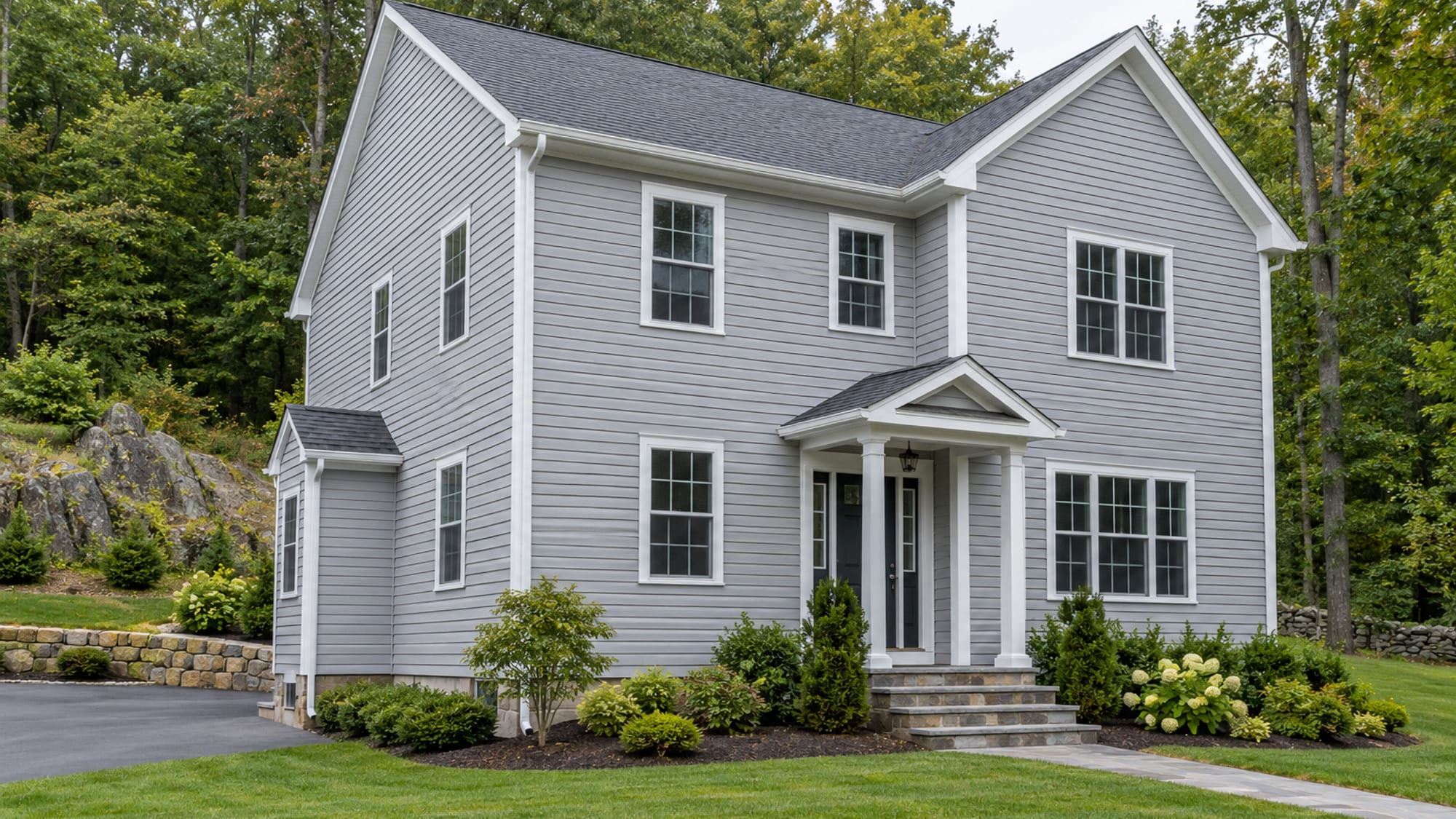
Siding in Danbury is priced by the amount of wall it covers, not by the size of your floor plan. A quote that does not say how many squares it includes, and what each square covers, cannot be compared with any other quote.
Before you collect prices, settle one question: is the siding causing your problem, or is it showing you a problem somewhere else? Cracked, warped or loose panels sometimes point to a failed window flashing, an overflowing gutter or a roof edge that sheds water onto the wall.
Today, take photos of the damage, note any stains or drafts inside, and write down roughly when the house was built. Those three things shape the whole project.
Key Takeaways
Wall area sets the price
One siding square is 100 square feet of installed coverage, and a quote should say whether its squares include waste, trim and accessories.
Find the water first
Stains and drafts near windows, doors and roof edges can mean the siding is a symptom of a flashing or gutter problem.
Permits depend on scope
Connecticut's 2022 code exempts repairs limited to 25% of a building's siding in one calendar year; a full re-siding goes through the Danbury Building Department.
Older houses add steps
A home built before 1978 may fall under EPA's lead-safe rule when paid work disturbs painted surfaces.
Verify before you sign
Check the contractor's active Connecticut HIC registration, and remember the three-business-day cancellation right counts Saturday.
Find Out Whether Your Siding Needs Repair or Replacement
Water usually gives itself away around windows, doors, roof intersections and anything that passes through a wall, such as a hose bib or a dryer vent. If the damp, stained or soft spots cluster in those places, the siding may be fine and the flashing or gutter above it may be the real cause. Replacing the panels without fixing that detail sends the same water into the new wall.
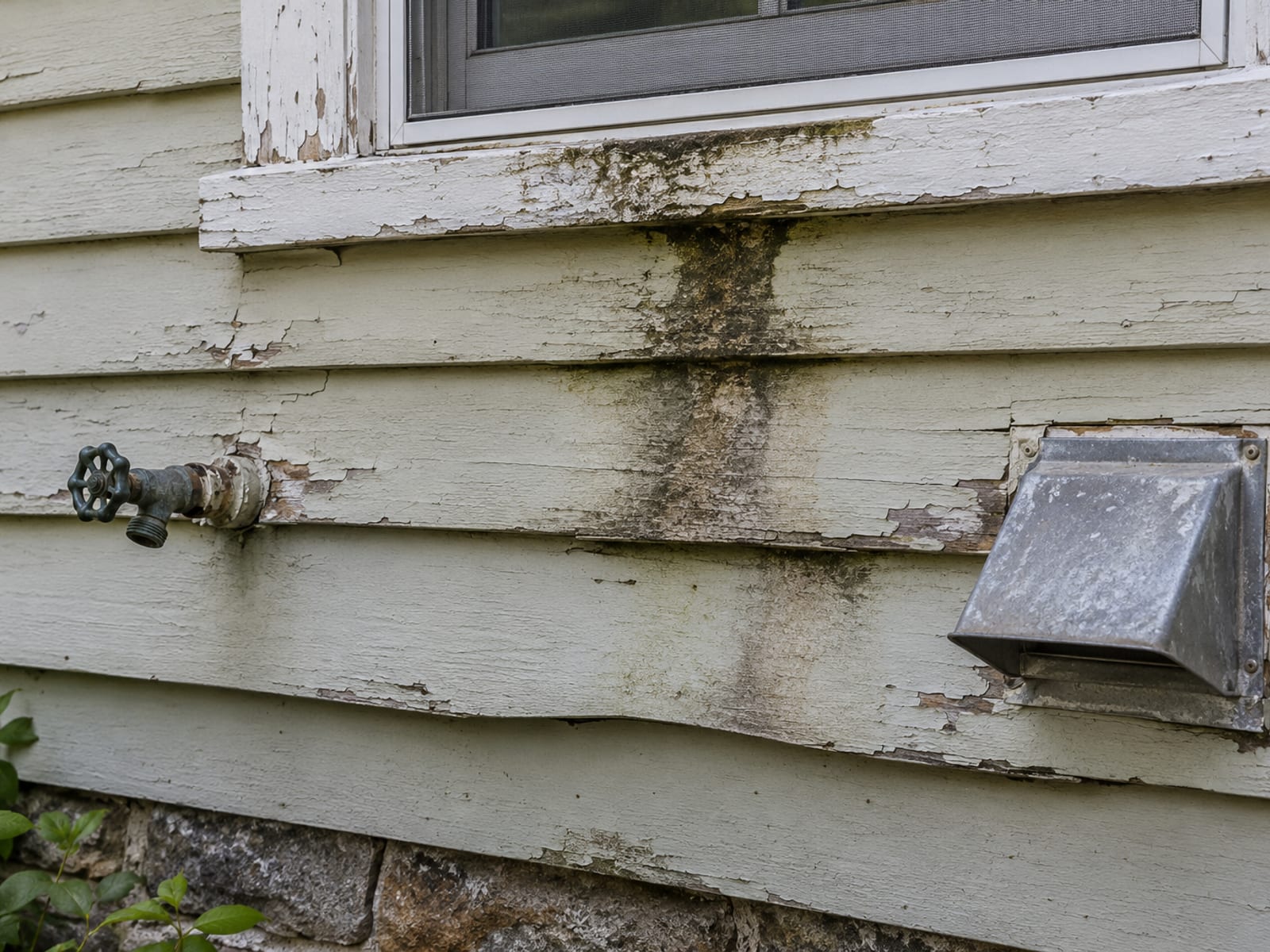
This week, ask for an inspection that covers more than the panels. It should include the sheathing under the siding, the wall framing, the house wrap, the flashing, the trim, the gutters and the roof details nearby. If damage is limited to a small section and the wall behind it is dry and solid, a repair may be all you need. If the damage is spread across several walls, or the wall behind the panels is wet, replacement becomes the more realistic plan.
A full siding installation is the right call when that inspection shows the wall itself needs attention.
Choose Siding That Handles Danbury's Winters and Older Houses
Danbury's weather is hard on exterior walls. The NOAA 1991 to 2020 normals for the Danbury station average 125.9 days a year with lows at or below 32°F, so walls go through many freeze and thaw cycles. The 2022 Connecticut State Building Code lists climate zone 5A, severe weathering, a 42-inch frost line and a 7°F winter design temperature. Drainage, flashing, clearances and fastening matter for every material on this list.
The age of local housing matters too. The city's 2019 to 2023 American Community Survey figures, reproduced in a Danbury financial statement, put 57.6% of its 34,798 housing units as built before 1980. Older walls are more likely to hide failed sheathing, old flashing and layers of paint, so the inspection step carries more weight here than the choice of color.
There is no single best material for every Connecticut house. The table compares what each one asks of you and what its maker or industry group publishes about durability. Those durability figures are warranties or reference assumptions, not promises about how long your wall will last.
Siding Materials Compared: Upkeep and Published Durability
Upkeep and moisture: Factory-finished; generally no painting, staining or routine caulking. Still needs a weather-resistant barrier and flashing.
Published durability figure: Vinyl Siding Institute uses a 50-year reference service life. An industry figure, not a guarantee.
Tap a factor to see how it moves the price.
These figures come from the Vinyl Siding Institute's environmental declaration, James Hardie's FAQ and Real Cedar's 2025 environmental declaration. Before you commit to one, read the exact product warranty and installation instructions for that material.
Color deserves a slow decision. Look at the house style, the roof color, the trim, how much sun the walls get and how close the trees are, and read the manufacturer's color-retention instructions. Darker colors may absorb more solar heat, and lighter colors generally reflect more. Get physical samples and look at them outside at different times of day, because screens are not reliable for final color. If the siding is sound and only the finish has worn, exterior painting may be the better project.
Know What a Complete Siding Installation Covers
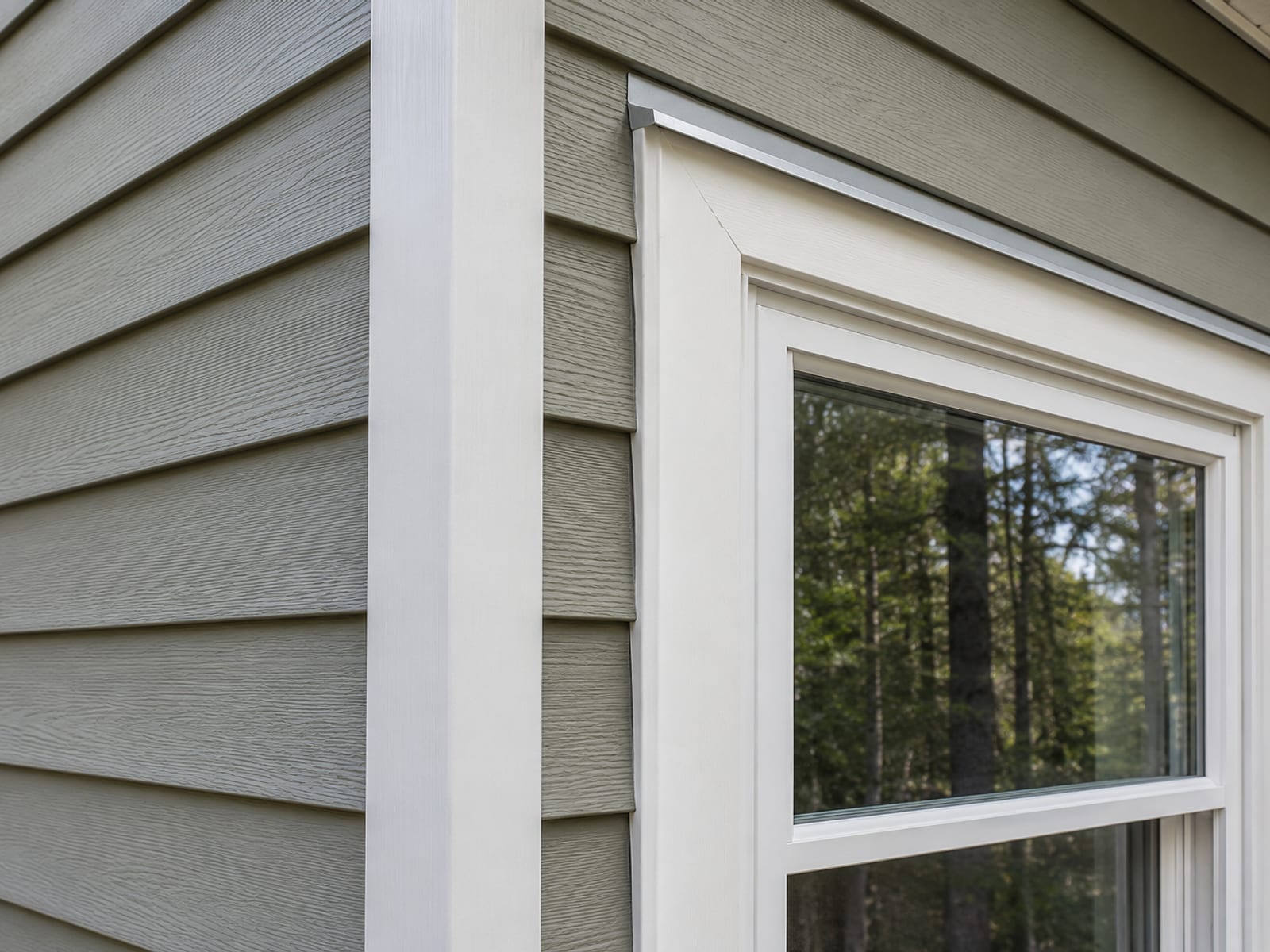
The panels you see from the street are a small part of the work. A complete installation can include removing the old cladding, inspecting and repairing the sheathing or framing, installing house wrap or another weather-resistive barrier, and flashing windows, doors, roof intersections and other penetrations. It also includes starter strips, corner posts, J-channel or other opening trim, soffit, fascia and rake transitions, fasteners, sealants, the clearances the manufacturer requires, and a final cleanup and inspection.
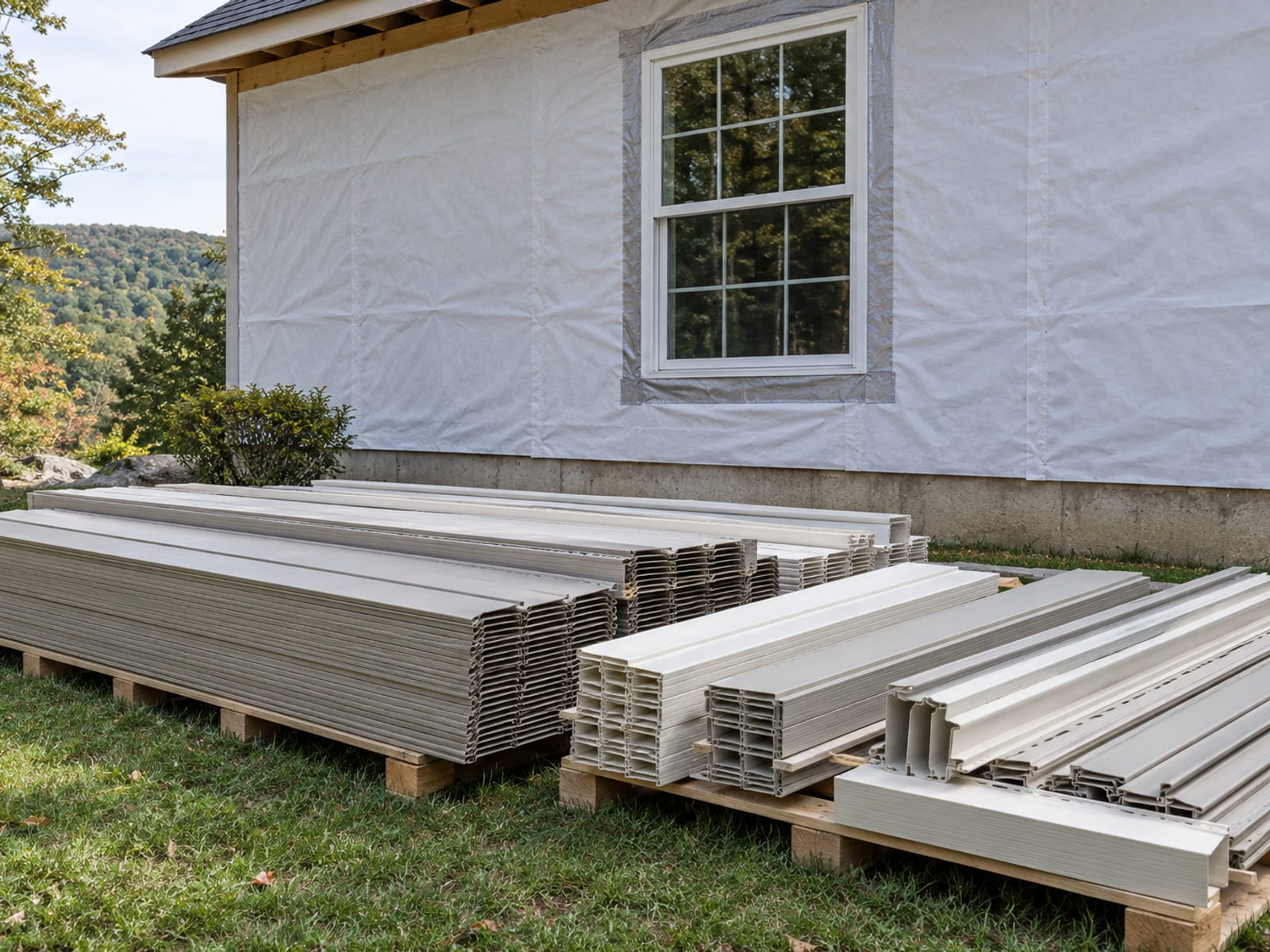
Siding should never go over concealed rot or failed sheathing. If the crew finds soft wood when the old siding comes off, that repair needs to be written up as its own line in the quote, along with any flashing replacement and any insulation work. Keeping them separate lets you see what you are paying for and compare quotes fairly.
Insulation is worth a conversation while the wall is open. ENERGY STAR's retrofit guidance recommends considering wall insulation when siding comes off, and for uninsulated wood-frame walls in climate zones 4 through 8 it suggests adding R-5 to R-10 insulative sheathing beneath the new siding. That depends on your actual wall assembly and the code, so ask the contractor what fits your house.
See How the Job Runs From Inspection to Final Walkthrough
Most siding projects follow the same order, and knowing it lets you spot a quote that skips a step. It begins with the inspection and a written scope. Then comes the permit, if the work needs one. After that the crew removes the old siding, checks and repairs the wall underneath, and puts the barrier and flashing in before any new panel goes up. The siding and trim go on next, and the job ends with cleanup and a final walkthrough.
The written scope is where you protect yourself. Before signing, it should name:
- Material details: the siding material, profile, color and manufacturer.
- Tear-off and disposal: who removes the old siding and hauls it away.
- Wall repairs: how sheathing or rot repairs will be handled and priced.
- Barrier and flashing: the house wrap or other barrier, and flashing at windows and doors.
- Trim pieces: corner posts, starter strips and J-channel.
- Insulation: any insulated siding or insulative sheathing.
- Responsibilities: who applies for the permit and who arranges inspections.
- Schedule and payment: start and completion dates, and a payment schedule.
- Warranties: both the workmanship warranty and the manufacturer warranty.
Danbury homes sit on lots with mature trees, and the city's Forestry Division looks after trees and shrubs on public ground. On your own lot, ask the contractor to assess overhanging branches, ladder access and how the landscaping will be protected during the work.
Ask which inspections apply to your project and how the permit will be closed out. The Danbury Building Department lists inspections at 203-797-4581, and the city's Permit Center can tell you what your project needs.
Read a Siding Quote Line by Line
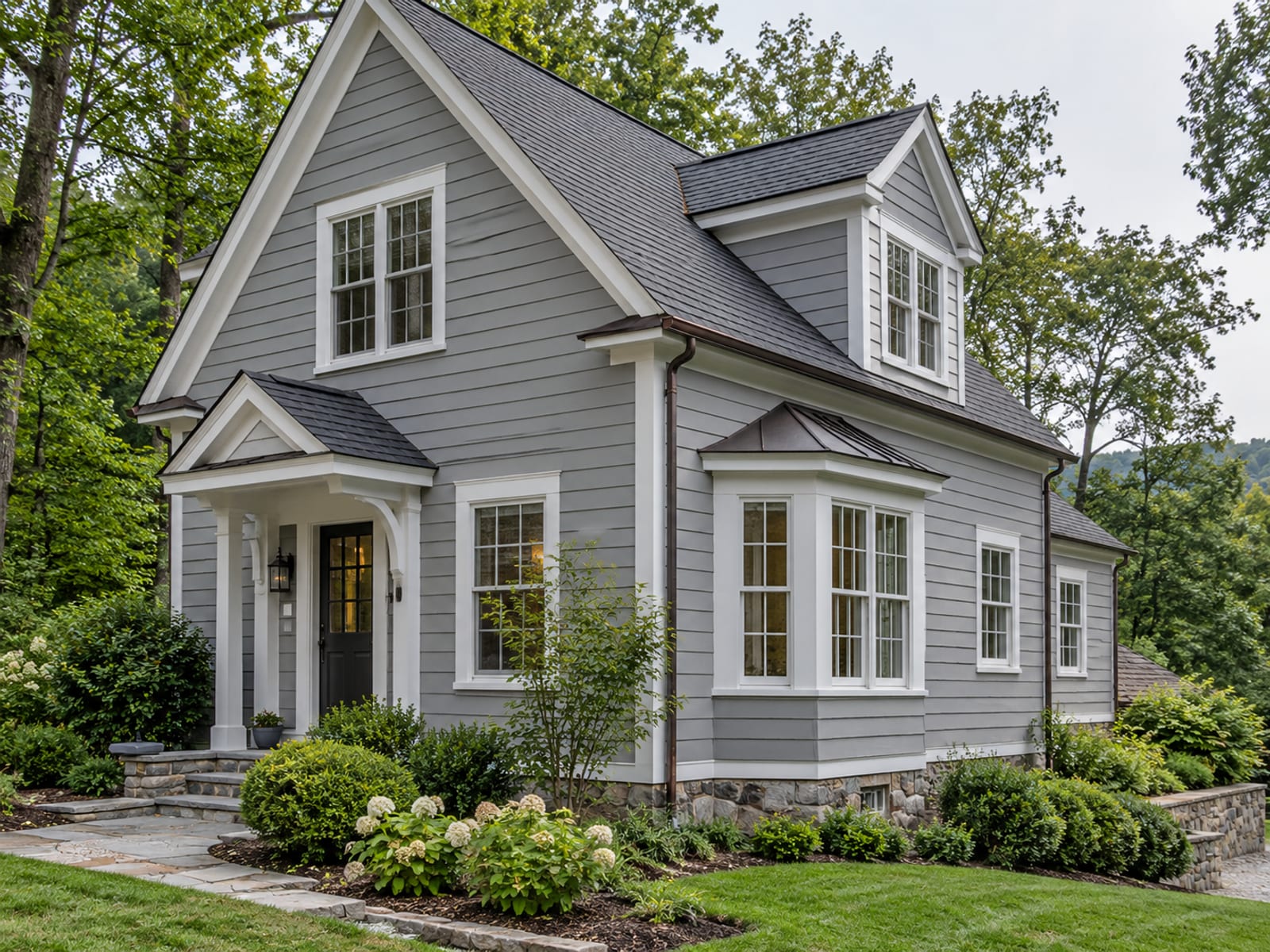
The first thing to check on any quote is the unit. A siding square is 100 square feet of installed coverage, which is the ordering definition the Vinyl Siding Institute uses. It is not 100 square feet of floor area. A two-story house with a small footprint can have far more wall than a ranch with the same floor space, once gables, dormers and bays are counted.
What Moves the Price of a Siding Installation
The total area to cover sets the number of squares.
Tap a factor to see how it moves the price.
On dollar figures, a 2023 Cost vs. Value report for the Hartford market lists a fiber-cement siding replacement project at $20,526 in its local cost column. That is regional industry data from 2023. It is not a Danbury quote and not a current contractor price. The most reliable number for your house will come from written quotes that use the same wall-area measurement and the same scope.
Ask each contractor to price the wall area and the components separately, so you can compare like with like.
Handle Permits and Lead-Safe Work on a Pre-1978 Danbury House
Whether you need a permit depends on how much siding the job touches. The 2022 Connecticut code exempts repairs limited to 25% of a building's siding within one calendar year. A full re-siding, or work above that limit, is outside the exemption and should go to the Danbury Building Department as a permit-related alteration. Confirm the exact classification with the city before work starts. The Building Department's number is 203-797-4580, and the Permit Center's is 203-796-1653.
Your contract should say who applies for the permit. Connecticut's Department of Consumer Protection says both sides must agree on that, and advises homeowners to verify the permit was actually obtained before work begins. If the contractor is applying, call the building official yourself to confirm.
Danbury's permit price list, effective July 1, 2024, bases residential building permit fees on construction cost: $22 for the first $1,000, $11 for each additional $1,000, plus a state education fee of $0.26 per $1,000. Ask the city to calculate the fee for your project from the declared cost.
Skipping a required permit can bring municipal enforcement and can mean the work misses the inspections that come with a permit. That can complicate a sale, a refinance or proof of improvements, so ask the building department what applies to your situation.
With so many Danbury houses built before 1980, lead paint deserves attention. For a home built before 1978, paid siding work that disturbs painted surfaces can fall under EPA's Renovation, Repair and Painting rule, which requires certified firms and lead-safe work practices. EPA treats exterior work affecting more than 20 square feet of painted surface as beyond the minor repair threshold, and removing aluminum siding can trigger the rule if painted material underneath is disturbed.
On a pre-1978 house, ask for:
- Certification: proof the firm is an EPA-certified renovation firm, and the name of the certified renovator supervising the work.
- A testing plan: how painted surfaces will be tested or treated as lead-containing.
- Required information: the Renovate Right pamphlet.
- Containment and cleanup: how dust will be controlled and the site cleaned.
- Disposal and records: a written plan for debris and project records showing compliance.
Hire a Connecticut Siding Contractor You Can Verify
Siding is expressly home improvement work in Connecticut, so the contractor must hold an active registration with the Department of Consumer Protection. You can check it on the state's eLicense lookup. To qualify for registration, an applicant must carry at least $20,000 in general liability insurance, according to the DCP application page. Our registration is CT HIC #0633301.
Verify Before You Sign a Siding Contract
Look the contractor up on the state lookup before the first meeting.
Tap a factor to see how it moves the price.
Connecticut's 2025 DCP guidance identifies a three-business-day cancellation period, and Saturday counts as a business day. Some of the most common mistakes are comparing quotes with different scopes, measuring by floor area instead of wall area, accepting a low bid that leaves out substrate repairs, letting siding cover rot, skipping questions about flashing, and signing before the permit obligation is clear. The Connecticut Attorney General also publishes home improvement consumer information.
Homeowners in Danbury who want the exterior looked at as a whole can also start with a Danbury roofing contractor, since roof edges and gutters so often sit behind a siding problem.
Frequently Asked Questions About Siding Installation in Danbury, CT
Do I need a permit to replace siding in Danbury?
Connecticut's 2022 code exempts repairs limited to 25% of a building's siding within one calendar year. A full re-siding, or work beyond that limit, should be submitted to the Danbury Building Department as a permit-related alteration. Confirm the classification with the city before work begins.
How do I get a siding permit in Danbury?
Danbury's Permit Center coordinates applications that involve the Building Department and other city departments. Your contract should say whether you or the contractor will apply. If the contractor applies, verify with the building official that the permit was obtained before work starts.
What happens if I do not pull a required permit?
The work may face municipal enforcement and may not get the inspections that come with permitted work. It can also complicate a sale, a refinance or documenting improvements. Ask the Danbury Building Department what applies to your project.
What is the easiest siding to install?
Vinyl is generally the simplest of these materials for routine installation, because the panels are lightweight, factory-finished and installed with interlocking profiles and accessory trim. The Vinyl Siding Institute still requires it to go over a weather-resistant barrier system and to follow the product instructions.
How much does a square of siding cover?
One siding square equals 100 square feet of installed coverage. Ask your contractor whether the number of squares is based on net wall area or includes waste, accessories and trim.
What is the best siding for a Connecticut house?
No single material is best for every house. Vinyl emphasizes low routine upkeep, fiber cement resists water absorption, engineered wood gives a wood look with specific clearance and repainting needs, and cedar offers natural character with more finish and moisture upkeep. Match the material to your priorities and compare each product's warranty.
How do I choose a siding color?
Consider the house style, roof color, trim, sun exposure, nearby trees and the manufacturer's color-retention instructions. Darker colors may absorb more solar heat. Look at physical samples outdoors before deciding.
Quick Siding Knowledge Check
1. How much installed coverage is one siding square?
2. What does Connecticut's code exempt from permitting?
3. What does a quote need to say about its squares?
4. What can bring EPA's lead-safe rule into a siding job?
5. What is the cancellation period for a Connecticut home improvement contract?
Final Thoughts
Good siding starts with the wall behind it. Find where the water is really coming from, measure the job by wall area, and ask for a written scope that lists the barrier, flashing, repairs and trim. Check what Danbury requires for a permit, and if the house was built before 1978, ask about lead-safe practices before anyone starts removing paint-covered siding.
Done with that groundwork, a new siding job gives you a drier wall and a house that holds up through Connecticut winters. The time you spend on the scope and the contract now is what keeps surprises off the final bill.
If you are a Danbury homeowner thinking about new siding, American Quality Roofing and Siding can help. We have served Central and Western Connecticut since 2006 from our home base in Brookfield, and we handle siding, roofing, gutters and 24/7 emergency roof services. We are licensed and insured, CT HIC #0633301, with free estimates. Call us or request a free estimate, and we will look at the wall, not just the panels.
Serving Danbury, CT
This guide is part of our exterior work in Danbury. See our roofing contractor services in Danbury, CT.
Written by Jose Zaruma, American Quality Roofing and Siding.
← Back to the blog