Roofing Guide
Exterior Painting Timing for Danbury Homes and Local Weather
By Jose ZarumaPublished
- exterior painting
- danbury ct
- connecticut
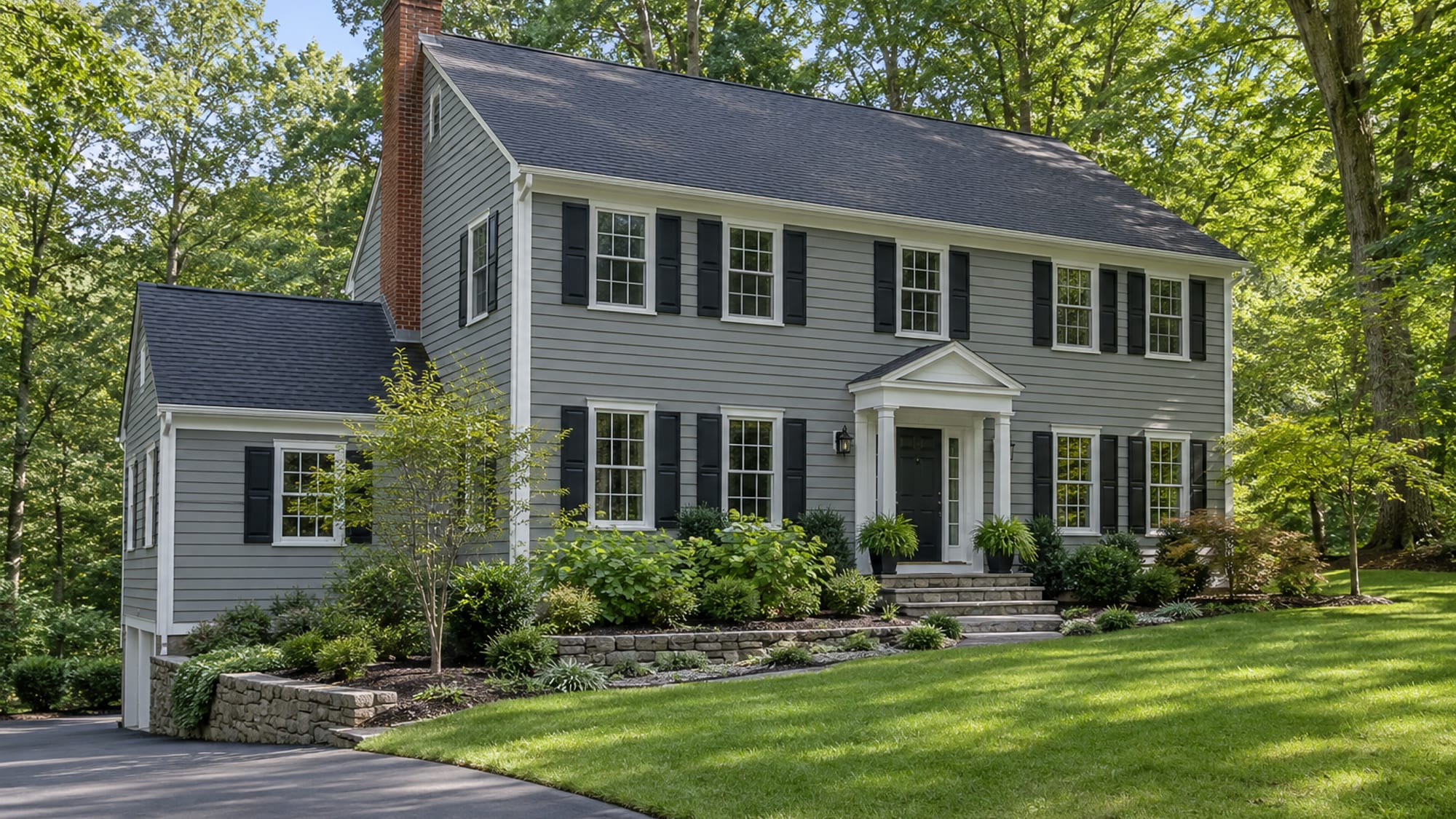
The best window for exterior painting in Danbury is generally May through September, when the city's average temperatures run well above the 50°F that standard latex paint calls for. April and October can still offer good workdays, but the margin is thinner and a single cold night can undo a day's work.
Before you pick a month, though, there is a bigger decision: whether your siding can be prepared and repainted, or whether rot, cracked boards, failed caulk or a leaking gutter needs fixing first. Paint over a damaged surface and it peels again, whatever the weather was on the day.
Danbury sits at about 405 feet elevation, with cold winters and measurable snow from November through March. That leaves a real stretch of the year when exterior painting is off the table, so it pays to line up the siding check and the quotes early.
Key Takeaways
Repair decides before color does
Peeling, chalking and fading call for repainting, while rot, warping and water intrusion call for carpentry or siding replacement first.
May through September has the widest margin
Danbury's 1991 to 2020 normals put those months at 60.4°F to 74.5°F, against 50°F for standard latex and 35°F for some products.
Planning ranges, not quotes
A 2026 Connecticut contractor guide lists $3,500 to $6,500 for a 1,000 to 1,500 square foot home and $5,000 to $9,000 for a 1,500 to 2,500 square foot colonial.
Paint life depends on preparation
Benjamin Moore says exterior paint commonly lasts 5 to 12 years, and an EPA guide puts careful work at 15 years or more.
Is Your Siding Ready for Paint or Does It Need Repair First?
Walk around the house in daylight and look at the siding the way a painter would. You are sorting problems into two piles: surface wear that paint can fix, and damage that paint will only cover for a season. The sorting matters because it changes the quote, the schedule and the result.
Repainting is generally the right call when you see widespread peeling, chalking (a powdery film that rubs off on your hand), fading, cracking, blistering, failed caulk or patches of exposed substrate. These are signs the finish has worn out while the material underneath still does its job.
Painting is not a substitute for siding replacement when the substrate is rotted, structurally damaged, warped, repeatedly swelling, cracked beyond repair or letting water in. James Hardie's replacement guidance separates the two cases for fiber cement: small cracks, chips and dents can be repaired with suitable patching compound, while severe or widespread deterioration may call for replacement.
Here is what to check today, before you call anyone:
- Identify the siding material: Wood, fiber cement, vinyl, brick or stucco each take different products and preparation.
- Locate peeling and bare areas: Photograph them with the date.
- Look for rot and loose boards: Press a screwdriver tip gently into suspect wood at corners, trim and the bottom edge of siding.
- Check caulk and water stains: Failed joints and dark streaks under windows point to water getting in.
- Look at the gutters and downspouts: A leaking gutter that soaks one wall will ruin fresh paint on it.
- Find the build year: A house built before 1978 triggers lead-safe rules, covered below.
Never climb onto a roof or a tall ladder to inspect high areas yourself. Binoculars from the ground show most of what you need, and a contractor can assess the rest safely. An on-site assessment this week should separate surface preparation, siding repairs, primer, finish coats, trim, access equipment and cleanup, so you can see what each piece costs.
What Preparation Makes the Finish Last?
The finish coat gets the attention, but preparation does most of the work of making paint last. An EPA preservation guide (Green Home Guide) names washing, sanding, priming bare wood and keeping siding dry as the measures that protect a finish. A good scope walks through these steps in order.
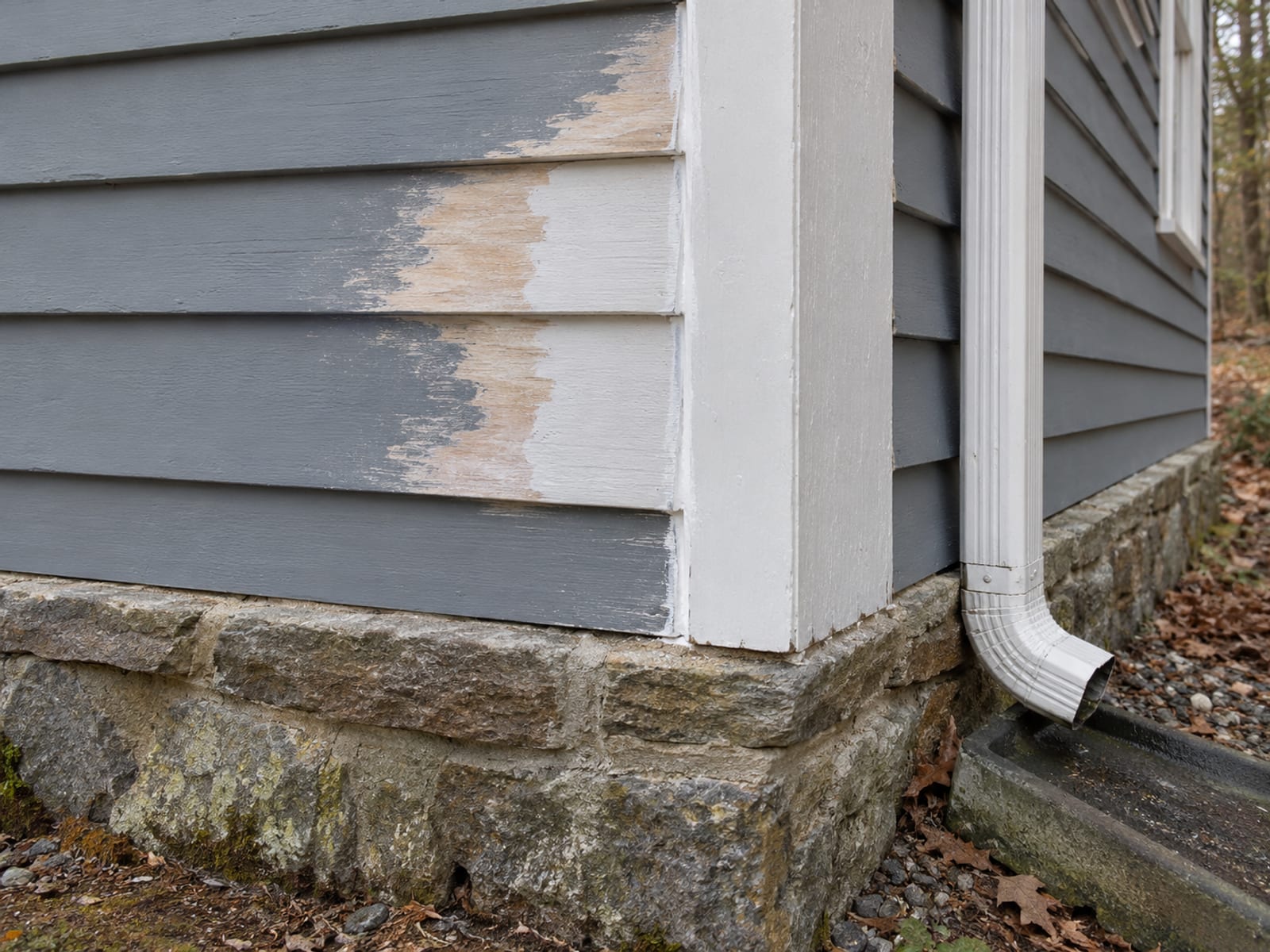
Step six is the one homeowners skip. If a downspout empties against the foundation and splashes back onto the lower boards every storm, the paint there fails early no matter how well it was applied. Gutters and downspouts are part of the exterior, and an estimate that ignores them is leaving out a common cause of peeling.
Ask the contractor to name the scraping, bare-wood priming, carpentry, number of coats and exclusions in the proposal. If any of those words are missing, the price probably leaves them out.
How Many Years a Good Paint Job Can Last
Lifespan depends on conditions, so published numbers are ranges. Benjamin Moore says exterior paint commonly lasts 5 to 12 years, depending on preparation, product, local weather and the material being painted.
For wood siding and trim, the EPA preservation guide says painted finishes ordinarily last 5 to 7 years and can last 15 or more when preparation, application and finish selection are handled properly. That is general guidance for wood, not a promise for your house. Southern exposure, shaded north walls, water exposure and the condition of the wood underneath all pull the number up or down.
Factory finishes follow different rules. James Hardie states that its ColorPlus factory finish carries a 15-year limited warranty covering paint and labor, and that its fiber-cement products carry a separate 30-year non-prorated product warranty. A factory-finished board can still be repainted if you want a different color. No single repaint interval fits every vinyl, aluminum or other siding, so ask the manufacturer's literature for your product.
A fresh coat over sound, well-prepared siding is a sensible investment. A fresh coat over rot is a short-term cover-up.
The Connecticut Weather Window for Exterior Painting
Weather decides whether paint dries into a lasting film or fails in a season. Sherwin-Williams advises keeping the temperature within a product's suggested range and above the dew point (the temperature at which moisture condenses out of the air) for at least 48 hours after application. Its exterior application guidance lists 50°F as the standard latex recommendation, while some products are designed for application down to 35°F.
Here is how Danbury's monthly averages compare to those thresholds, using the NOAA station's 1991 to 2020 normals.
Danbury Normal Mean Temperatures, 1991 to 2020
Normal Mean Temperature: 49.9°F
How It Compares to Paint Thresholds: Just under the 50°F latex recommendation on average; workable days depend on the forecast.
Tap a factor to see how it moves the price.
Based on those numbers and the manufacturers' temperature thresholds, May through September gives the widest margin. That is a reading of the temperature data against product limits, not an official Connecticut painting season, and individual weeks vary.
A few more weather details matter on the job itself:
- Wait after rain: Sherwin-Williams recommends at least one day after heavy rain, and longer for absorbent wood or masonry.
- Avoid hot, direct sun: Direct sunlight and temperatures above 100°F can cause drying and adhesion problems, and excessive heat can produce lap marks and blistering. Painters often follow the shade around the house.
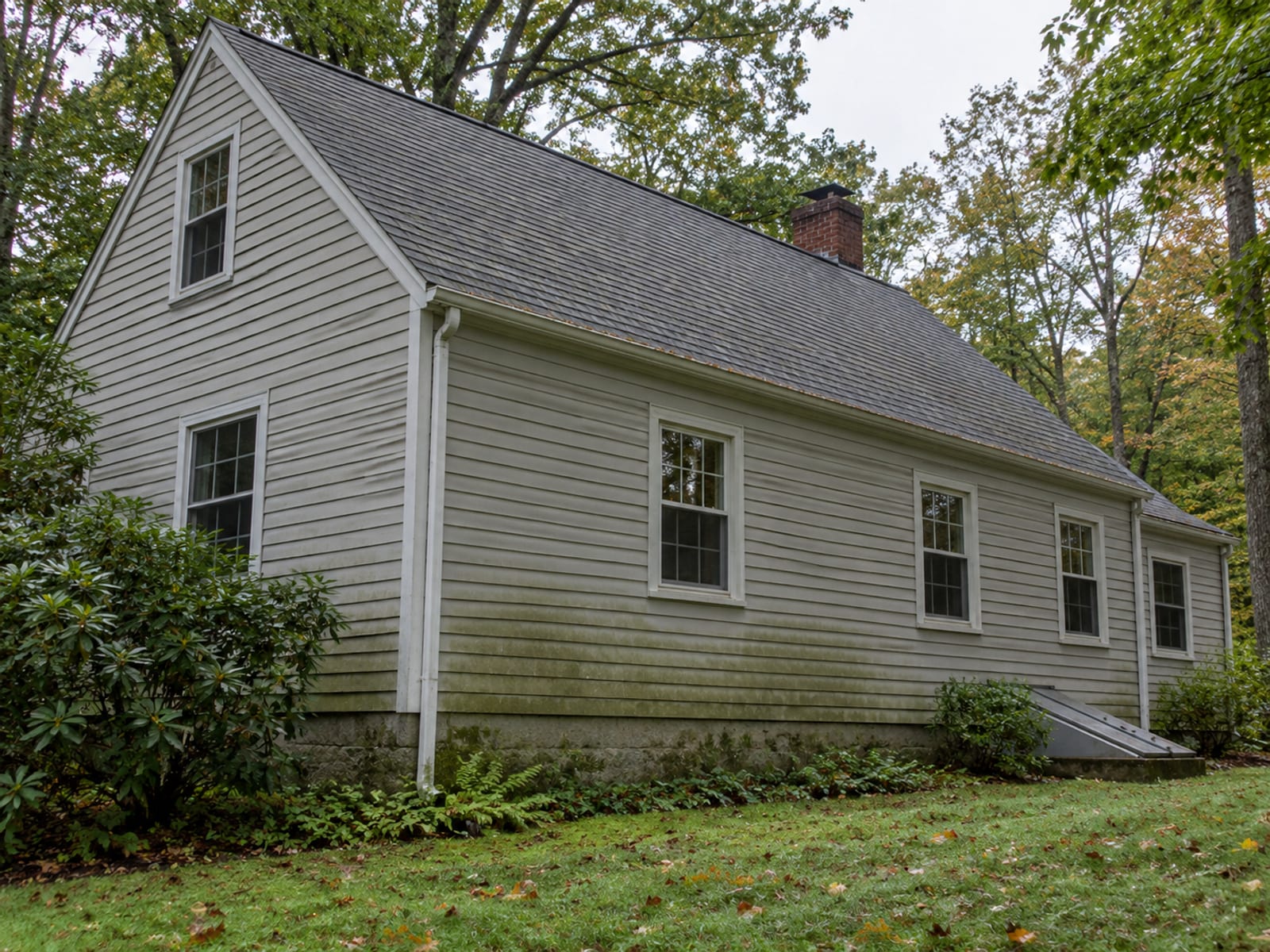
- Expect slower drying in shade: Wooded lots, common around Danbury, can keep north walls damp longer.
- Ask about delays: Rain or cold can push the schedule, so ask what happens to the dates if the weather turns.
What Exterior Painting Costs in Danbury Depends On
Published Connecticut pricing for exterior painting comes from contractors rather than from any government or industry standard. One Connecticut painting contractor's 2026 pricing guide gives these planning ranges, and it names preparation as a major cost driver.
Connecticut Exterior Painting Planning Ranges (2026 Contractor Guide)
$3,500 to $6,500
Tap a factor to see how it moves the price.
These are not Danbury quotes. The categories overlap at 1,500 square feet because house form and scope affect price, so a 1,500-square-foot house and a 2,000-square-foot house each need an on-site proposal. Use the ranges to sense whether a bid is in the neighborhood, not to judge it.
What pushes a Danbury bid up or down:
- Scraping, sanding and cleaning: More failed paint means more hours.
- Bare-wood priming and stain blocking: Exposed wood needs primer before the finish.
- Rot or siding repairs: Carpentry before painting adds cost.
- Stories and access: Taller houses need longer ladders or lifts.
- Siding material and condition: Each material has its own preparation.
- Coats and paint grade: Two coats of a better product cost more than one of a basic one.
- Trim, shutters, doors and porches: Each is a separate scope item.
- Lead-safe work: Containment and cleanup apply to covered pre-1978 work.
- Access, protecting plantings and disposal: Shrubs and beds need covering and debris needs hauling.
- Weather delays: Rain days stretch the schedule.
Compare proposals only when they cover the same surfaces, the same preparation and the same number of coats. A lower price that skips priming is a different job from a higher one that includes it.
Choosing Colors for Siding, Trim and Two-Color Homes
Start the palette with what cannot change: the roof color, brick, stone, masonry, foundation and permanent plantings. The body color and trim or accent color should be judged together, in natural light, on more than one side of the house. A color that looks right on the sunny front can read much darker on a shaded side.
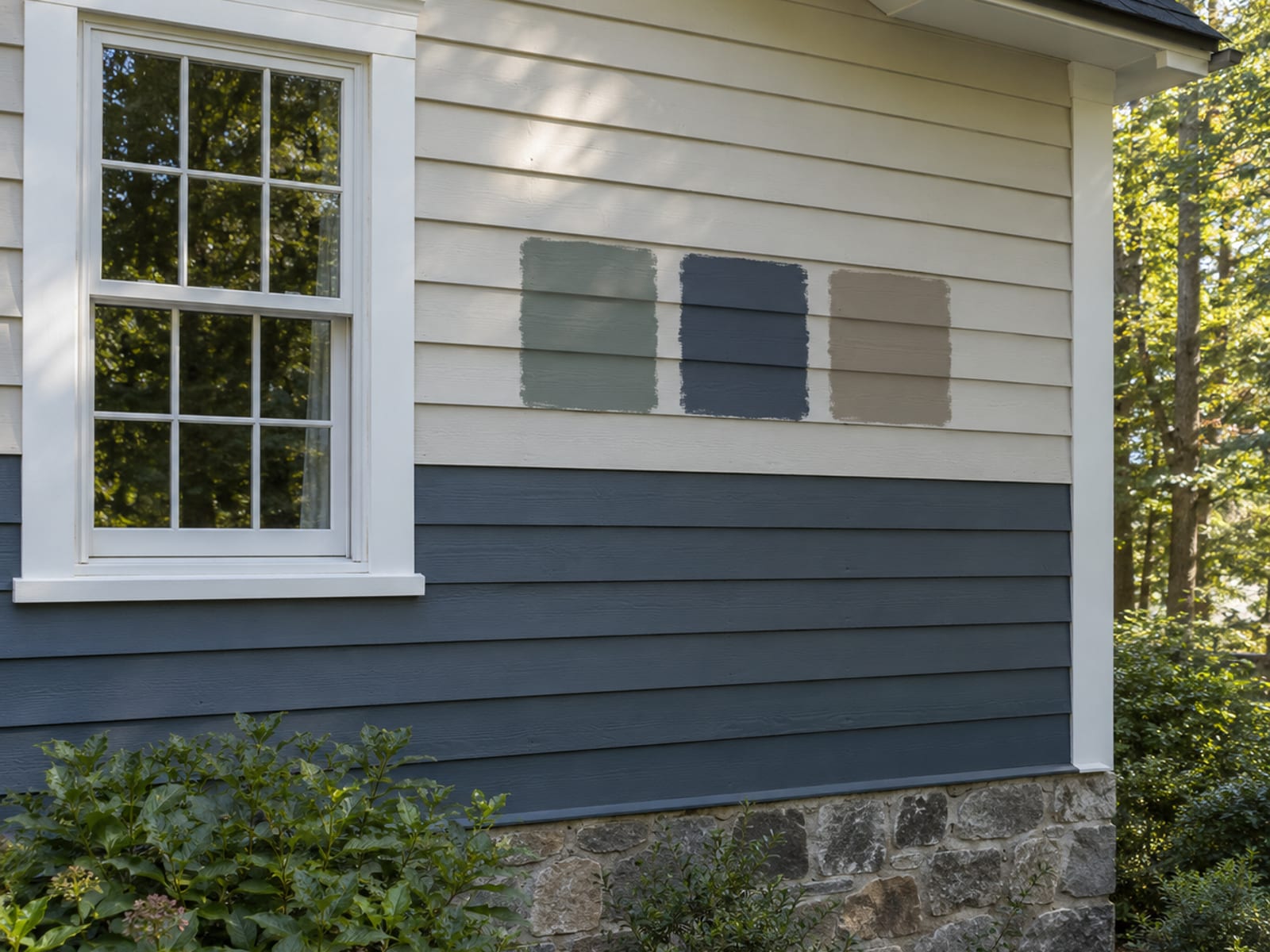
Wooded lots matter here as well. Shade can make a color appear darker and slow drying on shaded elevations. A color simulator is fine for comparing broad combinations, but a physical sample on your actual siding is the more reliable final test. Look at it in morning, afternoon and shade before you commit.
A specific two-color scheme depends on your roof, masonry and plantings, so a painter or color consultant needs to see the house.
Danbury Permits, Older Homes and Lead-Safe Rules
Connecticut's current State Building Code is the 2022 code, effective for permit applications filed from October 1, 2022, and it adopts the 2021 International Residential Code. Danbury's Building Department administers it for new construction, additions and renovations, and the city's Permit Center handles applications online.
Whether painting alone needs a permit depends on your exact scope. Call the Permit Center at 203-796-1653 before work starts and describe the job: painting only, or painting with siding replacement or other construction. Ask who applies for any required permit, whether a fee applies and whether an inspection is needed, and get the answers in writing.
If your house was built before 1978, EPA's Renovation, Repair and Painting rule applies to paid work that disturbs painted surfaces. The firm must be EPA-certified or state-certified, use a trained renovator and give you lead-safety information before work begins.
Lead-safe practices include containing the work area, minimizing dust, using wet methods or HEPA-equipped tools where appropriate, controlling debris and finishing with detailed cleanup. EPA has a minor-repair exception that covers no more than 20 square feet of disturbed exterior paint, but it does not apply to prohibited practices or to certain demolition and window-replacement work. The actual disturbance area and methods decide coverage, so ask the contractor how the rule applies to your job.
How to Vet a Connecticut Painting Contractor
Connecticut counts painting as home improvement, so a contractor working directly with a homeowner generally has to hold a Department of Consumer Protection registration. You can verify the registration through the state's eLicense system, and the DCP's home improvement page explains the rules.
- Contractor name and HIC number: Written on the contract.
- Complete scope: Including changes, which should also be in writing.
- Dates: Signing, start and completion.
- Cancellation notice: Your three-business-day right to cancel.
- Price and payment terms: Along with any other agreed conditions.
DCP's guide to contracting with a home improvement contractor is a short read worth keeping on hand. Beyond the contract, ask for evidence of general liability insurance and workers' compensation coverage where it applies, who will actually do the work, and references on jobs with similar siding and preparation. Ask the contractor to name the paint and primer products, and whether the firm is EPA RRP-certified if your house predates 1978.
A manufacturer certification shows product-specific training, but it does not replace a Connecticut HIC registration, insurance or a complete contract.
Use this list of questions with each bidder:
- Is scraping included?
- Is bare wood primed?
- Are caulking and carpentry repairs included?
- How many finish coats are included?
- Which surfaces are excluded?
- Who pays for any permit, if one is required?
- What warranty covers labor, and what covers the paint?
- What happens to the schedule if rain or cold weather delays the work?
Avoid the mistakes that show up again and again: accepting a price without a preparation scope, ignoring bare wood or rot, choosing a color without testing it on the siding, overlooking water problems, skipping lead-safe questions, agreeing to verbal change orders and comparing proposals that cover different surfaces or coats.
Frequently Asked Questions About Exterior Painting in Danbury, CT
When is the best time of year to paint the outside of a house in Danbury?
May through September gives the widest temperature margin in Danbury's 1991 to 2020 normals, against 50°F for standard latex and 35°F for some products. April and October can offer suitable days, but check the forecast for each product's range, a dry surface and 48 hours above the dew point.
How much does it cost to paint a 2,000-square-foot house exterior?
A 2026 Connecticut contractor guide lists $5,000 to $9,000 for a typical 1,500 to 2,500 square foot colonial. That is a planning range from contractor practice, not a Danbury quote. Preparation is the main cost driver, so an on-site proposal will give a better number.
What about a 1,500-square-foot house?
The same guide lists $3,500 to $6,500 for 1,000 to 1,500 square foot homes or ranches, and its colonial category starts at 1,500 square feet. House form and scope affect where yours falls, so get a written estimate.
When should you not paint the outside of a house?
Skip days when the surface is wet, when rain or heavy dew is expected during drying, when the temperature is below the product's minimum, or when it is likely to leave the recommended range while the paint cures. Sherwin-Williams also warns about direct sun and temperatures above 100°F.
How long does exterior paint last?
Benjamin Moore says 5 to 12 years is common. An EPA preservation guide says 5 to 7 years is ordinary for wood and 15 or more is possible with careful preparation. Your house may fall outside either range.
Do I need a permit to paint the outside of my Danbury house?
It depends on the scope. Call the Danbury Permit Center at 203-796-1653 with the exact work planned, and ask who applies and whether a fee or inspection applies.
Should I repaint or replace my siding?
Repaint when the siding is sound and the finish is worn. Repair or replace first when you have rot, warping, repeated swelling or water getting in. A contractor who looks at the siding in person can tell you which applies.
Exterior Painting Timing Knowledge Check
1. Which months give Danbury the widest temperature margin for exterior painting, based on 1991 to 2020 normals?
2. According to Sherwin-Williams, how long should the temperature stay in range and above the dew point after application?
3. What is the standard latex temperature recommendation mentioned by Sherwin-Williams?
4. Which problem calls for repair or replacement before painting?
5. Who should you call to confirm whether your exact painting scope needs a permit in Danbury?
Final Thoughts
Exterior painting in Danbury works best when the order is right: check the siding first, prepare it properly, then paint in the May through September window when the temperature margin is widest. The Connecticut planning ranges of $3,500 to $6,500 and $5,000 to $9,000 give you scale, and a written, itemized proposal gives you the real price.
Careful preparation is what carries a paint job past the low end of the 5 to 12 year range. A written contract with the HIC number, dates and cancellation notice protects you, and a call to the Permit Center settles the permit question before it can delay the job.
If your siding is peeling, chalking or faded, we can help. American Quality Roofing and Siding is based in Brookfield, CT, serves Danbury and the surrounding area, and holds CT HIC #0633301. We handle exterior painting along with siding, gutters, downspouts and roofing. Request a [free estimate/) or call us, and we will tell you whether your siding is ready for paint or needs repair first.
Serving Danbury, CT
This guide is part of our exterior work in Danbury. See our roofing contractor services in Danbury, CT.
Written by Jose Zaruma, American Quality Roofing and Siding.
← Back to the blog