Roofing Guide
How to Choose a Siding Company in Connecticut
By Jose ZarumaPublished
- siding
- siding installation
- hiring a contractor
- connecticut

Choose the siding company whose Connecticut registration checks out, whose insurance you have confirmed, whose written quote lists every part of the job, and whose payment plan follows the work. The lowest number on the page should not be the deciding factor. A price only means something when you know what it includes and who stands behind it.
If you are holding two or three bids that look nothing alike, that is normal. One may list house wrap and flashing while another says only "install siding." The difference in the totals often lives in those missing lines, not in the quality of the crew.
Everything below can be done at your kitchen table before the second visit. Most of it takes a phone call, a website lookup and a careful read of each quote.
Key Takeaways
Verify before you compare
look up the company's Home Improvement Contractor (HIC) registration with the Department of Consumer Protection and make sure the legal name matches the contract.
Confirm insurance with the insurer
ask for proof of general liability and workers' compensation coverage, then call the carrier.
Compare scope, not totals
removal, wall inspection, water-resistive barrier, flashing, trim, permits, cleanup and both warranties should appear on every quote.
Pay by progress
DCP recommends a deposit generally no higher than one-third of the price, so half up front is above that guidance.
A manufacturer program is a bonus, not a substitute
it does not replace registration, insurance or a written contract.
Run This Checklist Before the Second Visit
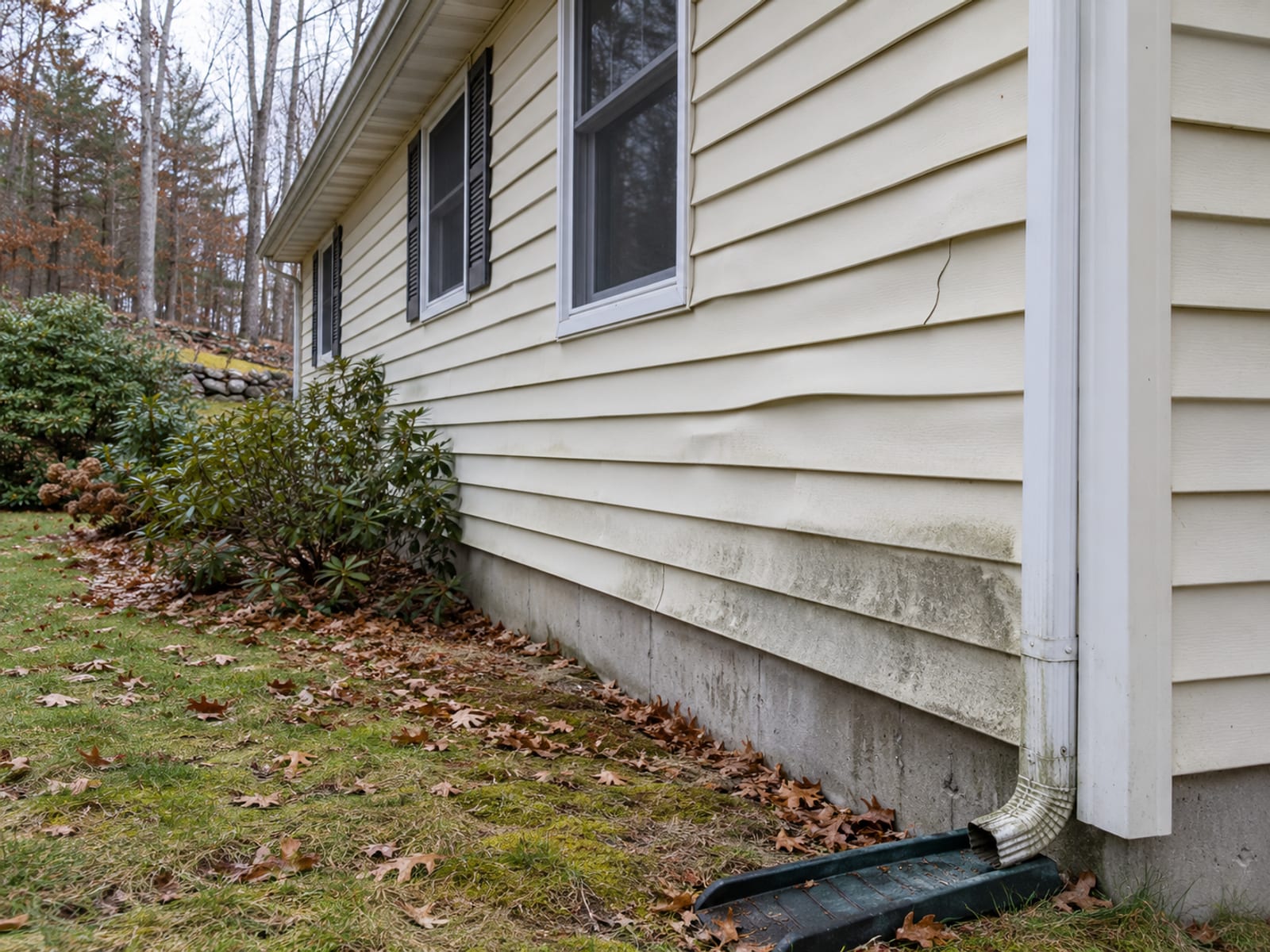
Start with what you can do today. Walk around the house and photograph cracked, warped, loose or stained siding from the ground. Do not climb a ladder or get on a roof to get a closer look; a good estimator will inspect the high spots safely. Note the approximate age of the house too, because a home built before 1978 brings lead-safe requirements for any work that disturbs painted surfaces.
This week, line up the verification steps. Look up the registration, request insurance documents, ask for references and gather at least three written quotes from companies with siding experience similar to what your house needs. The Department of Consumer Protection (DCP) recommends getting at least three quotes and asking for references from similar projects, as it says in its consumer guidance on home improvement projects.
Before you sign anything, read the whole contract. Never sign one with blanks in it.
Confirm Registration and Insurance First
In Connecticut, siding is home improvement work, and a business that contracts with a homeowner for it must be registered with DCP as a Home Improvement Contractor. DCP explains the registration on its home improvement applications page. Search the company in DCP's eLicense lookup and confirm the registration is active. Then check that the name on the registration matches the name on the contract and on whatever you will pay, whether that is a check or a card receipt.
Insurance comes next. Ask for proof of general liability insurance and proof of workers' compensation coverage for the company's employees. DCP says homeowners should verify general liability coverage and may call the insurer to confirm the policy is active, and it identifies at least $20,000 in general liability coverage as a requirement for registration. A certificate on paper is a start; a call to the carrier confirms it is current.
References are the third piece. Ask for recent jobs with the same or a similar siding material, and ask how long ago each was finished. Find out whether the company handled removal, flashing, repairs, permits and cleanup on those jobs. Then confirm the work shown actually belongs to the company you are hiring, since a gallery of nice photos is easy to borrow.
It is also fair to ask whether the company's own employees will do the work or whether subcontractors will, and who answers a warranty call afterward. Either answer can be fine. What matters is that you know it before you sign.
Compare Quotes Line by Line
Three quotes can total three different amounts for three different jobs. To compare them fairly, lay them side by side and check that each one names the same items. DCP says the contract should identify the materials, the work, permits, cleanup, the payment schedule, the start and completion dates and your cancellation rights, as described in its guidance on what a home improvement contract should include.
What a Complete Siding Quote Names
Manufacturer, product line, profile, color, texture and finish.
Tap a factor to see how it moves the price.
If one quote leaves out a line that the others include, ask about it before you compare totals. The missing line has not disappeared. It may show up later as a change order.
Know What Belongs Behind the Siding
Most of the weather protection on a wall is out of sight. The siding is the visible layer, but the material behind it does much of the work of keeping water out of the framing. Connecticut's building code interpretation on vinyl siding describes a weather-resistant barrier system made of continuous weather-resistant material with properly integrated flashing around penetrations. The siding itself must follow the applicable code, the referenced standards and the manufacturer's installation instructions.
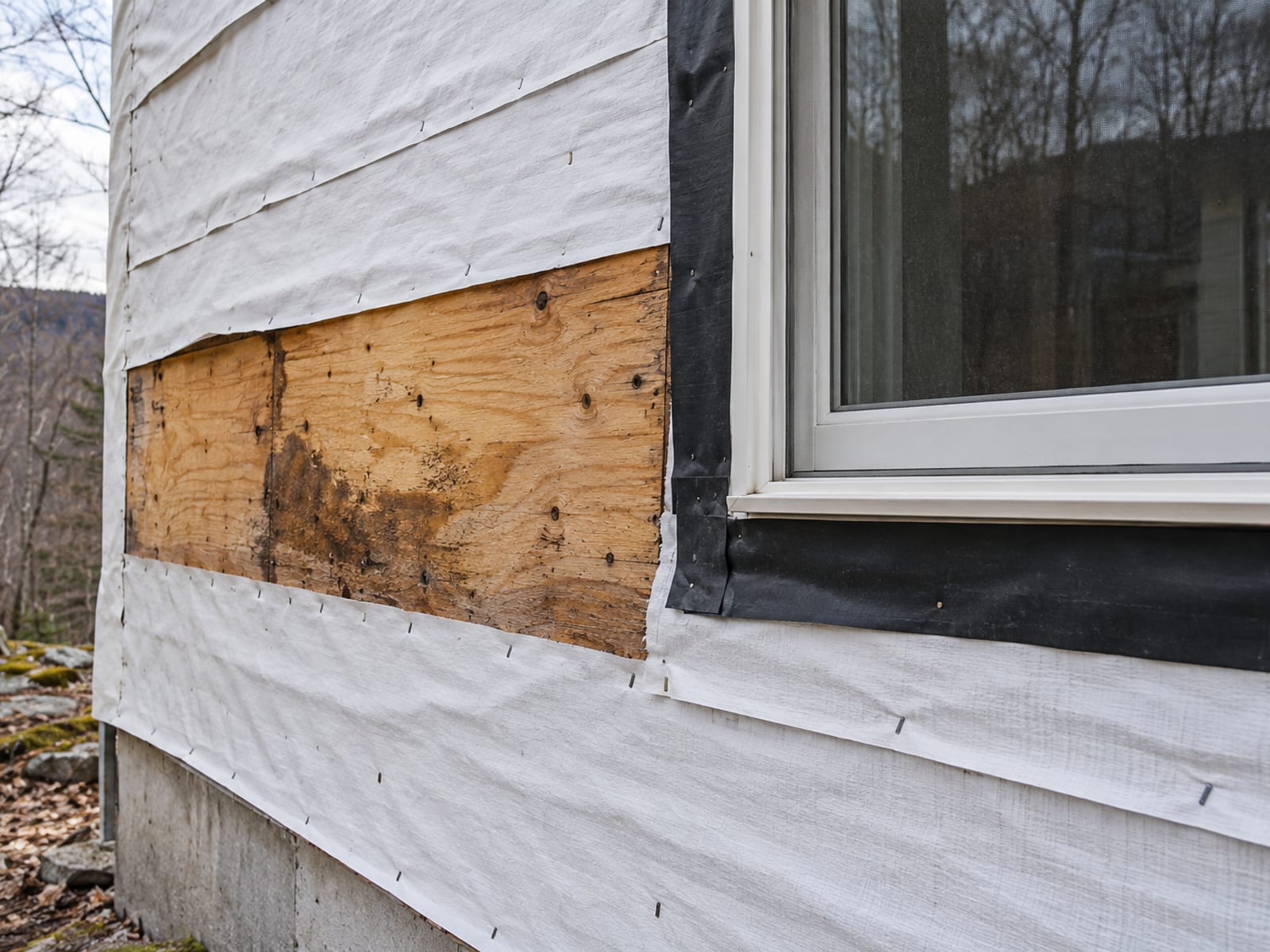
That last point is worth a direct question. Ask, "What happens if you find rot?" A clear answer names a price or a process in writing. If rot does turn up, related work such as wood rot repair belongs in the contract as an agreed change, not a verbal promise.
The same goes for the trim. Window and door trim, corners and the line where siding meets the roof all affect how well the wall sheds water. If your trim also needs paint, ask whether exterior painting is part of the quote or a separate line.
Understand Why Quotes Differ
Siding quotes spread apart for reasons you can usually trace. The exterior wall area matters more than the floor area, so a tall, narrow house with many gables may cost more to side than a long ranch with similar square footage inside. Material and finish change the price, as do the number of corners, dormers and roof lines, and how hard the walls are to reach.
Hidden work moves the total too. Removal and disposal, repairs to sheathing or insulation, house wrap and flashing at every opening all take time and materials. Permit requirements, trim and accessory details add more, and so does whether the quote includes painting, caulking and cleanup.
The most reliable number is the one written on a quote for your own house with the scope spelled out. Be careful with a price you get over the phone or from a national online calculator. It cannot know what is under your old siding.
When two bids differ by a large amount, ask each company to walk through the lines the other has. Often the cheaper bid skips the barrier, the flashing or the repair allowance, and the gap closes once the scopes match. If you are still deciding whether the wall needs new siding at all, read siding repair or replacement first.
If you want to see what a complete job involves from start to finish, the siding installation page walks through the materials and process.
Pay by Progress: Deposits, Dates and the Cancellation Right
Connecticut requires a written contract for home improvement work. It must include the contractor's HIC registration number, signatures, the contract date, the start and completion dates, and a notice of your right to cancel. Changes must be written too, and you should receive a copy.
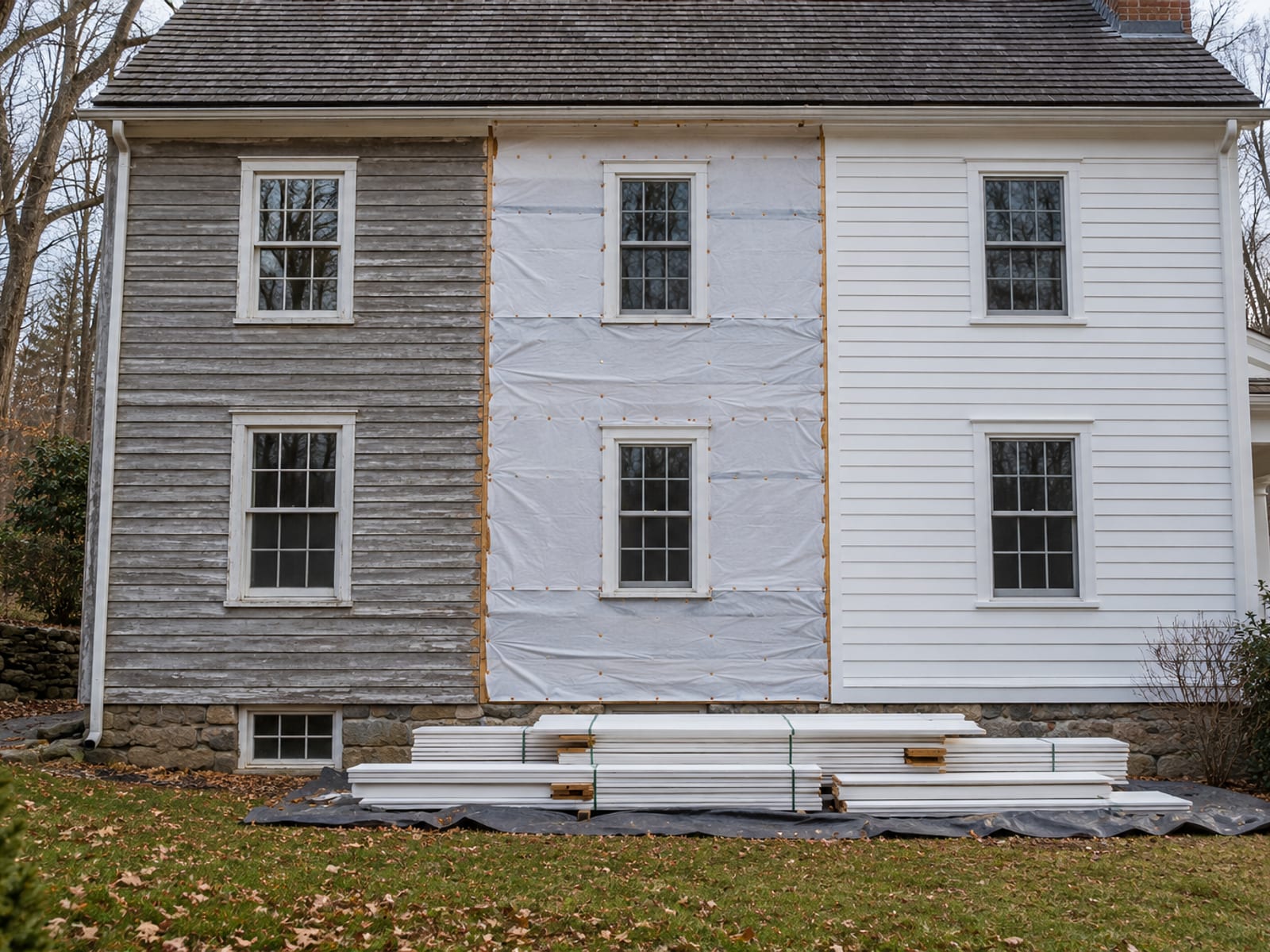
On money, DCP recommends that deposits not exceed one-third of the project price and that payments follow progress. Its guidance on working with a contractor suggests dividing the price into thirds.
A Progress-Based Payment Schedule (DCP Guidance)
Share of Price: One-third
What It Covers: The deposit and initial materials.
Tap a factor to see how it moves the price.
That makes a request for half the price up front higher than DCP's guidance. Pay by a traceable method such as a check or card, since DCP advises against cash and peer-to-peer payment apps. Keep every receipt. If you plan to borrow for the job, our guide to paying for new siding compares the usual options.
For timing, ask for start and completion dates in the contract. As a reference point, James Hardie says typical installation of its fiber-cement siding takes seven to 14 days depending on house size and repairs, per its FAQ page. Other products and weather can change that, so use the contract dates as the standard.
Spot the Signs That Mean Stop
Some behavior is a reason to slow down or walk away. DCP's guidance points to several, and a few more follow from the contract rules above.
- Pressure to sign right away: a deadline that disappears when you ask for time is a sales tactic, not a schedule.
- A large deposit or the full price up front: especially when it is requested quickly.
- Cash, gift-card, wire or peer-to-peer payment requests: payments should leave a paper trail.
- Refusal to share insurance information: you are entitled to see it.
- A blank, incomplete or handwritten contract, or one that leaves out the HIC number.
- A quote that skips the product, water-management work, trim, removal, permits or warranty.
- Financing papers handed over for immediate signature: a finance agreement deserves independent review, and DCP warns that some arrangements can place a second mortgage on the home.
- Door-to-door sales after a storm that push you to sign on the spot.
One warning sign does not always mean a bad company, but it does mean a closer look. Two or three together is a clear signal to step back and take your time.
Read Manufacturer Programs and Both Warranties
Siding manufacturers run programs that list or train installers. These can help you find contractors familiar with a product, and some give you a way to check a company against the maker's own directory. They do not replace Connecticut registration, insurance, references or a complete written contract.
If a company says it belongs to a manufacturer program, ask for the exact program name, then verify it in that manufacturer's own directory. James Hardie, for example, publishes a find a contractor tool and describes its training and support programs for installers. Every company you talk to, including us, should be willing to point you to the program page and name the program.
There are two warranties to compare, and they come from different places. The product warranty comes from the manufacturer. James Hardie's FAQ states that its fiber-cement products carry a 30-year non-prorated product warranty and that ColorPlus finishes carry a 15-year limited warranty covering paint and labor. The same page says James Hardie does not warrant installation, so installation coverage may come from the contractor. CertainTeed publishes its siding warranty information for the same purpose.
Ask for the workmanship warranty in writing: how long it lasts, what it excludes, how a claim is made and who does the repair. Ask whether registering the warranty or using particular installation methods affects coverage. The contract should list the manufacturer warranty and the workmanship warranty separately so neither gets mixed up.
Add Checks for Older Homes and Connecticut Weather
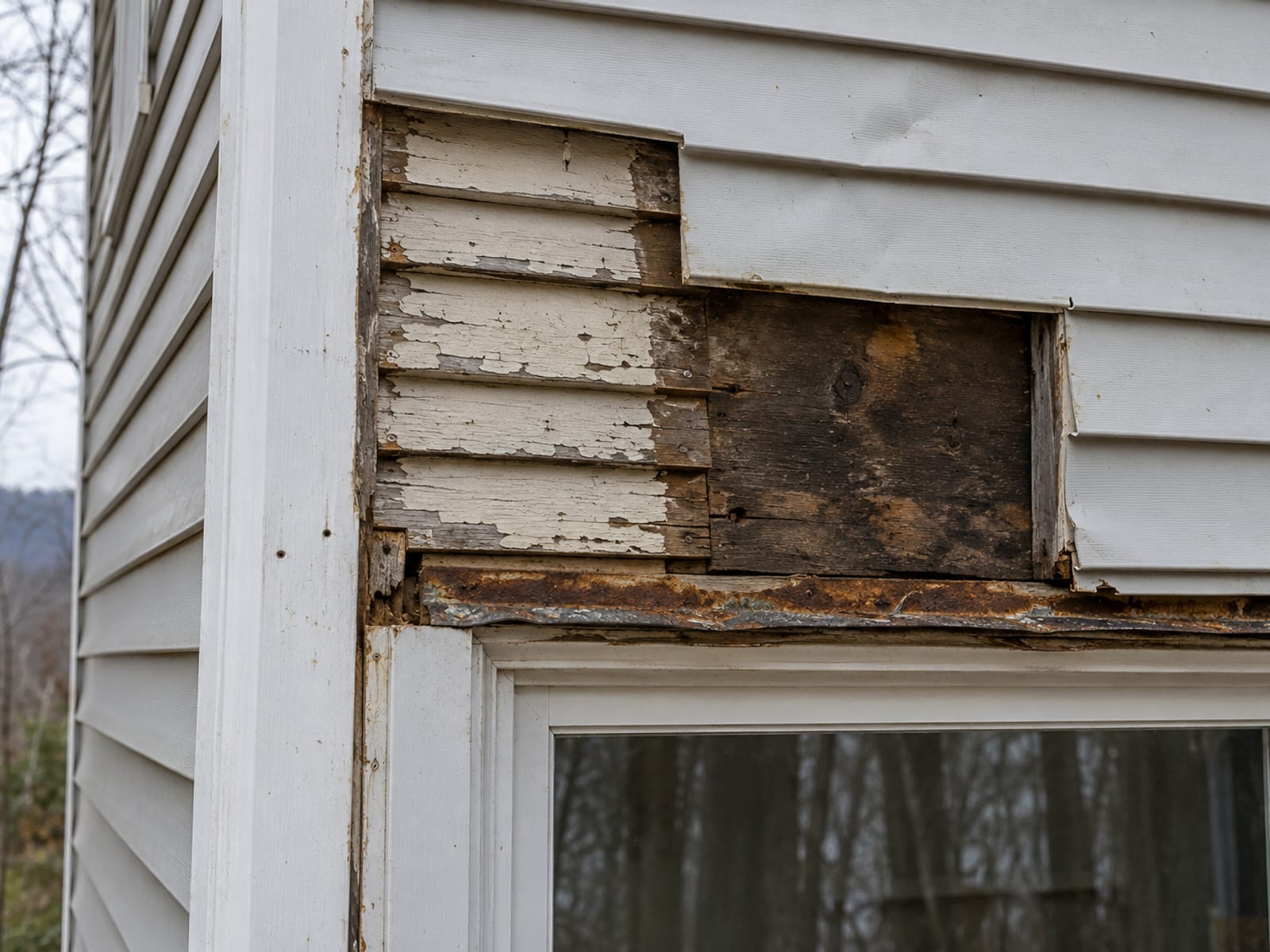
Older Connecticut houses call for extra questions. Their walls may hide earlier layers of siding, aging sheathing, worn flashing or earlier repairs, and nobody can tell until the old material comes off. Ask how the company handles surprises and what the change-order process looks like.
Weather is the other local factor. Connecticut sees snow, heavy rain, hail and damaging wind, and NOAA keeps storm event records for every Connecticut county. Ask each contractor how the product and the installation details they propose handle that exposure on your house, and listen for specifics about flashing and fastening.
Finally, ask about permits. Connecticut's State Building Code applies when buildings are altered or repaired, and the 2022 code applies to permit applications filed on or after October 1, 2022. DCP says many home improvement projects require a building permit from the town, obtained before work begins. Either you or the contractor can apply, but you are responsible for confirming the permit is in place. Put it in the contract, and verify it with your town's building department.
Frequently Asked Questions About Choosing a Siding Company in Connecticut
How do I pick a siding contractor in Connecticut?
Choose one whose HIC registration is active, whose insurance you have confirmed with the insurer, whose references involve similar houses and materials, and whose written quote names the full scope and a payment schedule tied to progress. Compare at least three quotes by scope rather than price alone.
What are the red flags when hiring a siding company?
Pressure to sign immediately, a large deposit request, a demand for full payment up front, cash or peer-to-peer payment requests, a refusal to share insurance information, a blank contract and a quote that leaves out the scope all call for a slower look.
Should I pay a siding contractor 50% up front?
DCP identifies one-third as the amount generally reasonable for a deposit, so half is above that guidance. DCP recommends payments in thirds that follow progress, written into the contract.
What should be behind new siding?
A weather-resistant barrier such as house wrap, with flashing at windows, doors and other openings. Connecticut's code interpretation describes continuous weather-resistant material with properly integrated flashing. Ask each quote to name the barrier and the flashing details.
Does a manufacturer certification mean a company is the right choice?
It can help you find an installer familiar with a product, but it does not replace Connecticut registration, insurance or a written contract. Ask for the exact program name and verify it with the manufacturer.
How long do I have to cancel a siding contract?
Generally until midnight on the third business day after signing. Saturday counts as a business day. The contract must include a notice of this right.
What type of siding has the highest quality rating?
No single siding rating fits every Connecticut house. Compare the exact product line, its published installation instructions, maintenance needs, the manufacturer's warranty and the contractor's workmanship warranty.
Quick Check: Choosing a Siding Company
1. Where do you confirm that a siding company is registered in Connecticut?
2. What does DCP say about the size of a deposit?
3. What should you do with a certificate of insurance?
4. Why compare quotes by scope?
5. What does a manufacturer installer program replace?
Final Thoughts
The checklist is short. Verify the registration and the insurance, ask for references from comparable jobs, compare at least three quotes line by line, and pay on a schedule that follows the work. Treat the warning signs as a reason to slow down, and remember you have a three-business-day cancellation right with Saturday counted.
Doing this before the second visit pays off long after the siding is up. A wall built to a written scope, by a company you have checked, is far less likely to leave you with surprise charges or a warranty nobody can find.
When you are ready for an itemized written estimate, American Quality Roofing and Siding offers free estimates across Central and Western Connecticut, and our HIC number is CT HIC #0633301, so you can look it up yourself in DCP's lookup. Request a free estimate or call us, and we will put the scope, the payment schedule and the warranties on paper for you to compare with any other bid.
Written by Jose Zaruma, American Quality Roofing and Siding.
← Back to the blog