
Roofing Guide
Water Through the Ceiling in Danbury? Emergency Roof Repair
By Jose ZarumaPublished
- emergency roof
- danbury ct
- connecticut
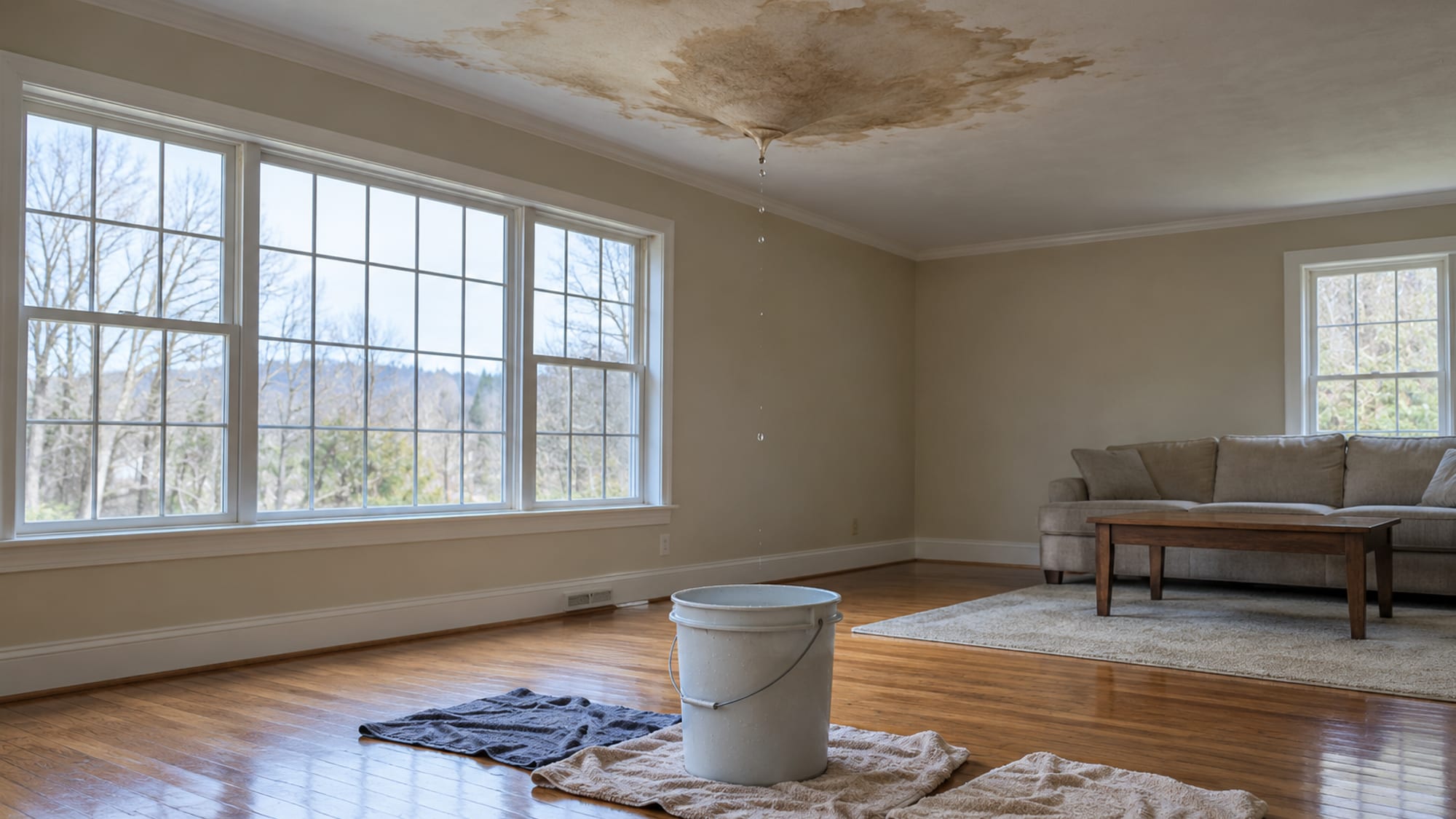
If water is coming through your ceiling, start by getting people away from it and away from anything electrical that is wet. Do not stand under a sagging ceiling, and do not touch a light, outlet or appliance near the water. If you smell gas, see sparks or smoke, or a power line is down, leave the house and call 911 or the utility.
Once everyone is safe, set out buckets or containers, lay down towels, and move furniture and belongings out of the way if the route is clear. Take photos and video before you clean up anything. Then stay off the roof. A wet, icy, windy or storm-damaged roof is no place to look around on your own, and nothing up there is worth a fall.
After that, call your insurance agent and a roofer. A roofer can cover the damaged area with a waterproof covering to hold water out until the permanent repair can be made, and that is the step that stops the damage from growing.
Key Takeaways
Safety comes before the roof
Keep people clear of sagging ceilings and wet electrical equipment, and call 911 or the utility for sparks, smoke, gas odors or downed lines.
The roof stays a roofer's job
Contain water from inside the house and never climb onto a wet, icy, windy or damaged roof.
Photos and a call to your insurer come early
Connecticut's storm-claim guidance says to report the loss promptly, keep receipts and photographs, and let the insurer inspect before permanent repairs.
A tarp is temporary
How long it holds depends on wind, attachment and the condition of the roof, so ask for a permanent assessment soon.
Check the contractor before permanent work
Verify the HIC registration in eLicense, get the scope in writing, and confirm who pulls any Danbury permit.
Stay Safe First, Then Slow the Water Down Inside
A sudden roof problem in Danbury rarely looks the same twice. It might be a stain spreading across a bedroom ceiling, a branch through the shingles, a patch of shingles gone after a windstorm, or water dripping at a skylight or chimney. In all of these, the first decision is whether it is safe to stay in that part of the house, and the second is how to keep the water from spreading while you wait for help.
Work from inside and from the ground. Everything below can be done without going near the roof.
Common Hazards and What To Do About Them
Keep everyone out from under it; do not poke it
Tap a factor to see how it moves the price.
These steps follow the Connecticut Insurance Department's storm guidance, which lists the same hazards. From inside, buckets, towels and plastic sheeting can catch and redirect water, as long as you stay clear of electrical hazards and unstable ceilings. Outside, the only protection you should attempt is the kind that does not need roof access, such as moving belongings and covering items inside the house.
If the damage is bad enough that you do not feel safe in a room, close the door and use another part of the house. A ceiling holding a lot of water can give way with little warning, so a bucket under a bulge is not a reason to stand near it.
The First Hour Goes Better With Photos, a Phone Call and Receipts
Once the immediate danger is handled, the first hour is mostly about two things: stopping more damage and keeping a clear record. The Connecticut Insurance Department's tips for filing storm claims say to report damage promptly, photograph it, make temporary repairs to limit further damage, keep receipts, and let the insurer inspect before permanent repairs begin.

- Photograph and video everything: Take the ceiling, walls, floors, belongings, the water's path, and any exterior damage you can see from the ground, before you clean up.
- Call your insurance agent or company: Report the loss as soon as you can, even if you do not yet know the full damage.
- Control the water: Use containers and towels, and move items out of the way when it is safe to do so.
- Keep every record: Save receipts, invoices, written estimates, photos and notes about who you spoke with and when.
- Hold on to damaged property: Keep damaged items for inspection where it is practical and safe.
- Wait on permanent work: Do not begin permanent repairs until the insurer has had a chance to inspect and give guidance.
What your policy covers depends on the policy, so your agent and the policy itself decide that, not a contractor. The state's claims and disaster guide explains the process in more detail. If you are not sure whether something is covered, ask before you make a decision you cannot undo.
Temporary protection is different. Insurance guidance supports reasonable temporary repairs to prevent more damage, which is why a tarp and a record of what it cost belong in your file from the start.
A Tarp Holds Water Out Until the Permanent Repair Is Done
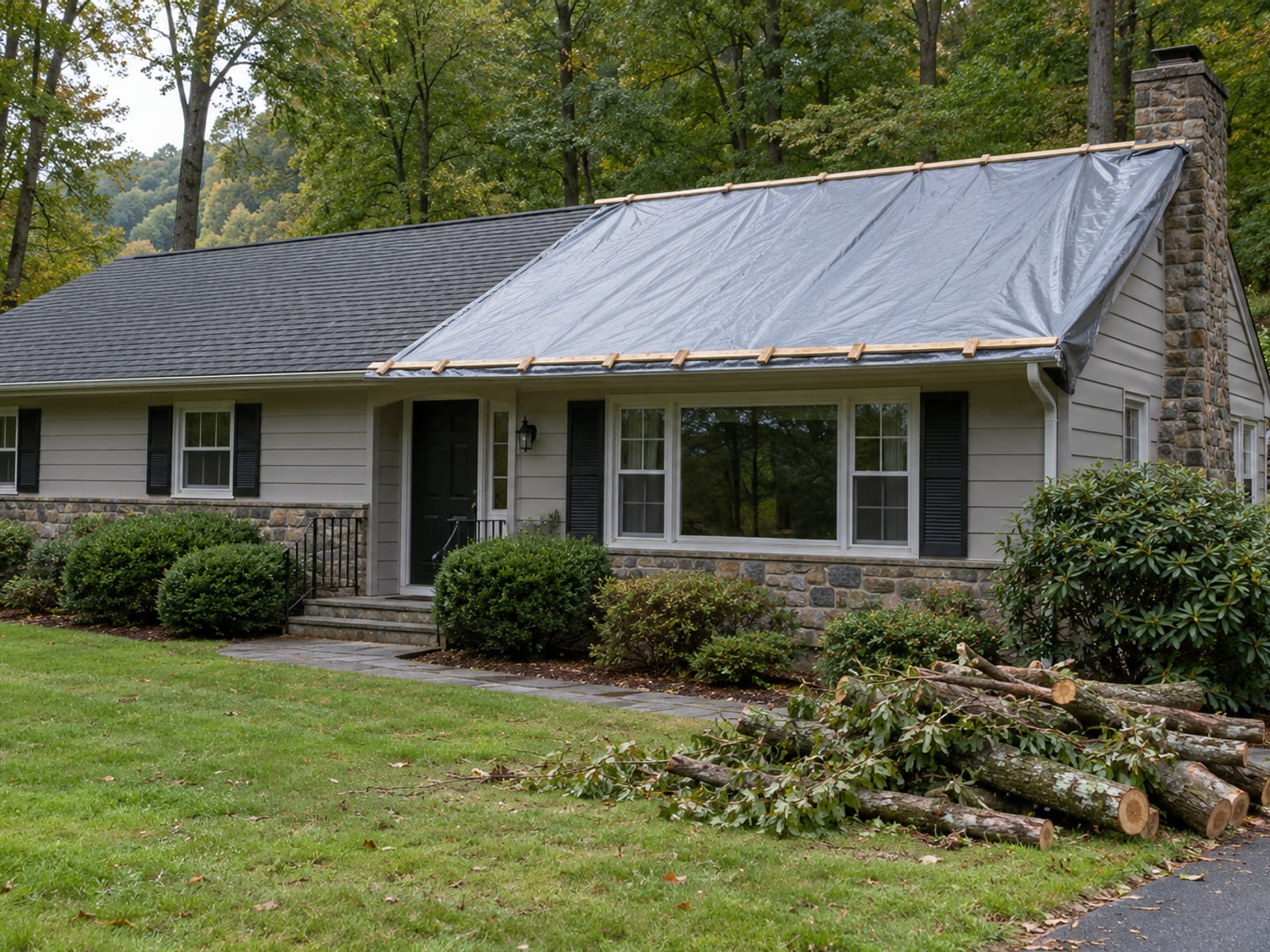
Emergency work on a damaged roof usually starts with a look at the damage from the ground and from inside the attic or the rooms below, when that is safe. The roofer finds where the water is getting in, clears or secures loose debris, and covers the damaged area with a waterproof covering. A tarp is typically extended past the damaged section and fastened so wind and water cannot lift its edges. The fasteners go into sound structure rather than loose roofing, and the covering is laid so water runs over it and away from exposed fasteners and loose edges.
Work stops in unsafe weather. OSHA identifies falls as a leading hazard in residential construction and requires fall-protection measures for workers exposed to roof falls. Its roof repair fact sheet covers how professionals reduce that risk. Damaged decking, skylights, open roof sections and falling debris call for extra care on top of that. This is the reason a homeowner should not climb up to throw a tarp over a hole.
A tarp is temporary protection and not a permanent repair. How long it lasts depends on the material, wind, how well it is attached, the condition of the roof and how often someone checks it. Because that varies so much, ask for a permanent assessment soon after the covering goes on, rather than waiting for the next storm to test it. If the roof is leaking at night or on a weekend, our 24/7 emergency roof services are there for that call.
Danbury Snow, Ice and Wind Are Hard on Roofs
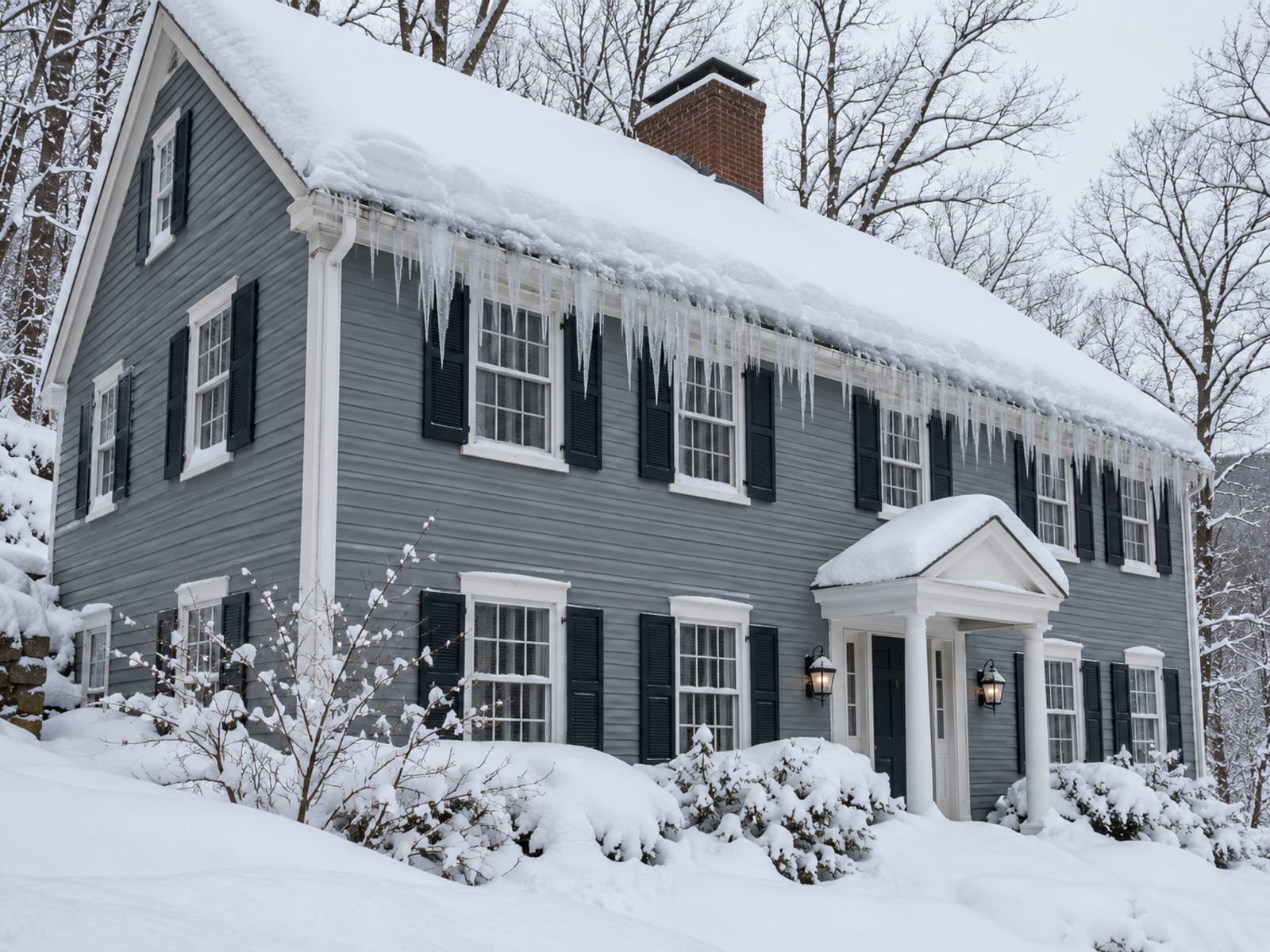
Danbury roofs go through a lot. NOAA's 1991 to 2020 climate normals for the Danbury station show 53.04 inches of precipitation in an average year and 49.3 inches of snow. January is the heaviest month for snow, with 15.7 inches on average, followed by February at 11.0 inches, March at 10.4 inches and December at 8.6 inches.
Danbury Weather Normals, 1991 to 2020 (NOAA)
53.04 inches per year
Tap a factor to see how it moves the price.
Those numbers describe the climate and do not predict what will happen to any one roof. Still, they point to the same stresses year after year: snow piling up, freezing and thawing that works at the edges and flashing, ice that can form dams along the eaves, and wind-driven rain. The Connecticut Insurance Department's storm guidance lists damaging wind, heavy rain, falling trees and power lines, flying debris and roof damage among the risks, and notes that nor'easters and severe thunderstorms can combine wind and rain.
A Permanent Repair Starts With Finding Everything the Storm Damaged
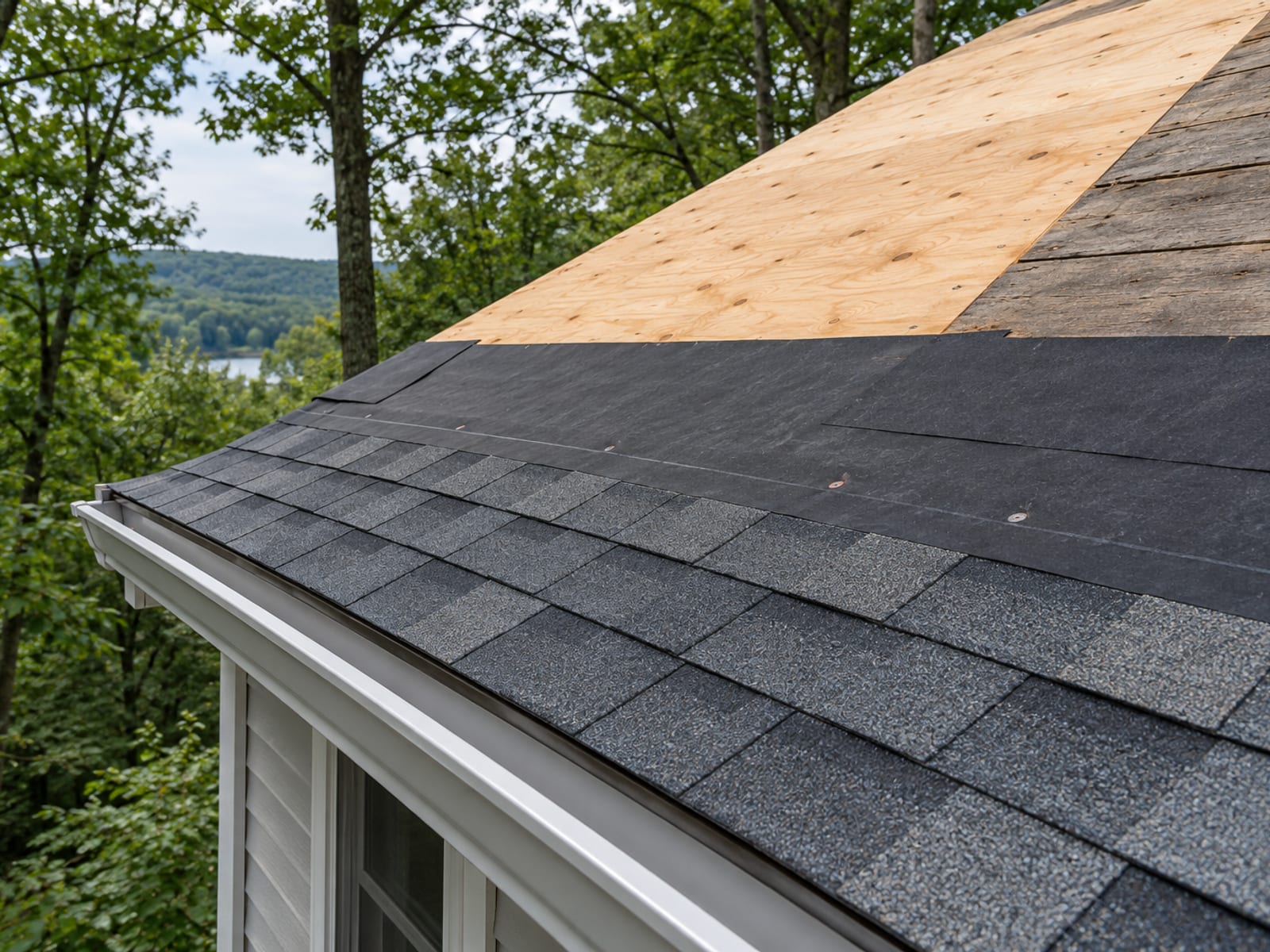
After the covering is on and the weather settles, the permanent fix begins with a closer look. A roofer can open up the area and check the decking, the underlayment, the flashing and the vents around the damage, because water often reaches farther than the stain suggests. Depending on what turns up, the answer may be a targeted roof repair or, when damage is widespread, a bigger project.
Connecticut's building code has a say in what goes back on. The 2022 State Building Code applies to permit applications filed on or after October 1, 2022, and it adopts the 2021 International Residential Code. The code requires compliant underlayment on roof assemblies, and for relevant roof decking it calls for a self-adhering polymer-modified bitumen membrane at least 4 inches wide over the joints, with the underlayment installed over it according to the code and the manufacturer's instructions. You can find the adopted text through the Office of the State Building Inspector and the 2022 code document.
If the answer is a new roof, read the shingle warranty with care. A "30-year" label usually names a warranty category and not a promised service life. GAF's published shingle warranty lists products with 25-year, 30-year and "Lifetime" limited terms, along with coverage conditions, limits and prorating rules. How long a roof lasts also depends on installation, ventilation, weather, maintenance and design. Ask for the exact product warranty, the installation requirements and the exclusions in writing.
Cost Depends on the Damage, the Access and What Is Hidden
Emergency roof work does not have one price, and a number quoted before anyone has seen the roof is a guess. What you can do is understand what drives the total, so you can read a written scope line by line.
What Drives the Cost of Emergency Roof Repair in Connecticut
Getting to a damaged roof safely, often in bad weather, and covering it
Tap a factor to see how it moves the price.
Ask for a written scope that lists the temporary work separately from the permanent repair, with materials, labor, any allowance for decking, disposal, permits, interior work and the payment schedule. That separation lets you and your insurer see exactly what the emergency step cost and what the lasting fix will cost.
Danbury's Building Department administers the Connecticut State Building Code, reviews applications and plans, issues permits and performs inspections. The department is at 155 Deer Hill Avenue, and you can reach it at 203-797-4580. The Permit Center coordinates Building, Zoning, Engineering, Fire Marshal, Health and Public Utilities review, and applications go through the city's online permitting portal.
Whether your repair or replacement needs a permit, and what the fee and inspections will be, is a question for the Building Department before work begins. Connecticut's Department of Consumer Protection says either the homeowner or the contractor may apply for a required permit, but the homeowner is ultimately responsible for making sure it is in place. Ask who is applying, then call the department to confirm it was filed.
Connecticut also requires contractors who do residential roof work to hold a home improvement registration. You can look one up on the state's license verification page, and the DCP application information notes that applicants must carry at least $20,000 in general liability insurance. Match the name on the registration to the name on the contract, and ask for current liability and workers' compensation insurance information you can confirm with the insurer.
The Department of Consumer Protection's guide to what to look for in a home improvement contractor and its notice on contracts and registered contractors cover the same ground. The written contract should include the contractor's name and HIC number, a full description of the work, materials, start and completion dates, price, payment schedule, signatures and the cancellation notice. Require every change to be in writing and signed.
A few habits can protect you after a storm, when the pressure to sign fast is highest. Do not pay the full amount up front, do not sign over an insurance check, and avoid any payment method you cannot trace. Do not choose on the lowest bid alone. The state's page on common disaster recovery scams describes what to watch for.
Your Claim and Your New Roof Both Need Good Records
Good records protect two things. For the claim, they show what the storm did and what you spent to limit it. For the new roof, they show what was promised and what was installed.
It is also reasonable to ask which manufacturer's products will be used, whether the installer follows the manufacturer's instructions, and whether any enhanced warranty requires a certified installer. Requirements differ by product, so the exact published warranty is the place to look.
Frequently Asked Questions About Emergency Roof Repair in Danbury, CT
What should I do first when water is coming through the ceiling?
Move people away from the area, especially if the ceiling sags or the water is near a light, outlet, appliance or electrical panel. Do not touch wet electrical equipment. If you can do it without entering a hazardous area, put containers under the leak and move belongings. Take photos, call your insurer, and call a roofer. Do not go onto the roof.
What can I do from inside to slow a leak until a roofer arrives?
Use buckets or containers, towels and plastic sheeting to catch and redirect the water, and keep clear of electrical hazards and unstable ceilings. Move belongings out of the way and keep the damaged items for inspection when it is safe.
How urgent is a roof leak?
Active water coming in, a puncture, exposed decking, a sagging ceiling, a fallen tree, major shingle loss or damage near electrical equipment all call for a prompt safety check and temporary protection. Even a small leak can damage ceilings, insulation, framing and electrical components, and lingering moisture can lead to mold. The permanent repair timing depends on the weather, the structure, the scope and any permit.
How long does a tarp last?
That depends on the material, wind, how it is attached, the condition of the roof and how often it is checked. Treat it as temporary and ask for a permanent assessment soon.
Does my insurance pay for emergency repairs?
That depends on your policy and the cause of the damage, so your agent and the policy decide. Connecticut's guidance is to report the loss promptly, make reasonable temporary repairs to limit further damage, keep receipts and photos, and let the insurer inspect before permanent repairs.
Do I need a permit to repair or replace a roof in Danbury?
Ask the Building Department at 203-797-4580 before work begins. The department can tell you whether your exact job needs a permit and what the inspections and fees are.
Does a 30-year shingle last 30 years?
Not necessarily. The label usually names a warranty term, and actual life depends on installation, ventilation, weather and maintenance. Read the warranty for coverage periods, conditions and exclusions.
Emergency Roof Repair Knowledge Check
1. Water is dripping near a ceiling light and the ceiling is sagging. What is the safest first move?
2. Which step belongs in the first hour after storm damage?
3. What is a roof tarp?
4. Who decides whether a Danbury roof repair needs a building permit?
5. Which is a good practice before paying a roofer after a storm?
Final Thoughts
When water comes through a Danbury ceiling, the order matters: get people clear of the ceiling and any wet electrical equipment, slow the water from inside, photograph the damage, call your insurer, and let a roofer deal with the roof. A tarp buys time, and the permanent repair, the permit question and the written contract come next.
Taking those steps in order protects your family first, then your house, and then your claim. A clear folder of photos, receipts and a signed scope also makes the rest of the repair easier to follow, whatever your policy ends up covering.
If you have a leak, a tree on the roof or shingles missing in Danbury, American Quality Roofing and Siding is here at any hour with 24/7 emergency roof services. We are licensed and insured, CT HIC #0633301, CertainTeed ShingleMaster PRO certified, and rated A+ by the BBB, serving Central and Western Connecticut since 2006 from our base in Brookfield. Request a [free estimate/) or call us, and read more about our work in Danbury.
Serving Danbury, CT
This guide is part of our exterior work in Danbury. See our roofing contractor services in Danbury, CT.
Written by Jose Zaruma, American Quality Roofing and Siding.
← Back to the blog