Roofing Guide
Danbury Roof Repair: What to Do Before the Roofer Arrives
By Jose ZarumaPublished
- roof repair
- danbury ct
- connecticut
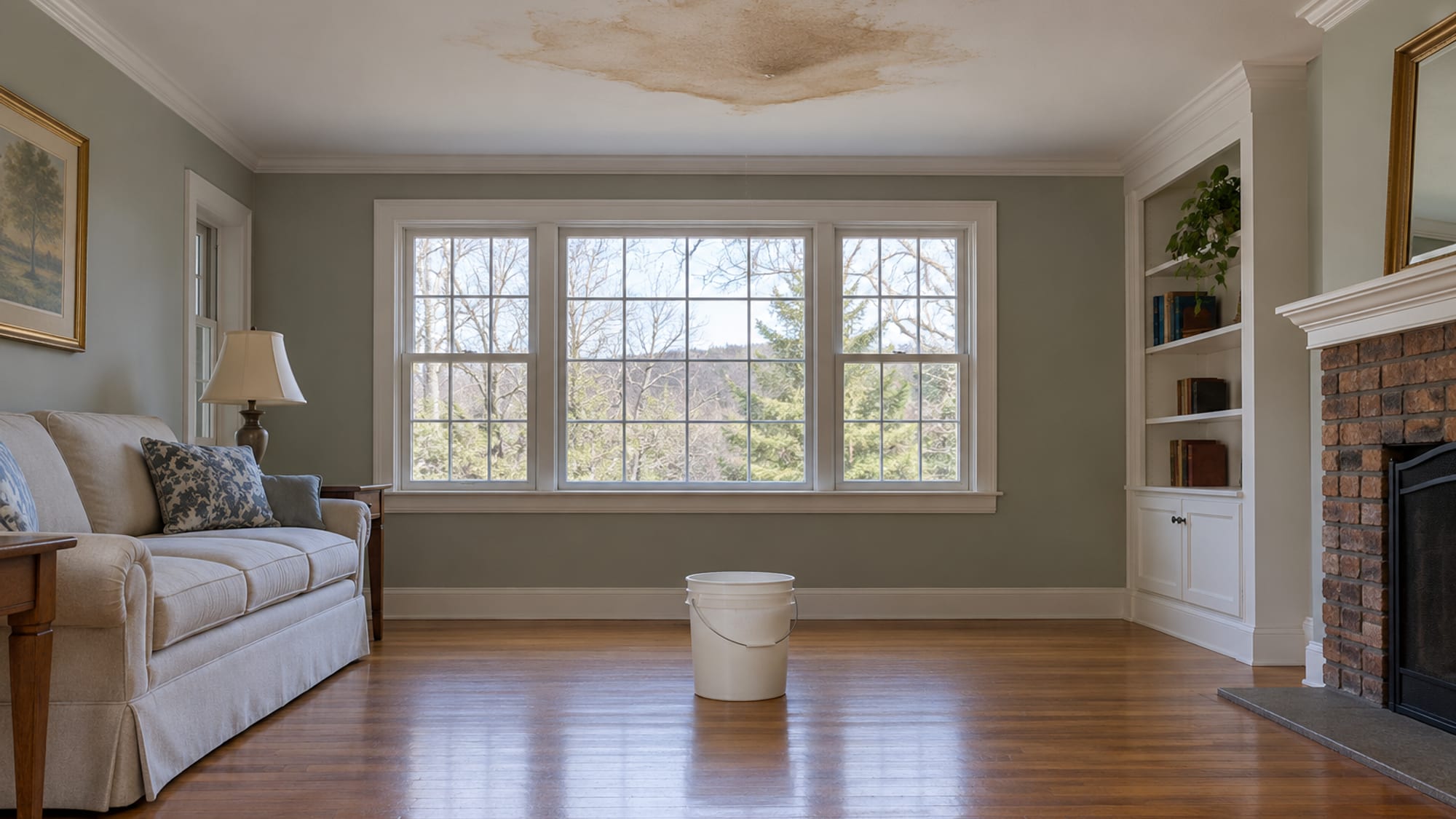
If water is coming through a ceiling in your Danbury house, the first hour is about safety and containing the water, not the repair. Keep people out from under any sagging ceiling, set containers under the drips, and move furniture and belongings away from the water. Then stay off the roof. Never climb onto a wet, icy or storm-damaged roof, not even for a quick look.
Next, document the damage while it is fresh. Take photos and video of the ceiling, the attic if you can reach it safely, and any roof damage you can see from the ground. Water does not wait well, since it can move into insulation, rafters, sheathing and wall cavities, so call a roofer the same day.
Most leaks come down to one failed spot, and finding that spot is what a repair depends on. Danbury adds its own paperwork: the Permit Center at 203-796-1653 can tell you whether your repair needs a permit, and the state code exempts repairs limited to 25% of the roof covering and siding within one calendar year.
Key Takeaways
Contain the water and stay off the roof
Containers, moved belongings and photos from the ground and attic are safe first steps; a tarp belongs to someone who can work on the roof safely.
The stain is not the entry point
Water travels along decking and rafters, so a roofer should find the entry point in the attic and on the roof, not just patch above the stain.
Repair works when damage is local
A sound deck and covering, material that can be integrated and a fix that restores water shedding favor repair; widespread or repeated damage favors replacement.
The 25% figure is a permit rule
It exempts limited repairs from the state permit requirement within one calendar year; it does not decide repair versus replacement.
Insurance depends on the cause
Sudden wind or hail damage may be covered, wear generally is not, so keep dated photos, receipts and the roofer's written estimate.
Start With the First Hour: Contain the Water and Stay on the Ground
The safest things you can do before a roofer arrives are all on the ground or inside the house. Work through them in this order, and stop if anything feels unsafe.
- Keep people clear: Stay away from sagging ceilings and from any visibly unsafe area of the roof.
- Contain the water: Put containers under interior drips and move belongings out of the way.
- Document: Photograph and video the interior, the attic, the damage you can see from the ground, and damaged belongings.
- Call your insurer or agent if wind, hail or a fallen tree caused it: Do it promptly.
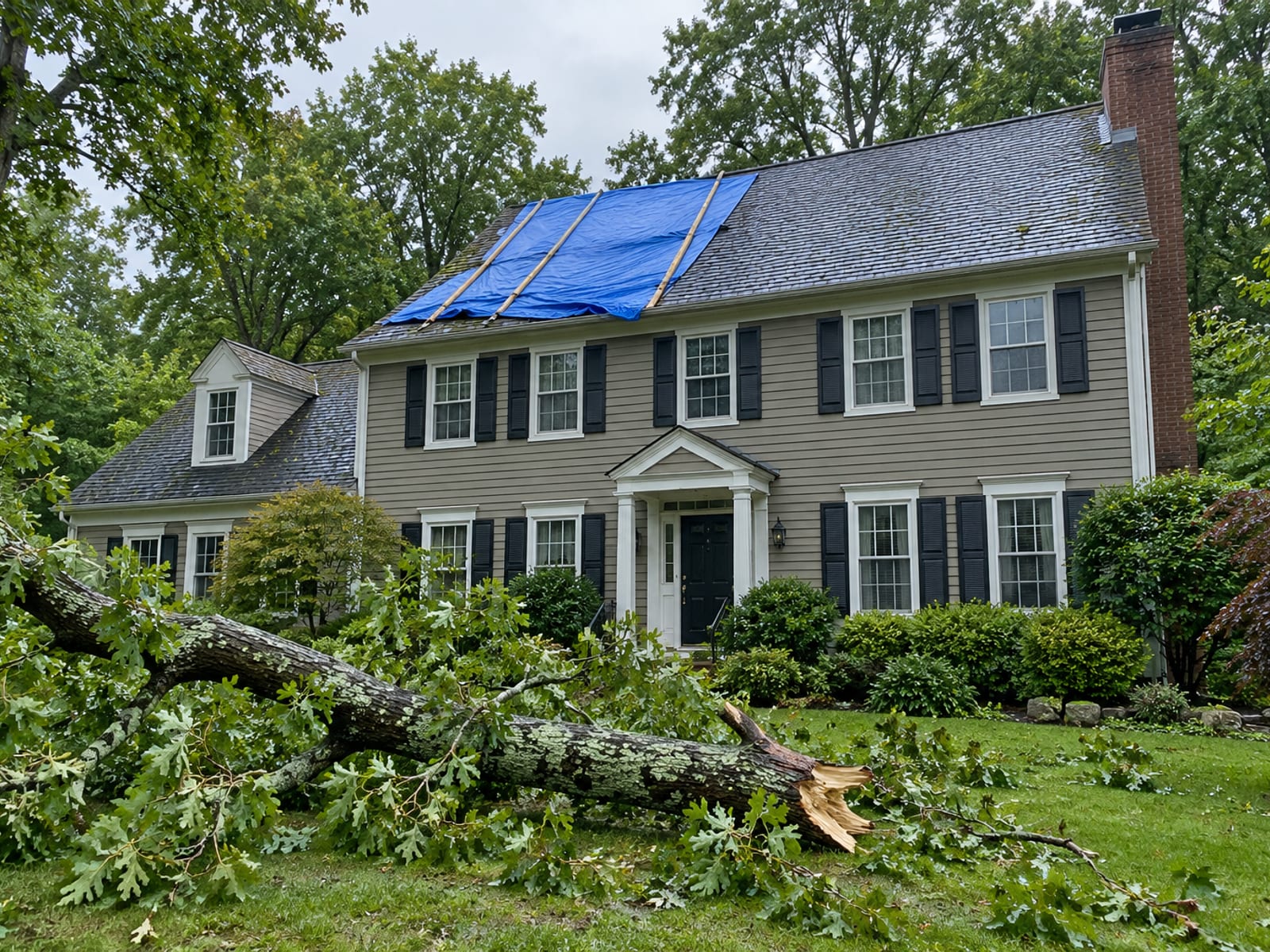
- Limit temporary repairs: Make only safe temporary repairs that stop more damage, such as a professionally installed tarp, and keep every receipt.
- Keep damaged materials: When it is safe to do so, hold on to them until the insurer has had a chance to look.
A tarp or exterior patch is a job for someone who can work on the roof safely. Sealing over wet materials can trap moisture inside the roof, and a patch is no substitute for finding the actual entry point. If the damage is severe or the leak is active, our 24/7 emergency roof services exist for this.
The EPA advises fixing water problems promptly, and says to consult a professional when water damage is extensive or mold covers more than about 10 square feet. Its mold cleanup guidance is a useful reference if the ceiling or insulation has been wet for a while.
A Repair Holds When the Damage Is Local and the Deck Is Sound
A repair generally holds when the damage is localized, the roof covering and deck are still serviceable, new material can be integrated with the old, and the fix restores the way the roof sheds water. Replacement becomes the stronger option when the damage is widespread, the deck or framing has deteriorated, several areas leak, the roof has had repeated repairs, or matching shingles are no longer available.
Repair or Replacement: What Each Points Toward
Repair
Tap a factor to see how it moves the price.
No Connecticut rule requires every 20-year-old roof to be replaced. Age does have an insurance side, though. The Connecticut Insurance Department's February 6, 2026 advisory says insurers commonly set eligibility limits around 15 to 20 years for asphalt, wood, rubber and similar non-permanent materials, and often 25 years or more for architectural shingles. An inspection of the roof's actual condition still settles the repair question.
The Stain Is Rarely Where the Water Gets In
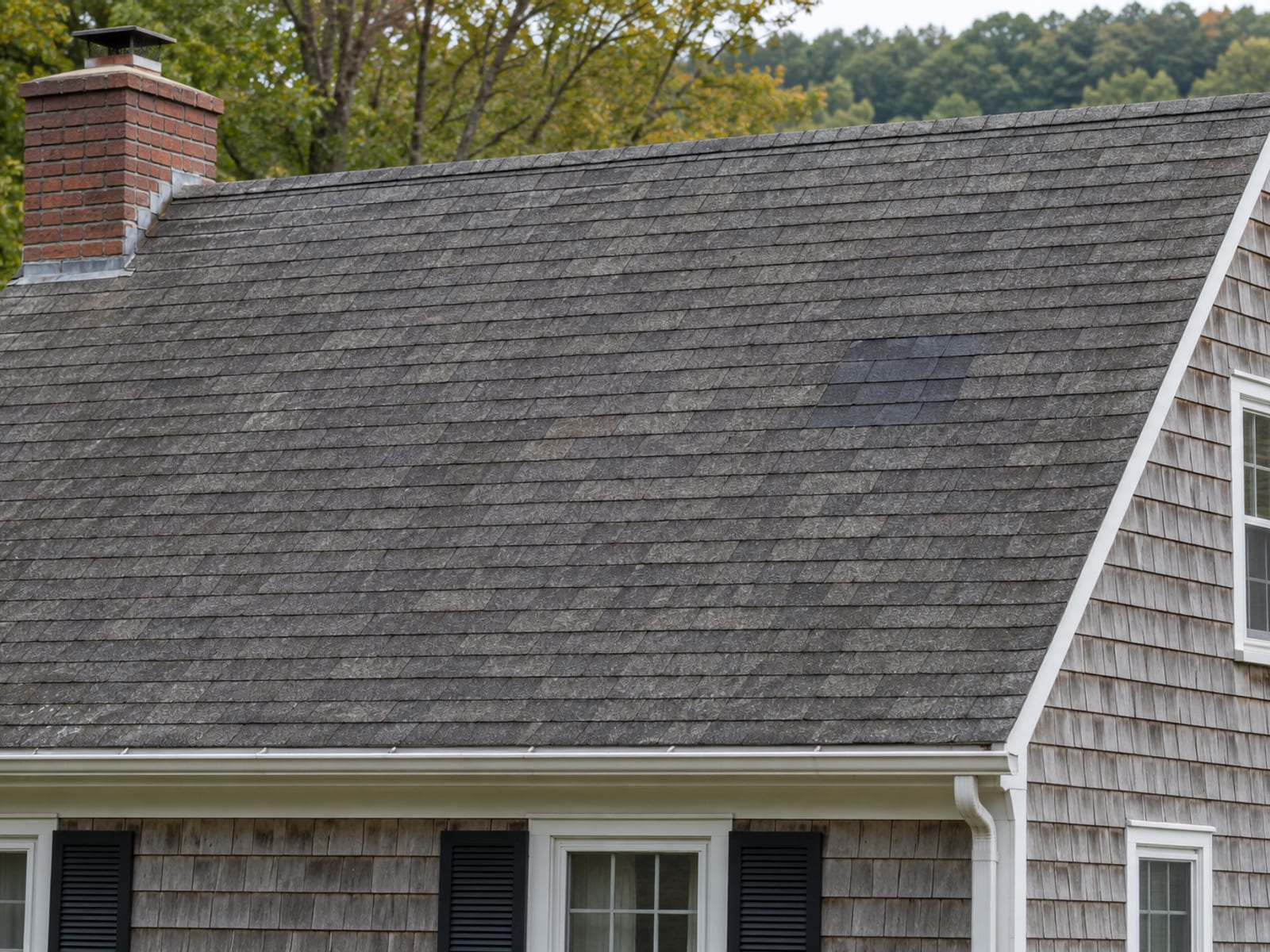
A ceiling stain is not necessarily directly below the opening in the roof. Water can run along decking, rafters, underlayment and framing before it shows up indoors, so the entry point can sit well upslope of the stain. That is why a good inspection starts in the attic and then moves to the roof, rather than only patching above the stain.
A roofer tracing a leak compares the interior stain with what shows in the attic and on the roof:
- In the attic: Wet insulation, darkened sheathing, water tracks and damaged framing.
- On the roof planes above the stain: Missing, lifted, cracked or deteriorated shingles.
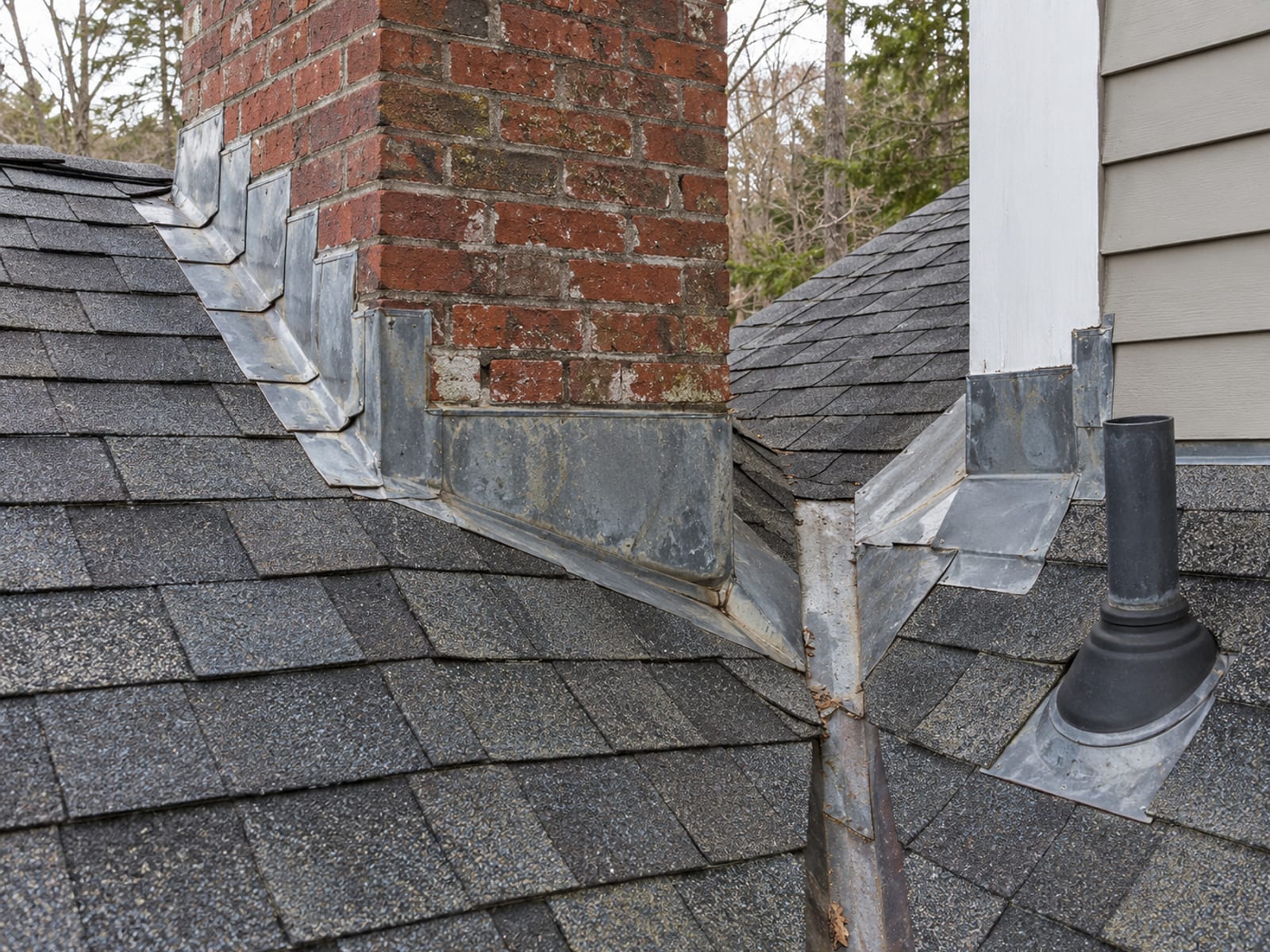
- At intersections: Valleys, where concentrated runoff passes through, and step and counter-flashing around chimneys and sidewalls.
- At penetrations: Pipe boots, roof vents and skylight curbs.
- At the edges: Eaves, gutters and ice-dam areas.
- Under the surface: Decking, rafters and trusses for moisture or structural damage.
Controlled water testing may help isolate a leak that only shows up in certain weather. The repair should address the entry detail, whether that is failed flashing, a damaged boot, a valley problem, a skylight seal, an ice-dam path or a shingle failure. Manufacturers publish how flashing is meant to go in, and GAF's technical bulletin on proper flashing is one example of the standard a repair should follow.
A stain that shows up in cold weather may also be condensation rather than a leak. ENERGY STAR explains that moist household air can condense on cold attic surfaces, causing frost, damp insulation or staining. The roofer should look at the roof exterior, attic ventilation, insulation and household exhaust paths before deciding which problem you have.
Published Connecticut Estimates Run From About $375 to $1,950
Nobody can quote a Danbury repair accurately from the street. ClearCost's Connecticut roof repair estimate, updated April 2026, models a range of $375 to $1,950 with an average of $1,025, including a $250 to $500 service-call component. HomeAdvisor's national guide, updated in 2026, reports a normal range of $395 to $1,968 and an average of $1,174.
Published Roof Repair Estimates
Range: $375 to $1,950
Average: $1,025
Tap a factor to see how it moves the price.
Both figures are estimates, not Danbury quotes, and the HomeAdvisor numbers are national. Structural damage varies widely, which is why truss repairs get their own, much wider range.
Danbury Wants the Permit Question Answered Before Work Starts
Danbury's Building Department administers the Connecticut State Building Code, which is the 2022 code adopting the 2021 International Residential Code. Applications go through the city's online permitting system at the Permit Center, with supporting documents uploaded as PDFs.
The 2022 State Building Code exempts repairs limited to 25% of the roof covering and siding within one calendar year from the state building-permit requirement. That exemption is a permit rule. It is not a test for repair versus replacement, and it does not authorize work that breaks other code or local requirements.
A larger repair, structural work, or anything that needs code review should be confirmed with Danbury before work begins. The Building Department is at 203-797-4580, the Permit Center at 203-796-1653 and inspections at 203-797-4581. The fee follows the city's published construction-cost formula, so ask the Permit Center to calculate it for your scope. Then have the contract name who holds the permit and who schedules the inspections.
Insurance Responds to Sudden Covered Damage, Not Wear
Homeowners insurance generally responds to covered perils such as wind and hail, and it is not a maintenance contract. Wear, deterioration and poor maintenance are treated differently from sudden damage, and flood or surface water is generally excluded from standard policies. The policy, the cause of loss, the exclusions, the deductible and the roof's condition decide the result, so your policy and your agent are the final word. The NAIC's homeowners insurance consumer guide explains the basics.
- Dated photos and video: Taken before any cleanup.
- The date and likely cause: Wind, hail or a fallen limb.
- Emergency invoices and receipts: For tarping and other temporary work.
- The roofer's written inspection and estimate: Along with your claim number and adjuster messages.
- A list of damaged belongings: And the materials themselves, when it is safe to keep them.
A contractor's estimate describes proposed work and price. An adjuster's scope describes what the insurer considers payable, and the two can differ because of coverage, depreciation, deductibles, hidden damage, code requirements or different measurements. Neither one decides coverage alone. For a covered partial loss, the Connecticut Insurance Department's homeowner insurance page says the insurer pays to repair or replace the damaged portion so it conforms to a reasonably uniform appearance with adjacent items, subject to the policy.
Check the Roofer's Registration and Paperwork Before You Sign
Residential roof work counts as home improvement in Connecticut, so the contractor must be registered with the Department of Consumer Protection. The state's home-improvement registration page points to the eLicense lookup, where you can check an active registration. Registration requires at least $20,000 in general liability insurance, so ask for proof of that coverage, and for workers' compensation where it applies.
The state's home-improvement contract guidance says the contract must be written, show the contractor's registration number, show signed start and completion dates, contain the three-business-day cancellation notice, and leave you with a completed copy. Saturday counts as a business day. Beyond the legal minimum, ask for:
- A written diagnosis and scope: Including the repair type, whether shingle, flashing, decking or structural.
- Product and manufacturer instructions: Plus any manufacturer certification the contractor claims.
- References: From comparable roof repairs.
- Payment schedule and change-order terms: In writing.
- Warranties, disposal and cleanup: Both workmanship and materials.
- A plan for hidden damage: How decking or framing problems will be priced if found.
Signing under pressure, paying without a defined scope, and accepting a replacement recommendation without a repair assessment are the common ways this goes wrong. A roofer who has to find the real entry point first is giving you the right estimate, even if it takes a day longer.
The Attic Decides Whether the Repair Stays Dry
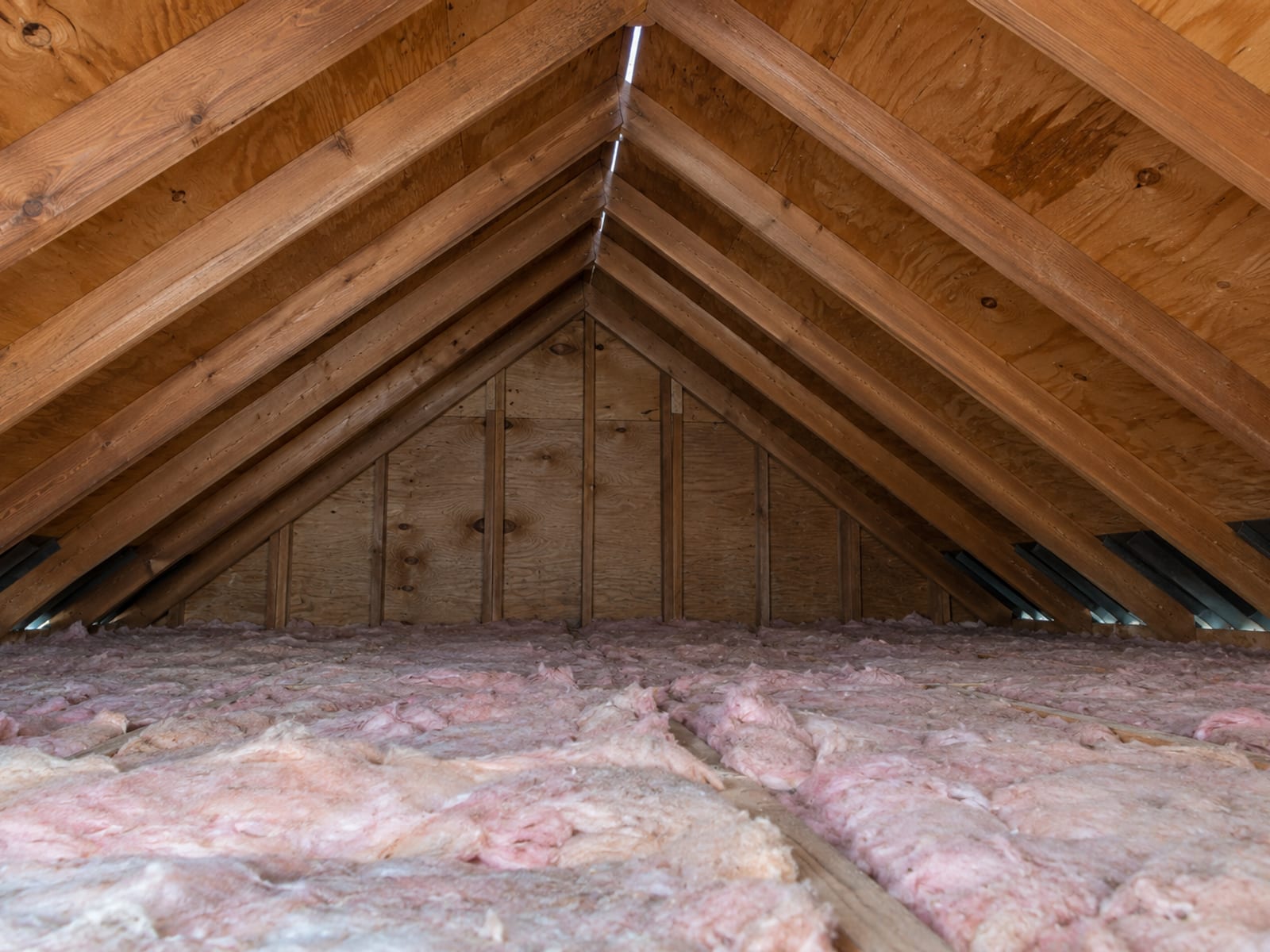
A repair fixes the entry point, and the attic decides whether the fix stays dry. ENERGY STAR notes that wet insulation, moldy or rotted rafters, inadequate ventilation and moist household air condensing in a cold attic are all possible moisture problems. Its guidance on attic ventilation also explains that cold-weather ventilation reduces ice-dam potential.
Frequently Asked Questions About Roof Repair in Danbury, CT
What happens if I leave a roof leak alone?
Water can keep moving into insulation, rafters, sheathing, ceilings and wall cavities. The EPA advises fixing water problems promptly and drying wet materials, and mold or structural deterioration can spread past the original entry point.
What can I safely do to stop a leak until the roofer arrives?
Stay inside and on the ground. Contain the water with containers, move belongings, and document the damage. A tarp or exterior patch should be installed by someone who can work on the roof safely.
How much does a roof repair cost?
ClearCost's Connecticut estimate, updated April 2026, is $375 to $1,950, with a $1,025 average. HomeAdvisor's national range, updated in 2026, is $395 to $1,968. Neither is a Danbury quote, so a written estimate after an inspection is what sets your price.
Is the 25% rule a reason to replace my whole roof?
No. Under the 2022 State Building Code, repairs limited to 25% of the roof covering and siding within one calendar year are exempt from the state permit requirement. It is a permit rule, not a repair-versus-replacement test.
Does homeowners insurance cover roof repair?
It depends on the policy, the cause of loss, exclusions and the roof's condition. Sudden damage from a covered peril such as wind or hail may be covered. Wear and maintenance generally are not.
Is it a roof leak or condensation in the attic?
A leak often shows up as wet insulation or staining after rain, wind or snow. Condensation tends to appear in cold weather as frost, damp insulation or staining. A roofer should inspect the roof, attic ventilation, insulation and exhaust paths before deciding.
Quick Roof Repair Knowledge Check
1. What is the safest thing to do first when a ceiling is dripping?
2. Why can a ceiling stain sit far from the roof opening?
3. What does Connecticut's 25% figure for roof work refer to?
4. Which situation points toward replacement over repair?
5. What should a Connecticut home-improvement contract include?
Final Thoughts
A leaking roof in Danbury asks for the same few moves in order: keep people safe and the water contained, document the damage from the ground and the attic, and get an inspection that finds the real entry point. From there, a repair holds when the damage is local and the deck is sound, and a replacement makes sense when the roof is failing in several places.
The paperwork protects you as much as the roof. A permit answer from the Permit Center, a policy question to your agent, and a registered contractor with a written scope keep a repair from becoming a dispute. Acting early keeps one small leak from becoming wet insulation, rotted framing and a larger bill.
If you have a leak, missing shingles or storm damage in Danbury, American Quality Roofing and Siding can help. We are a Brookfield-based, licensed and insured contractor serving Central and Western Connecticut since 2006 (CT HIC #0633301), and our roof repair work starts with finding the source of the leak. We serve Danbury homeowners, with 24/7 emergency roof services when water cannot wait. Call us or request a [free estimate/).
Serving Danbury, CT
This guide is part of our exterior work in Danbury. See our roofing contractor services in Danbury, CT.
Written by Jose Zaruma, American Quality Roofing and Siding.
← Back to the blog