Roofing Guide
Emergency Roof Tarping in Connecticut: What to Expect
By Jose ZarumaPublished
- emergency roof
- storm damage
- connecticut
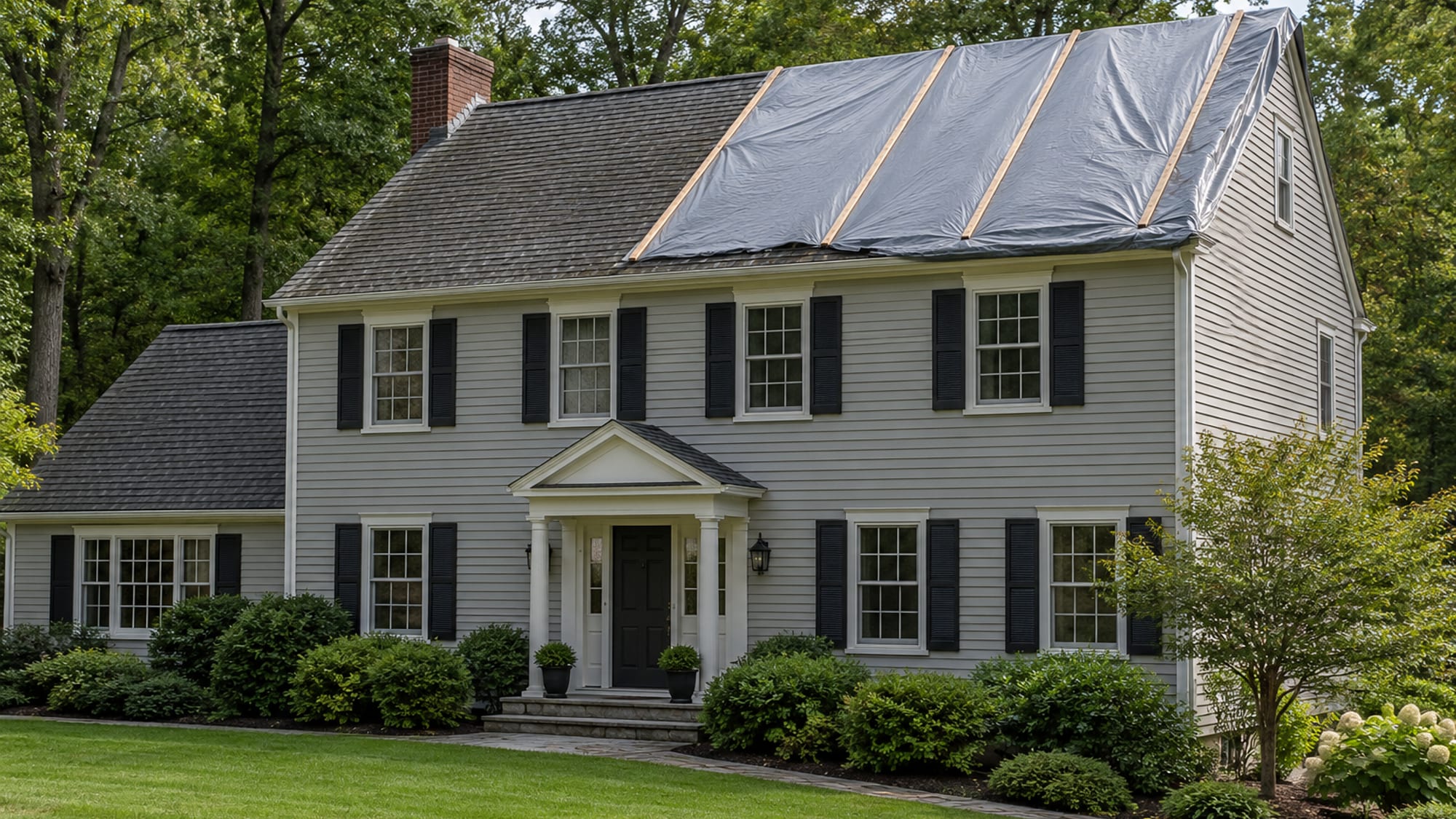
If water is coming through your roof, the safe move is to have a trained roofing crew put an emergency tarp over the opening while you and your family stay off the roof. A tarp is a temporary waterproof cover. A crew can fasten it to solid structure with the right gear, which is very hard to do from a wet ladder.
Until the crew arrives, stay inside, catch the drips, move your belongings and take photos from safe spots. Then call your insurance company or agent to report the loss. In Connecticut that call matters in every season, because the National Weather Service says nor'easters are most frequent and most violent from September through April.
A tarp buys you time, and that is all it is meant to do. The permanent repair still has to follow.
Key Takeaways
Stay off the roof
A damaged roof is slippery and may not hold your weight, so the tarp goes on with a trained crew and fall protection.
Use the waiting time
Catch drips, move belongings, photograph the damage from safe spots and report the loss to your insurer.
A tarp is a bridge
Sun, wind, snow and weak attachment all shorten its life, so plan the permanent repair as soon as the house is safe.
Prices vary with the roof
Published Connecticut figures run from about $300 to over $1,500 depending on the area covered, and after-hours work can add to the bill.
Ask before it goes on
Get the covered area, the material, the attachment points, the price and whether removal is included in writing.
What Should You Do in the Next Hour With an Open or Leaking Roof?
Start with people. Keep everyone out of the rooms under the damaged section, and keep children and pets out of the yard beneath it. Shingles, flashing and branches can slide off a damaged roof without warning. Do not climb a ladder to look, and do not go up on the roof, even if the rain has slowed. Wet shingles are slick, and the wood underneath may be softer than it looks.
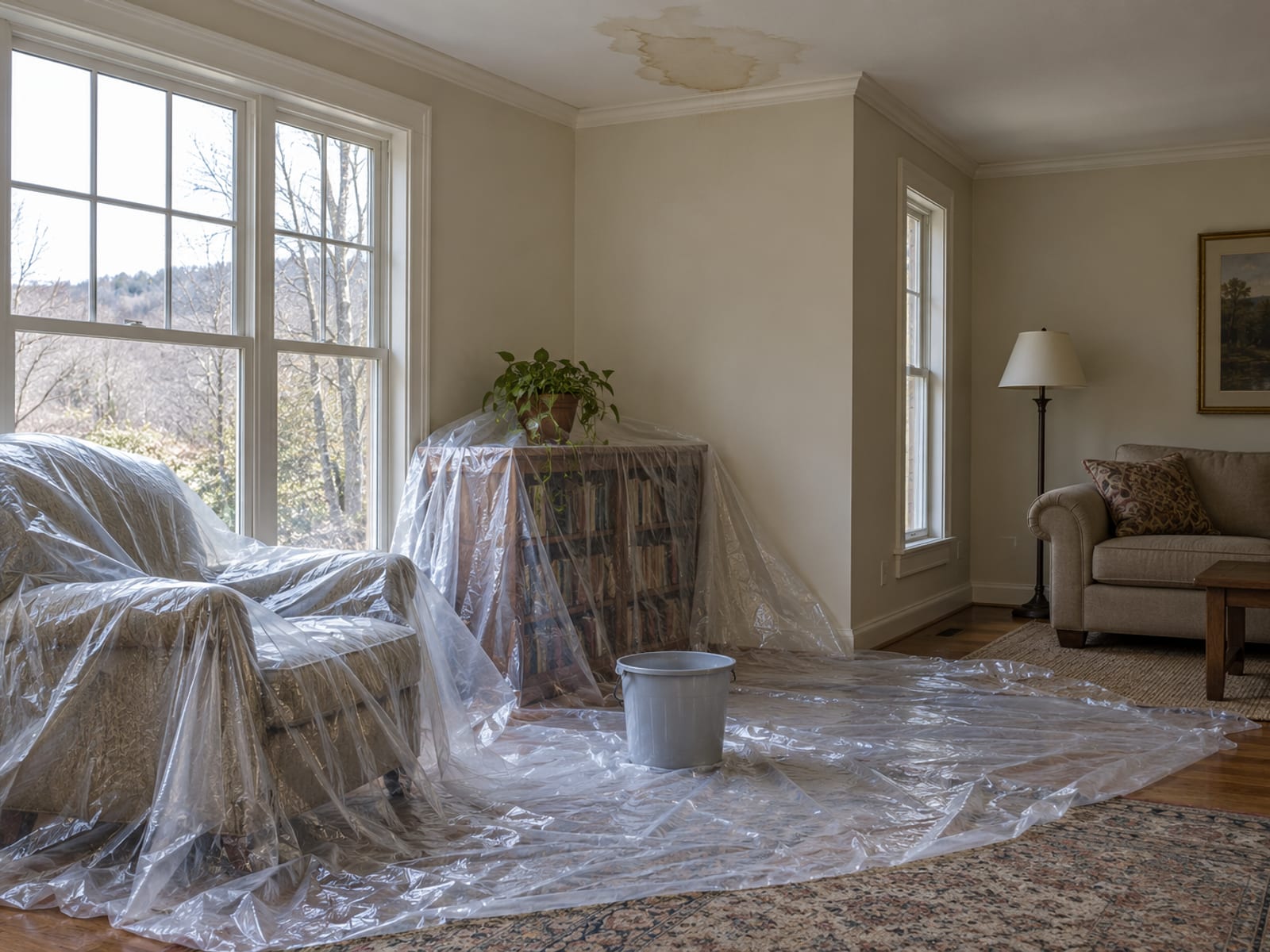
If the area is safe to stand in, you can limit the damage inside the house while you wait:
- Set buckets or containers under active drips.
- Move furniture, electronics and anything you cannot replace away from wet areas.
- Spread plastic sheeting or a clean tarp over the floor and over belongings you cannot move.
- Photograph ceiling stains, running water and damaged belongings, and note where the water seems to be coming from.
- Leave a bulging ceiling alone, and do not puncture it or go into an unsafe attic.
Those steps control the mess inside. They do not stop water from entering, so the roof still needs a cover.
Then make two calls. The Connecticut Insurance Department's storm guidance tells homeowners to photograph the damage, take reasonable steps to prevent more of it, and keep receipts. Call your insurer or agent, report the loss and ask whether they want to inspect before any permanent work. After that, call a roofing company that offers emergency roof services and describe what you see from inside the house.
How Does a Crew Put On an Emergency Tarp?
A professional emergency tarp is a temporary waterproofing system, not a repair. The work follows a sequence, and each step has a reason behind it.
The crew begins by checking how to reach the roof safely and whether the roof surface can accept fasteners. They find the damaged area and clear loose material where it is safe to do so. Then they choose a tarp large enough to carry water past the opening instead of just covering the hole. Where the roof design allows, the tarp runs over the ridge, so water coming down from the upper roof cannot slip underneath it.
Attachment is the part that decides whether the tarp stays put. The U.S. Army Corps of Engineers describes its Operation Blue Roof program as tarps nailed onto standard shingle roofs, and a Connecticut roofing guide from 2026 describes the same idea with wood strips fastened into the roof deck and sealed edges at penetrations such as vents. The fasteners need to reach sound structure. Loose shingles, rotted decking or detached framing will not hold a tarp in a nor'easter.
That same Corps page notes that slate, clay tile, asbestos-containing material and other fragile surfaces may not qualify, because ordinary fastening can crack them. If your roof is one of these, tell the roofer on the first call. The crew may need a different method.
A good crew also records the job. Expect photos before and after the tarp goes on, plus a written description of the protected area, the materials, the attachment method, any structural damage they saw and what the permanent repair should include. You will want that paperwork for your insurer.
Why Shouldn't You Tarp the Roof Yourself?
Because the roof is the most dangerous place on your property right after a storm. Wet, icy or steep shingles are slippery. The decking may be damaged in ways you cannot see from a ladder. Wind can catch a loose sheet of plastic and pull you with it. And the edge of a roof is a long way from the ground.
OSHA's residential fall protection guidance and its rule at 29 CFR 1926.501 generally require workers exposed to a fall of 6 feet or more to use guardrails, safety nets, personal fall-arrest systems or another permitted protection. Those rules cover employers and employees, not homeowners. They still show how seriously the hazard is taken, and a homeowner rarely has the harness, anchors, trained helpers or fall plan that a crew brings.
There is a practical problem too. A tarp only works if it covers the real water-entry point, reaches far enough to shed water and is fastened into sound structure. That is hard to judge from the ground or from a ladder, and a cover that is in the wrong place can leave the leak running while you think it is protected.
So, the best job for you during a leak is the inside job: contain the water, protect belongings, document the damage and make the calls. The roof job belongs to people who do it for a living.
How Long Will a Roof Tarp Last?
A tarp has no fixed lifespan. A heavier, reinforced, UV-resistant cover generally holds up longer than a light blue sheet, and a tarp fastened into sound decking outlasts one tied to loose shingles. Either way, it is short-term protection measured in weeks, not seasons.
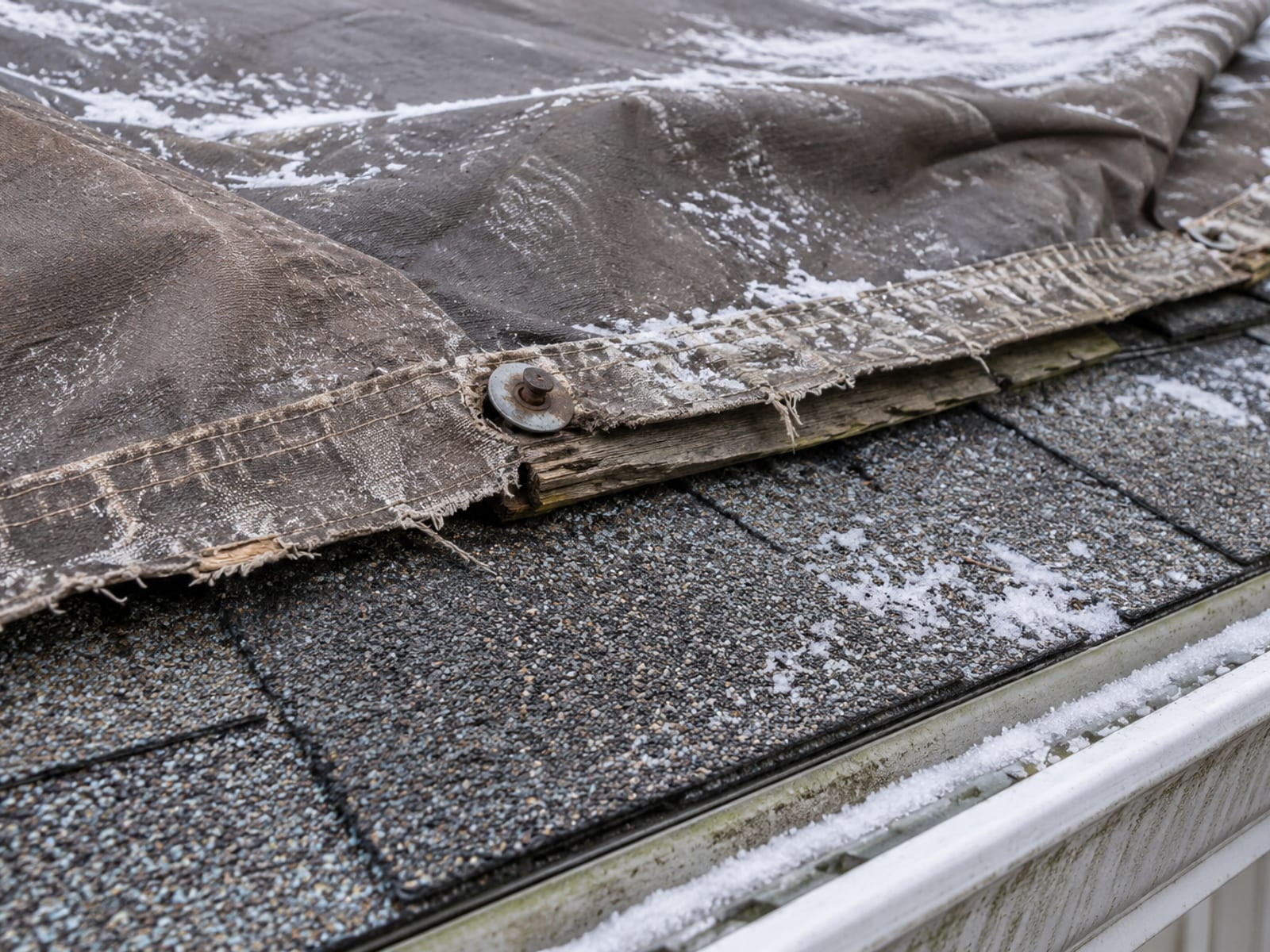
- Sunlight: Ultraviolet exposure makes polyethylene brittle.
- Wind: Repeated flapping wears the tarp and works fasteners loose.
- Poor attachment: A tarp fastened to weak material can tear free.
- Abrasion: Roof edges, branches and sharp materials rub through the cover.
- Snow and ice: Weight and freeze-thaw cycles stress the tarp and what it covers.
- Standing water: Ponding or blocked drainage on the cover can overload it.
Because of all that, have the tarp checked after any major wind, rain, snow or ice event and whenever the inside starts to leak again. Ask your roofer how often they will check it while you wait for the permanent repair.
The most important point is the plan. A tarp is a bridge to the permanent repair, not a winter roof. Leaving one through a Connecticut winter exposes it to nor'easters, freezing precipitation and snow weight. Schedule the permanent repair as soon as the property is safe and your insurance process allows.
What Does Emergency Roof Tarping Cost in Connecticut?
Emergency tarping prices follow the size of the opening, the roof and the hour of the call. The published Connecticut figures below give a sense of scale, and a written estimate for your own roof gives the real number.
Published Emergency Tarping Figures
What It Covers: Under 100 square feet
Published Figure: $300 to $600
Tap a factor to see how it moves the price.
These are one Connecticut guide's practice figures, and none of them is a quote for your house.
What moves the price on a real job is fairly predictable: how much roof has to be covered, the tarp material, the pitch and number of stories, access for ladders or a lift, chimneys, skylights and valleys, rotted decking that cannot hold fasteners, debris removal, and emergency timing. Those prices typically cover temporary tarping only. Permanent repair, structural work, tree removal, interior drying, inspections and permit fees may be billed separately.
Does Insurance Pay for an Emergency Tarp?
It may, but that depends on your policy, the cause of the damage, your deductible and the exclusions, and no roofer can promise the answer for you. What you can do is protect your claim from the start.
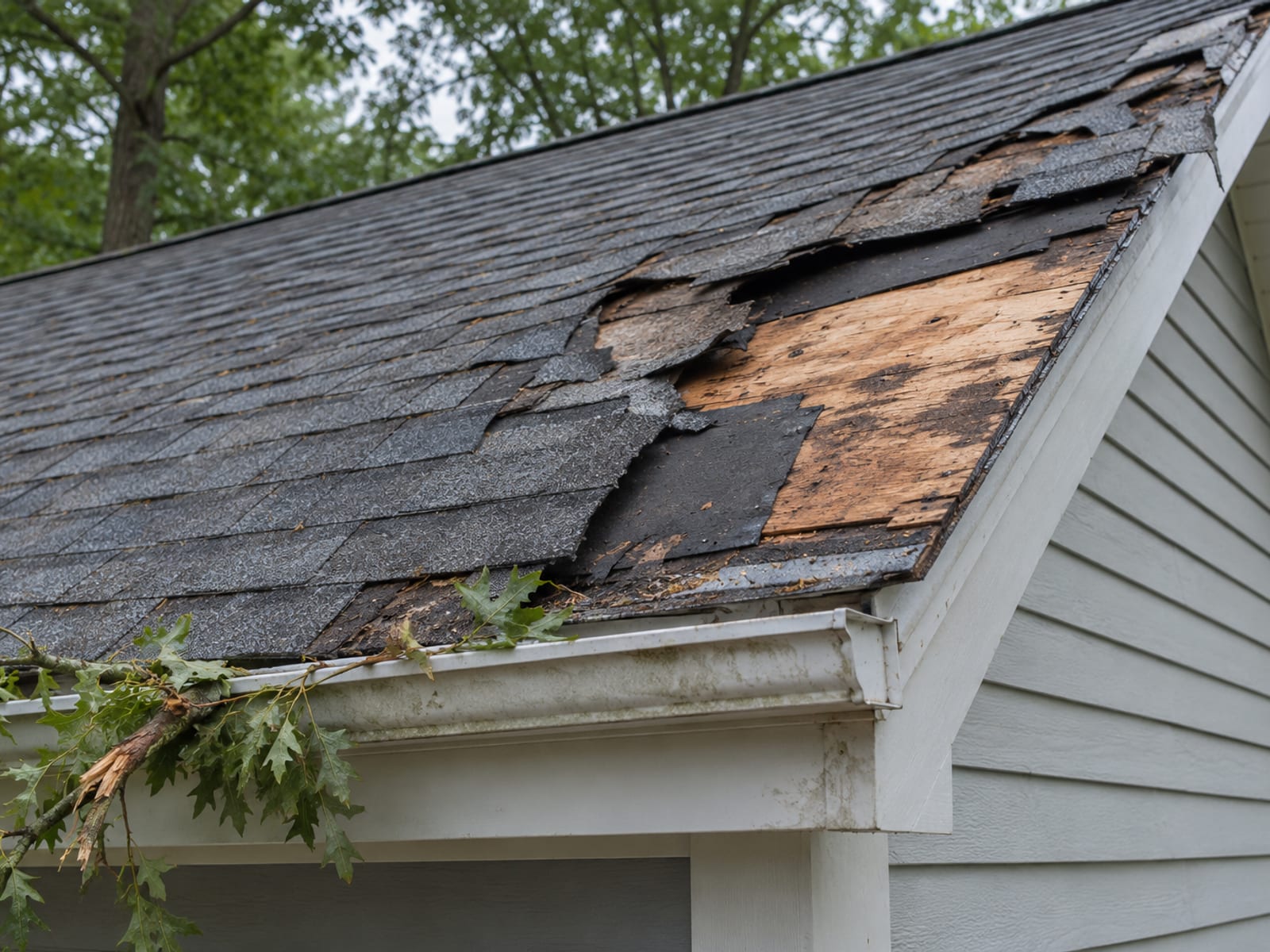
Keep everything in one folder: the tarp invoice, the photos, the written description of the work, receipts and every email or letter with the insurer. Ask your adjuster how temporary work is handled under your policy and whether the roofer should send the documentation directly.
Age and wear matter, too. The Department's winter claim guidance says policies normally cover sudden and accidental roof collapse but may exclude damage from age or pre-existing conditions, and that coverage varies by policy. Read your own policy and ask your agent.
Be wary of any contractor who promises that insurance will pay or offers to waive your deductible. Do not sign over your insurance benefits, and do not pay the whole contract price up front.
What Do Connecticut Storms and Older Homes Mean for a Tarp?
Connecticut roofs take a lot of weather. The National Weather Service describes nor'easters as East Coast storms that commonly bring heavy rain or snow and gale-force winds, and says they are most frequent and violent from September through April. Add thunderstorms in summer, and a tarp can be tested by wind, rain and then snow in the same season. Our storm damage service covers the permanent work that follows.
The age of the houses matters as well. The Census Bureau's 2024 American Community Survey table puts the median year Connecticut homes were built at 1981. That means many homes here have roofs that have been replaced at least once, with layers of older material, flashing and decking underneath. Older decking is more likely to have soft spots, and that is exactly what a crew has to check before choosing where to fasten.
Permits are a local question. Connecticut's 2022 State Building Code applies to permit applications filed since October 1, 2022, and it adopts the 2021 International Residential Code. Your town's building department decides what needs a permit and an inspection. Ask whether a temporary emergency cover, the roof repair or any structural work needs one, and ask your roofer who will handle it. The Department of Consumer Protection says responsibility for permits ultimately rests with the homeowner.
How Do You Check a Connecticut Roofing Contractor Before the Tarp Goes On?
After a big storm, people knock on doors and offers pile up. You can still check a company in a few minutes, even at night.
Connecticut's Department of Consumer Protection requires home improvement contractors to register, and roofing counts. You can look up a registration in the state's eLicense system. Compare the legal name, address and registration number with what the contractor gives you. DCP also tells homeowners to verify that a contractor carries general liability insurance of at least $20,000, and it is reasonable to ask about workers' compensation as well. Call the insurer or ask for a certificate to confirm the policy is active.
DCP's contract requirements call for a written, signed and dated contract that names the contractor and registration number and lists project dates, price, payment terms, materials, permits and cancellation information. Homeowners generally have three business days to cancel, though that right can be waived when the work is an emergency that needs to start right away.
Ask for references from storm or emergency jobs, and compare two or three written proposals if the situation allows. If the permanent work will be a new roof, ask whether the contractor is trained or certified by the manufacturer of the roofing system. Walk away from anyone who is not registered, who wants the full price up front, or who promises your insurance will cover the job.
What Should You Ask Before the Tarp Goes On?
Good questions are quick to ask and hard to dodge. Write the answers on the estimate, or have the contractor do it.
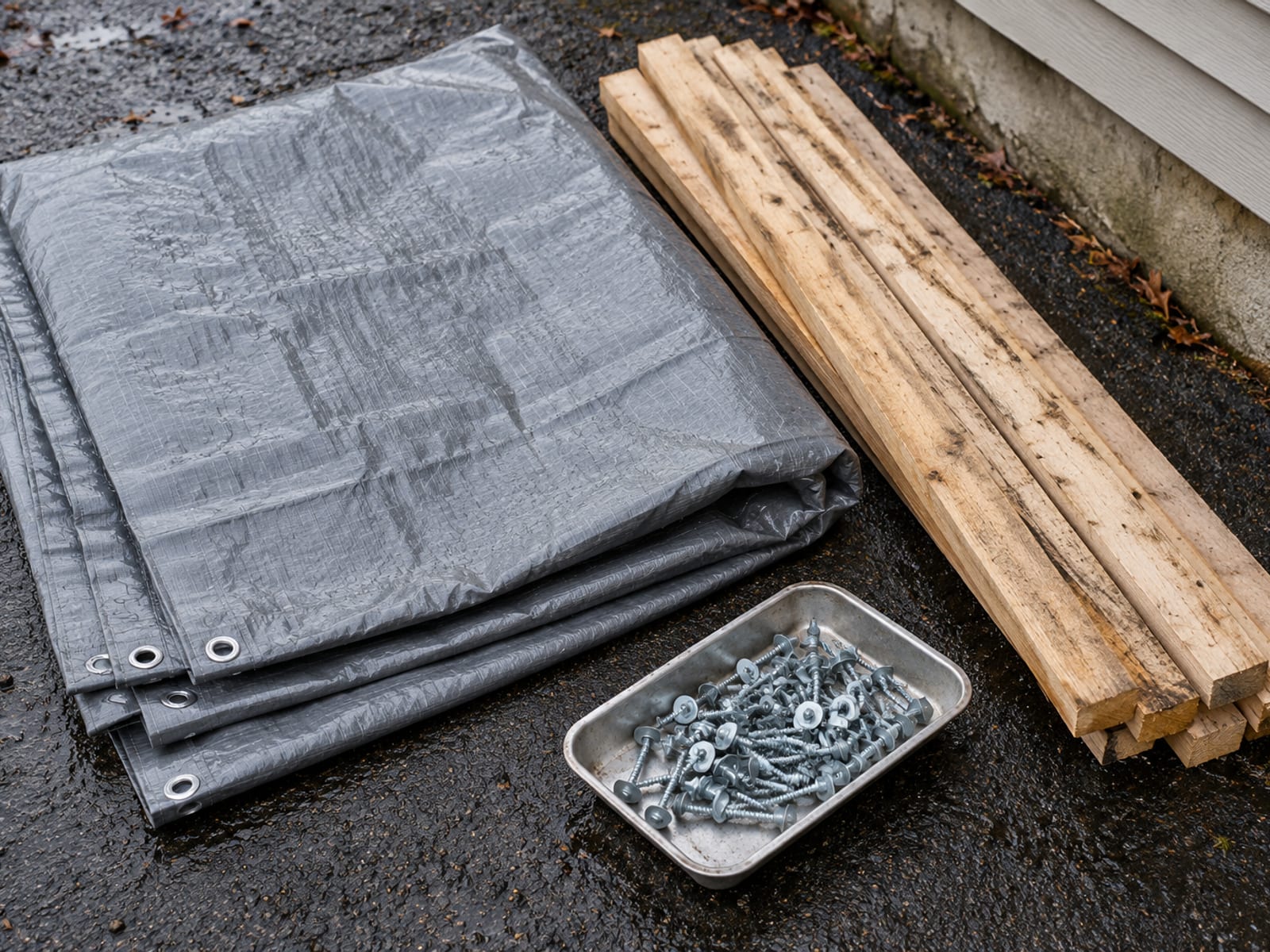
On timing, an arrival window depends on the roof, the damage and the weather, so be skeptical of a firm promise made over the phone before anyone has assessed the damage. Ask for the window after the assessment, and ask what happens if a second storm arrives before the permanent repair is done.
Frequently Asked Questions About Emergency Roof Tarping in Connecticut
Will a tarp stop my roof from leaking?
A properly installed professional tarp can reduce the water entering through an exposed area for a while. Its effect depends on whether it covers the real entry point, extends far enough to shed water and stays firmly attached. It does not repair decking, framing, flashing, shingles or anything damaged inside the house.
How long does it take to put on a tarp?
It depends on roof size, pitch, the number of stories, access, debris, structural damage, weather, the material and crew availability. Ask for an expected arrival and work window after the contractor has reviewed your situation.
Can I put a tarp on my roof myself if I stay near the edge?
No. Falls, slick surfaces, wind and damaged decking are all hazards, even near the edge. Stay inside, protect your belongings and let a trained crew do the roof work.
What kind of tarp is best for a leaking roof?
A heavy-duty, reinforced, UV-resistant tarp that suits the roof shape and the weather ahead. One 2026 Connecticut contractor guide calls 6-mil polyethylene a minimum and prefers 10-mil UV-resistant material. Your roofer should choose based on the roof type, the damaged area, the attachment points and how soon the permanent repair can happen.
Does insurance pay for the tarp and the repair?
It depends on the policy, the cause of loss, the deductible and any exclusions. Report the loss promptly, keep your receipts and documentation, and ask your insurer how temporary work is handled before permanent repairs begin.
Do I need a permit for a tarp?
Your local building official decides whether a temporary cover, a repair or structural work needs a permit or inspection. Ask before work begins, and ask your contractor who will handle it.
Emergency Roof Tarping Knowledge Check
1. What is the safest thing for a homeowner to do while waiting for an emergency tarp?
2. Why should the tarp be fastened into sound structure?
3. What shortens the life of an emergency roof tarp?
4. What do published tarping prices for Connecticut tell you?
5. What should you never accept from a contractor after storm damage?
Final Thoughts
An open roof is stressful, but the first day is manageable when you take it in order. Stay inside, protect what you can, document the damage and report the loss. Let a trained crew cover the opening, and ask what area it covers, what it is made of and where it attaches before the tarp goes on. Remember that a tarp is a bridge, and that the roof still needs its permanent repair.
Moving promptly on that repair, once the property is safe and your insurer has had its chance to inspect, protects your ceilings, insulation and framing from a second or third round of water. It also keeps a short-term fix from becoming a winter problem.
If you need a hand, American Quality Roofing and Siding offers 24/7 emergency roof services for homes and businesses across Central and Western Connecticut, and we are based in Brookfield. We are licensed and insured, CT HIC #0633301. We can assess the roof, cover the damage and walk you through the permanent repair. Call us or request a free estimate, and we will tell you what we find before any work begins.
Written by Jose Zaruma, American Quality Roofing and Siding.
← Back to the blog