Roofing Guide
Emergency Roof Services Brookfield CT: What to Do Now
By Jose ZarumaPublished
- emergency roof
- brookfield ct
- connecticut
- storm damage
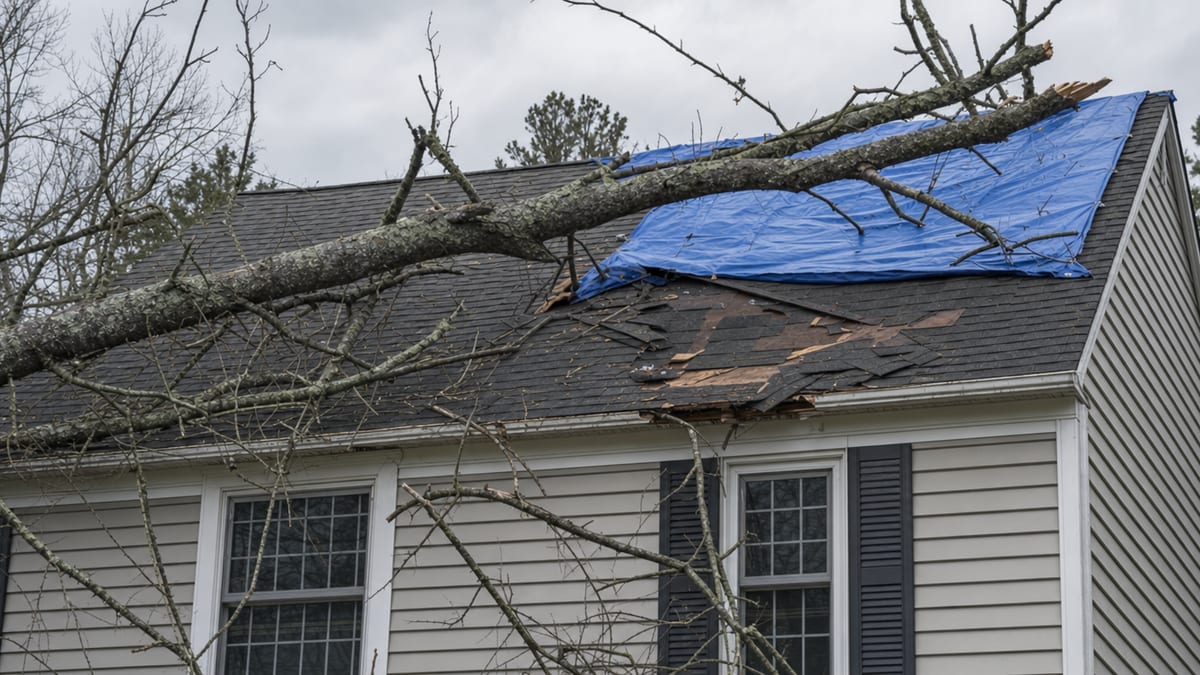
It is the kind of moment that makes your stomach drop. A stain spreading across the ceiling during a storm, a branch through the roof, or water dripping into a bedroom in the middle of the night. The first feeling is not curiosity, it is fear: is this dangerous, is the damage getting worse right now, and who do you even call at this hour. Emergency roof services in Brookfield CT exist for exactly these moments, but the smartest first move is almost never to climb up and look. It is to keep people safe, protect what you can from where you stand, and get the right help on the way. This article walks through what actually counts as a roof emergency, the safe first steps to take, what temporary protection like tarping can and cannot do, how insurance fits in, and how to tell a real emergency roofer from a storm chaser knocking on your door. The goal is to help you feel steadier and act correctly when a roof problem cannot wait.
Key Takeaways
Protect people before the roof
Stay away from sagging ceilings, wet electrical fixtures, and downed wires, and do not get on a roof in unsafe weather; call 911 for fire, collapse, or live wires.
A tarp buys time, it is not a repair
Temporary protection can slow further damage, but the roof still needs a full inspection and a permanent fix, and 24/7 availability means fast triage, not a guaranteed midnight repair.
Document everything and verify who you hire
Photograph the damage before and after any temporary work, contact your insurer, and confirm a contractor's Connecticut registration and insurance before signing anything.
Protect People Before You Protect the Roof
When a roof fails suddenly, the instinct is to rush toward the damage. The right instinct is the opposite: get people to safety first, because the roof can be fixed and injuries cannot be undone. Active water, fallen trees, and structural damage create hazards that are easy to underestimate in the moment. Before anyone thinks about buckets or tarps, check for the dangers below.
- Sagging or bulging ceilings: A ceiling holding water can collapse without warning, so keep everyone out of that room.
- Wet electrical fixtures and outlets: Water and electricity together are a shock and fire risk; do not touch wet switches or fixtures.
- Downed power lines: Treat any downed wire as live, stay far back, and call the utility or 911.
- Unsafe roof access: Do not climb onto a wet, icy, storm-lashed, or structurally damaged roof for any reason.
For immediate life danger, fire, a collapse, or downed live wires, call 911 first. Guidance from Ready.gov on severe weather reinforces the same order: personal safety comes before property every time. Once people are safe, you can move on to protecting belongings and getting help.
What Counts as a Roof Emergency?
Not every roof problem is a middle-of-the-night emergency, and knowing the difference helps you respond at the right speed. A true emergency involves active water entering the home, an exposed opening in the roof, or a safety hazard. An urgent problem needs prompt attention but can be scheduled safely. Reading which one you have keeps you from panicking over a minor issue or underreacting to a serious one.
- Clear emergencies: Active leaks during a storm, a tree or branch through the roof, fire damage, a large area of missing roofing, broken skylights letting in water, or a sagging ceiling.
- Urgent but not emergencies: A small stain that is not actively growing, a few missing shingles with no active leak, or minor flashing issues that need prompt scheduling.
- The deciding question: Is water actively entering, or is anyone in danger right now. If yes, it is an emergency; if no, it is urgent repair that can be planned.
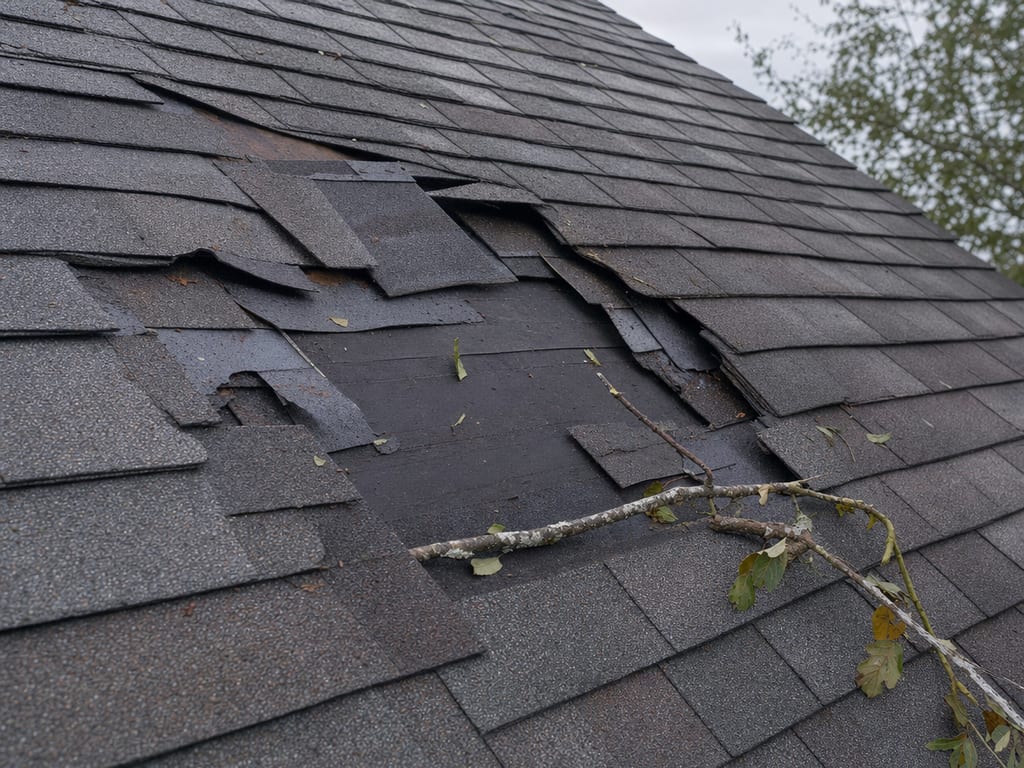
The First Ten Minutes: What to Do During a Roof Leak
Once everyone is safe, a clear order of steps protects your home and your future insurance claim. You do not need to fix anything yourself; you need to limit damage and get the right help moving. Here is what to do, roughly in order, and only when it is safe to do so.
- Move people and pets away from the damaged area and any sagging ceiling.
- Stay clear of wet electrical fixtures, and shut off power to the area only if you can do so safely.
- Contain water only when safe, using buckets and towels from a stable, dry spot, never under a bulging ceiling.
- Protect belongings by moving what you can reach without risk.
- Photograph the damage thoroughly, inside and out, before you move or change anything.
- Contact your insurer to start the claim and get their guidance.
- Call a qualified emergency roofer to triage the situation and plan temporary protection.
That documentation step matters more than it feels like in the moment. Connecticut's tips for filing storm claims stress photographing damage and keeping records, because a clear before-and-after record supports your claim later.
What a Tarp Can and Cannot Do
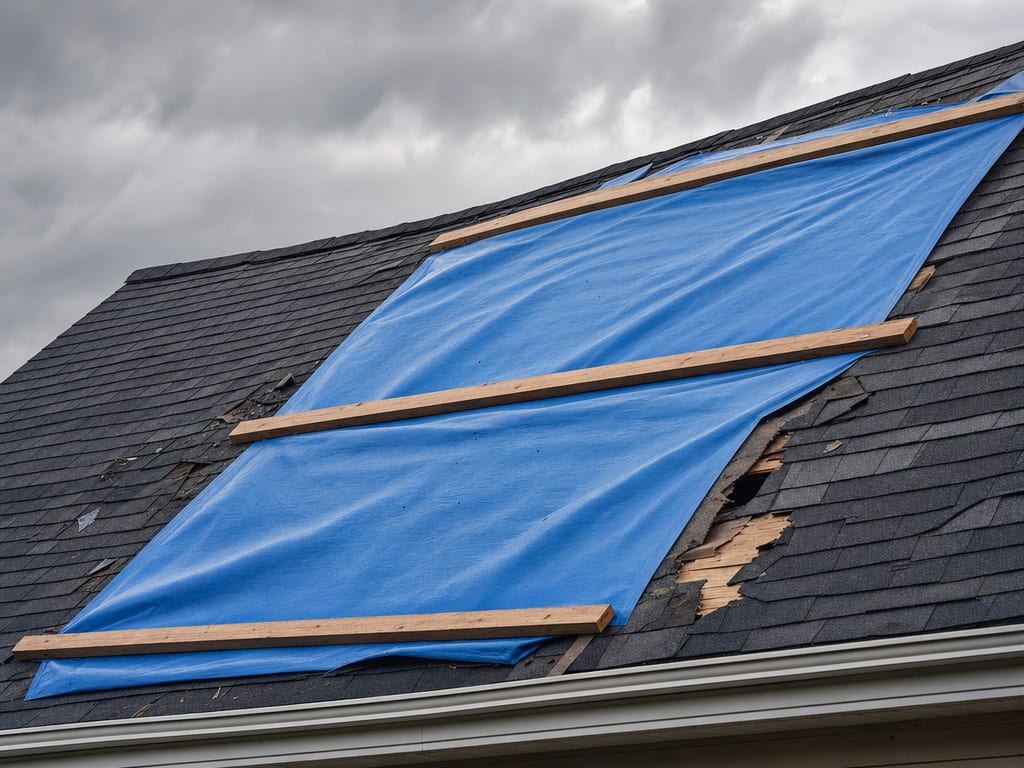
Tarping is the most common emergency measure, and understanding it sets the right expectations. A properly installed tarp covers an exposed or damaged section and reduces how much additional water gets in while you wait for permanent repairs. That can save insulation, drywall, and belongings from a bad situation getting worse. It is genuinely valuable, and it is also genuinely temporary.
What a tarp cannot do is restore the roof. It does not repair the flashing, replace the shingles, or fix the deck underneath. It is weather protection that buys time, and it has limits: tarping is unsafe in high wind, lightning, ice, or on a structurally compromised roof, so even a 24/7 crew may have to wait for safe conditions before installing one. A tarp left in place too long becomes its own problem, so it is a bridge to a real repair, not a destination. When the storm passes, the roof still needs a full inspection and a permanent plan, whether that is a targeted roof repair or, for widespread damage, a roof replacement.
What to Expect From a 24/7 Roofer
When you call an emergency roofer, it helps to know what genuinely fast, responsible service looks like, because it is not the same as a guaranteed instant repair. A good 24/7 response follows a sequence designed around safety and documentation, and an honest company is clear about what it can and cannot promise overnight.
- Phone triage: Understanding the situation and helping you take the right immediate steps.
- Dispatch and access review: Checking whether conditions are safe enough to come out and get on the roof.
- Safe inspection: Assessing the damage inside and out once it is safe to do so.
- Temporary stabilization: Tarping or securing loose materials to limit further damage.
- Written documentation: Photographing and recording the damage and the temporary work for your claim.
- Permanent repair planning: Scheduling the full inspection and the real repair or replacement.
What 24/7 availability does not mean is a guaranteed midnight roof access, a same-night permanent repair, or approval of your insurance claim. Weather and safety control access, and a permanent repair follows a full inspection in daylight and safe conditions. A company that promises to fully replace your roof at 2 a.m. in a storm is not being straight with you.
How Insurance and Documentation Work After a Storm
Insurance is where a stressful situation gets more manageable if you handle the early steps well. The core idea is simple: document thoroughly, prevent further damage, and let the insurer evaluate the claim. Contact your insurer promptly, save photographs and receipts for any temporary work, and keep damaged materials until an adjuster has had a chance to see them.
A few realities are worth understanding up front. Coverage depends on the cause of loss, your policy terms and exclusions, your deductible, and depreciation, and wind damage is treated differently from flood damage. Reasonable temporary repairs to prevent further damage are expected, but permanent work is best held until the insurer has inspected, unless safety requires immediate action. Most importantly, a contractor can document damage professionally, but no contractor can guarantee that your claim will be approved. Anyone who promises to get your claim approved or to waive your deductible is a warning sign, not a bonus.
Permits Come After the Emergency Is Stable
In the middle of an emergency, permits are the last thing on your mind, and that is fine, because temporary protection to prevent further damage is about safety, not paperwork. Once the situation is stabilized, though, the permanent repair may require town review depending on its scope. Temporary tarping is different from structural repair, roof replacement, framing work, skylight replacement, or fire restoration, and those larger jobs often need a permit and inspections.
Brookfield's Building Department is the authority on what the permanent work requires, and a reputable roofer confirms and handles that as part of the repair plan. After a fire, the fire marshal may also be involved. The point is that permits belong to the calm, permanent phase, not the emergency itself.
What Drives Emergency Roof Repair Cost
There is no honest flat price for emergency roof work, because so much depends on the situation, the conditions, and what the permanent repair turns out to involve. A single tarp on an accessible roof is a small job; a fallen tree, structural damage, and interior water is a much larger one. The table below shows the factors that move the number, and why temporary mitigation and permanent repair should be priced separately in writing.
What Moves the Cost of Emergency Roof Work
After-hours and severe-weather response involves different logistics than a scheduled visit.
Tap a factor to see how it moves the price.
Because the emergency and the permanent repair are two different jobs, a trustworthy roofer separates them in writing: what the temporary protection costs now, and a documented scope for the permanent work once the roof is fully inspected. That protects you from paying for a rushed permanent repair made under pressure.
How to Spot a Storm Chaser and Choose a Real Roofer
After a big storm, unfamiliar trucks appear in Brookfield neighborhoods, and not all of them are legitimate. Storm chasers use urgency and fear to pressure homeowners into signing on the spot, and Connecticut regularly warns residents to be aware of scammers posing as roofing companies. The good news is that the same few checks that identify a real roofer also filter out the scammers.
- Verify Connecticut registration and insurance: A legitimate contractor holds a state Home Improvement Contractor registration and carries insurance; ours is CT HIC #0633301.
- Confirm the business identity: A real local company has a verifiable name, address, and history, not just a magnetic sign on a truck.
- Get a written temporary-work scope: Documented temporary protection, separate from the permanent repair.
- Ask about documentation and permits: A real roofer documents the damage and handles permits for the permanent work.
- Reject deductible-waiver and claim-approval promises: These are red flags, not selling points.
- Review permanent repair and warranty terms: Understand the real repair and what is guaranteed before you commit.
A contractor who welcomes these questions is who you want on your roof. One who pressures you to sign immediately, demands a large cash payment, or guarantees your insurance outcome is who the state is warning you about.
Common Emergency Mistakes to Avoid
Under stress, good people make avoidable mistakes. Knowing them in advance helps you stay safe and protect your claim.
- Climbing onto a roof in unsafe weather: The single most dangerous emergency mistake.
- Entering a room with a sagging ceiling: It can collapse without warning.
- Touching wet electrical equipment or approaching downed wires: A serious shock and fire risk.
- Treating a tarp as a permanent repair: Temporary protection is a bridge, not a fix.
- Failing to photograph the damage: Documentation is what supports your claim.
- Discarding damaged materials too soon: Keep them until the adjuster has seen them.
- Signing an incomplete contract or hiring an unverified storm contractor: The path to being scammed.
Frequently Asked Questions About Emergency Roof Services in Brookfield, CT
What should I do first during a roof leak emergency?
Protect people first. Move everyone away from sagging ceilings and electrical hazards, contain water only when it is safe, photograph the damage, contact your insurer, and call a qualified emergency roofer. For fire, collapse, or downed live wires, call 911 first.
Can a roofer tarp my roof while the storm is still happening?
Only when access and weather are safe. Lightning, high wind, ice, structural damage, fallen trees, and utility hazards may require the crew to wait. A responsible roofer will not send someone onto a roof in dangerous conditions, even in an emergency.
Is roof tarping a permanent repair?
No. Tarping is temporary weather protection that limits further water damage. The roof still needs a full inspection and a permanent repair plan once conditions are safe. A tarp left in place too long becomes its own problem.
Will insurance pay for emergency roof repair?
It depends on the cause of loss, your policy terms and exclusions, your deductible, depreciation, and the insurer's evaluation. Save photographs and receipts and prevent further damage, but do not rely on any contractor to guarantee that your claim will be approved.
Does an emergency roof repair in Brookfield need a permit?
Temporary protection to prevent further damage is about safety, not permits. The permanent repair may require review depending on scope, since structural, replacement, framing, skylight, or fire-restoration work is different from tarping. Confirm the permanent scope with Brookfield's building office.
How do I avoid roofing scams after a storm?
Verify Connecticut registration, insurance, and business identity, get a written scope, and understand the payment terms and permit responsibility. Avoid high-pressure tactics, large cash demands, deductible-waiver offers, and anyone who guarantees your insurance claim.
Quick Emergency Roof Knowledge Check
1. What is the first priority during a roof emergency?
2. What can a properly installed tarp do?
3. What does 24/7 emergency roofing availability actually mean?
4. What is a clear warning sign of a storm-chaser scam?
5. What should you do with damaged materials after a storm?
Final Thoughts
A roof emergency is frightening, but the right response is calm and ordered. Protect people first, staying clear of sagging ceilings, wet electrical fixtures, and downed wires. Limit the damage from where it is safe to stand, photograph everything, and contact your insurer. Then get a qualified emergency roofer to triage the situation, install temporary protection when conditions allow, and plan the permanent repair. Understanding that a tarp buys time rather than fixing the roof, and that no honest contractor guarantees an insurance outcome, keeps you steady and protects you from the scams that follow every storm.
Handled this way, even a serious roof emergency becomes a manageable sequence rather than a panic, and your home is protected from a bad night turning into far worse damage. The goal is to stop the harm quickly, document it well, and repair it right.
If a storm, a fallen tree, or a sudden leak has your roof open to the weather, we are here to help. American Quality Roofing and Siding has served Brookfield, CT and the surrounding Central and Western Connecticut area since 2006, and we provide 24/7 emergency roof services, from fast triage and tarping to full storm-damage repair and replacement. We are licensed and insured, CertainTeed ShingleMaster PRO certified, and hold an A+ BBB rating and CT HIC #0633301. Call us any hour for emergency help, and we will stabilize your roof safely and plan the permanent repair the right way.
Serving Brookfield, CT
This guide is part of our exterior work in Brookfield. See our roofing contractor services in Brookfield, CT.
Written by Jose Zaruma, American Quality Roofing and Siding.
← Back to the blog