Roofing Guide
Roof Replacement Brookfield CT: Cost, Process, and Permits
By Jose ZarumaPublished
- roof replacement
- brookfield ct
- connecticut
- roofing
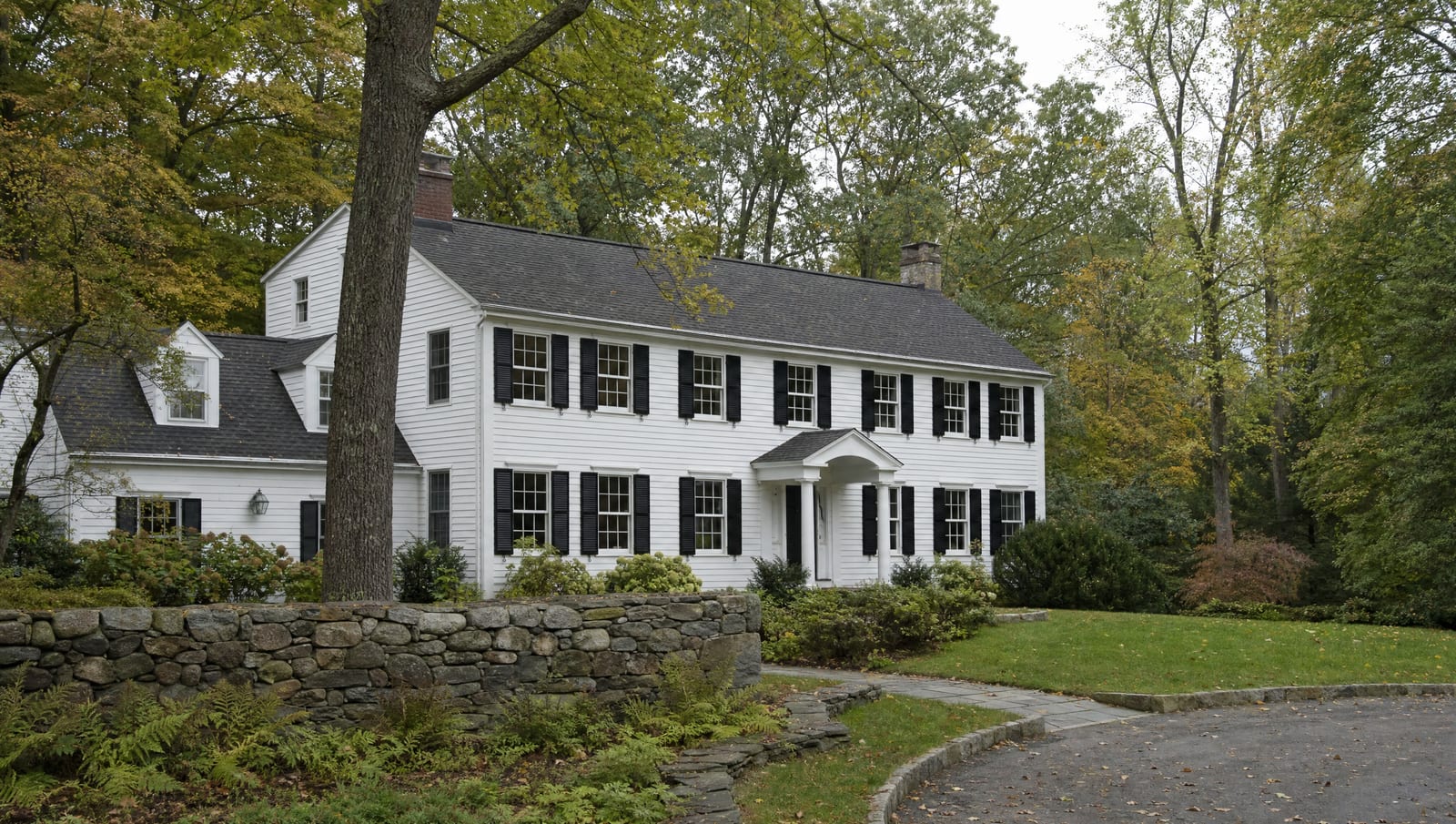
Granules collecting in the gutters, a brown stain spreading across a bedroom ceiling, or a business card left behind after the last hailstorm. If any of that sounds familiar, you are probably wondering whether your roof needs to be replaced, or whether a repair will still hold. A roof replacement in Brookfield, CT is one of the larger decisions you will make on a home that, for many owners here, represents a major share of their net worth. The hard part is rarely the damage itself. It is the uncertainty: not knowing whether one leak means a whole new roof, what a fair proposal should include, or how to tell a serious contractor from someone with a ladder and a truck. This article walks through the same things a careful roofer would explain at your kitchen table, so you can weigh a repair against a replacement, understand what drives the cost, and know what Brookfield and Connecticut actually require before any work starts.
Key Takeaways
Age alone does not decide it
Widespread granule loss, repeated leaks in different spots, soft decking, and failed flashing matter more than a number of years, so a real inspection should come before any replacement recommendation.
You are buying a system, not shingles
Decking, ice-and-water protection, flashing, attic ventilation, and the shingles themselves have to work together, which is why installation details decide how long a roof lasts.
Cost and paperwork are project-specific
Roof size, pitch, layers, deck repair, and materials move the price, and a Brookfield building permit plus a properly written Connecticut home improvement contract are part of doing the job right.
Repair or Replace: Reading the Signs on a Brookfield Roof
Most homeowners start looking into replacement because of something they can see or something that just failed. A single leak does not automatically mean the whole roof is finished, and an older roof is not automatically due for replacement either. The honest answer depends on the roof's overall condition, how the damage is spread out, and how much serviceable life the shingles have left. That is why a roof should be looked at, inside and out, before anyone recommends tearing it off.
Signs a Roof Is Near the End of Its Life
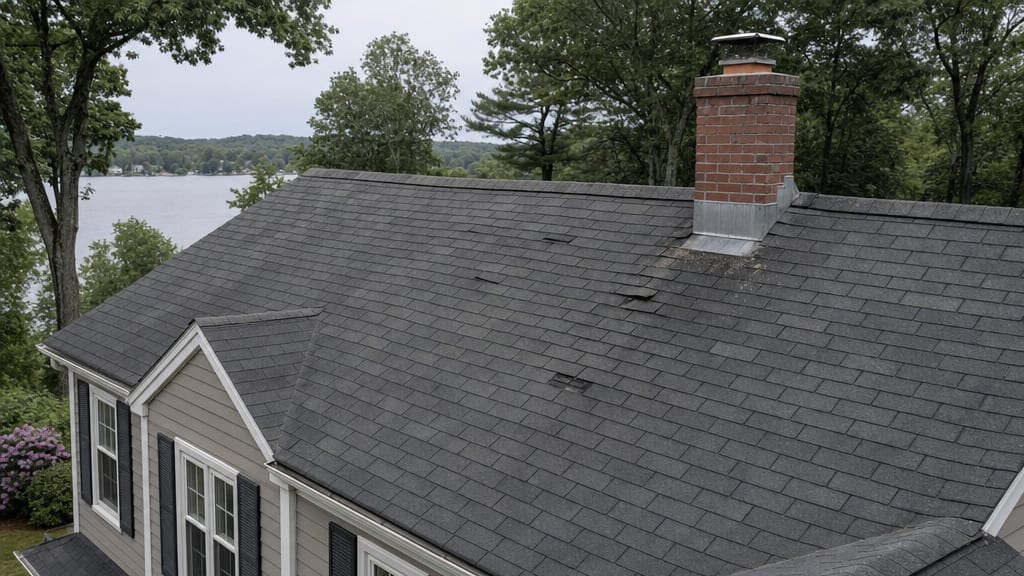
Certain patterns point toward replacement rather than another patch. Watch for widespread granule loss, brittle or curling shingles, missing tabs after wind, repeated leaks in different areas, deteriorated flashing, soft or spongy decking underfoot, and several roof sections failing at once. When damage is broad instead of local, or when the roof has already been repaired many times, another repair often just delays the inevitable. Manufacturer and industry guidance both treat repeated, widespread problems as a stronger signal than age by itself (Owens Corning).
When a Repair Still Makes Sense
Repair is often the right call when the damage is localized, the shingles are still flexible and available to match, the deck is sound, and the leak traces back to a fixable detail like a pipe boot or a section of flashing. A roof with real life left in it does not need to be replaced because of one bad valley. If you are not sure which situation you are in, a straight comparison of a targeted roof repair against a full replacement is the fastest way to see whether you are spending good money on a roof that is genuinely done, or protecting one that still has years to give (IKO).
How Brookfield's Weather and Wooded Lots Wear Down a Roof
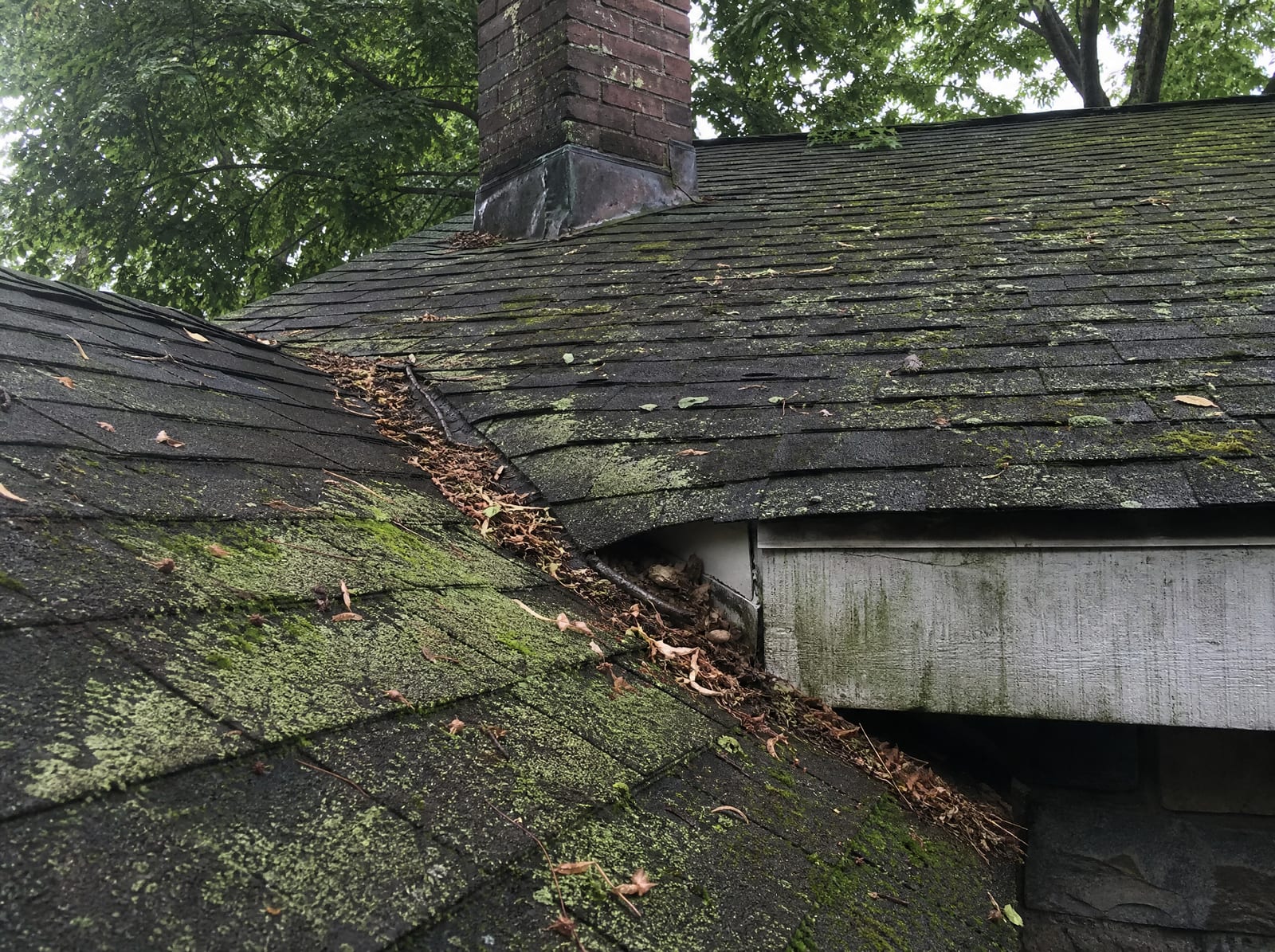
Brookfield roofs work hard. The town sits in western Connecticut near Candlewood Lake, with four real seasons and a lot of tree cover, and all of it shows up on the roof over time. A roof, its flashing, the attic ventilation, and the gutters function as one moisture-management system, so a weakness in one place tends to surface as a problem somewhere else.
Snow, Ice, and Freeze-Thaw
Winter is the hardest season on a Connecticut roof. Snow load, frozen gutters, and the repeated freeze-thaw cycle work at shingles and flashing, and ice dams form when heat escaping the attic melts snow that then refreezes at the cold eaves and backs water up under the shingles (National Weather Service). Good eave protection and balanced attic ventilation reduce that risk, though they cannot cancel it out entirely.
Wind, Hail, and Falling Branches
Thunderstorms, strong wind, and the occasional hail event lift and crease shingles, especially along roof edges, corners, and ridges (National Weather Service). On wooded lots, falling limbs add impact damage on top of the wind. After a storm, it is worth documenting anything you can see from the ground, since that record helps later if you file a claim or need storm damage work.
Shade, Moss, and Debris on Wooded Properties
Many Brookfield homes sit on shaded, wooded lots, and that setting slows how quickly a roof dries. Leaves and needles collect in valleys and gutters, moss and algae take hold on north-facing slopes, and standing debris holds moisture against the shingles. Lakeside and sloped properties add their own wrinkle, since long driveways, stone walls, and tight staging areas affect how a crew reaches the roof and protects the grounds during the work.
What a Complete New Roof in Brookfield Includes
A new roof in Brookfield, CT is more than a fresh layer of shingles. The value is in the full assembly underneath, and each part has a job. When you compare proposals, you are really comparing how completely each contractor rebuilds that system. A trustworthy scope should describe every layer, not just the shingle brand.
Tear-Off and Deck Inspection
A proper replacement starts with a full tear-off down to the wood deck, which is the only way to see what has been hiding under the old roof. The crew checks the sheathing for rot, delamination, and soft spots, and any damaged decking is documented and repaired before new roofing goes down. Roofing over wet or failing decking is one of the more expensive shortcuts a homeowner can end up paying for later.
Water Protection, Flashing, and Ventilation
Above the deck, the system layers up: ice-and-water membrane at the eaves and valleys, underlayment across the field, a clean drip edge, new flashing at chimneys, walls, valleys, and penetrations, and starter and ridge components sized to the roof. Attic ventilation gets evaluated as a balanced intake-and-exhaust system, not an afterthought, because poor airflow shortens shingle life and feeds ice dams (ENERGY STAR). Managing where water goes across the whole roof is the point of the exercise (GAF). Skylights, fascia, and gutters are best handled during the same project so the flashing ties in as one continuous surface.
Choosing Asphalt Shingles That Hold Up in Brookfield
Architectural asphalt shingles are the most common choice on Connecticut homes, and for good reason: they balance cost, appearance, and performance across a wide range of roofs. That said, the shingle you can see is only part of the story. How it is installed, and what goes under it, decide how it holds up.
What Actually Separates One Shingle From Another
When you look at asphalt shingle roof replacement in Brookfield, the factors that matter are wind rating, impact resistance, algae resistance for shaded lots, color, pitch compatibility, and the warranty terms that come with the full system (GAF). Manufacturer warranty eligibility often depends on using matched components and installing them to the manufacturer's instructions, so the products and the workmanship are tied together (CertainTeed).
Why Installation Beats Color
Two roofs with the same shingle can perform very differently. Fastening pattern, starter placement, flashing details, valley construction, ventilation, and deck condition all affect whether the roof reaches its rated life. Color is the fun part of the decision, but the parts you never see are the ones that keep water out during a February thaw.
What Drives Roof Replacement Cost in Brookfield
There is no honest flat price for a new roof, and any number quoted before a measurement and inspection is a guess. Roof replacement cost in Brookfield comes down to the specific roof and what the crew finds once the old one comes off. The most reliable way to understand pricing is to compare detailed written scopes rather than bottom-line totals (Owens Corning). These are the factors that move the number on your roof.
What Moves Your Roof Replacement Cost in Brookfield
Overhangs, additions, steep slopes, valleys, and dormers add area, labor, staging, and waste
Tap a factor to see how it moves the price.
Because those factors vary so much from one house to the next, the smartest move is not to chase the lowest total. It is to compare what each written scope actually includes, line by line, so you know both bids are pricing the same roof (GAF).
Brookfield Roof Permits and Connecticut Contractor Rules
Two kinds of paperwork protect you on a roof replacement: the town permit and the contract itself. Neither is optional busywork. They put the work on record, hold it to code, and give you recourse if something goes wrong. A contractor who treats them as a nuisance is a warning sign.
The Brookfield Building Permit
Roof replacement in Brookfield generally requires a building permit through the town Building Department, and the project should be reviewed with the department before work begins so the current permit type, documents, fees, and inspections are clear for your exact scope (Town of Brookfield). Either the homeowner or the contractor may pull the permit, but the contract should say who is responsible. As your licensed contractor, we file the permit and handle the inspection so your roof is documented and meets the Connecticut State Building Code (Connecticut DAS).
Historic Properties and Connecticut Contracts
If your home sits in a historic district or is a regulated historic property, visible exterior changes may need a certificate of appropriateness even when a building permit alone would not require it, so it is worth confirming before you choose materials or color (Town of Brookfield). Separately, Connecticut requires home improvement contractors to be registered, and state law requires the contract to include specific elements such as the contractor's name and registration number, the scope, dates, signatures, and your cancellation rights (Connecticut DCP). Our CT HIC registration is #0633301, and a complete written contract is part of every project.
What to Expect During Your Brookfield Roof Replacement
A good roof replacement is predictable. Knowing the sequence ahead of time makes it easier to plan and easier to spot a crew that is cutting corners. Most projects follow the same path from the first call to the final walkthrough, and the details in between are where quality shows.
Step 1: Inspection and Written Proposal
We look at the whole roof, the attic, the flashing, and any low-slope sections, then put together a written scope and price that spells out materials, deck-repair pricing, ventilation, flashing, gutters, permits, cleanup, and warranty. If a repair still makes sense, we say so.
Step 2: Permit, Protection, and Installation
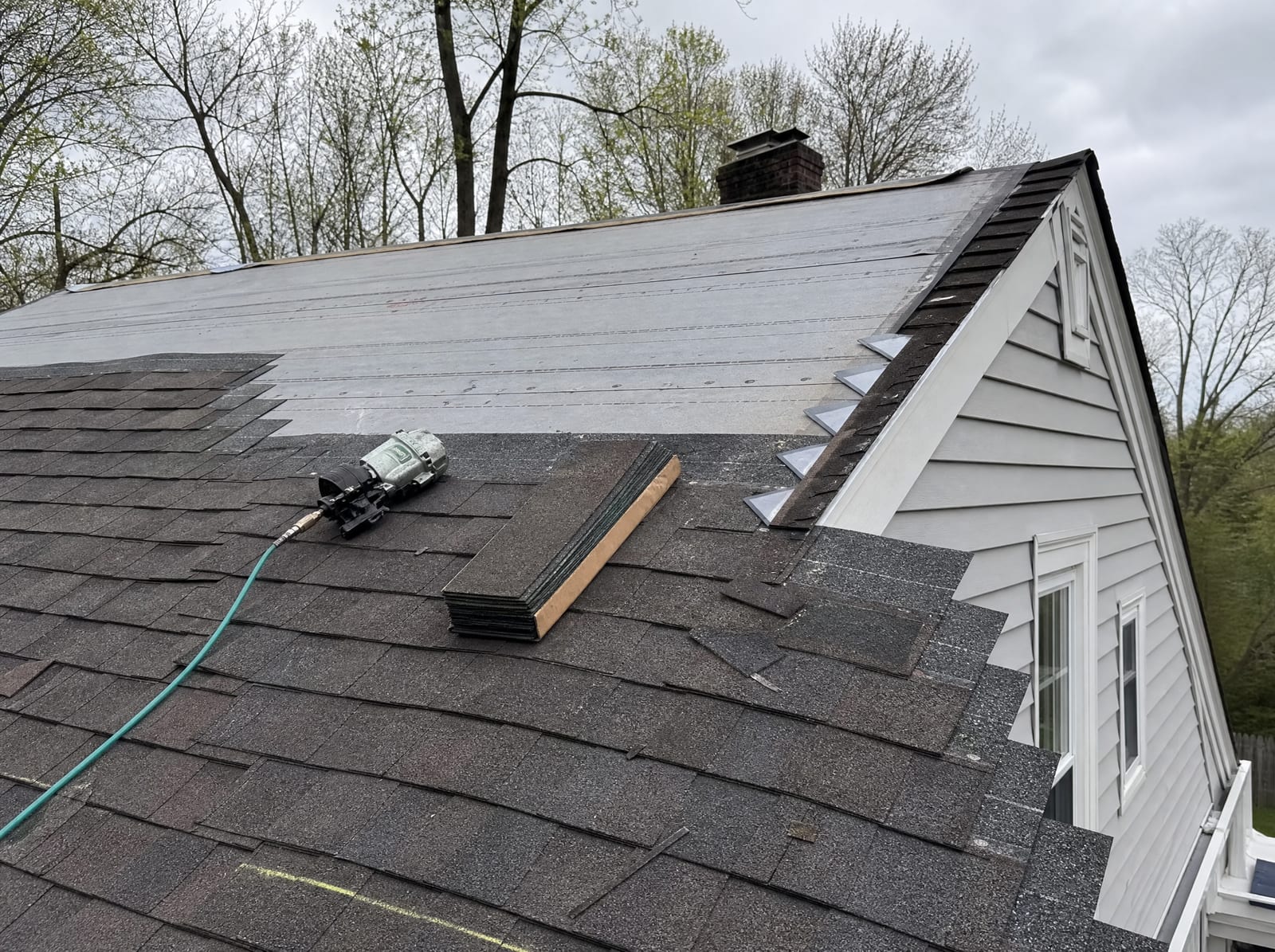
Once you approve the scope, we pull the Brookfield permit, help you finalize materials and color, and schedule around the weather. On install day the crew protects landscaping, walkways, and the driveway, strips the roof to the deck, and shows you anything that needs repair before it is covered. The new system goes on in the correct order, and the day ends with a magnetic nail sweep and debris haul-off (Owens Corning). A final walkthrough covers what was done and what your warranty includes (GAF).
How to Compare Roofing Contractors in Brookfield
The lowest number on a page is not the same as the best value, and the gap between two proposals usually hides in the details. When you evaluate a roofing contractor in Brookfield, CT, look past the total and compare what each one is actually promising to do.
Verify, Then Compare Scopes
Confirm active Connecticut Home Improvement Contractor registration and current insurance before anything else (Connecticut DCP). Then read the written scopes side by side: product specifications, how deck repair is priced, flashing and ventilation details, cleanup, and the exclusions. Two honest bids should describe the same roof in comparable terms.
Credentials, Warranties, and Support
A manufacturer credential like a CertainTeed ShingleMaster certification signals that a contractor installs to the standard that keeps an extended warranty valid, though certification is a floor, not a promise about your specific roof (GAF). Ask how permits, decking, flashing, ventilation, and cleanup are handled, what the workmanship warranty covers, and whether the company answers the phone for emergency roof services after the job is done.
Mistakes That Cost Brookfield Homeowners Later
A few avoidable errors show up again and again. Comparing only the final price. Assuming every estimate includes deck repair. Reusing old flashing that should have been replaced. Roofing around an aging skylight instead of replacing it while the roof is open. Ignoring intake ventilation. Skipping confirmation of who pulls the permit. Paying a storm-chaser before verifying credentials. Accepting a verbal warranty instead of a written one. Assuming an insurance claim guarantees a full replacement. Each one is easy to sidestep once you know to look for it.
Frequently Asked Questions About Roof Replacement in Brookfield, CT
How do I know whether to repair or replace my roof?
Weigh the roof's age against its actual condition: the number and spread of leaks, the repair history, whether the shingles are still flexible and available to match, and whether the decking is sound. Localized damage on a roof with life left usually points to repair, while widespread failure points to replacement (Owens Corning).
What determines roof replacement cost in Brookfield?
Roof size, slope, and complexity, the number of layers removed, deck condition, the material system, chimneys and skylights, access, disposal, permits, and any related gutter or fascia work. Because those vary by home, a defensible price requires an inspection and measurements.
Is a permit required to replace a roof in Brookfield?
A roof replacement generally needs a building permit, and the scope should be reviewed with the Brookfield Building Department before work begins (Town of Brookfield). We handle the permit and inspection as part of the project.
How long does a roof replacement take?
Many homes are finished in one to three days once work starts, though size, complexity, weather, deck repairs, and access can extend that. We give you a realistic timeline up front.
Should an old skylight be replaced with the roof?
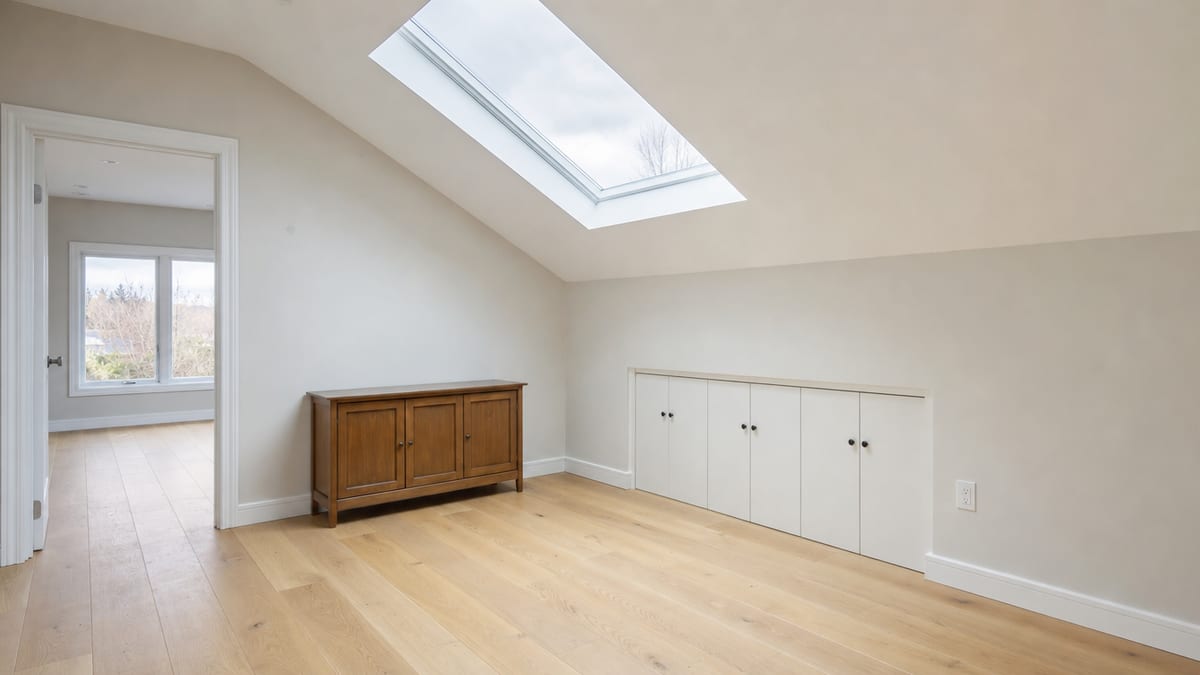
At a minimum it should be evaluated. Replacing an aging skylight while the roof is open lets the flashing tie in as one system and avoids disturbing a new roof later (VELUX).
Will homeowners insurance pay for a new roof?
Insurance may cover sudden damage from a covered event, but it generally will not pay for age or normal wear. Coverage depends on your policy and the insurer's evaluation (NAIC).
What should be included in a roof replacement estimate?
Tear-off, materials and membranes, flashing, ventilation, deck-repair pricing, skylights, gutters, permits, disposal, cleanup, payment terms, warranties, and exclusions, all in writing so you can compare bids fairly.
Quick Roof Replacement Quiz
1. Does a single roof leak in Brookfield always mean you need a full replacement?
2. What matters most when deciding whether to replace a roof?
3. In Brookfield, who is allowed to pull the building permit for a roof replacement?
4. What belongs in a complete new roof system, not just the shingles?
5. When you compare two roof replacement estimates, what is the smartest move?
Final Thoughts
A roof replacement in Brookfield comes down to a few honest questions. Does the whole roof need to come off, or will a repair hold. What does a complete new system include, from the deck up through the flashing and ventilation. What is actually driving the price on your specific roof, and is the permit and contract handled the right way. When you have clear answers to those, the decision stops feeling like a gamble.
Getting them right protects more than the shingles. A properly built roof manages water, handles Connecticut winters, keeps its warranty intact, and holds the value of what is likely your largest asset. The details you cannot see from the driveway are the ones that pay you back for the next twenty years.
If you are weighing a new roof, we are glad to help you sort it out. At American Quality Roofing and Siding, we have served Brookfield and the rest of Central and Western Connecticut since 2006, and we are licensed and insured, CertainTeed ShingleMaster PRO certified, with an A+ BBB rating and CT HIC #0633301. Our team can inspect your roof, give you a clear written estimate that compares repair against replacement, and answer questions about shingles, skylights, gutters, and siding, or get to you fast with 24/7 emergency roof service after a storm or an active leak. Call us in Brookfield, CT to schedule your free, no-pressure roof inspection and estimate.
Serving Brookfield, CT
This guide is part of our exterior work in Brookfield. See our roofing contractor services in Brookfield, CT.
Written by Jose Zaruma, American Quality Roofing and Siding.
← Back to the blog