Roofing Guide
Wind-Damaged Roof: Repair or Replace in Connecticut?
By Jose ZarumaPublished
- wind damage
- roof replacement
- roof repair
- connecticut
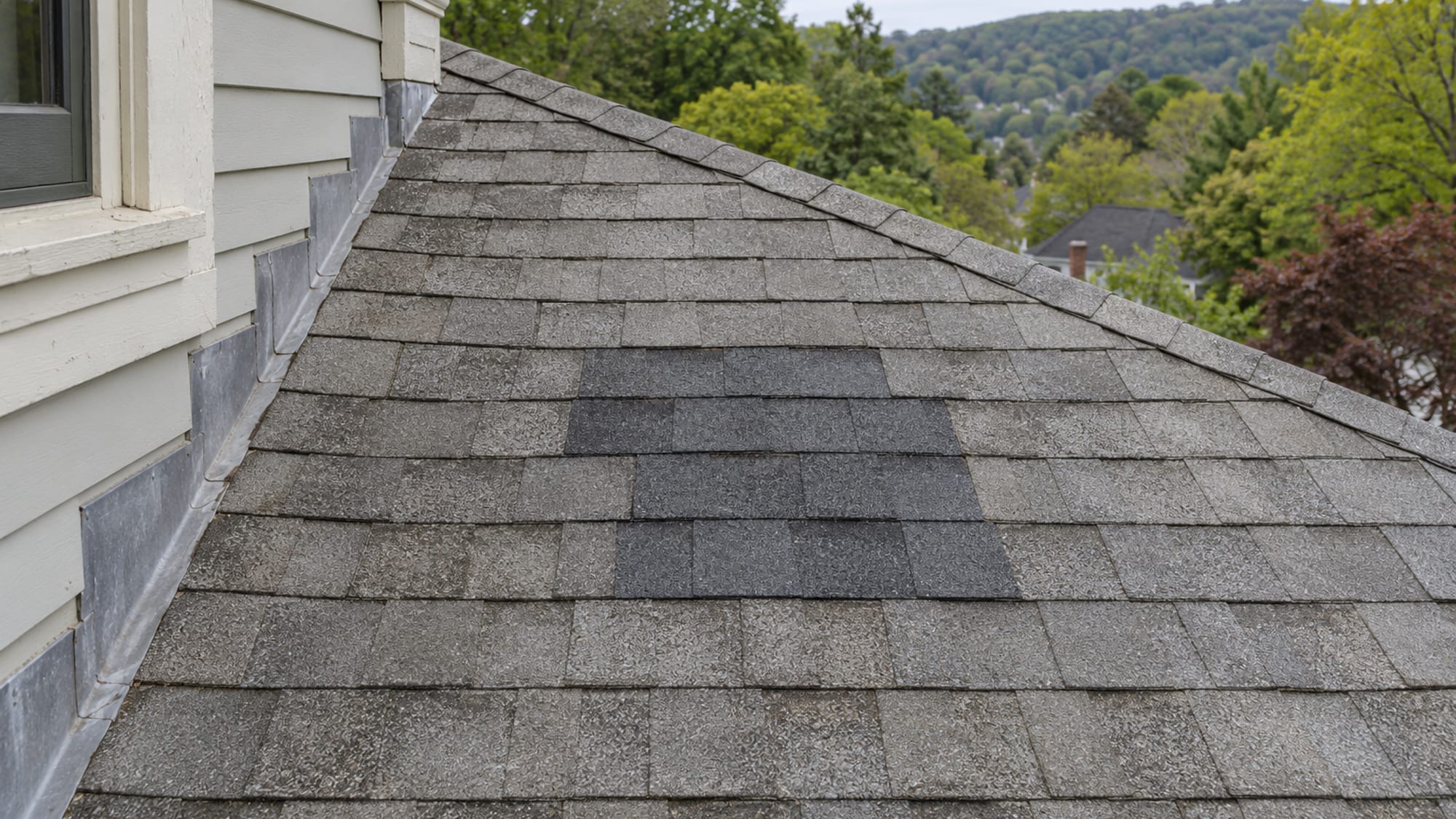
Repair the roof when the wind damage stays in one area, the deck underneath is dry and solid, the flashing is sound and the remaining shingles still have years of life and can be matched. Replace it when the damage reaches several roof planes, the shingles are brittle or discontinued, there are multiple layers, or a patch could not give you a durable roof.
Most decisions land between those two, which is why the answer rests on a handful of conditions you can ask a roofer to document in writing. An adjuster may already be on the way, and the insurer's view and the roofer's view are not always the same.
The "25% rule" comes up in most of these conversations. In the Connecticut State Building Code, it is a permit exemption for small repairs. It does not order a replacement, and it does not decide what your insurer pays.
You can sort all of this out from the ground, with photos, a written inspection and a few questions for your insurer. Nobody needs to climb onto the roof to make the call.
Key Takeaways
Five conditions settle most decisions
How far the damage reaches, whether the deck and flashing are sound, how many layers are on the roof, whether the shingles are brittle or discontinued, and how close the roof is to the end of its life.
The 25% rule is a permit exemption
Repairs limited to 25% of the roof covering and siding in one calendar year are exempt from a building permit. It is not an order to replace the roof.
Insurance looks at uniform appearance
Connecticut Insurance Department guidance says a covered partial loss must be repaired or replaced to reach a reasonably uniform appearance with adjacent items, which does not automatically mean the whole roof is paid for.
Roof age affects coverage
Insurers commonly use eligibility ranges of 15 to 20 years for nonpermanent materials and 25 years or more for architectural shingles, and the ranges vary by insurer.
Get the decision in writing
Ask for an inspection that separates storm damage from age and wear, ask your insurer for the policy provision behind its scope, and verify the contractor's HIC registration before signing.
What Should You Do in the First Week, Before Anyone Decides?
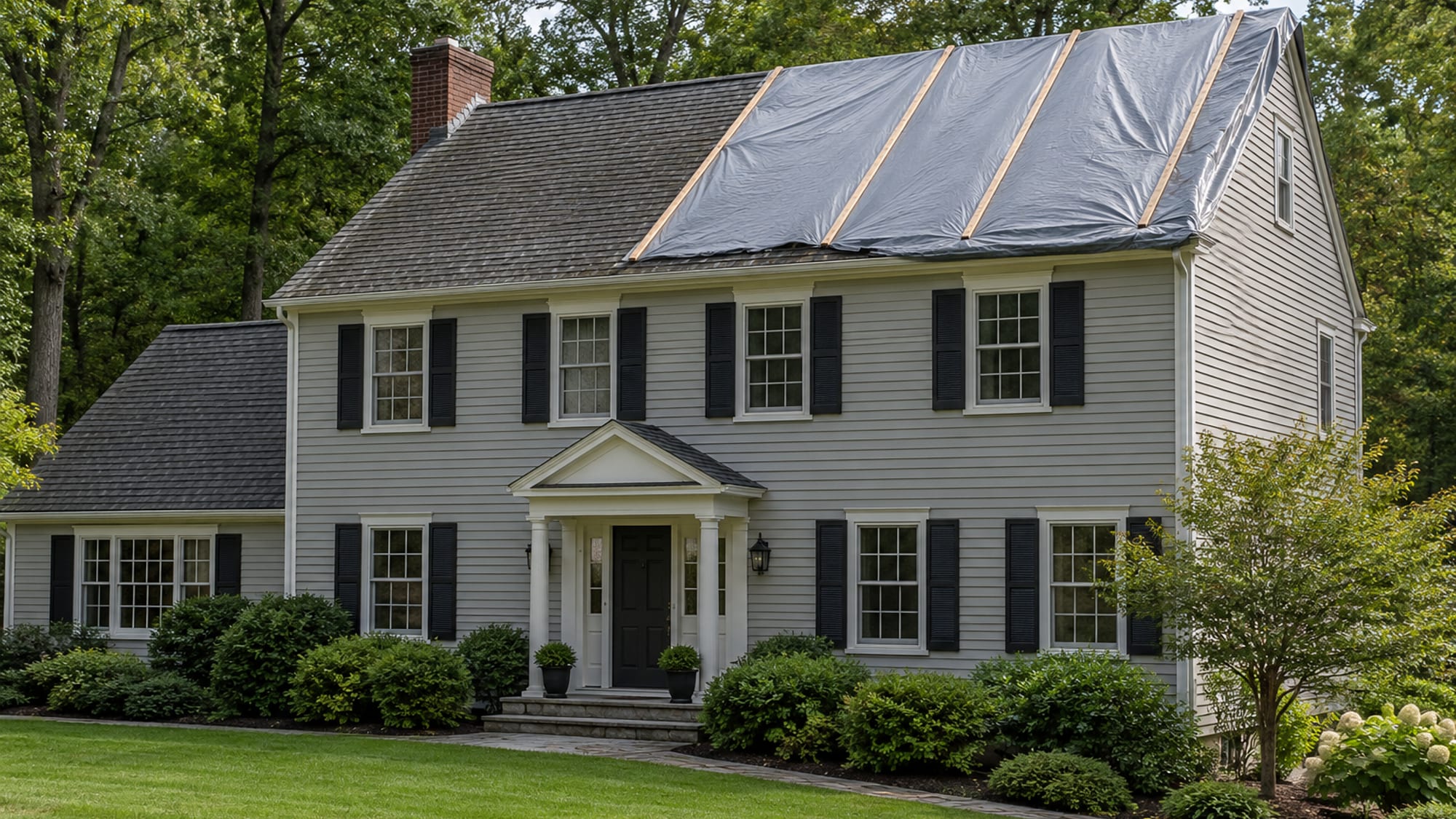
Water protection comes first, and the decision comes second. If shingles or flashing are gone, a temporary tarp or emergency repair keeps more water out while you gather information. Have a roofer do that work, because NRCA advises homeowners not to attempt storm-damage repairs themselves. If the roof is leaking tonight, our emergency roof services are available around the clock.
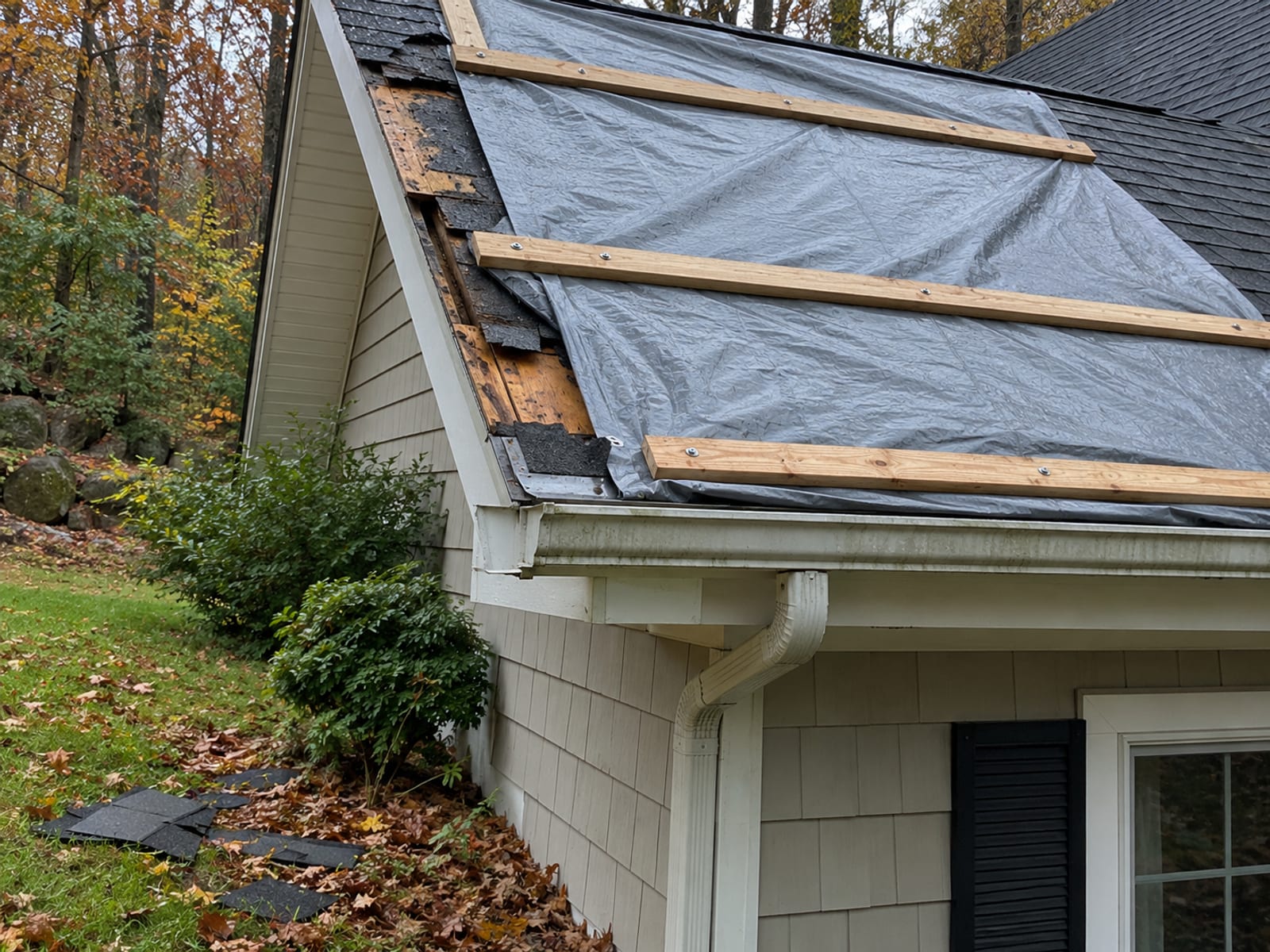
During the week, get a written roof inspection. It should describe the storm damage separately from older wear, maintenance problems, deck work, flashing and any work the code requires. Ask the inspector to state the roof's age, the number of layers, whether the shingles are brittle or discontinued, whether the deck is damaged and whether a repair can give you a durable, water-shedding result. Our post on the signs of wind damage on a roof covers what to look for from the ground first.
Your adjuster's scope and your roofer's scope may not match. That is common, and it is another reason to have the findings in writing before you commit to a plan.
Which Roof Conditions Decide Between Repair and Replacement?
Five things do most of the deciding, and a good inspection speaks to every one. A repair is more plausible when the damage is localized, the remaining shingles are still serviceable, the deck and flashing are sound and compatible materials can be installed correctly. Replacement becomes more plausible when damage is widespread, shingles are brittle or discontinued, layers complicate the work, the decking is compromised or a repair would not produce a durable roof.
Repair or Replace: What the Inspection Should Tell You
Leans Toward Repair: A small area, one slope or one edge
Leans Toward Replacement: Several roof planes affected
Tap a factor to see how it moves the price.
Brittleness matters because removing shingles from a worn roof often cracks the ones around the repair. A roofer can sometimes only learn whether a repair is realistic by opening the damaged area and looking at the deck.
Layers matter because of the code. The state code limits reroofing options through its adopted residential-code provisions, and NRCA describes complete tear-off and re-covering as the two basic reroofing options, noting that building codes often allow no more than one re-cover before complete replacement is required. Tolland's published roofing requirements, for example, allow no more than two shingle layers, and other towns set their own rules.
If you are leaning toward a repair, our roof repair page explains what a localized repair involves and where it reaches its limits.
How Does Insurance Handle a Partial Roof Loss?
Insurance starts with the policy. A homeowners policy may cover direct physical damage from a covered wind event, subject to its exclusions, deductible, limits and the insurer's decision on cause. Wear, deterioration and poor maintenance are treated differently from sudden storm damage, which is why the inspection should keep them apart.
That does not automatically mean the whole roof is paid for. There is no universal Connecticut percentage at which an insurer must replace an entire roof. The insurer looks at the covered damage, the policy language, whether the roof can be repaired, matching, the condition of the roof and any limits. Ask your insurer to name the policy provision and give you the written scope behind its decision to repair or replace.
How the claim is paid matters too. Replacement-cost coverage generally pays to repair or replace without subtracting depreciation, up to the limit and minus the deductible, while actual-cash-value coverage subtracts depreciation. The Insurance Department's claims and disaster guide explains that a replacement-cost policy may first pay the actual cash value and release the recoverable depreciation after you show that the work was done. A policy can also carry roof-specific limits or settle roof damage on an actual-cash-value basis even when other parts of the house have replacement-cost coverage.
If you plan to replace, tell your insurer or agent afterward. Provide the invoice, permit or final inspection records, material details, photos and warranty information. A new roof may affect underwriting, eligibility or discounts, though requirements vary by insurer.
How Do Matching, Roof Age and the 25% Rule Fit In?
These three come up in nearly every claim conversation, and each one answers a different question. Matching asks whether a repair would look and perform like the rest of the roof. Age asks how much life the roof has left and how an insurer sees it. The 25% rule asks whether a permit is needed for a small repair.
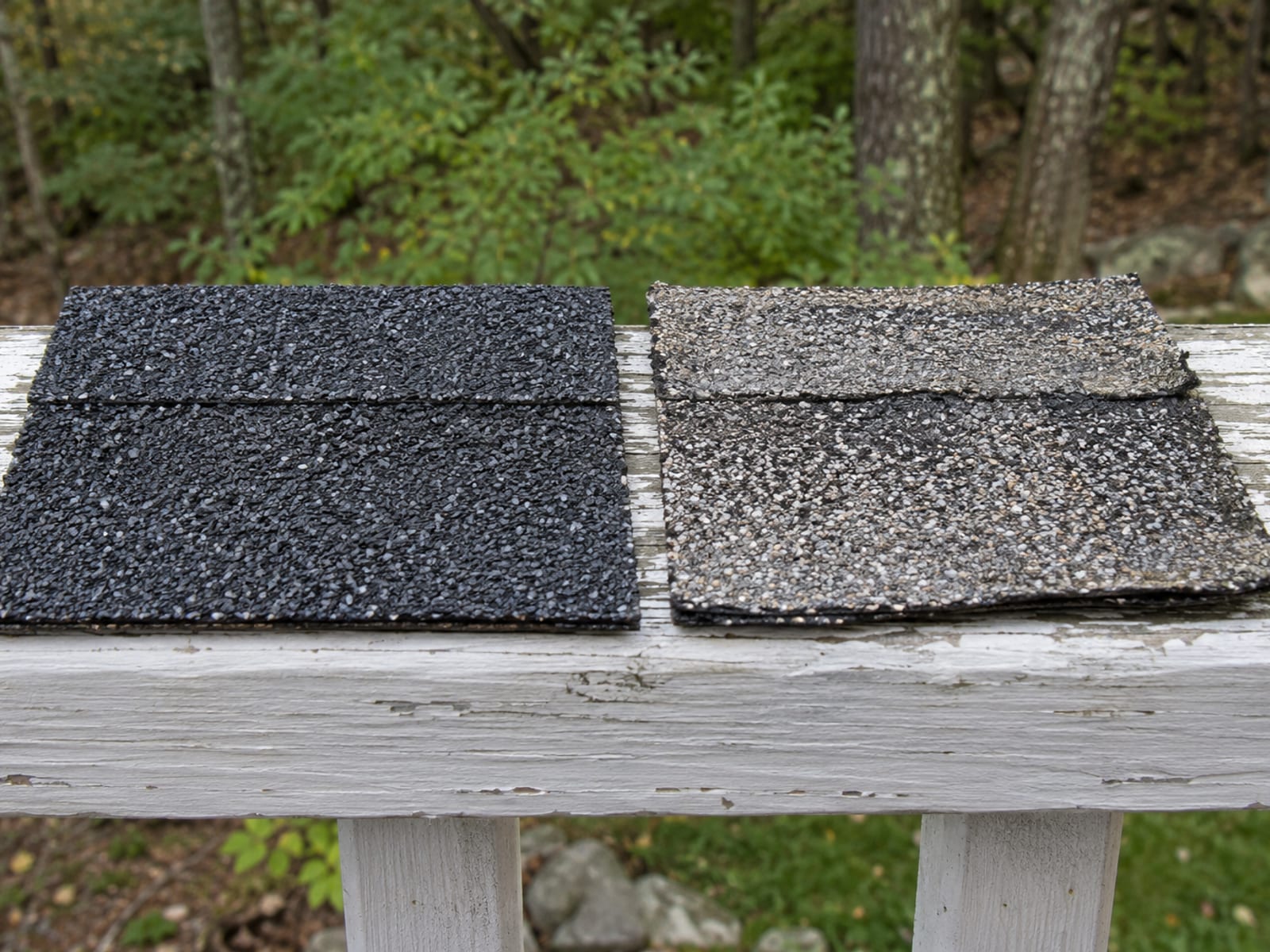
On matching, a shingle that is discontinued, or that has faded and weathered next to a fresh patch, can leave a repair that is visibly different. That is the gap the Insurance Department's uniform-appearance language speaks to, and it is why an inspection should say whether a compatible color, profile and size exists. It also affects the final decision, since a repair that cannot be matched may not be the best answer for you even if it keeps water out.
On age, a February 2026 Insurance Department advisory says insurers commonly review roof age, condition, missing or lifted shingles, curled or cracked shingles, multiple layers and unrepaired damage when deciding whether to issue or renew coverage. It reports common eligibility limits of 15 to 20 years for nonpermanent materials such as asphalt, wood and rubber, and 25 years or more for architectural shingles, and says guidelines vary by insurer. These are common ranges, not a statewide rule. A 15-year-old roof may well be insurable, depending on its material and condition. A 2024 notice adds that cosmetic discoloration or streaking alone should not support nonrenewal. If your insurer cites age, ask for its written underwriting rule and its renewal decision.
On the 25% rule, the 2022 Connecticut State Building Code lists repairs limited to 25% of the roof covering and siding within one calendar year among the work exempt from a building permit. It is not a requirement to replace the roof when damage passes 25%, and it does not decide insurance coverage. If your repair goes past that limit, the likely effect is that a permit comes into play.
Which Roofs Hold Up Best in High Wind?
If replacement is the answer, choose the roof as a system and not just a shingle. Connecticut's code ties asphalt-shingle wind classifications to design wind speed. Table R905.2.4.1 lists ASTM D7158 classifications D, G and H and ASTM D3161 classifications A, D and F at the lower listed wind-speed ranges, and it requires higher classifications as design wind speed goes up. The manufacturer's instructions then decide how the shingle is installed.
Ask for the product data sheet, the wind classification, the installation instructions, the warranty conditions and the proposed fastening schedule before you approve anything. Enhanced nailing can be required for higher wind ratings or warranty eligibility. A few parts of the system matter more than most homeowners expect:
- Starter strips: GAF's Pro-Start instructions call for starter strips at eaves and rakes with a defined nail pattern, so they work as part of the wind resistance.
- Hip and ridge products: GAF's Z-Ridge instructions specify starting direction, exposure and nail placement.
- Underlayment: The code calls for underlayment with a minimum 4-inch self-adhering membrane over deck joints, with stated exceptions.
- Matching products: An enhanced manufacturer warranty may require the maker's own shingles, starter strips, ridge caps, deck protection or leak barriers installed exactly as specified. GAF's residential warranty page is one place to read those conditions.
Impact resistance is a separate question. An impact-rated product addresses hail testing, and it does not automatically carry a particular wind rating. Owens Corning's Duration Flex Storm instructions are an example of the kind of installation document to ask for.
What Do Permits, Inspections and Connecticut Weather Mean for the Job?
Confirm the permit with your town before work begins. The state says many home-improvement projects need a building permit from the town, and the permit must be in place before work begins. Even when a contractor agrees to pull it, the homeowner remains responsible for confirming the permit exists. The Department of Consumer Protection explains this in its guide to hiring a contractor.
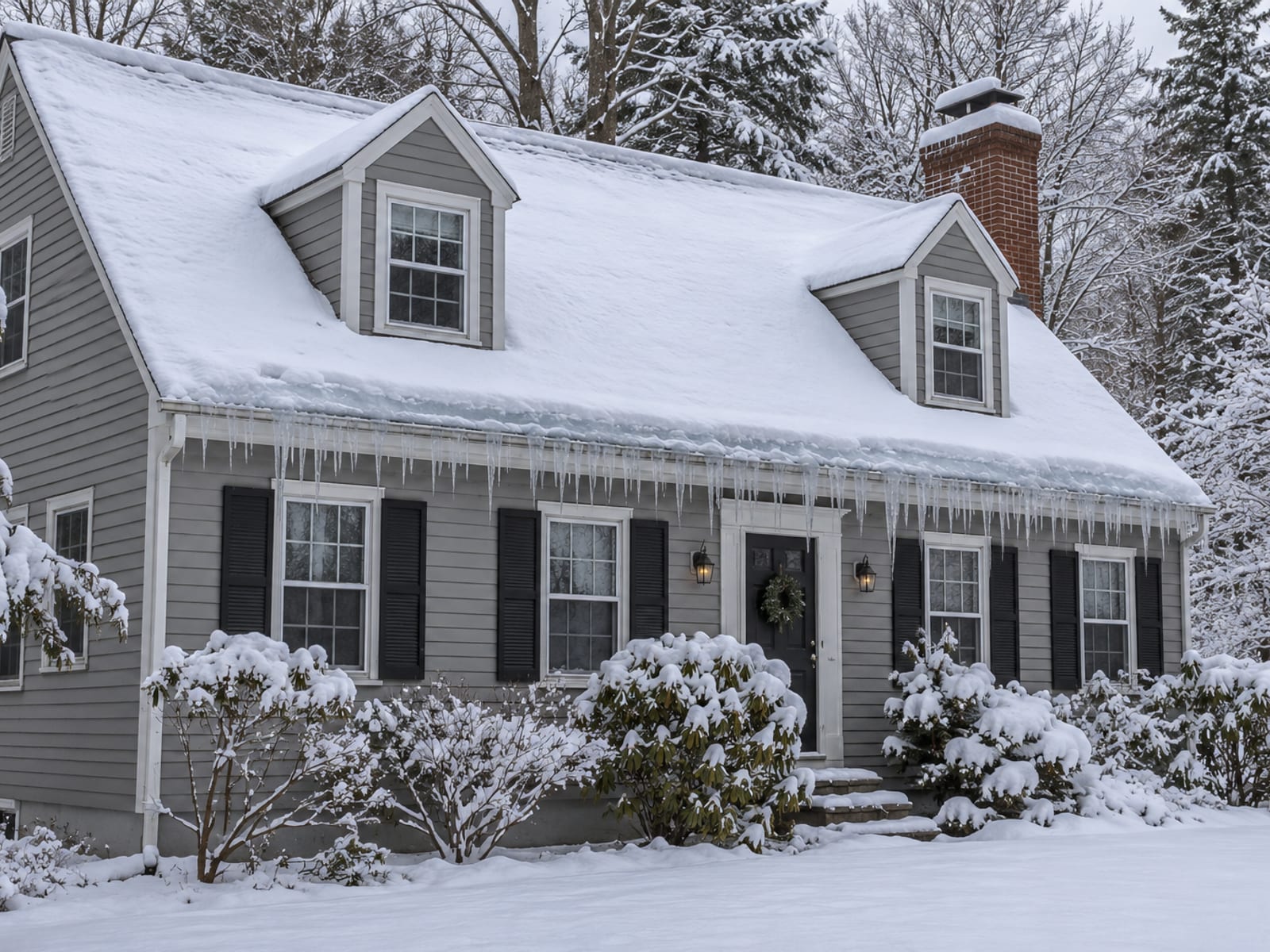
Connecticut's weather is the reason the details matter. The National Weather Service's Hartford report for 2025 recorded 27.5 inches of snow, 10 days with at least an inch of snow, four heavy-snow events, one hail report and one freezing-rain event; these are Hartford observations, not a statewide average. NOAA and NWS research from 2023 counted 15 significant hail events in Connecticut from 1950 through mid-2023, using a threshold of hail at least two inches across, wind gusts of at least 74.8 mph or an EF2 or stronger tornado.
For scale, Census QuickFacts reports about 1.56 million housing units in Connecticut as of July 2025, with a 66.5% owner-occupied rate for 2020 to 2024. A roof here can face snow load, ice and wind in the same year, which is why the underlayment, flashing and fastening details belong in the written scope.
What Drives the Cost of Repairing or Replacing?
Published figures describe replacements better than repairs. This Old House's 2026 estimate puts a Connecticut roof replacement at an average of $8,562, with a range of $6,630 to $21,288, and calls those figures budgeting estimates and not bids. Fixr reports Connecticut replacement costs of $12,000 to $16,000 in a January 2025 update, with most homeowners paying $6 to $10 per square foot.
These numbers disagree because roofs differ. Size, pitch, geometry, stories, material, the number of layers, tear-off, deck repairs, flashing, skylights, ventilation, underlayment, ice-and-water protection, disposal, permits and labor all move the price. A localized wind repair costs far less than any of these replacement figures, and its price depends on your roof, so ask for an itemized estimate after the inspection.
Insurance changes what you personally pay. Your deductible, depreciation, policy limits, code-required upgrades and any damage that was already there all shift the out-of-pocket amount. Ask for an estimate that separates covered storm damage, code-required work, upgrades and items you would pay for yourself.
How Do You Vet a Connecticut Roofing Contractor?
Start with the registration. Home-improvement contractors working on residential roofs must be registered with the Department of Consumer Protection, and applicants must carry at least $20,000 in general liability insurance to qualify. Verify the registration through the state's eLicense system and read the registration requirements yourself. Ask for proof of liability insurance and confirm it with the insurer or agent.
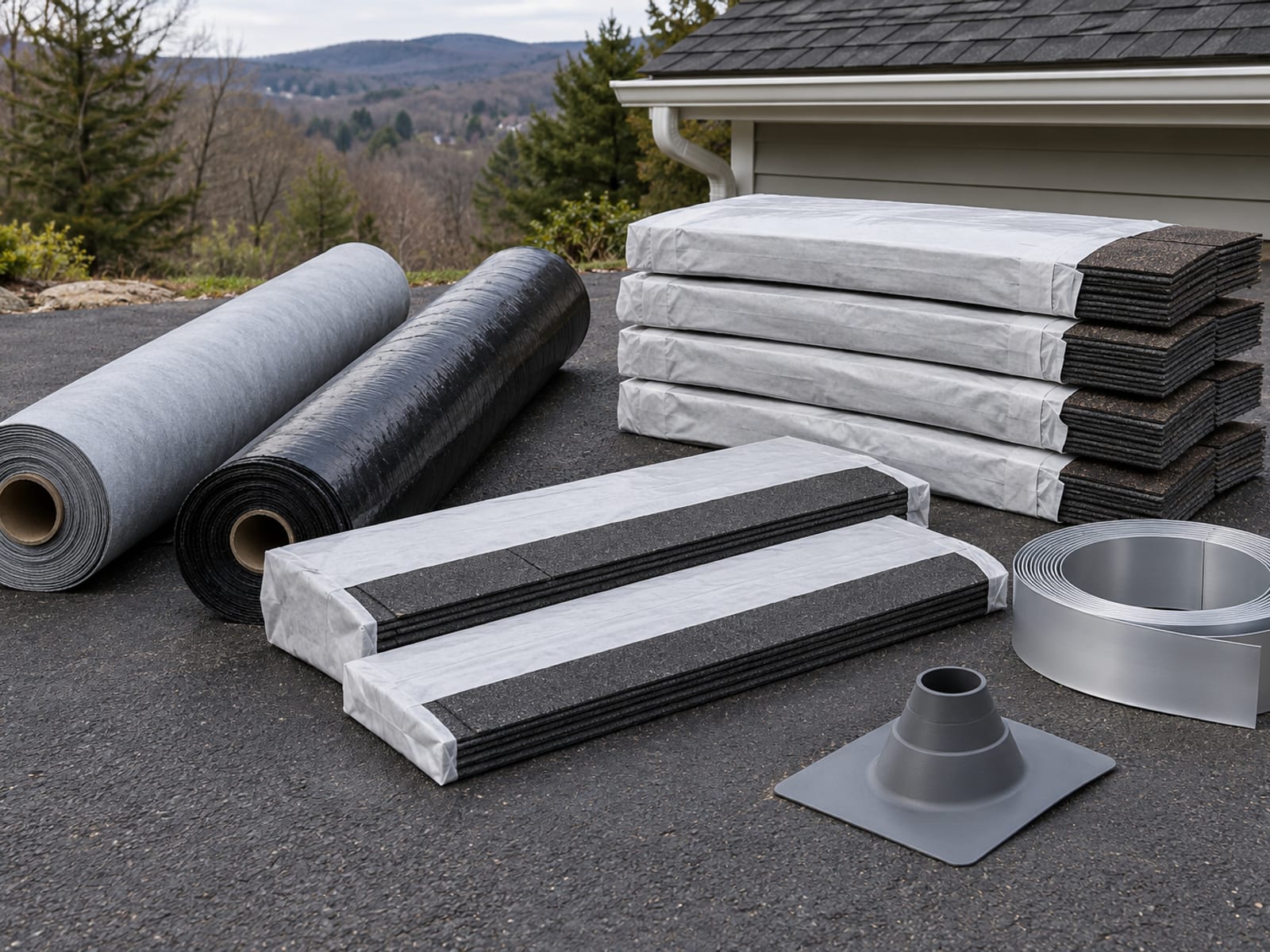
Ask the questions that tie back to this decision. Does the proposal include tear-off, the number of layers, a deck-replacement allowance, flashing, starter strips, ridge caps, underlayment, ice-and-water protection, ventilation, disposal, permit fees and inspections? Who documents the storm damage and communicates with the adjuster? You should keep control of the claim, and you should not sign anything that transfers your claim rights without understanding it. Ask for the manufacturer certification details and the installation instructions that will govern the work.
The mistakes to avoid are accepting a verbal scope, signing under storm pressure, choosing from a door-knock alone, assuming the 25% figure guarantees a full replacement and relying on a product warranty without confirming the installation conditions. DCP's news release on home-improvement contracts is a short read before you sign. If a full replacement is where the inspection points, our roof replacement page covers the process, and the wind damage page covers how storm work is handled from the first call.
Frequently Asked Questions About Repairing or Replacing a Wind-Damaged Roof in Connecticut
At what point will insurance replace a roof?
There is no universal Connecticut percentage. The insurer evaluates the covered damage, policy language, repairability, uniform appearance, matching, roof condition and applicable limits. The Insurance Department says a covered partial loss must be repaired or replaced to reach a reasonably uniform appearance with adjacent items, which does not automatically mean the entire roof is paid for.
What is the 25% rule for roofing?
In the Connecticut State Building Code, repairs limited to 25% of roof covering and siding within one calendar year are exempt from a building permit. It does not require full replacement when 25% is exceeded, and it does not decide insurance coverage.
How do I know if my roof needs repair or replacement?
Repair is more plausible when the damage is localized, the remaining shingles are serviceable, the deck and flashing are sound and compatible materials are available. Replacement is more plausible when damage is widespread, shingles are brittle or discontinued, there are multiple layers, the decking is compromised or a repair would not be durable. A written inspection settles it for your roof.
Does insurance pay for wind damage to a roof?
A homeowners policy may cover direct physical damage from a covered wind event, subject to its exclusions, deductible, limits and the insurer's decision on cause. Wear, deterioration and earlier damage are treated differently. Your policy and the claim investigation control the outcome.
Is a 15-year-old roof insurable?
It may be. Eligibility depends on the material, the roof's condition, the insurer's guidelines and inspection findings. The Insurance Department's 2026 advisory describes common limits of 15 to 20 years for nonpermanent materials and 25 years or more for architectural shingles, and these vary by insurer.
Should I tell my insurance company if I get a new roof?
Yes. Notify your insurer or agent and send the completion invoice, permit or final inspection records, material details, photos and warranty information. A new roof may affect underwriting, eligibility or discounts.
Which roofs hold up best in high wind?
A properly designed and installed roof system does, using a product whose tested wind rating, fasteners, starter course, ridge caps and underlayment match the project. Ask for the ASTM D7158 and D3161 classifications and the manufacturer's installation instructions.
Quick Check: Repair or Replace After Wind Damage
1. What is the 25% rule in the Connecticut State Building Code?
2. Under Connecticut Insurance Department guidance, what must a covered partial loss achieve?
3. Which condition most favors replacement over repair?
4. What should you ask your insurer for when it decides between repair and replacement?
5. What should you verify before signing a roofing contract?
Final Thoughts
If the damage is limited to one area and the deck, flashing and shingles around it are sound and can be matched, a repair is a reasonable answer. If it spreads across slopes, the shingles are brittle or near the end of their life, or the layers and deck make a patch unrealistic, replacement is the more durable choice. The 25% rule is a permit question, and your policy and the insurer's written scope answer the money question.
Getting the answer in writing protects you either way. A written inspection that separates storm damage from age and wear, a written scope from your insurer and a written contract from a registered contractor leave less room for surprises.
If wind has damaged your roof, American Quality Roofing and Siding can inspect it and explain in writing what we see, what a repair would cover and whether replacement makes more sense. We serve homeowners across Central and Western Connecticut from our home base in Brookfield, we are licensed and insured with CT HIC #0633301, and we offer free estimates and 24/7 emergency roof services. Request a free estimate or call us, and we will go over your options before you decide.
Written by Jose Zaruma, American Quality Roofing and Siding.
← Back to the blog