Roofing Guide
Signs of Wind Damage on a Roof in Connecticut: What to Check
By Jose ZarumaPublished
- wind damage
- storm damage
- roofing
- connecticut
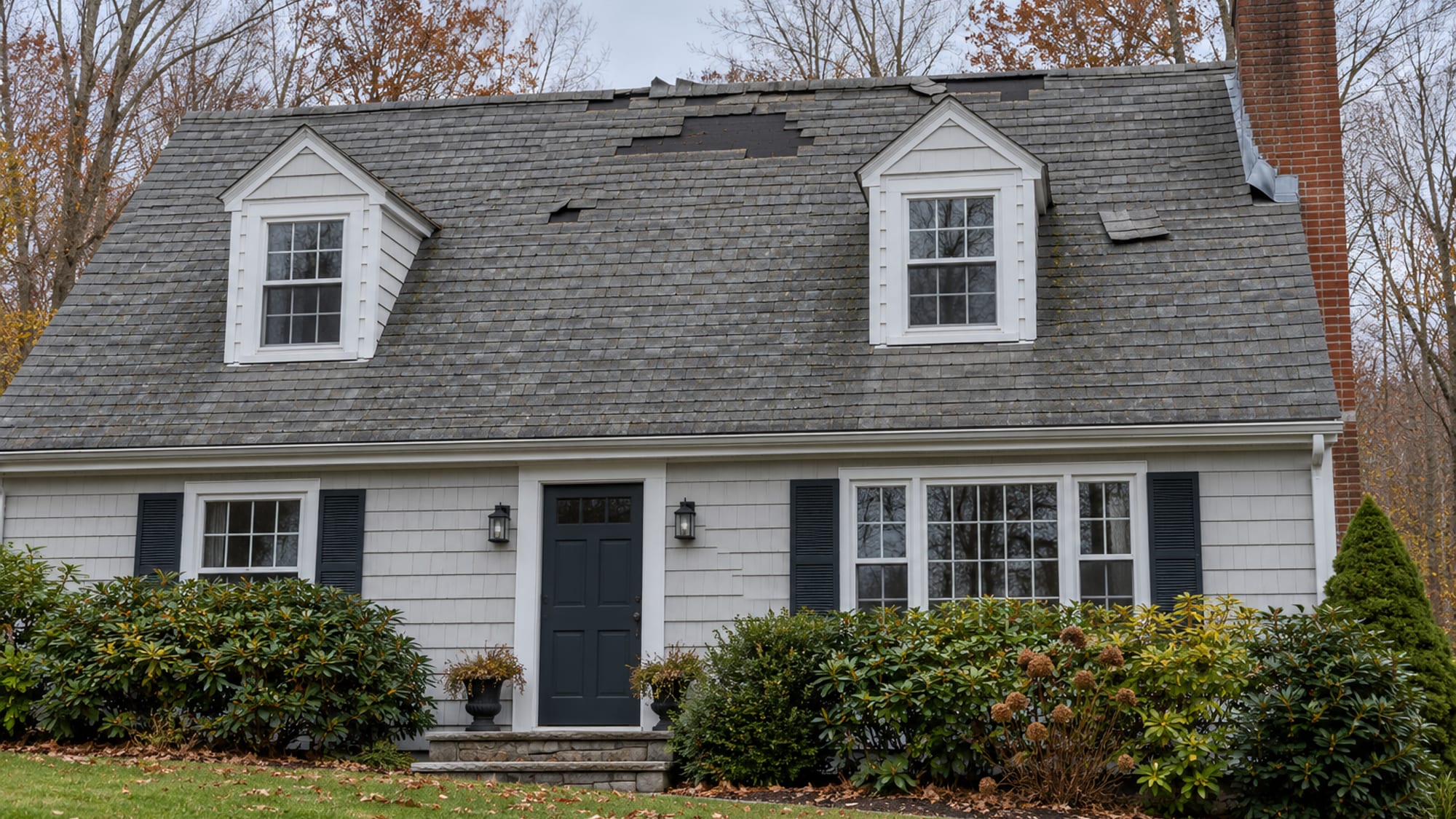
From the yard, wind damage on a Connecticut roof shows up as shingles that are missing, lifted at a corner or creased across the middle, ridge caps that have slid out of line, and metal flashing that has pulled loose from a chimney or wall. Binoculars or a camera with a zoom lens will show most of it, and nobody needs to climb a ladder or step onto the roof to look.
A roof can also look fine from the ground and still be letting water in. A shingle whose seal strip let go may lie almost flat, then lift again in the next storm. What you see from the ground is a warning sign. A close look by a roofer is what confirms the damage and sets the scope of the repair.
No single wind speed decides it, either. The shingle, its age, how it was nailed and where the house sits on its lot all play a part, so the condition of the roof tells you more than the number on the weather report.
Connecticut gets damaging wind from more than one direction. The National Weather Service describes nor'easters as most frequent and most violent from September through April, with gale-force winds and heavy rain or snow. In the summer, tropical storms and thunderstorms take over. During Tropical Storm Isaias on August 4, 2020, the NWS reported gusts of 40 to 50 mph and widespread tree and limb damage, and more than 700,000 Connecticut customers lost power.
Key Takeaways
Start from the ground
Missing, lifted, creased or torn shingles, displaced ridge caps, loose flashing and exposed underlayment or decking can all be spotted with binoculars, without climbing.
A sign is not a diagnosis
Visible warning signs tell you to call a roofer. A close inspection confirms the damage and sets the repair scope.
No single wind speed damages every roof
Shingle product, age, installation and exposure all matter, so a published wind rating is not a damage threshold.
Some signs cannot wait
Active leaking, exposed decking, a sagging roof, a large branch on the roof or water near electrical fixtures mean an emergency call and leaving the area.
Insurance depends on the policy
Connecticut Insurance Department guidance says homeowners policies generally cover windstorm loss, but exclusions, limits and the deductible decide the claim.
Check the contractor before you sign
Verify the Connecticut HIC registration, ask for proof of insurance and insist on a written contract.
What To Do the Day After a Connecticut Windstorm
The first day is about safety and a clear record. The roof may be wet, slick or unstable, and a damaged roof can fail under a person's weight. Everything useful at this stage can be done from the ground and from inside the house, and none of it needs a ladder.
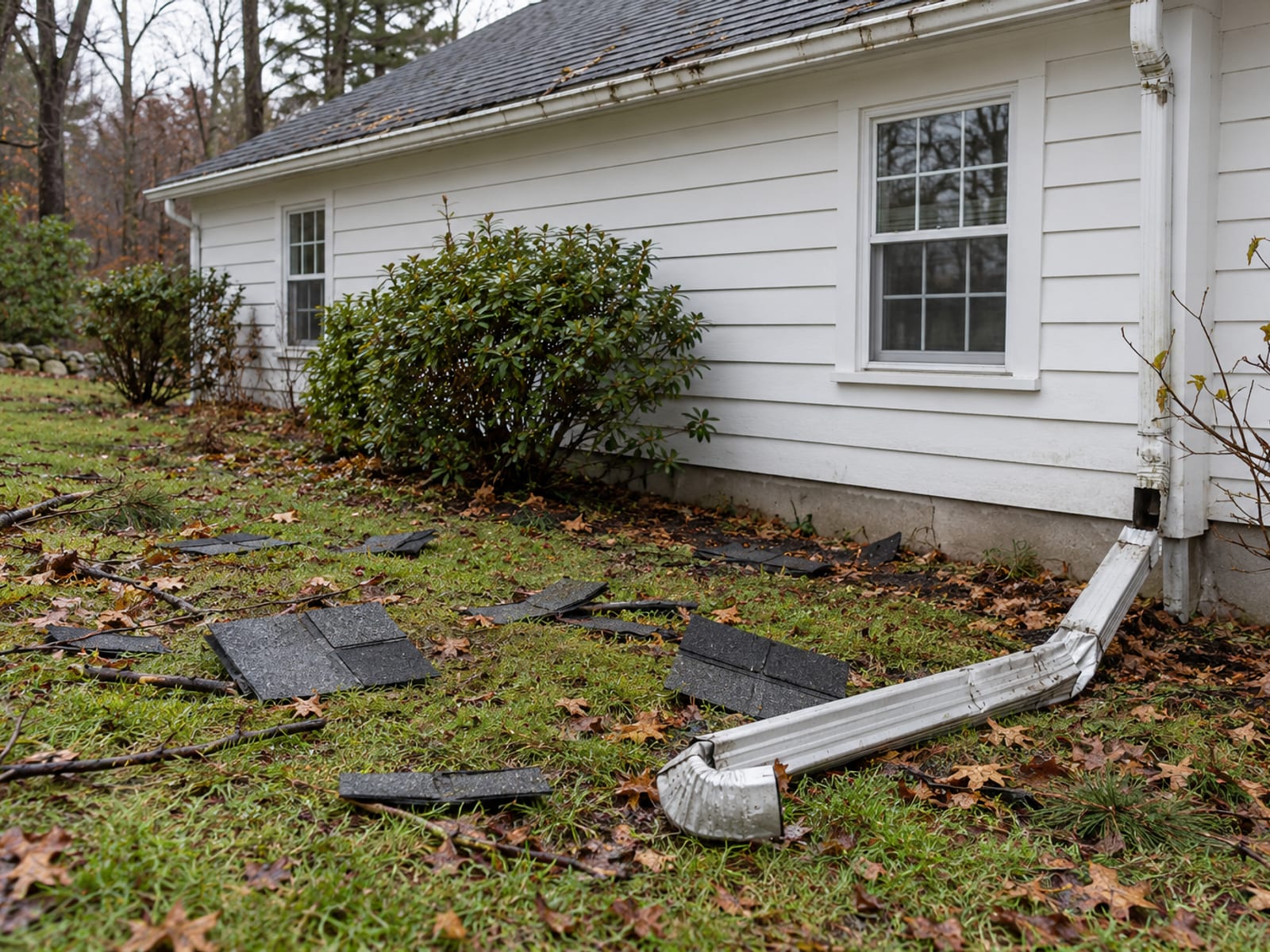
Walk around the house and look at each roof slope with binoculars. Take wide photos that show the whole slope and close photos of anything that looks wrong, and photograph fallen shingles, gutters, downspouts and debris on the ground. If you can enter the attic safely, photograph the underside of the roof from a stable floor or the access point, and look for damp insulation, wet rafters or daylight where there should be none.
Write down the date of the storm and roughly when it hit, and keep the weather alerts, photos, videos and any messages about repairs together in one place. If you see active leaking, an open hole, a sagging roof surface or anything that looks structurally unstable, call an emergency roofer and stay out of that part of the house.
This week
If anything on the roof, in the gutters, in the attic or on a ceiling has changed since the storm, book a professional inspection. Ask for a written description of the damage, any temporary protection that was put in place, and whether the roof looks repairable.
Pull out your homeowners policy and read the declarations page. Wind, hail, hurricane or named-storm deductibles can differ from the ordinary one, and some policies require prompt notice of a loss. Call your agent or insurer before you authorize major work, and ask how the policy applies.
Before you sign anything
Storms bring door-knockers. The Connecticut Department of Consumer Protection warns about disaster-recovery scams, and the safest habit is simple: nobody gets a signature on the day they show up. Verify the contractor's registration, ask for proof of insurance and get the scope in writing.
The Roof Signs You Can See From the Ground
Wind pushes up and sideways on a roof. A shingle tab can lift, bend backward, lose its grip on the shingle below, crease, tear or blow off. Wind pressure is usually strongest at the roof's edges, corners, ridge, eaves and rake edges, so those are the places to look first before you scan the middle of each slope.
The table below pairs each sign with where it tends to show up and what it may mean. Treat every row as a reason to call a roofer, because only a close look can tell a harmless scuff from a shingle that has lost its seal.
Wind Damage Signs You Can Check From the Ground
Where to Look: Edges, corners, ridge
What It May Mean: Underlayment or decking may be exposed to rain.
Tap a factor to see how it moves the price.
Creases, tears, displaced shingles and exposed roof layers are stronger indicators than ordinary granule loss alone. Branches, punctures and impact marks matter too, but they point to a different cause than wind pressure, and a roofer will record them separately. Hail leaves its own pattern, covered in our guide to hail damage signs on a roof.
An inspection from the ground has limits. A binocular view can miss a failed seal strip, and a roof can be damaged without a visible leak. That is why the next step after spotting a sign is a professional inspection, and why photos from several angles are worth taking now. An adjuster's roof review, a roofer's inspection and your own photos each cover different ground.
Which Signs Mean Call Now, and Which Can Wait for an Inspection
Some findings are emergencies and some are not, and it helps to sort them before you pick up the phone. The emergency list is short: active leaking, exposed roof decking or a large opening, a roof surface that sags, a bulging ceiling, a large branch or tree resting on the roof, and water coming in near light fixtures, outlets or wiring.
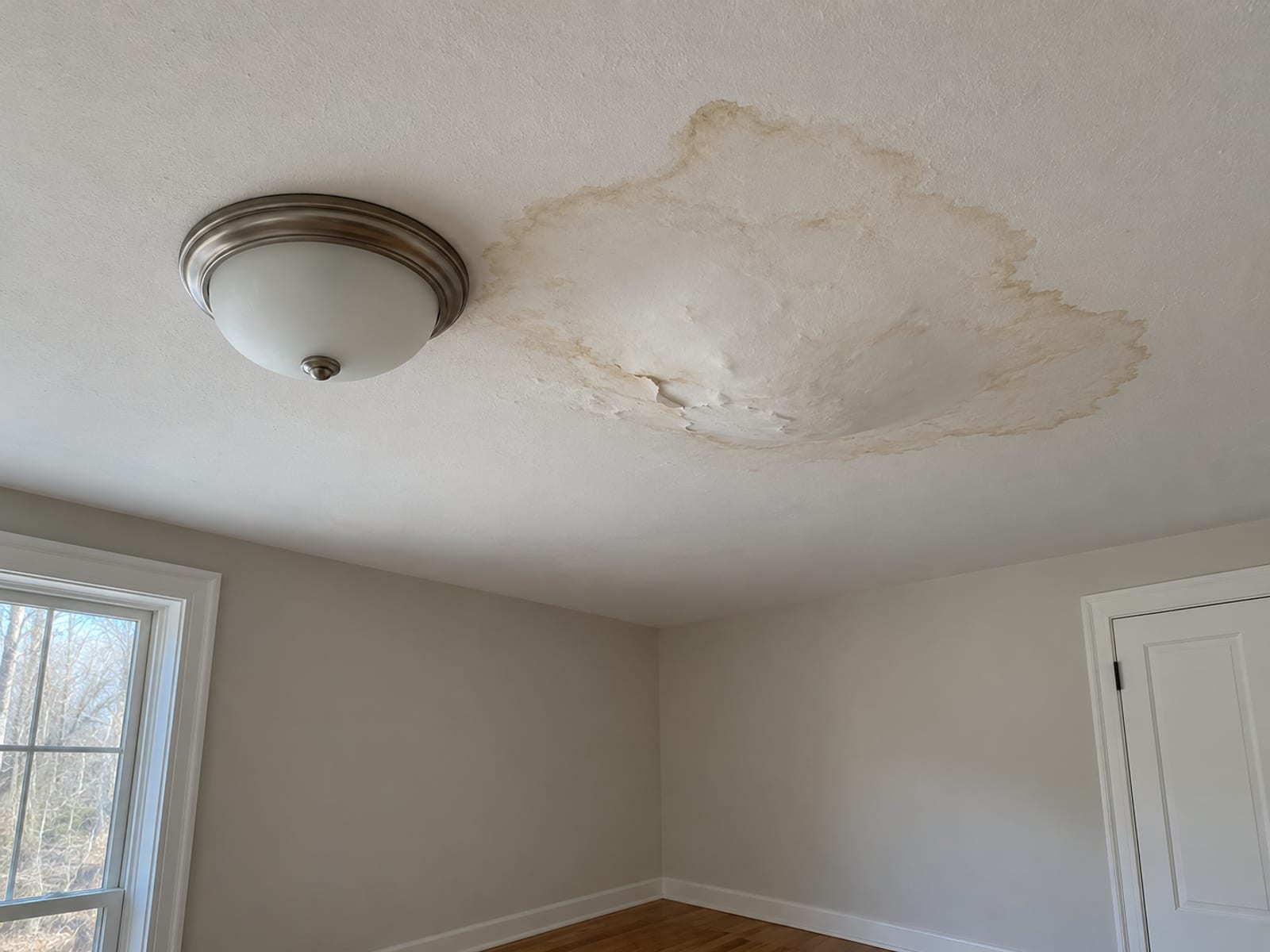
Everything else belongs on the "book it this week" list: missing or lifted shingles with no water coming in, creased tabs, a displaced ridge cap, loose flashing, damaged gutters or a small ceiling stain that has not grown. These can usually wait a few days, but not a few months. A lifted shingle that is not fixed can tear off in the next storm, and every rain shower in between is a chance for water to get past it.
When you call, say what you saw and when. A roofer who knows the storm date, the location of the damage and whether water is entering can decide how fast to come. Our storm damage and wind damage pages describe how that work usually goes, from the first visit to the repair.
Why a Shingle's Wind Rating Is Not a Damage Threshold
Almost everyone asks what wind speed damages a roof, and the short answer is that there is no single number. The same gust can leave one roof untouched and strip shingles from the house next door. The difference comes from the shingle product, the age and condition of the roof, how it was installed, and the surrounding terrain and exposure.
Shingles are tested to published standards. ASTM D7158 measures how well sealed asphalt shingles resist uplift, and ASTM D3161 is a fan-induced wind test. ASTM notes that the D7158 result assumes defined sealing and installation conditions and does not account for everything that happens on a real roof. A shingle's classification applies under its stated test conditions, so it should not be turned into a "damage begins at" number.
In the field, installation matters as much as the product. GAF's technical bulletin on wind resistance explains that asphalt shingles must meet ASTM D7158 or D3161 according to the code and product scope. Nail placement, nail count and depth, roof slope, temperature, dirt on the seal strip and following the manufacturer's instructions all affect how the shingle performs.
A roof is more vulnerable when its shingles are old, brittle, poorly sealed, missing fasteners or already damaged before the storm. Corners, ridges, eaves, rake edges and roof penetrations take concentrated wind. Ask your roofer to name the shingle on your roof and the classification published for it, rather than guessing from the weather report.
A 50 mph gust can damage some roofs, siding and trees, but it is not a universal threshold. The 40 to 50 mph gusts of Isaias still brought down trees and power lines across Connecticut, and whether a given roof lost shingles depended on that roof.
Connecticut Storms and Permits: What Changes From Town to Town
Wind reaches Connecticut roofs in several ways. Nor'easters run from September through April, tropical storms and hurricane remnants can bring strong winds and heavy rain, and thunderstorms can cause very local damage in warm months. The NWS Boston review of 2020 described the October 7 derecho as producing widespread tree, wire and direct structural damage across southern New England.
Winter adds its own load. Snow and ice sit on the roof while wind tests the shingles, flashing and ridge caps, and freeze and thaw loosen things that wind then finishes. To see what has happened in your county, the NOAA Storm Events Database lets you search wind, hail, tornado, tropical and winter events by county and date.
Repairs follow the Connecticut State Building Code. The 2022 code applies to permit applications filed on or after October 1, 2022, and it adopts the 2021 International Residential Code. Its roof provisions call for asphalt-shingle underlayment that meets the applicable standards, plus a minimum 4-inch self-adhering membrane over roof-deck joints, installed with the required underlayment system.
Permits are handled by your town, and practice differs. East Haven says installing a new roof requires a building permit and that the owner, agent or contractor is responsible for calling for inspections. Tolland's roofing requirements base the permit on job cost, call for an in-progress inspection of deck seams, ice-and-water protection and flashing, and require a final inspection. Before work begins, ask your town's building department what applies to your job, and ask your contractor who is pulling the permit.
What Wind Damage Repair or Replacement May Cost in Connecticut
The price of a wind repair depends on the damage itself, the size, pitch and height of the roof, how many stories it has, how easy it is to reach, how many layers are on it and what material it is. Flashing and ventilation work, damaged decking or framing, temporary protection, debris removal and permit requirements add to the total.
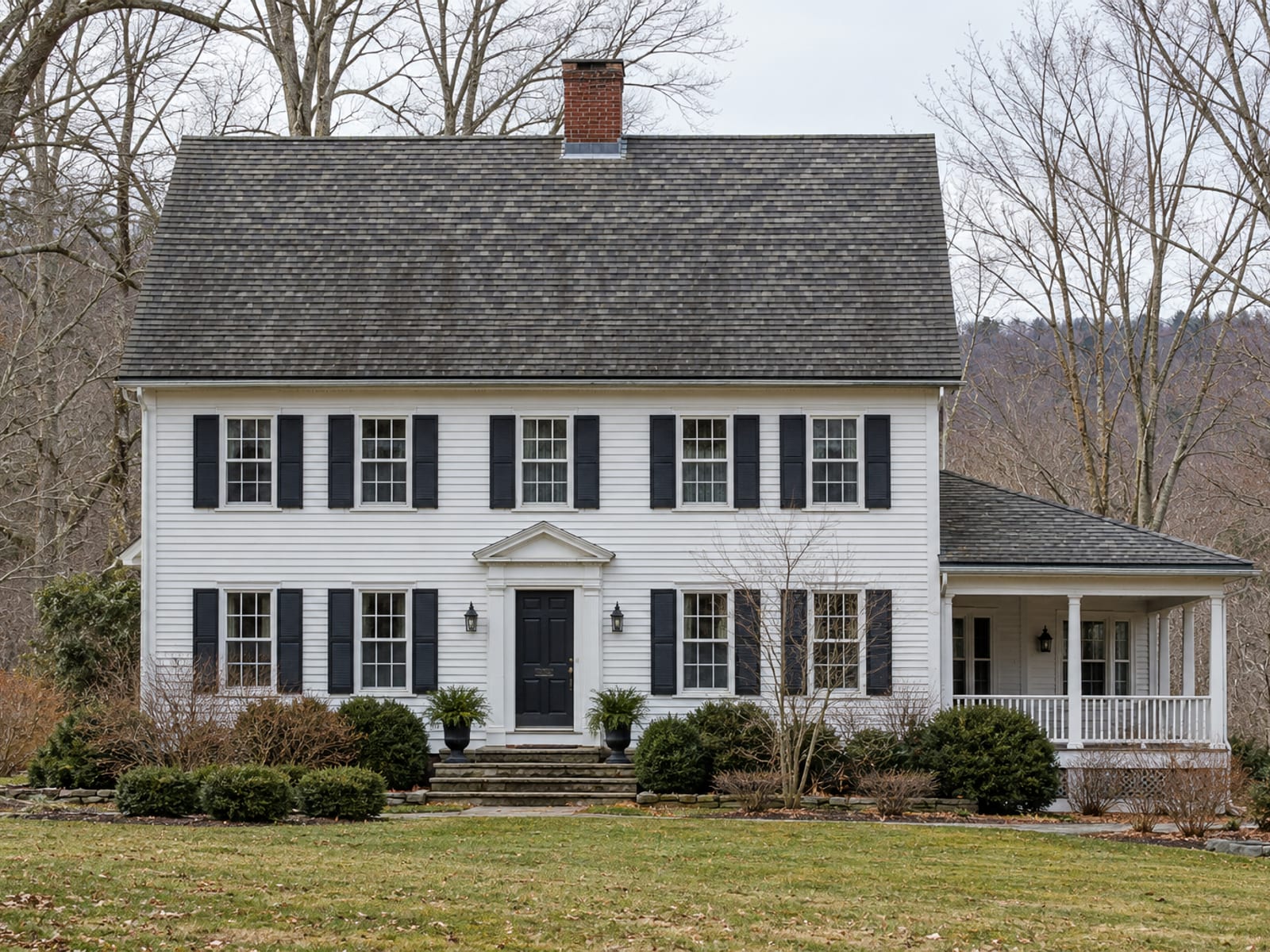
Published Connecticut Roof Cost Figures (2026 Estimates, Not Quotes)
Published Figure: $6,630 to $21,288, average $8,562
Source and Limits: This Old House, 2026; budgeting estimate, not a bid or insurance settlement
Tap a factor to see how it moves the price.
Insurance estimates and contractor estimates can also differ in scope, depreciation, deductible treatment and code-related work, so a gap between two numbers may be a difference in what each one covers.
The reliable number comes from a written, property-specific estimate that itemizes the damage scope, materials, permit work, disposal and anything excluded. Ask for that after the inspection and before you agree to anything. If the inspection points to more than a patch, our guide to repairing or replacing a wind-damaged roof walks through how that decision is made.
Insurance: Claims, Deductibles and Premium Questions
The Connecticut Insurance Department says homeowners policies generally cover windstorm loss, whether the storm is called a hurricane, a tornado or another kind of windstorm. Coverage for your roof still depends on the policy's covered perils, exclusions, limits and deductible, and on what the insurer finds when it looks at the roof. Wear and tear, poor maintenance and damage that was there before the storm are treated differently from sudden storm damage.
Look for a separate wind or hail deductible on the declarations page, because it may differ from the ordinary one. Flood and storm-surge damage generally require separate flood coverage. If you are unsure what your policy says, your agent can walk through it with you before you authorize work.
Will a claim raise your premium? It may, though not for everyone. The Insurance Department lists claims history among the factors that can affect premiums, alongside roof age and condition, deductible choice, location, construction type, home age and exposure to severe weather. There is no single Connecticut increase that applies to every wind claim. Its homeowner and renter insurance guidance also advises thinking about the effect of filing small claims.
A practical step is to ask your insurer or agent how a claim would be recorded before you file. A roof inspection and an insurance coverage decision are two different things; a roofer can tell you what the roof shows, but only the insurer decides what the policy pays. Never accept a promise from anyone that coverage is guaranteed, and do not sign an assignment of insurance benefits without understanding what it gives away.
Choosing a Connecticut Roofing Contractor Before You Sign
Roof work on a home counts as home improvement in Connecticut, so the contractor generally has to hold an active Home Improvement Contractor registration with the Department of Consumer Protection. Check it on the state's eLicense system, and look at complaint history while you are there. The Department also recommends meeting several contractors, asking for recent references and asking to see current work. See its guide on what to look for in a home improvement contractor.
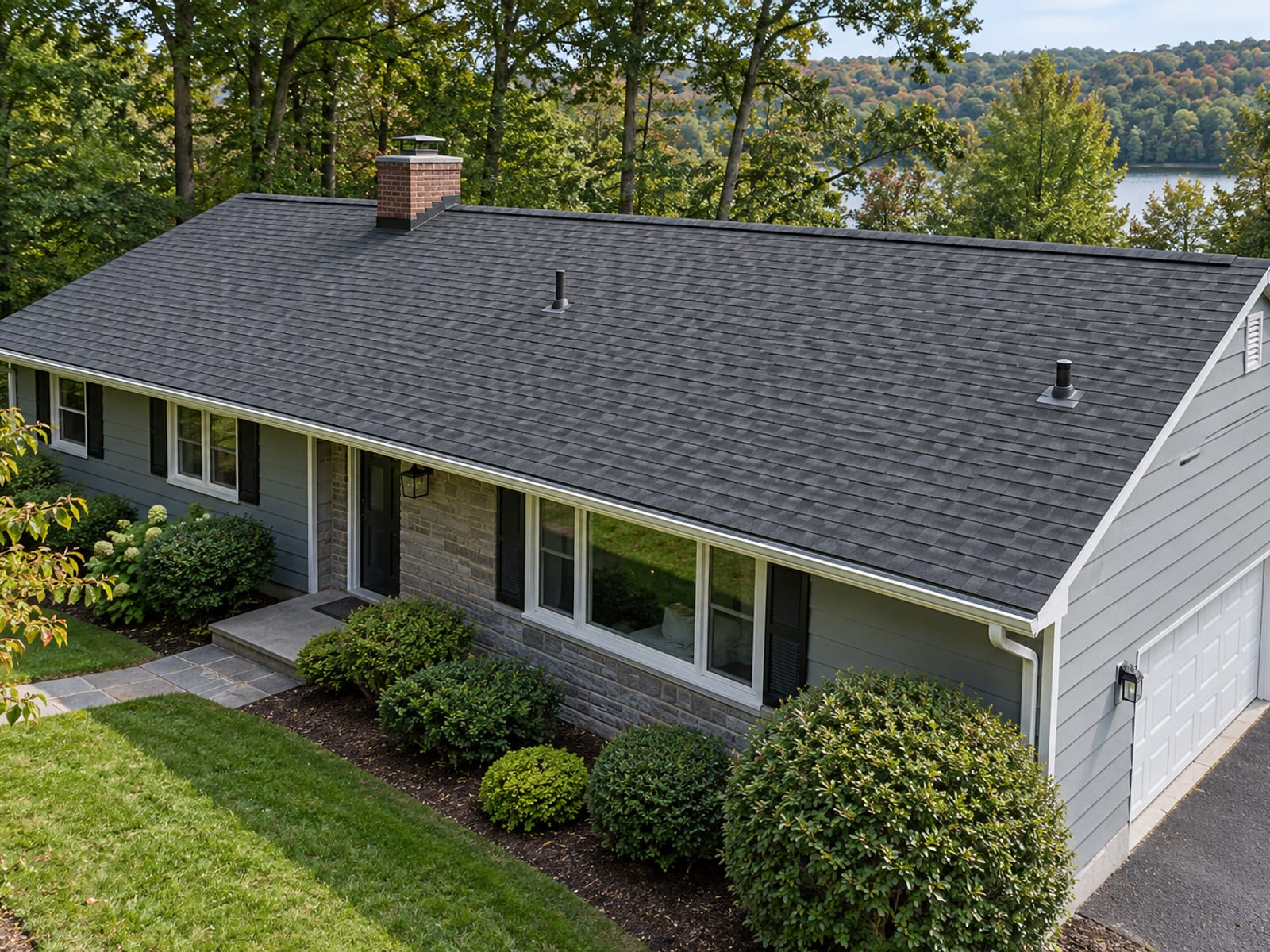
Good questions are plain ones. Which roof areas show wind damage, and which photos document them? Is the recommendation a repair, a partial replacement or a full replacement, and why? What shingle, manufacturer and wind classification apply, how many fasteners does each shingle get and who inspects the work? Who pulls the permit, and does the estimate include tear-off, decking, flashing, underlayment, ventilation, disposal and temporary protection?
Watch for the common mistakes: hiring a storm chaser without checking registration, signing under pressure, choosing the lowest bid alone, paying most of the price before the work progresses and accepting a vague scope. Manufacturer certification, such as CertainTeed ShingleMaster PRO status, is worth asking about, but it does not replace registration, insurance or a detailed contract.
Frequently Asked Questions About Wind Damage to a Roof in Connecticut
How do I know if my roof has wind damage?
Look from the ground for missing shingles, corners that are lifted or curled, creased or torn tabs, displaced ridge caps, loose flashing and any exposed underlayment or decking. Creases, tears and exposed layers are stronger signs than granule loss alone. A close inspection by a roofer is what confirms the damage and sets the scope.
What wind speed damages a roof?
No single wind speed damages every roof. The shingle product and its published classification, the roof's age and condition, fastener placement, seal-strip adhesion, installation quality and exposure all affect the result. Ask a roofer to assess your roof's actual condition.
Will 50 mph winds damage a house?
They can damage some roofs, siding, trees and other parts of a house, but 50 mph is not a universal threshold. During Tropical Storm Isaias in 2020, gusts of 40 to 50 mph in Connecticut came with widespread tree and power-line damage. What happens to your roof depends on its condition.
Does home insurance cover roof damage from high winds?
Connecticut Insurance Department guidance says homeowners policies generally cover windstorm loss, but the policy's exclusions, limits, roof-condition provisions and deductible decide your claim. Ask your insurer or agent how your policy applies before you authorize major work.
Will my insurance go up after a wind damage claim?
It may. Claims history is one factor the Insurance Department lists, and there is no single Connecticut increase that applies to every wind claim. Ask your insurer or agent how a claim would be recorded.
Which roofs are most vulnerable to high winds?
Roofs with aged, brittle, poorly sealed or poorly nailed shingles, or damage from before the storm, are more vulnerable. Corners, ridges, eaves and rake edges take the most wind pressure. No roof type can be ranked without looking at the specific product, installation and condition.
Can I check my own roof for wind damage?
You can check from the ground with binoculars and photos, and from the attic if it is safe to enter. Do not climb onto the roof, walk on shingles or put a ladder against a damaged roof surface.
Quick Check: Wind Damage on a Connecticut Roof
1. What is the safest way for a homeowner to look for wind damage?
2. Which wind speed damages every roof?
3. Which finding calls for an emergency roofer right away?
4. What do Connecticut Insurance Department guidance and your policy say about wind claims?
5. What should you verify before signing a roofing contract?
Final Thoughts
After a Connecticut windstorm, the useful first steps are the ones that keep you safe and build a record: look from the ground, photograph what you see, note the storm date and call a roofer for anything that changed. Active leaking, exposed decking, a sagging roof, a large branch on the roof or water near electrical fixtures mean an emergency call. Everything else points to an inspection this week.
Acting early keeps a small repair small. A lifted shingle or loose flashing is a modest job today and a bigger one after the next nor'easter, and a clear record of the damage makes your conversation with your insurer easier.
If wind has left your roof looking different, American Quality Roofing and Siding can inspect it, explain what we find in writing and tell you whether a repair or a larger project makes sense. We serve homeowners across Central and Western Connecticut from our home base in Brookfield, and we offer 24/7 emergency roof services. We are licensed and insured, with CT HIC #0633301. Request a free estimate or call us, and we will walk you through the damage before you decide anything.
Written by Jose Zaruma, American Quality Roofing and Siding.
← Back to the blog