Roofing Guide
Hail Damage on a Roof: Signs to Look For in Connecticut
By Jose ZarumaPublished
- hail damage
- storm damage
- roofing
- connecticut
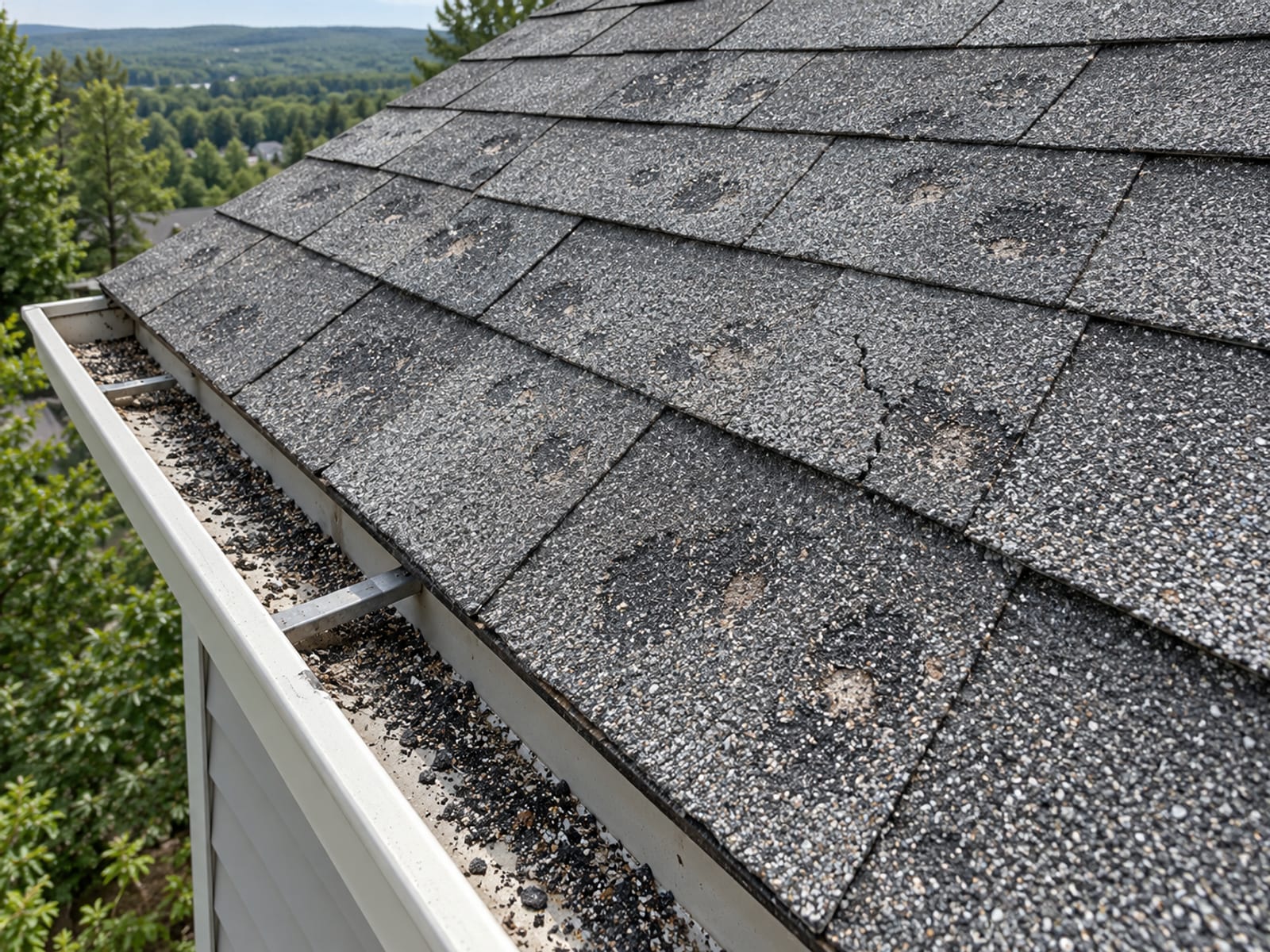
On asphalt shingles, hail damage usually looks like random bruises: soft or dented spots you can feel, bare patches where the granules were knocked loose, and the occasional torn or cracked shingle. On metal it looks like round or irregular dents. From the street, a hit roof can still look fine.
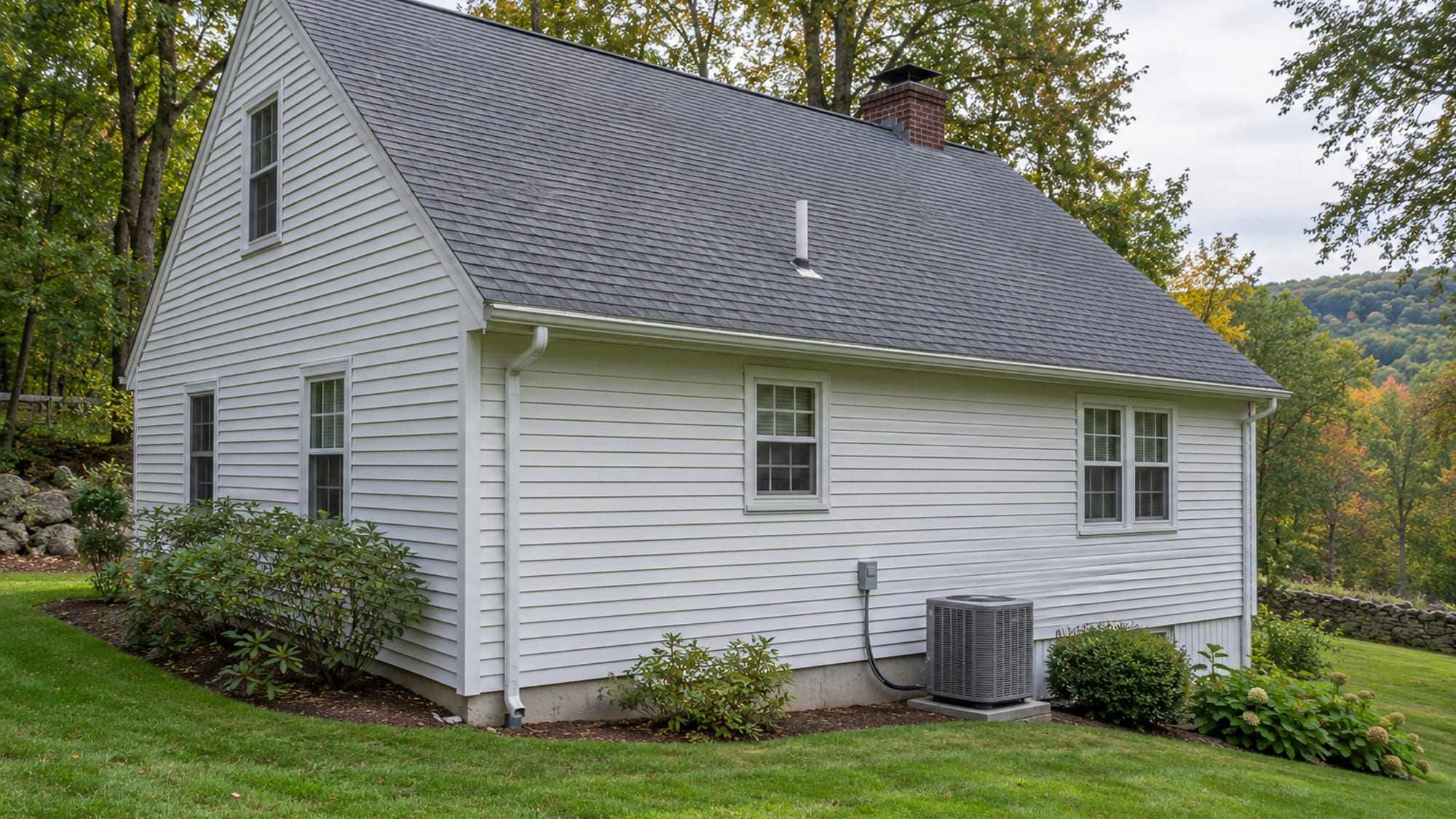
You can start looking without leaving the ground. Walk the yard with a phone or binoculars and study the gutters, vents, siding and any outdoor equipment. Dents and spatter marks on those soft metal parts tell you hail reached your house. Then go inside and check the attic and upper-floor ceilings for damp insulation or fresh stains.
Stay off the roof for all of it. A roof can look intact from below and still be damaged, and a bruised, wet surface is a poor place to stand. Telling functional damage from cosmetic marks takes a trained inspection.
Key Takeaways
Check from the ground first
Random dents or bruises, displaced granules, torn material and damaged ridge caps point to hail on shingles; round dents on gutters, vents and flashing show hail reached the property.
Look-alikes are common
Blistering, edge wear, installation marks and ordinary weathering can resemble hail damage, which tends to appear in a random pattern.
Hail size alone settles nothing
The 1.25-inch to 2.00-inch Class 1 to Class 4 ratings are laboratory test classes, and a one-inch storm does not tell you whether a given roof was damaged.
Order matters
Photograph from safe spots, check the attic, tell the insurer before permanent work, ask about the hail deductible and claim deadline, and verify a Connecticut registration and a written scope before you sign.
Ground-Level Signs Tell You Whether Hail Reached Your House
Before you think about the roof, look at everything hail would hit first. Soft metal records impacts well, and it sits where you can reach it safely. Check the gutters and downspouts, roof vents, window and door flashing you can see, the air-conditioning fins, grill covers, mailbox and any painted metal. Take close photos of each dent with a coin or ruler beside it for scale.
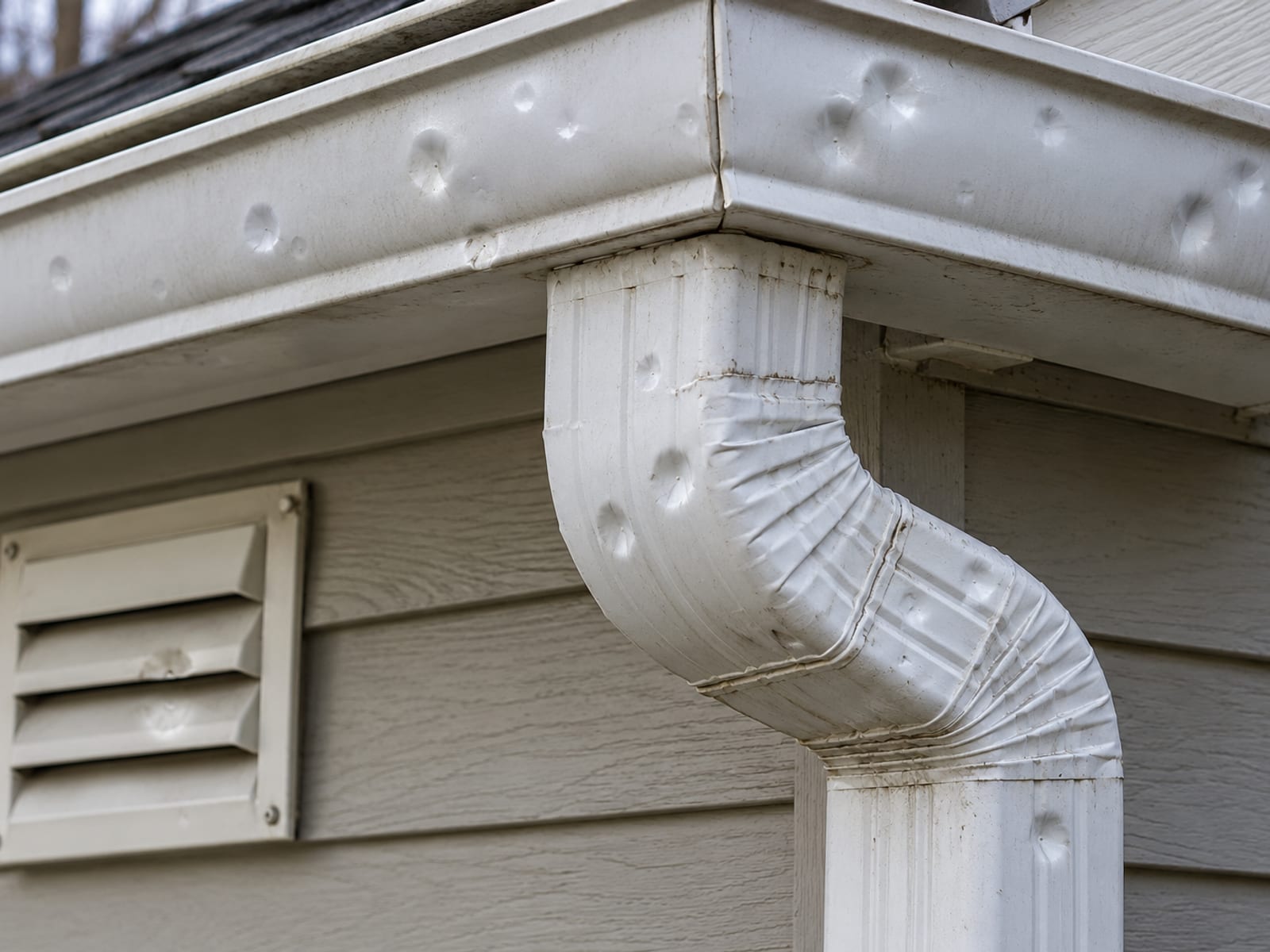
Siding and vehicles tell the same story. Depending on the material, siding may show chips, cracks, dents or impact marks. Mark the storm date in your phone, then photograph the side of the house that faced the wind from a few steps back and again up close. Collateral marks like these help establish that a storm happened. They do not decide whether the roof needs replacing.
The roof itself comes next, still from the ground. With binoculars, scan for missing shingles, shingles that look torn or broken, and ridge caps along the peak that seem cracked or lifted. Look at the ground under the downspouts and in the gutters for loose granules, since displaced granules are one of the signs of shingle hail damage. If the roof is not safely visible from the ground, that alone is a reason to book a professional inspection.
Asphalt Shingles Show Hail as Bruises, Bare Spots and Breaks
IBHS describes three broad ways hail damages asphalt shingles: denting, breaching or tearing, and granule displacement. A dent shows up as a depression or bruise in the shingle surface that you can feel. Granule displacement leaves a bare spot where the protective surface was knocked off, and in some cases the mat underneath is exposed. A breach is a torn, fractured or punctured spot.
Pattern is the clue. IBHS says hail impacts tend to occur in a random pattern, spread across the roof without lining up, and the hail-damage brochure says a hit may produce a bruise that can be felt. Ridge caps are named as a vulnerable area because they sit exposed along the top. An inspector looks at each slope in turn.
Will a hail-damaged roof leak? Not every mark produces an immediate leak. IBHS says severe damage that breaches or tears the shingle can create potential for water entry, and a roof can look intact from the ground while damage exists in the shingle surface or the roof system. That is why a quiet attic after the storm is good news but not a final answer.
Look-Alikes Can Fool You, So Know What Else Leaves Marks
Not every dark patch or worn spot is hail. IBHS lists blisters as a hail-damage look-alike, and the same brochure notes that general edge granule loss, installation marks, mechanical damage, manufacturer defects and natural weathering can resemble hail damage. A blister comes from the shingle itself and not from an impact, so it will not follow the random pattern hail leaves.
The simplest test is the pattern and the feel. Hail hits land at random across the surface and tend to leave a bruise or depression you can feel. Even wear along the edges, a uniform pattern across every shingle, or marks that line up with a ladder or a foot path point to something else. You do not need to climb up to find out, and you should not. Do not walk on the roof or strike shingles to test them; leave that to an inspector.
Hail Marks and Common Look-Alikes
Points Toward Hail: Yes, especially in an uneven spread across the roof
Could Be Something Else: Mechanical damage or installation marks
Tap a factor to see how it moves the price.
Metal Roofs and Exterior Parts Get Dents That Do or Do Not Matter
Hail can dent metal roofing, flashing, vents and gutters. Those dents are round or irregular, and they often cluster in exposed panels or formed profiles. A dent is not automatically a failure. IBHS reports that dents change appearance, and it has no evidence that dents alone affect how a metal roof works.
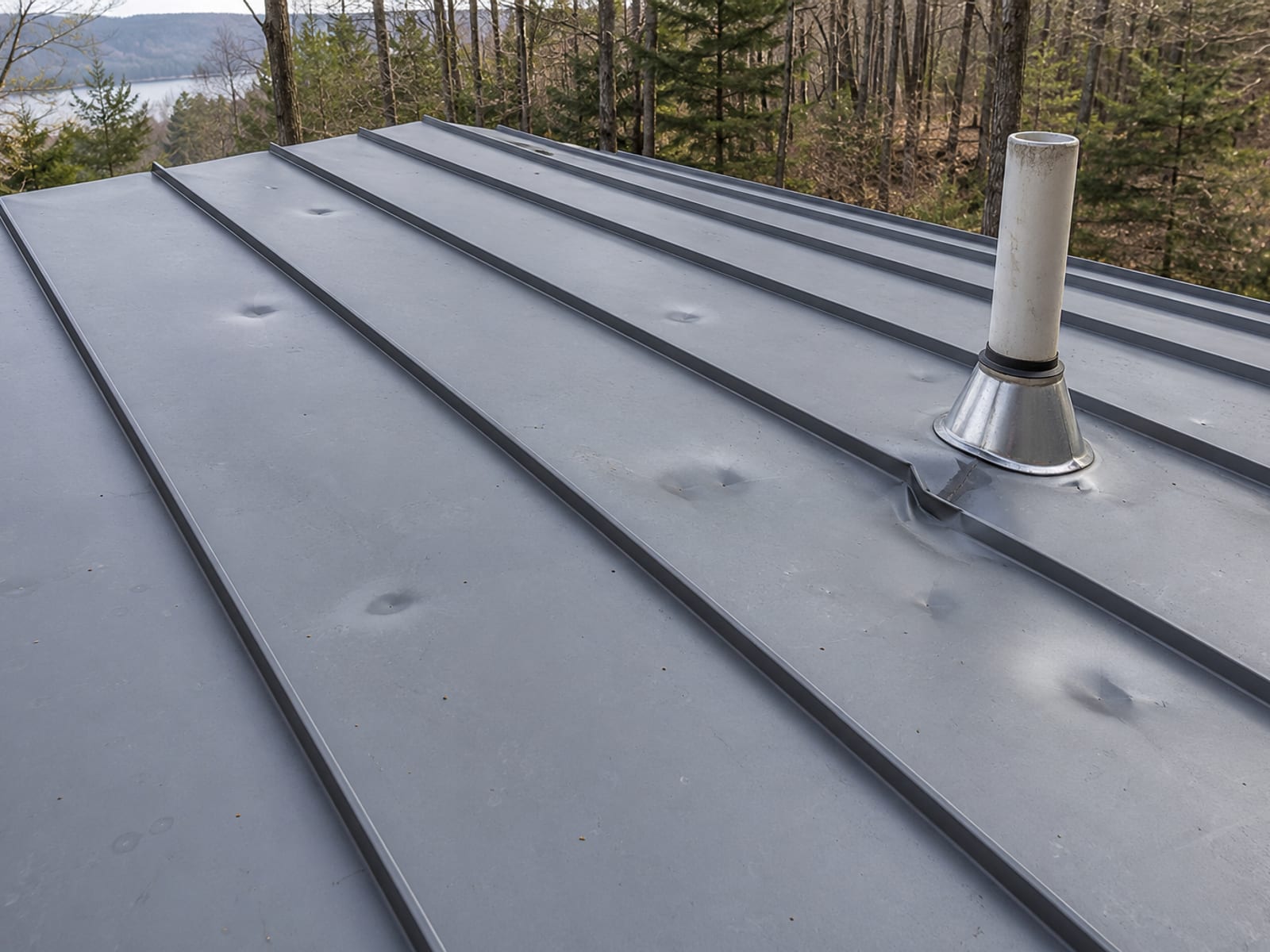
That distinction also answers a common worry about insurance: a roof with only cosmetic dents and a roof with damaged seams are different situations on paper. Your policy may treat them differently, and an inspector's written notes help show which one you have. Ask whoever inspects a metal roof to look at seams, fasteners, flashing and penetrations specifically, and to say in writing what they saw.
Around the house, gutters and downspouts are the other metal parts that take hits, so photograph each dent and note which side of the house it is on. Siding damage varies by material, and it is worth documenting even if you plan to deal with the roof first.
An Attic and Ceiling Check Catches Leaks Before They Spread
Because a roof can be breached without looking damaged from below, the attic is your best early warning. If you can reach it safely through a hatch or pull-down stair, bring a flashlight. Look at the underside of the roof boards and the insulation for dark stains, damp spots, drips or daylight where it should not be. A few minutes of looking will tell you if water is coming in.
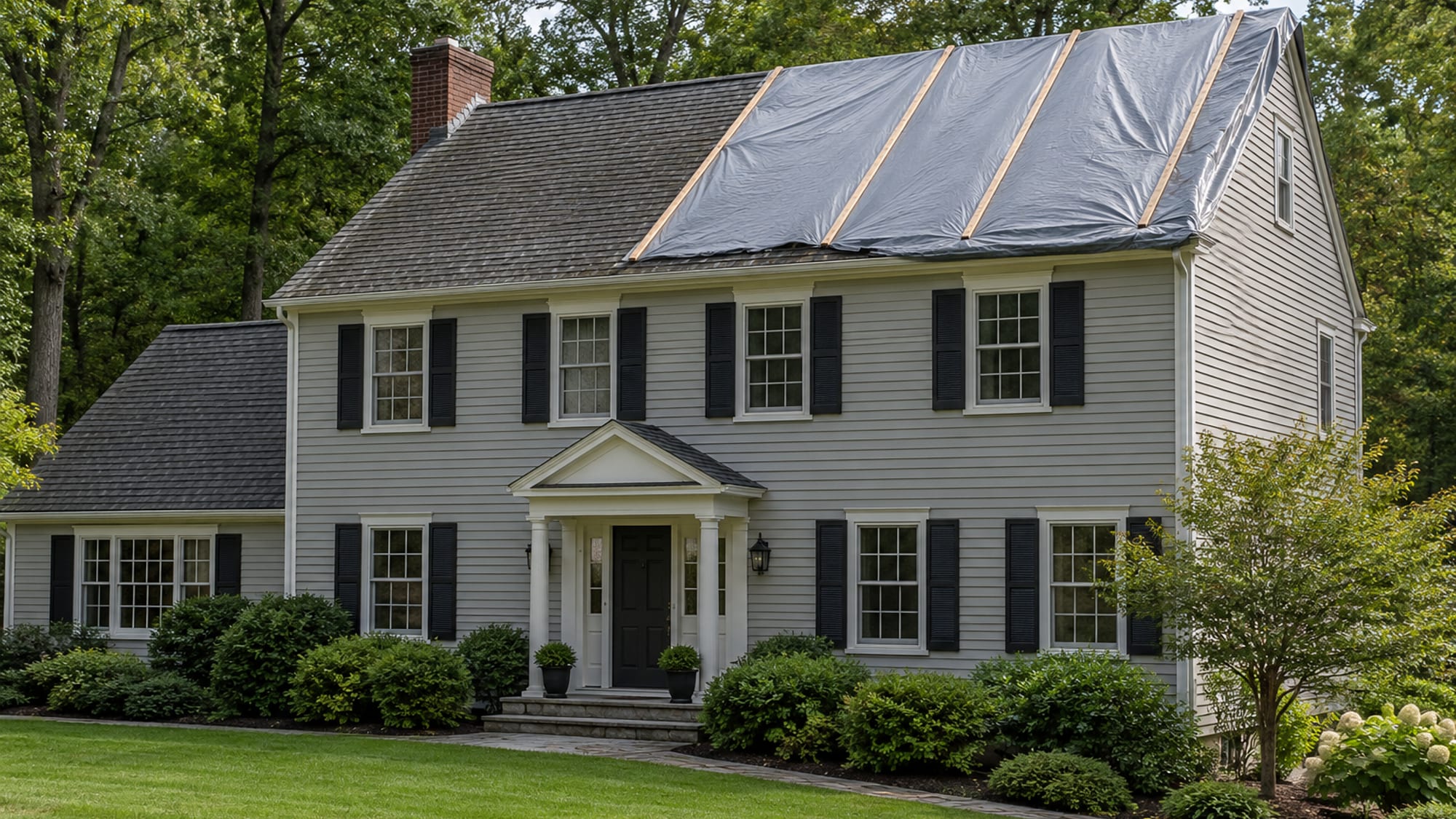
Then check the upper-floor ceilings, especially below the slopes that took the storm. New brown rings, bubbling paint or sagging drywall are active water signs. If you find any, photograph them, move belongings, and put a bucket under a drip. Call a roofer for temporary protection instead of going up yourself. Our 24/7 emergency roof services cover that kind of call.
If the attic is dry, do not treat that as permission to skip the inspection. Damage that has not leaked yet can still let water in later. A dry attic only means no water is entering at the moment you look, and the next heavy rain is the real test. Schedule the inspection while your photos and the storm date are fresh.
Hail Size and Impact Ratings Do Not Predict Your Roof
Weather reports love a size comparison, and homeowners often ask whether one-inch hail can damage a roof. The answer is that a one-inch storm does not settle it. Damage depends on how dense and fast the hailstones were, the roof material, its age and condition, its slope, how it was installed and where the stones landed. The National Weather Service uses hail at least 1 inch in diameter, or winds of at least 58 mph, as severe thunderstorm warning criteria, but that is a weather threshold and not a roof-damage threshold.
The impact ratings on shingle packages are different again. IBHS lists its laboratory classes as Class 1 for 1.25-inch test hail, Class 2 for 1.50-inch, Class 3 for 1.75-inch and Class 4 for 2.00-inch test hailstones, on its Roof 101 page. UL Solutions describes its UL 2218 standard as four classes based on impact energies from steel balls dropped from different heights, with Class 4 as the highest.
Laboratory Impact Classes for Roofing
1.25 inches
Tap a factor to see how it moves the price.
Those are test classifications, not a promise. Natural hail varies in hardness, shape, speed and angle, and a Class 4 shingle is a product that passed the highest class in a lab test, not one that cannot be damaged. FM 4473 is another impact standard IBHS references beside UL 2218, so product paperwork should name the exact standard and class. Some manufacturers, Owens Corning among them, say insurers may offer discounts for qualifying Class 4 products. Whether you qualify depends on your insurer and policy, so ask yours.
A Documented Claim Starts With the Insurer, Not the Contractor
The Connecticut Insurance Department's July 2026 consumer notice advises homeowners to photograph and video damage, make temporary repairs, keep receipts, notify the insurer promptly and let the insurer inspect before permanent repairs. That order protects you. If a new roof goes on before the adjuster sees the old one, there may be nothing left to inspect.
Build a file as you go: dated photos from the ground, close-ups of dents on metal parts, the storm date, any interior photos, temporary-repair receipts and every message from the insurer. The Department's storm-claims tips also recommend preserving damaged property until the inspection. If a piece of flashing or a vent cover comes off, bag it and keep it.
Two questions belong in your first call: what is the hail deductible, and what is the claim deadline? Most insurance companies set a time requirement for filing, and the exact one is in your policy, so ask the insurer to confirm it in writing. A hail or wind deductible can be a flat amount or a percentage of the dwelling limit, which can make the choice to file quite different from house to house.
Can an adjuster tell how old hail damage is? Sometimes, but not always from a mark alone. An adjuster may compare how the marks look with documented storm dates, earlier photographs, maintenance records and prior claims. Weathered marks and older defects can complicate the picture. If you have photos of the roof from before the storm, such as from a past sale, a roof inspection or a family photo that shows the roofline, keep them in the file.
A Claim Is Worth Filing When Covered Damage Clearly Exceeds the Deductible
Is it worth claiming hail damage? The Insurance Department's claims guide suggests comparing the likely repair cost with your deductible. A claim may be worth considering when the estimated covered damage clearly exceeds the deductible. When it is close to or below it, the claim may not pay off.
Remember who decides. The policy and the insurer determine coverage; a contractor does not. A contractor can document damage and write a scope, and a good one will tell you that. If anyone promises that insurance will pay for a new roof before the adjuster has looked, treat that as a warning sign. Ask the insurer about the deductible, the settlement method and what it will need from you. Our post on whether homeowners insurance covers roof storm damage explains deductibles and settlement in more depth.
Roof age and condition also matter for the insurer over time. The Insurance Department stated in a March 2024 notice that cosmetic discoloration or streaking alone does not support nonrenewal, since insurers need evidence of material degradation or damage that increases loss risk.
Connecticut Permits, Weather and Housing Shape the Repair
Connecticut's current State Building Code is the 2022 code, based on the 2021 International Codes, and it applies to permit applications filed from October 1, 2022. Your town's building official administers permits and inspections, and roofing work may require a permit. Put permit responsibility in the written contract, then confirm with the building office that the permit was issued. The state's code page is the starting point.
Connecticut's exposure includes severe thunderstorms and hail, high winds, winter storms, snow and ice, so a roof that handled one hailstorm may face others. The NOAA Storm Events Database records reported hail, wind and winter events by county, with data from January 1950 through June 2026. It lists reported events, not every storm that occurred, but it can help you confirm the storm date for your claim file.
Connecticut's houses span many building eras. For your own house, use property records or your town's documentation to learn the roof's age and how many layers it carries. An older roof can change both the repair plan and what the insurer expects.
Costs Follow Damage, Access and Materials
Hail repair cost depends on roof area, measured in roofing squares of 100 square feet, plus pitch, height, access and complexity. Tear-off and disposal, the number of layers, decking, flashing, ventilation, underlayment, ice barrier and drip edge also count. So do the material and its impact rating, the extent of functional damage, permit and inspection requirements, temporary tarping and site conditions.
For a general sense of scale, ClearCost, a pricing guide, published an April 2026 estimate of $9,200 to $27,075 for roof replacement in Connecticut, or $350 to $750 per roofing square, with an average of $16,250. ClearCost says these figures are adjusted from national pricing using Connecticut regional price data and are not bids for a specific property. Your roof's price comes only from an itemized estimate.
What Moves a Hail-Related Roof Price
More squares and steeper slopes mean more material and labor.
Tap a factor to see how it moves the price.
Ask for estimates that separate each of those items, and compare them with what your insurer's estimate includes. Our roof repair and roof replacement pages describe the work behind the lines, and our hail damage page explains what an inspection covers.
A Short List of Checks Protects You Before You Sign
After a hailstorm, door knockers appear. Before you sign with anyone, verify that the contractor's Home Improvement Contractor registration is active through the state's eLicense system, and confirm that the name and number match the contract. Roofing counts as home improvement under the Department of Consumer Protection's registration rules.

Watch for the warning signs listed in the Department's alert about scammers posing as roofing companies: demands for full payment up front, pressure for a same-day signature, and requests for cash or untraceable payments. Ask for proof of liability insurance and verify it with the insurer. Get more than one written estimate, and keep every change in writing.
If impact resistance matters to you, ask whether the proposed shingle has UL 2218 or FM 4473 documentation, and whether the installer follows the manufacturer's published instructions. Do not sign an assignment or authorization you do not understand, and do not let permanent work begin before the insurer has had its chance to inspect. A few questions to put to any roofer:
- Function: Is the damage functional, cosmetic or ordinary wear, and what in the photos shows it?
- Repair: Can the roof be repaired, or does the damage call for replacement?
- Storm date: What evidence supports the storm date?
- Permit: Who obtains the permit, and who schedules the inspection?
- Estimate basis: Is the estimate priced to replacement cost or actual cash value, and what is in it?
- Schedule and warranty: When does work start and finish, and what warranty applies?
Frequently Asked Questions About Hail Damage Roof Signs in Connecticut
How can I tell if my roof was damaged by hail?
Look for random bruises or dents you can feel on asphalt shingles, bare spots where granules were knocked off, torn material and damaged ridge caps, plus dents on gutters, vents and flashing. If the roof cannot be seen safely from the ground, a professional inspection is needed.
Can one-inch hail damage a roof?
It can, but a one-inch storm does not settle the question for your roof. Damage depends on the hailstones, the roof material, its age and condition, its slope and where the stones landed. The laboratory classes start at 1.25-inch test hail and are not a field threshold.
Does hail damage metal roofs?
Yes, hail can dent metal roofing, flashing, vents and gutters. A dent is not automatically a functional failure, and IBHS has no evidence that dents alone impair a roof. Seams, fasteners, coatings and penetrations matter more than an open panel.
Is a dent damage or just cosmetic?
It depends on location. A dent that changes only appearance may be cosmetic. One that affects a seam, a panel connection, a penetration, a coating or a drainage part may need repair.
How long will a roof last after hail damage?
There is no reliable number. Remaining life depends on the roof's age, material, the kind and severity of the damage, its exposure and whether breached areas are repaired. A roof with functional damage should be assessed and protected promptly.
Can an insurance adjuster tell how old hail damage is?
Often they compare marks with storm dates, earlier photographs, maintenance records and prior claims. Exact age cannot always be read from a mark alone, so keep dated photos and records.
What is the difference between blistering and hail damage?
Blisters are a hail look-alike that come from the shingle. Hail leaves random impacts and may leave a bruise or depression you can feel.
Quick Check: Hail Damage Signs and Next Steps
1. Where should you start checking after a hailstorm?
2. Which sign points toward hail on asphalt shingles?
3. What do the Class 1 to Class 4 ratings measure?
4. What should you do before permanent roof work begins?
5. Who decides whether hail damage is covered?
Final Thoughts
Hail marks on a roof are random bruises, bare patches and breaks on shingles, and round dents on metal, backed up by dents on gutters, vents and flashing. Blistering and normal wear can look similar, laboratory hail classes do not predict your roof, and a dry attic is good news but not a final answer. Photograph from safe spots, notify the insurer before permanent work, and keep every record in one place.
Acting while the storm date and photos are fresh keeps your options open. If the damage is small and below your deductible, you will know that early; if it is larger, you will have a clear record to work from. Either way, you stay in charge of the decision.
If you think hail hit your roof anywhere in Central or Western Connecticut, American Quality Roofing and Siding can come take a look. We offer free estimates and 24/7 emergency roof services, and our CT HIC registration number is #0633301, so you can verify it before you sign. Call us or request a free estimate, and we will go over what we see with you.
Written by Jose Zaruma, American Quality Roofing and Siding.
← Back to the blog