Roofing Guide
Gutter Replacement or Repair? Signs to Check in Connecticut
By Jose ZarumaPublished
- gutters
- gutter installation
- connecticut
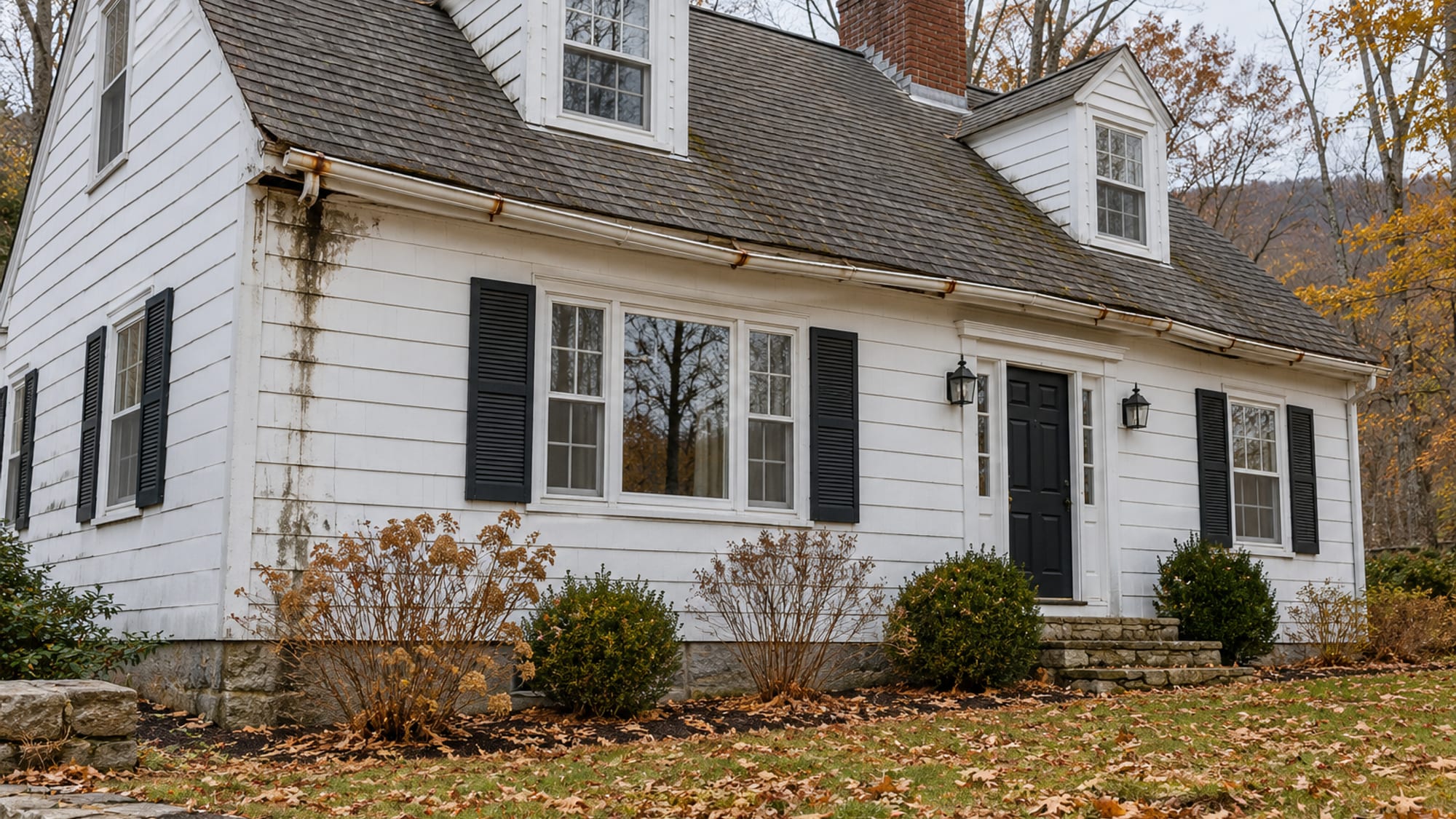
Age alone does not settle whether your gutters need replacing. A 20-year-old system with one fixable defect, like a leaking seam or a loose hanger, can often stay. What moves a system toward replacement is trouble that shows up in several places at once.
Rust across several runs, seams that keep leaking after they have been resealed, more than one sagging section, hangers pulling out of soft fascia, and water that still spills over the edge after a cleaning all point that way. Any one of them on its own may still be a repair.
Connecticut houses make a closer look worthwhile. About 41% of the state's housing stock was built before 1960, according to 2024 Census data reported by CT Mirror, so the fascia and hangers behind many gutters have been through a lot of winters.
Key Takeaways
One defect is usually a repair
A single leaking seam, loose hanger, detached downspout or missing end cap on an otherwise sound system rarely justifies new gutters.
Several defects together point to replacement
Rust-through on multiple runs, widespread seam failure, repeated sagging and overflow after cleaning are the combination that settles it.
Soft fascia comes first
Hangers cannot hold in rotten wood, so the fascia is repaired or replaced before any new gutter goes up.
Check where the downspouts empty
Staining and pooling beside the house can come from a downspout that discharges too close, not from a failed gutter.
Insurance depends on the cause
Sudden wind or hail damage may be covered under some policies; age, corrosion and wear generally are not.
Check Where the Downspouts Empty Before Blaming the Gutter
Some of the most worrying signs turn out to be discharge problems. Wet soil along the foundation, a stained patch on the siding or a puddle that lingers after rain can all come from a downspout that ends too close to the house, an extension that came loose, or an outlet packed with debris.
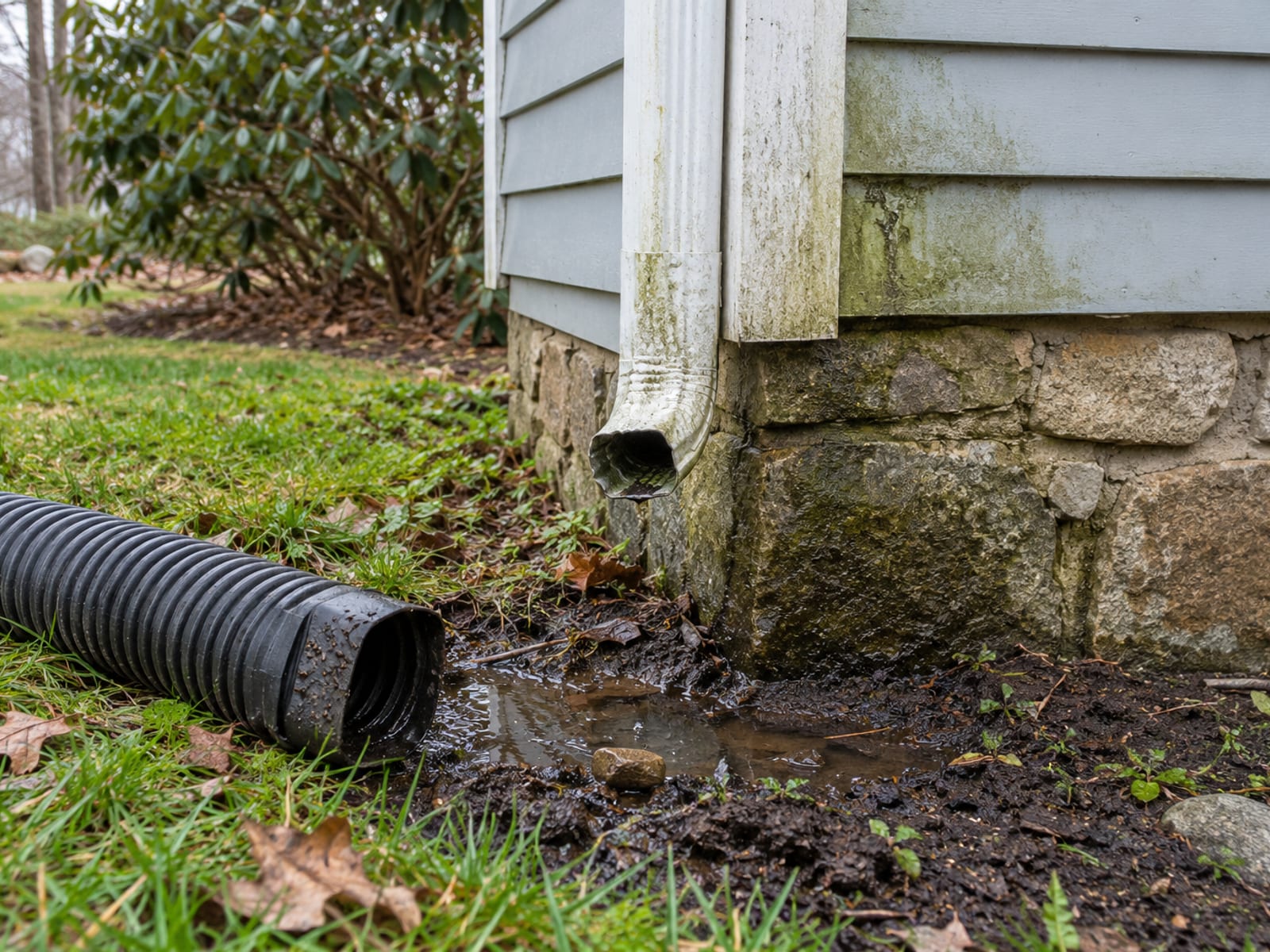
Stay on the ground for this. Take photos of the staining, the pooling and any run that looks out of line, and leave anything that needs a ladder or a roof edge to a professional, especially when surfaces are wet or icy.
Nine Signs and What Each One Usually Points To
Every sign below has a usual cause and a usual answer, but a house can be an exception. Treat these as the questions a careful inspection would ask, in the words a homeowner would use. For each one, the useful question is whether the problem is one spot or a pattern.
The table gives the short version, and the groups after it give the reasoning.
Gutter Signs: Repair or Replace?
Often a Repair When: One short sag from a loose hanger or trapped debris
Points Toward Replacement When: Several runs sag or hangers keep pulling out
Tap a factor to see how it moves the price.
Signs You See on the Gutter Itself
Sagging, separated seams, rust and peeling finish are the signs most people notice first. Sagging usually means hangers have failed or are spaced too far apart, the run is overloaded with debris, the slope is wrong or the fascia behind it has weakened. One short sag may be repairable. Sagging across several runs points toward correcting or replacing the system.
A single failed joint can often be resealed and fastened. Joints generally need both sealant and mechanical fastening, so a bead of caulk over a moving seam is a short-term fix at best. Widespread separation suggests aging sealant or movement that will keep breaking new joints.
Rust and peeling paint deserve a close look rather than a quick judgment. Surface discoloration can be cosmetic. Holes, flaking metal or corrosion in several places mean the gutter is losing its ability to hold water. Peeling matters more when it comes with rust-through, leaking joints or a run that has bent out of shape.
Signs You See on the House
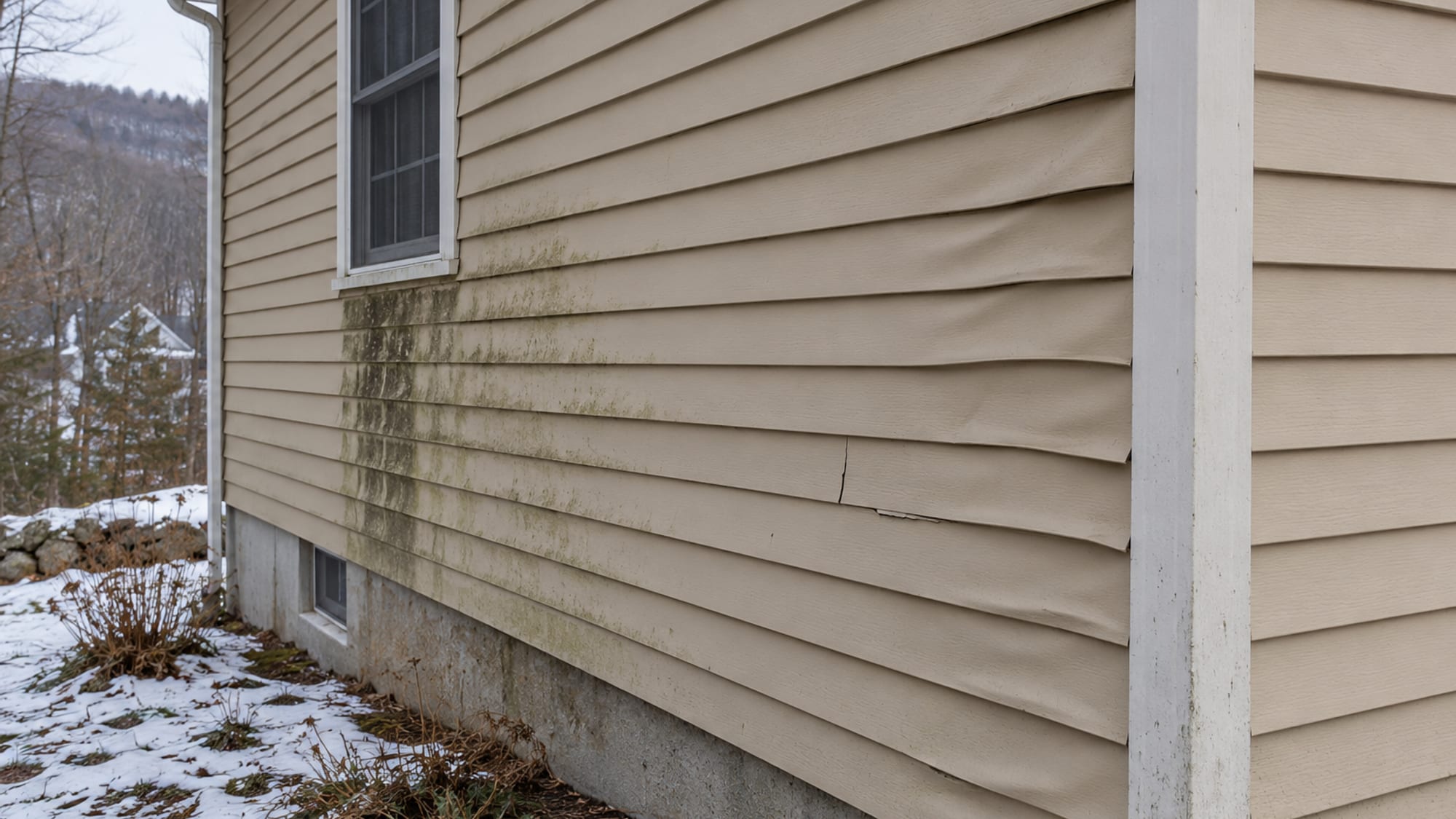
Water marks on the siding or trim below the eave, mildew near the roofline and wet soil at the foundation tell you water is leaving its intended path. The cause might be a blockage, poor slope, an undersized downspout, a failed seam, a missing end cap or roof runoff that jumps over the gutter. Mildew alone does not name the failed part; it only says the area stays damp.
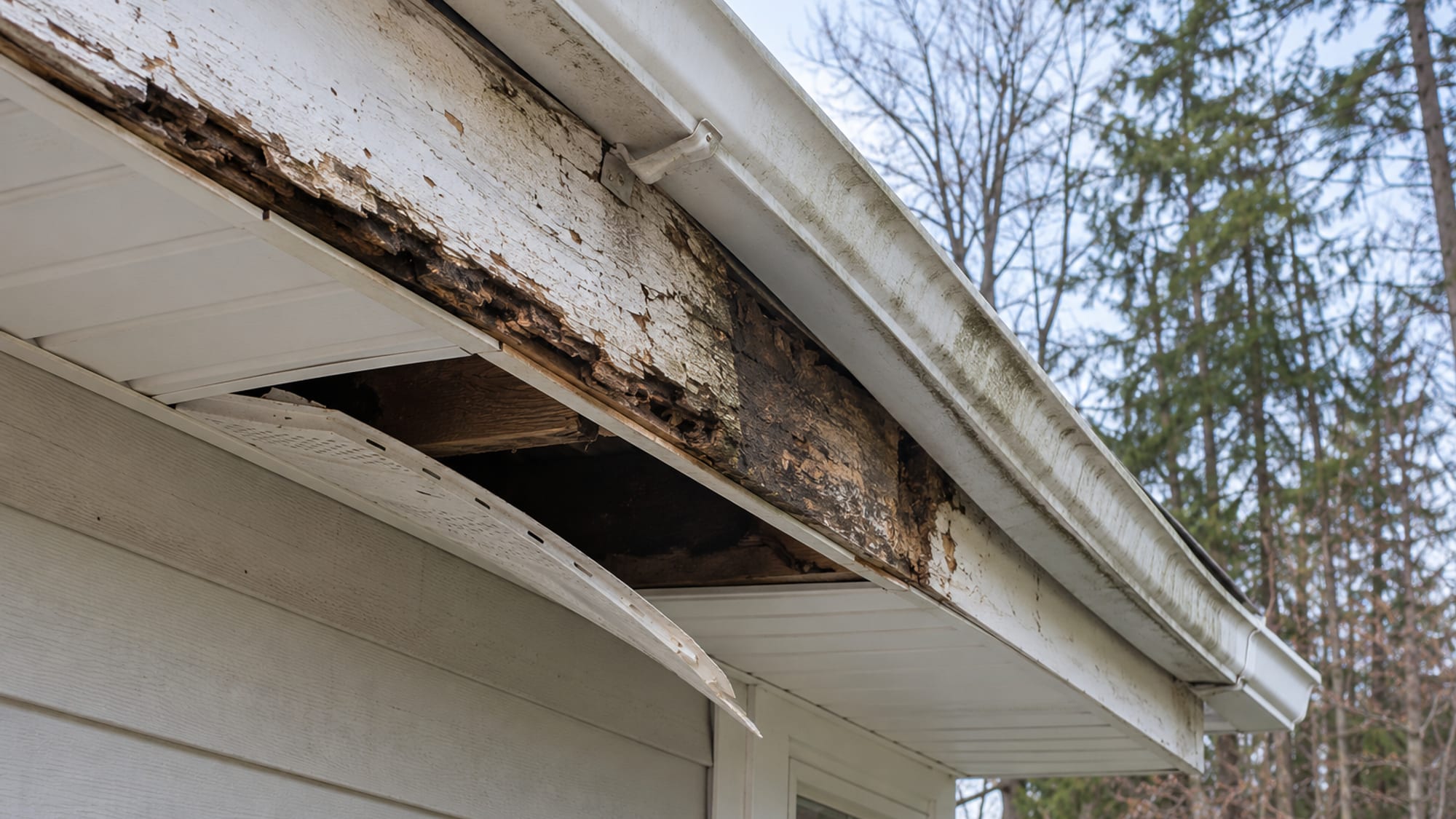
Soft fascia is the sign that changes the job. Hangers and fasteners cannot grip rotten wood, so the wood has to be repaired or replaced before any gutter is secured to it. Pressing a screwdriver into the fascia is a job for a contractor on a ladder, not for you.
Signs You See in the Rain
Overflow during a downpour has many causes: leaves, inadequate pitch, undersized gutters, too few downspouts, steep roof runoff or a blocked outlet. If the water still pours over the edge after the gutters are cleaned and the slope is corrected, the system itself may be the wrong design for that roof, and that is a replacement question.
A gutter should fall steadily toward its outlets with no water standing in it. The product's installation instructions set the exact slope, and your local building official has the final say on any particular installation.
Repair Fits an Isolated Problem on a Sound System
A repair is generally the right call when the defect is isolated and everything around it is still solid. Examples include one leaking seam, one loose hanger, a detached downspout, a missing end cap, a localized blockage or a short section damaged by a branch. Our gutter repair guide for Brookfield walks through those fixes.
Replacement becomes the better choice when several problems stack up. That means multiple sagging or detached sections, rust-through across more than one run, overflow that persists after cleaning and slope correction, widespread seam failure, hangers pulling from rotten fascia, repeated repairs on an aging sectional system, or downspouts that cannot carry the roof's runoff away safely. Storm damage that affects a large share of the system belongs on this list too.
A May 2026 Hartford-area contractor guide draws the line by age. It treats isolated leaks, a single sagging section, a detached downspout or localized storm damage as repair situations on systems under 15 years old. On systems around 15 to 20 years old, it treats widespread seam separation, several sagging sections, persistent overflow, and rust or rotten fascia across multiple runs as replacement indicators. That is one contractor's practice, not a code rule.
Time Gutters With the Roof When Both Are Near the End
Gutters and roofs meet at the roof edge, where the drip edge, fascia and the back of the gutter all have to work together. If a roof replacement is coming soon, replacing the gutters during that project can cut down on repeated access and lets the installer line up the drip edge so runoff goes into the gutter instead of behind it.
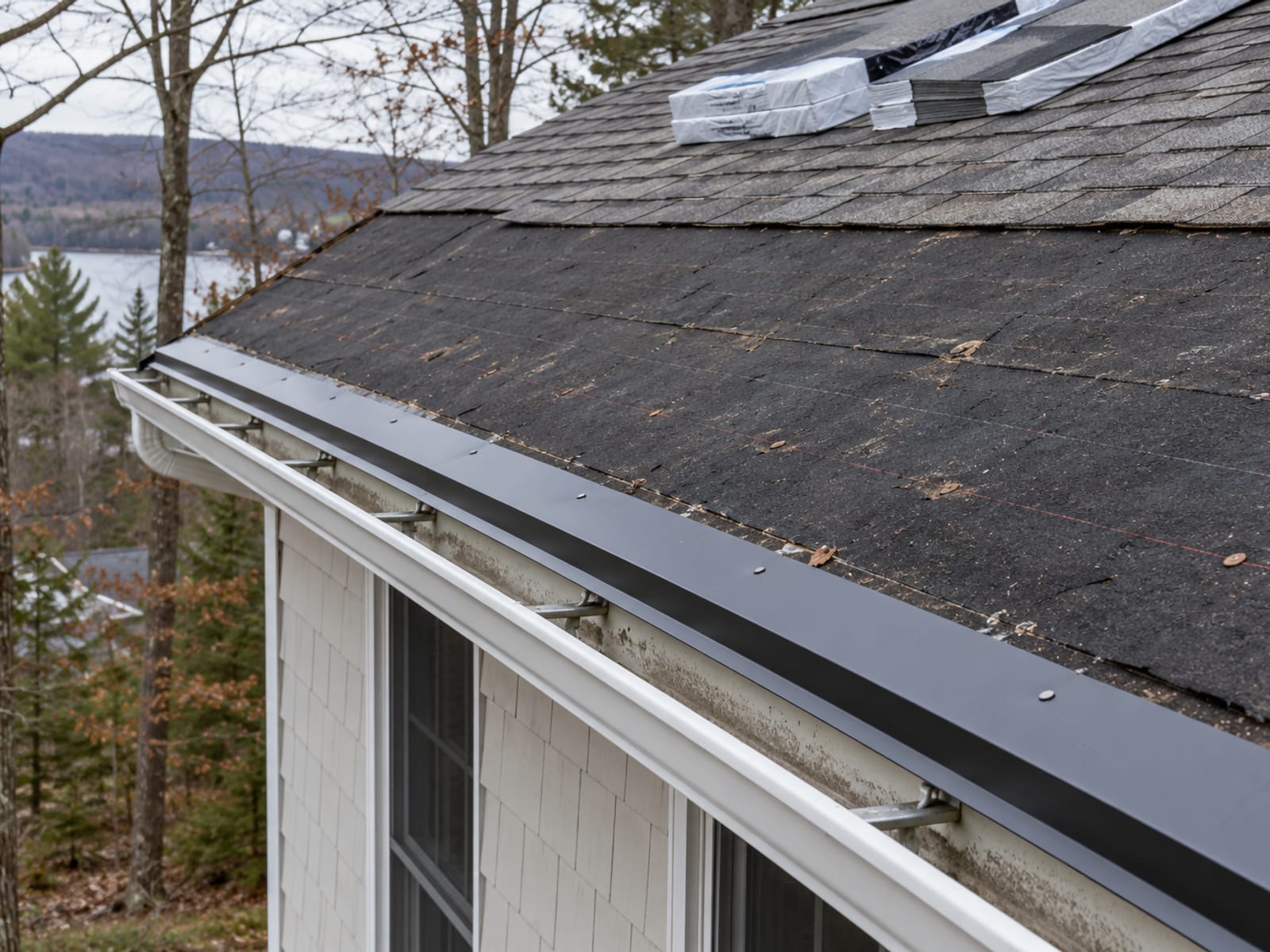
A few questions settle the plan before work starts:
- Is the fascia sound, and who repairs it if it is not?
- Will existing gutter guards be removed, replaced or reinstalled?
- Should downspout locations or extensions change while the drainage is exposed?
- Who is responsible for flashing, drip edge and the final water test?
Put the answers in writing, since the roofing and gutter work may be split between two crews.
Materials Wear Out at Different Rates
Gutter life depends on the material, how well it was installed and what it faces each year. The same May 2026 contractor guide lists the estimates below. They are practice figures from a contractor, not code requirements or independent durability tests.
Typical Gutter Service Life by Material (Contractor Estimates)
10 to 15
Tap a factor to see how it moves the price.
Installation quality, snow and ice loading, freeze-thaw cycles, debris, maintenance and the condition of the fascia all move these numbers. So, a 40-year promise for any gutter is not something to count on, and a 20-year-old aluminum system may be well inside its range. Judge the system in front of you: its seams, hangers, finish and fascia matter more than the date on the receipt.
Connecticut Winters and Older Houses Work Against Gutters
Water, ice and snow are what gutters spend their lives handling. The same Hartford-area guide describes about 49 inches of rain a year, up to 48 inches of snow and roughly 100 freeze-thaw swings each winter. Those are one contractor's figures for the Hartford area, not statewide statistics, but they match what most Connecticut homeowners see: ice at the eave, snow sliding off a roof and long stretches of wet leaves.
Older houses add another layer. The same CT Mirror report puts the state's median housing structure year at 1966, and about one-tenth of homes were built in 2000 or later. Housing age varies a lot by town, so your own house may sit well on either side of that line. Older fascia, older hangers and older flashing are simply more likely to be where trouble begins.
After a heavy snow, an ice buildup or a windstorm, have the gutters looked at. Keep people and pets away from any run that looks loose or heavy with ice, and stay off wet or icy roofs and ladders.
Published Costs Vary Widely, so Ask for Every Line Item
Published figures for gutter replacement come from private cost guides, and they differ from one to the next. Use them for planning, then rely on a written estimate for your own house.
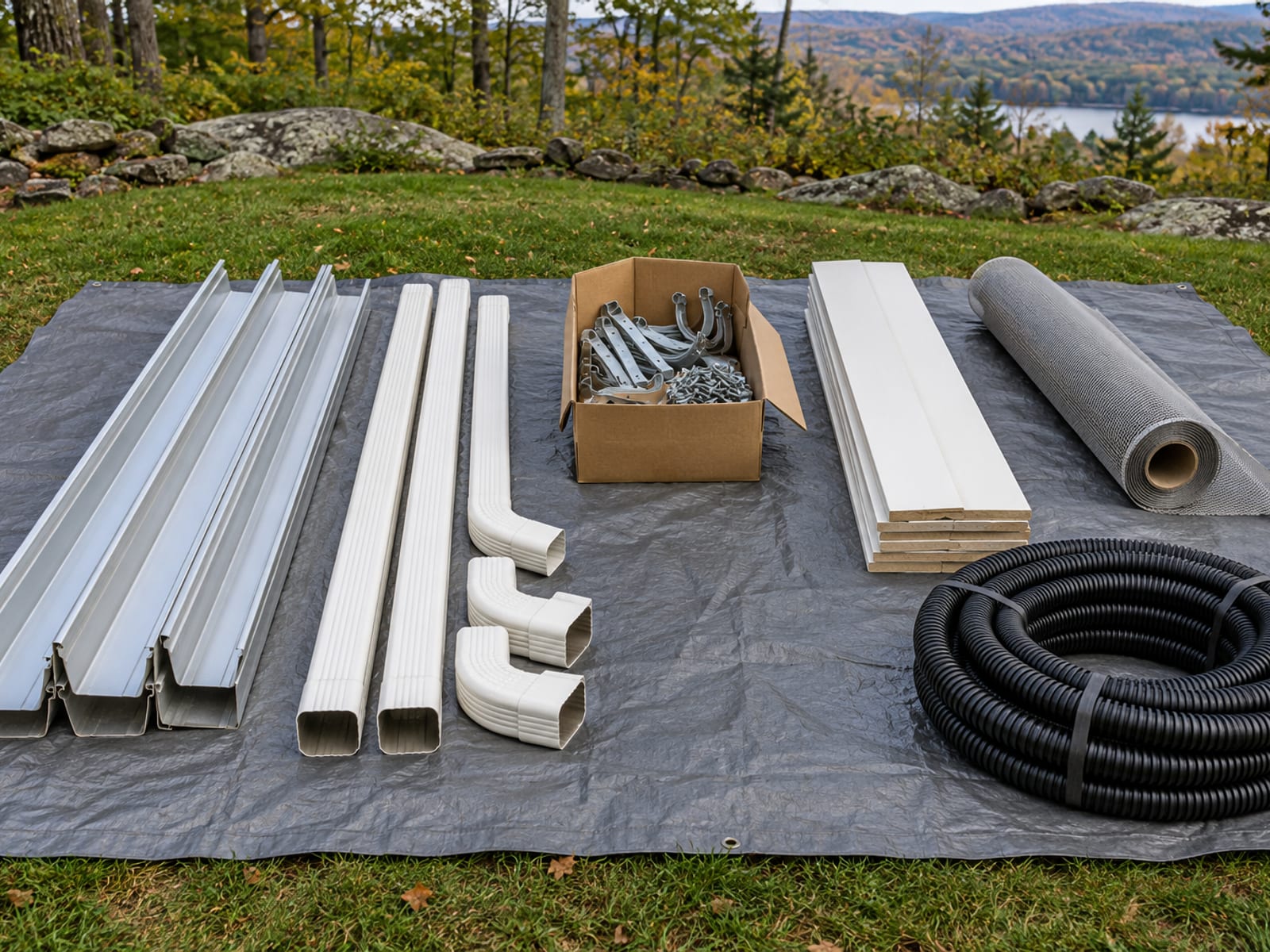
Published 2026 Gutter Replacement Figures
$1,075 to $3,800 total; $6 to $25 per linear foot
Tap a factor to see how it moves the price.
The final number depends on linear footage, material, whether the gutters are seamless or sectional, five-inch or larger sizing, roof pitch and corners, one story or several, fascia repair, guards, downspout count and routing, underground drainage, removal and disposal, and even the season. Your written estimate should price fascia, guards, underground drainage, tear-off and disposal as separate lines, so you can compare two quotes for the same scope. Our gutter installation cost guide explains each line.
Insurance Looks at the Cause of Damage, Not the Condition
Whether a homeowners policy pays for gutters depends on the policy, the deductible, any exclusions and what caused the damage. The Connecticut Insurance Department explains that wind damage may be covered, while flood damage is generally excluded from standard homeowners policies. Sudden damage from a covered wind or hail event may be eligible. Age, corrosion, deferred maintenance and ordinary wear generally are not storm losses.
If a storm damaged your gutters, photograph everything before cleanup, report the loss promptly and make only the temporary repairs needed to prevent more damage, keeping receipts. Let the insurer inspect before permanent work when that is practical. Do not sign over an insurance settlement, and do not assume an insurer will pay for an upgrade, an undamaged part of the system or a roof-and-gutter package just because it is more convenient.
Your policy and your agent hold the real answers, and the Department's homeowners insurance FAQ is a good place to see how Connecticut explains deductibles and exclusions.
Permits and Contractor Checks Come Before the Contract
Connecticut's current State Building Code is the 2022 code, which adopts the 2021 International Residential Code and International Plumbing Code. Local building departments administer permits and inspections, and towns differ. Bridgeport's building department says a permit is required to alter or repair a building and asks for contractor registration and a written scope. Stamford's building FAQ says ordinary repairs may be exempt but excludes replacing or relocating drainage or drain-leader work that affects public health or general safety.
So, the safest step is a call to your town's building official. Describe the exact job, whether it is replacement, downspout relocation, fascia repair, roof-edge work or underground drainage, and ask whether a permit or inspection applies and who will pull it.
Before signing, check that the contractor is registered. Connecticut requires home-improvement contractors to register with the Department of Consumer Protection, and you can verify the registration through eLicense. The Department also recommends a detailed written contract that names the work, materials, dates and price, along with proof of workers' compensation and liability insurance. The state's Smart Consumer guide to home repairs covers the same ground.
What to Put in the Written Estimate
A good estimate answers questions before they become disputes. Ask for at least two detailed written estimates and compare them line by line.
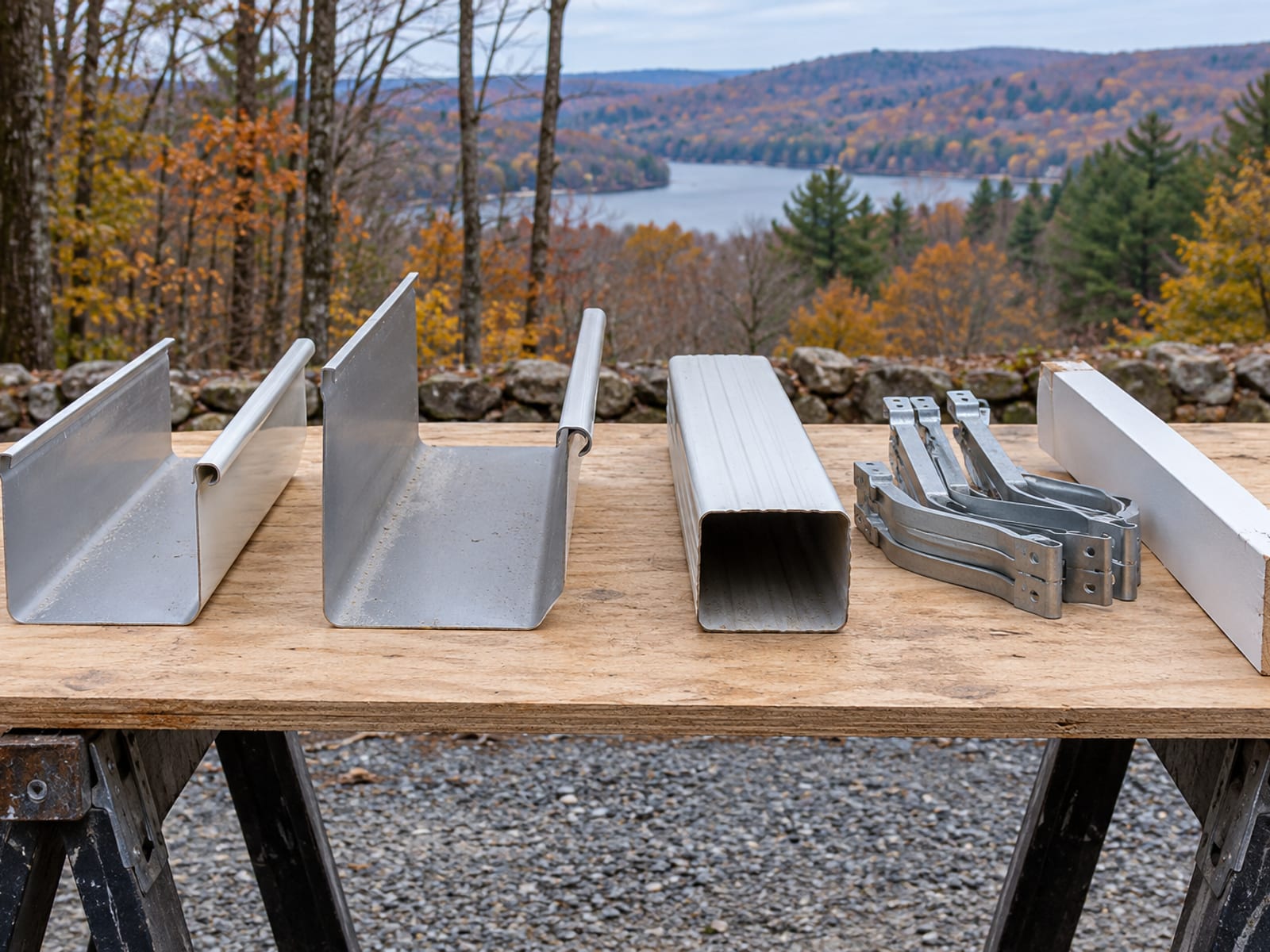
Keep receipts and written messages in one folder. Size deserves a calculation rather than a guess; five-inch gutters are widely used, and six-inch may suit larger or steeper roof sections, but capacity should come from the roof area, pitch, rainfall runoff and downspout capacity.
Frequently Asked Questions About Gutter Replacement in Connecticut
Should I replace 20-year-old gutters?
Not because of age alone. A 20-year-old system with one repairable defect may keep working after an inspection. Widespread rust, recurring seam leaks, several sagging sections, failing hangers, overflow that continues after cleaning or deteriorated fascia make it a replacement candidate.
Is it okay to get new gutters before a new roof?
Yes, if the roof edge, drip edge, fascia and gutter attachment are coordinated. When the roof is scheduled soon, doing both together can save repeated access. If the gutters are failing urgently, they can go first, as long as the roofing crew protects them during the reroof.
Can gutters last 40 years?
Some materials can stay in service that long, but a 40-year promise is not something you can count on. A May 2026 Connecticut contractor guide estimates 20 to 30 years for seamless aluminum and 50 or more for copper, and installation, snow, debris and maintenance move those numbers.
Does homeowners insurance cover gutter replacement?
It depends on the policy and the cause. Sudden damage from a covered wind or hail event may be eligible, subject to the deductible and exclusions. Replacement because of age, corrosion or poor maintenance is generally a maintenance cost, and flood is generally excluded.
How do I get insurance to pay for gutters?
Document the damage before cleanup, report the claim promptly and ask the insurer to inspect. Give the adjuster the contractor's itemized estimate and your photos. Then ask your insurer or agent whether the gutters, fascia and roof edge are covered under your specific policy.
What is the most popular gutter size?
Five-inch K-style gutters are widely used on homes. The right size depends on roof area, pitch, local rainfall and downspout capacity, and six-inch gutters may suit larger or steeper roof sections. Have the capacity calculated for your roof instead of choosing by popularity.
What slope should a gutter have?
A steady fall toward the downspouts, with no water standing in the gutter. Long runs are pitched toward the outlets, and the manufacturer's instructions set the exact slope. Confirm any local requirement with your building official.
Gutter Repair or Replacement Quick Check
1. Does age alone mean a gutter system has to be replaced?
2. Which combination most clearly points toward replacement?
3. Water is pooling beside the foundation. What should be looked at first?
4. What has to happen before new gutters are hung on rotten fascia?
5. Which statement about homeowners insurance and gutters is accurate?
Final Thoughts
Whether your gutters need a repair or a replacement comes down to pattern, not age. One isolated defect on a sound system is usually a repair. Rust on several runs, seams that keep failing, multiple sags, hangers pulling from soft fascia and overflow that outlasts a cleaning point toward a new system, and the downspout discharge and the fascia get checked first either way.
Catching the signs early protects the siding, the trim, the foundation and the soil around it from repeated soaking. A clear diagnosis also lets you compare written estimates for the same scope, so you pay for what the house needs.
If your gutters are showing some of these signs, American Quality Roofing and Siding can take a look at them, the fascia and the downspouts. We serve homeowners across Central and Western Connecticut from our base in Brookfield, and our estimates are free. Request your free estimate or call us, and we will tell you what we see and what it would take to fix it.
Written by Jose Zaruma, American Quality Roofing and Siding.
← Back to the blog