Roofing Guide
Downspouts and Extensions Brookfield CT: Drainage Done Right
By Jose ZarumaPublished
- downspouts
- brookfield ct
- connecticut
- gutters
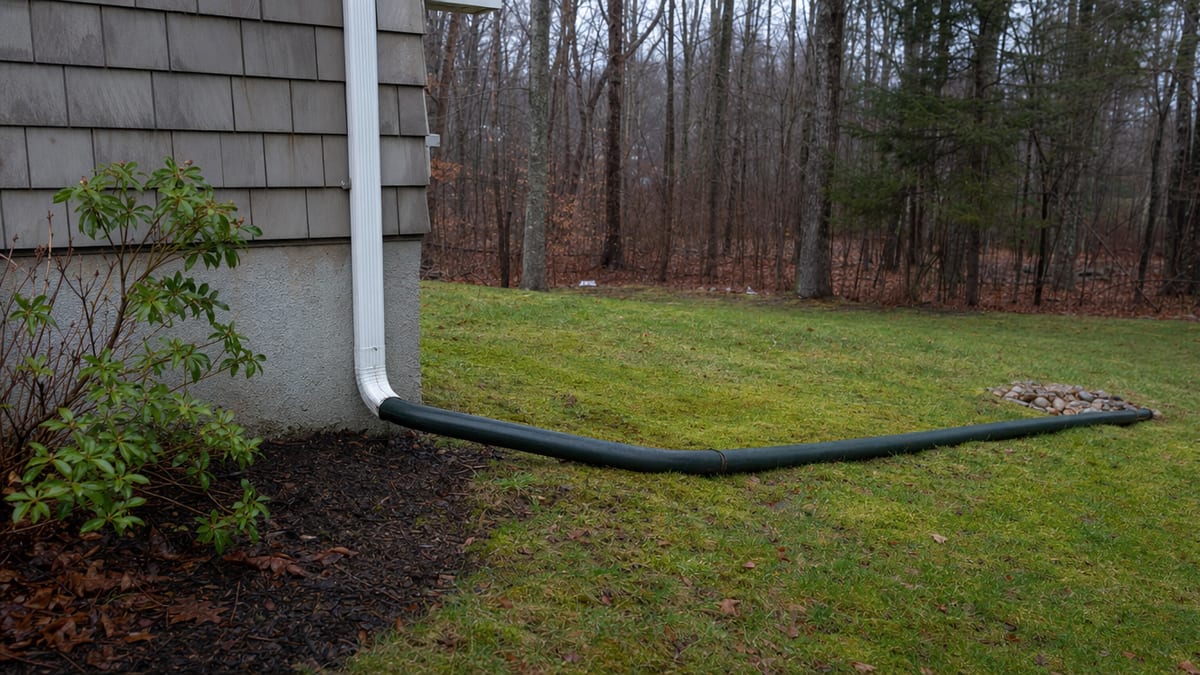
You have watched it happen from a window during a heavy rain. Water sheets off the roof, fills the gutter, and then pours out near a corner of the house and pools right against the foundation. Maybe there is already a damp patch in the basement, a soggy spot in the lawn, or a downspout that dumps water two feet from the wall. You bought an extension at the hardware store, snapped it on, and the problem is still there. Downspouts and extensions in Brookfield CT are the last stage of the roof drainage system, and they are the stage that actually decides whether all that water helps or harms your home. Gutters can collect water perfectly and still fail to protect the house if the outlets clog, the downspouts are undersized, the extensions are too short, or the discharge lands in the wrong place. This article explains how the whole system works, the surface and buried options, what Brookfield's terrain adds to the picture, and what moves the cost, so you can fix the real problem instead of the symptom.
Key Takeaways
Downspouts finish what gutters start
Gutters alone do not protect a foundation; the water has to be carried well away from the house, which is the job of the downspouts, extensions, and where they discharge.
Where the water ends up is the whole point
Discharge should continue away from the building without pooling at the foundation, eroding soil, or icing a walkway, and it should never be tied into a foundation drain.
Brookfield sites are not interchangeable
Wooded lots, slopes, ledge, wells, septic systems, wetlands, and lake proximity all change the right design, so a good plan starts with your specific property.
Downspouts Finish the Job Gutters Start
A gutter's job ends the moment water reaches the outlet. From there, the downspout and its extension decide where thousands of gallons of roof runoff actually go. That is why a house can have brand new gutters and still have a wet basement: the water is being collected and then released right back against the foundation. Guidance on how a gutter and downspout system moves stormwater makes the point plainly, the collection and the discharge are two halves of one system.
In Brookfield, the discharge half is often the weak link. Roof runoff that lands beside the wall saturates the soil, and saturated soil against a foundation is how water finds its way inside. The fix is rarely a longer splash block alone. It is a downspout system sized for the roof and an extension or buried line that carries the water to a spot where it can leave the property safely.
Warning Signs Your Drainage Is Failing
Drainage problems announce themselves if you know where to look, and catching them early keeps a nuisance from becoming a foundation repair. Some signs are at the downspout, and some show up in the basement or the yard. If several of these sound familiar, your downspouts and extensions are worth a closer look.
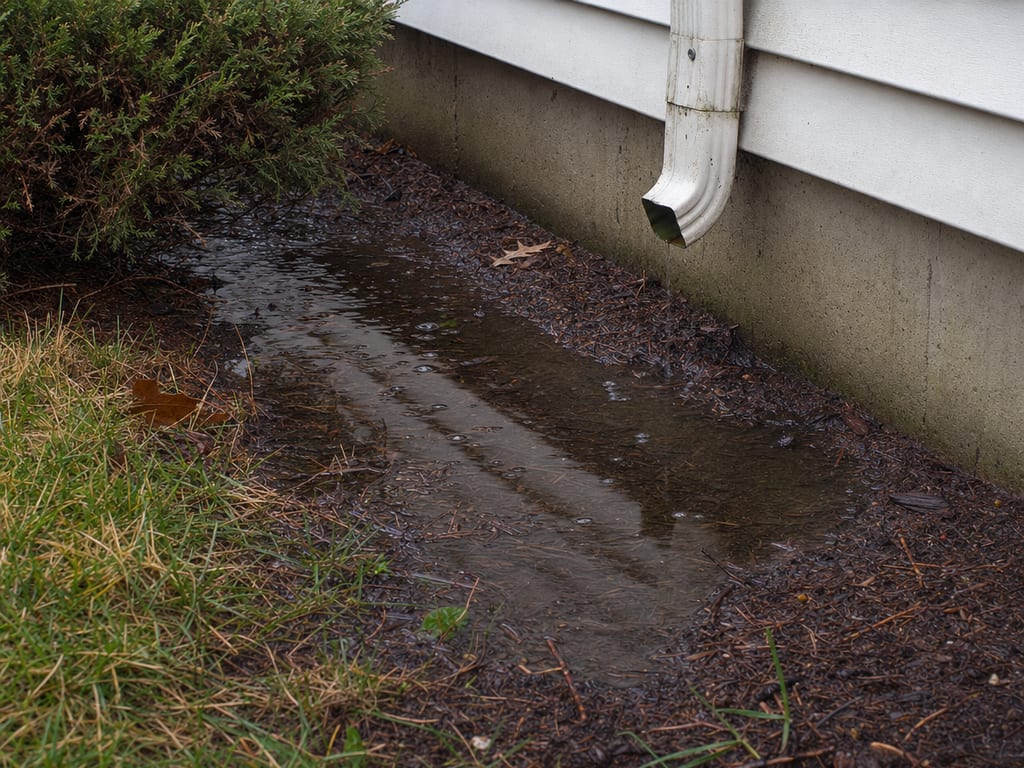
- Water pooling near the foundation after rain: The clearest sign the discharge is landing too close to the house.
- Basement dampness or water staining: Interior moisture that follows heavy rain often traces back to roof runoff at the wall.
- Gutter overflow during storms: Clogged outlets or undersized downspouts back water up until it spills.
- Soil erosion, mulch washout, or ruts: Concentrated discharge cutting channels in the yard.
- Ice or algae on nearby walkways: Water discharging onto a path in a cold climate is a slip hazard as well as a drainage clue.
- Crushed, disconnected, or missing extensions, or a buried line that backs up: The parts that carry water away have failed or were never adequate.
Getting the Downspout System Sized Right
Before you decide where to send the water, the downspouts themselves have to be able to move it. This is the part homeowners skip and installers sometimes do too. A downspout cannot fix a gutter that is undersized, poorly pitched, or clogged, and a single small downspout cannot drain a long run fed by a steep valley. Sizing the system means matching a few things to your actual roof.
- Roof area and where runoff concentrates: Valleys funnel a lot of water to a few feet of gutter, and that section needs enough outlet and downspout capacity.
- Number and size of downspouts: More or larger downspouts move water out faster, which prevents the overflow that undersized systems produce.
- Outlet placement and gutter pitch: Outlets in the right spots and a gutter sloped correctly keep water flowing to the downspouts instead of standing.
Because good downspouts depend on a sound gutter system, the two are best planned together. If your gutters are also failing, pairing this work with proper gutter installation fixes the collection and the discharge at the same time.
Surface Extensions: Simple, Visible, and Limited
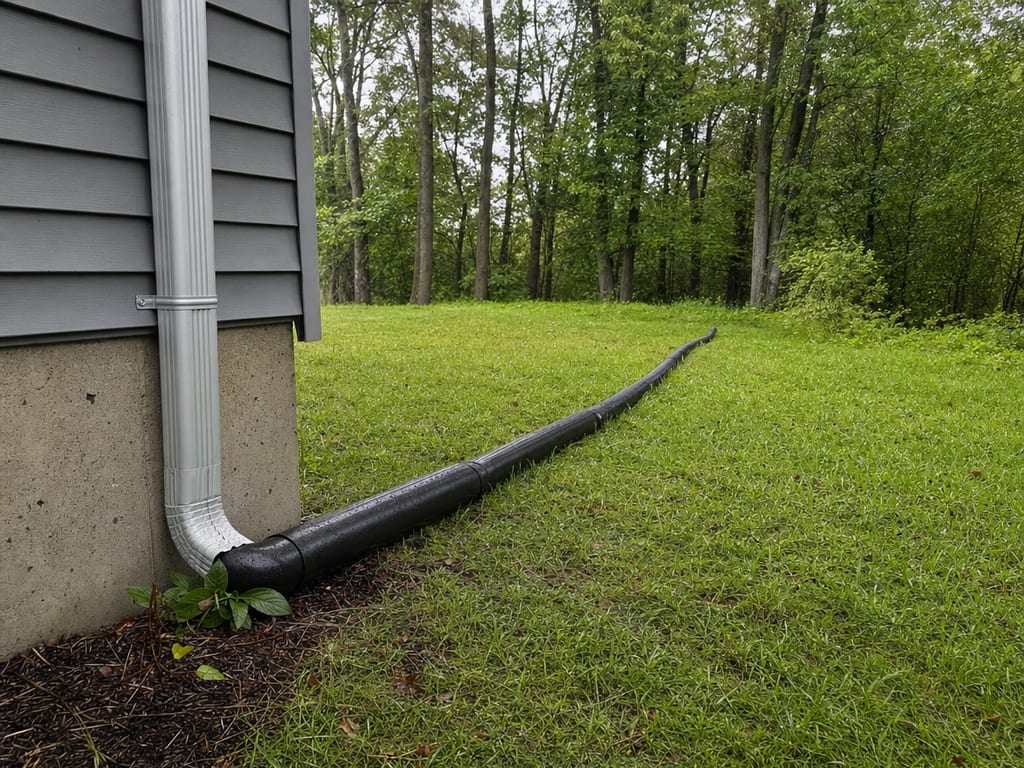
The simplest way to move water away from the house is a surface extension on the end of the downspout. These are affordable and easy to adjust, and for many homes they are enough. Their limits are that they are visible, they can be tripped over or hit by a mower, and they only carry water as far as they physically reach. Here are the common surface options.
- Rigid extensions: A solid length of pipe that carries water several feet from the wall to better soil or grade.
- Hinged or removable extensions: Pieces that flip up or detach for mowing, then return to position.
- Splash blocks: A shaped block that spreads and directs discharge, best combined with an extension rather than used alone.
Surface options work well when the ground slopes away from the house and there is somewhere safe for the water to go. When the yard is flat, the discharge point is too close to a walkway, or the look of pipes on the lawn is a problem, a buried line is usually the better answer.
Buried Downspout Lines: Out of Sight, Done Right
A buried downspout line carries water underground from the downspout to a discharge point away from the house. Done correctly, it is invisible and effective. Done poorly, it clogs, holds water, and becomes a hidden problem. The difference is in the details, and a proper buried system includes several of them.
- Solid pipe on a continuous slope: A smooth-walled pipe pitched to drain fully, so nothing sits and freezes.
- Cleanouts and accessible fittings: Access points that let the line be inspected and cleared, because any buried line eventually needs maintenance.
- A known discharge outlet: A daylight outlet where the ground opens up, a pop-up emitter that lifts under flow, or a catch basin, each chosen for the site.
- Erosion protection at the outlet: Stone or a splash area so the exiting water does not carve a channel.
- Respect for what is underground: Utilities, septic systems, wells, and wetland setbacks all constrain where a line can run and discharge.
How Downspouts Fit Into Foundation Drainage
Downspouts are one piece of a larger picture that includes grading and soil. Keeping a foundation dry depends on all three working together: the roof water carried away by downspouts, the ground sloped to fall away from the house, and soil that drains rather than holds water against the wall. The EPA's guidance on managing rain where it falls, part of its soak up the rain resources, and FEMA's advice on protecting a home from water both point to directing roof runoff away from the foundation as a first step.
One rule is worth stating clearly: roof runoff should not be routed into a foundation drain. Building science guidance on keeping foundation drains and downspouts separate explains why. A foundation drain is meant to relieve groundwater around the footing, and dumping a roof's worth of storm water into it can overwhelm the very system protecting the basement. When downspout work alone does not solve a persistent wet basement, that is the signal to bring in a broader drainage or foundation evaluation rather than to keep adding pipe.
Permits, Wetlands, and Digging Safely in Brookfield
A surface extension is a simple project, but buried lines and drainage changes can trigger review, and Brookfield has specific rules worth knowing before you dig. Simple downspout work differs from excavation, work near wetlands, or connections to drainage systems. Brookfield's Building Department can confirm what a given project needs, and the town's Inland Wetlands Commission governs work near wetlands and watercourses, which matter on many wooded and lakeside lots here.
There are practical limits too. Discharge should not be aimed at a road or a neighbor's property, floodplain and easement areas add constraints, and the town's stormwater rules shape where water can go. Before any excavation, a utility markout is essential so digging does not strike a buried line. A contractor who works in Brookfield regularly handles these steps as part of the job rather than treating them as your problem.
What Drives Downspout and Extension Cost
There is no honest flat price for drainage work, because downspout extension cost in Brookfield Connecticut depends almost entirely on design and site conditions. A pair of surface extensions is a small job; a buried system across a wooded, sloped lot with ledge is a much larger one. The table below shows what moves the number so you can compare written scopes.
What Moves the Price of Downspout and Extension Work
Each downspout that needs an extension or buried line adds material and labor.
Tap a factor to see how it moves the price.
Because so much depends on the site, the fair way to price drainage work is a look at the property and a written scope that names the discharge plan. That protects you from a cheap fix that just relocates the puddle.
How a Downspout Installation Goes
A well-run project starts by understanding the whole system, not just the one downspout dripping at the corner. The contractor inspects the existing gutters, downspouts, grading, and where water is going now, then identifies why the current setup fails. From there they plan the discharge: how far the water needs to travel, whether surface extensions or a buried line fits the site, and where the outlet can safely release.
Once the plan and any needed permits are in place and utilities are marked, the crew corrects any gutter or outlet problems, installs the extensions or buried pipe on a continuous slope, sets the outlet and erosion protection, and tests the flow in the rain or with a hose. The final step restores the lawn or hardscape and shows you where the cleanouts and outlet are, so the system can be maintained. Done in that order, the water is actually carried away, not just moved a few feet.
Choosing a Contractor Who Treats Drainage as a System
The right contractor for downspouts and extensions talks about where the water ends up, not just the pipe on the wall. Ask how they plan to move the discharge away from the foundation, whether the site calls for surface or buried lines, and how they will keep roof runoff out of any foundation drain. An installer who answers those questions is solving a drainage problem. One who just wants to add a longer extension is treating the symptom.
Credentials are easy to verify. Look for a licensed and insured contractor; in Connecticut that includes a Home Improvement Contractor registration, and ours is CT HIC #0633301. Because downspouts tie into the gutters and the roof edge, working with a team that also handles roofing and roof repair means the collection and discharge are coordinated by one accountable crew.
Common Drainage Mistakes to Avoid
Most drainage failures come from a short list of shortcuts, and knowing them helps you spot a fix that will not last.
- Discharging right beside the foundation: The single most common cause of a wet basement.
- A buried line with no slope or cleanouts: It holds water, freezes, and clogs with no way to clear it.
- Routing roof runoff into a foundation drain: Overwhelms the system meant to keep the basement dry.
- Extensions too short to reach safe grade: Water travels a few feet and then soaks right back toward the house.
- No erosion protection at the outlet: The exiting water carves a channel and moves the problem downhill.
- Ignoring wetlands and utility rules: Digging without markout or review invites damage and violations.
Frequently Asked Questions About Downspouts and Extensions in Brookfield, CT
Why is my basement still damp after I added downspout extensions?
Usually because the extensions are too short or the discharge still lands close to the house. Water needs to be carried far enough that it drains away from the foundation instead of soaking back toward it. If the problem persists after proper extensions, a broader drainage evaluation may be needed.
Are buried downspout lines better than surface extensions?
Not automatically; each fits different sites. Surface extensions are simple and cheap and work well when the ground slopes away. Buried lines are better when the yard is flat, the discharge point is far, or visible pipes are a problem, but they require slope, cleanouts, and a known outlet to work long term.
Can I connect my downspouts to my foundation drain?
No. Roof runoff should be kept out of foundation drains, which are meant to handle groundwater around the footing. Sending storm water into them can overwhelm the system and make a basement moisture problem worse.
Do I need a permit for downspout or drainage work in Brookfield?
It depends on the scope. Surface extensions usually do not, but excavation, work near wetlands or watercourses, or connections to drainage systems can require review. Brookfield's building and inland wetlands offices confirm what a project needs, and a good contractor handles that.
What affects the cost of downspout and extension work?
The number of downspouts, whether the lines are surface or buried, pipe length and diameter, digging conditions like rock and ledge, the outlet type, any gutter corrections, and lawn restoration. Because so much depends on the site, an honest price follows an inspection.
Where should downspout water finally discharge?
Somewhere it can leave safely, away from the foundation, walkways, and your neighbor's property, and not toward a road. That may be a daylight outlet on a slope, a pop-up emitter in the lawn, or a catch basin, chosen for your specific site and protected against erosion.
Quick Downspout and Drainage Knowledge Check
1. What is the main job of downspouts and extensions?
2. Why can a basement still be damp after new gutters are installed?
3. Should roof runoff be routed into a foundation drain?
4. What does a buried downspout line need to work long term?
5. Before excavating for a buried line in Brookfield, what step is essential?
Final Thoughts
Downspouts and extensions are the quiet, unglamorous end of the roof drainage system, and they are the part that actually protects your foundation. Gutters can be perfect and the basement can still flood if the water is released in the wrong place. Getting it right means sizing the downspouts for your roof, carrying the discharge far enough away, keeping roof water out of any foundation drain, and respecting the terrain, wetlands, and utilities that make every Brookfield lot a little different.
Handled correctly, a good drainage plan quietly moves thousands of gallons off your roof and away from your home through every storm, protecting the foundation, the yard, and the exterior work you have already invested in. The money is well spent when the water actually leaves, instead of circling back to the wall.
If water is pooling at your foundation or your basement gets damp after every rain, we can help you design drainage that fits your property. American Quality Roofing and Siding has served Brookfield, CT and the surrounding Central and Western Connecticut area since 2006, and we handle downspouts, extensions, gutters, roofing, and the grading and roof-edge details that tie them together. We are licensed and insured, CertainTeed ShingleMaster PRO certified, and hold an A+ BBB rating and CT HIC #0633301. Call us for a free, no-pressure estimate, and we will plan a system that carries the water where it belongs.
Serving Brookfield, CT
This guide is part of our exterior work in Brookfield. See our roofing contractor services in Brookfield, CT.
Written by Jose Zaruma, American Quality Roofing and Siding.
← Back to the blog