Roofing Guide
Clapboard Siding on Older CT Homes: Repair or Replace?
By Jose ZarumaPublished
- siding
- siding repair
- siding materials
- connecticut
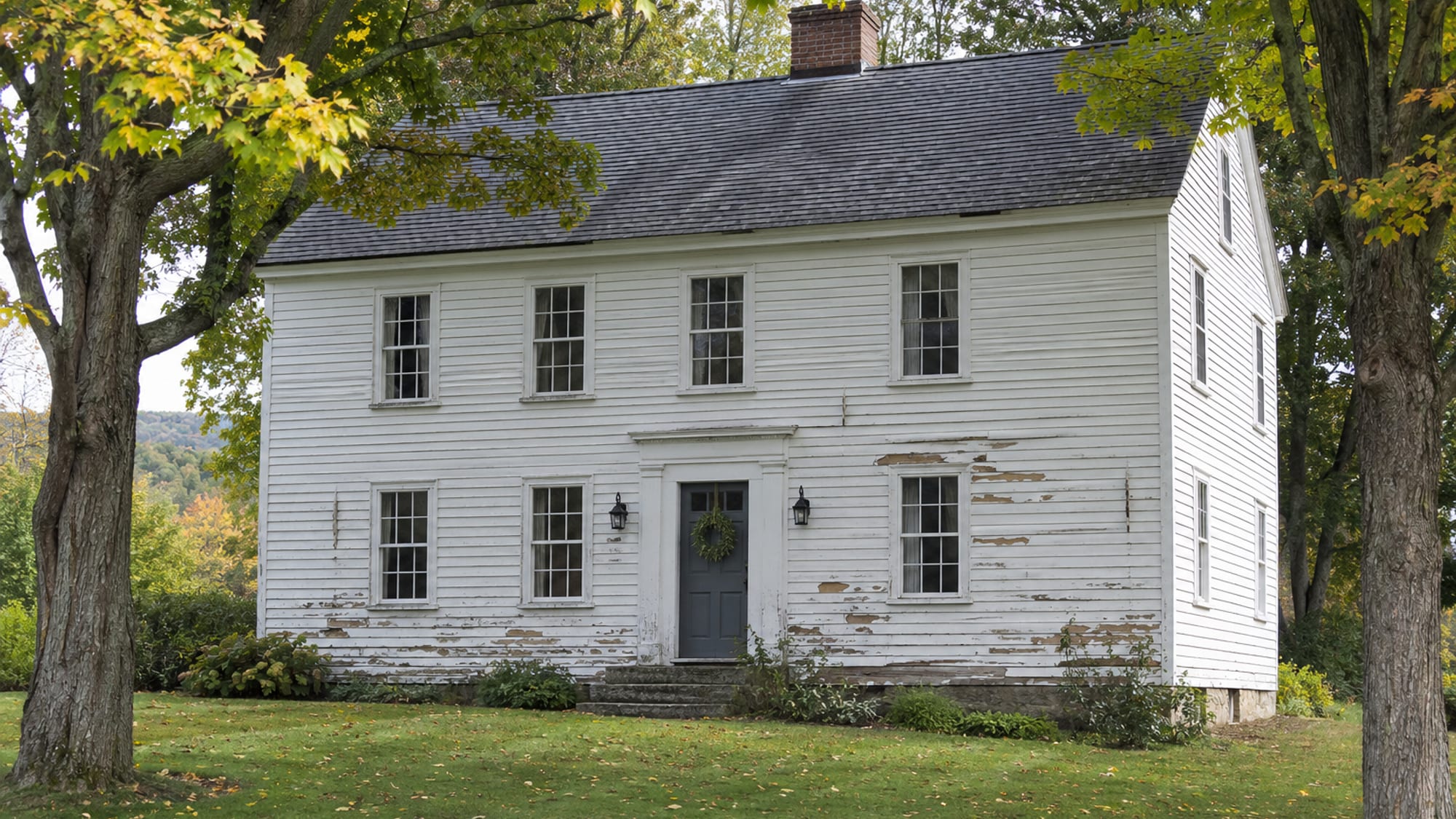
Peeling paint and a few split boards on an older Connecticut house usually call for repair and repainting, not new siding. Rot in one area means replacing those boards, and rot across a whole wall is when residing starts to make sense.
Two things can change the job before anyone picks up a scraper. If the house was built before 1978, paid work that disturbs the paint falls under an EPA lead rule. If the house sits in a local historic district, you may need town approval even when no building permit is required.
A walk around the house with your phone, one call to the town and a look at the year the house was built will settle most of it. After that, you can compare bids on equal terms and know which questions to ask.
Key Takeaways
Limited peeling and a few split boards usually suit repair and repainting; rot in one area calls for new boards, and rot across a wall points to residing.
A house built before 1978 may have lead paint, and paid work that disturbs painted siding falls under the EPA lead renovation rule.
In a local historic district, a certificate of appropriateness is required whether or not a building permit is, and many districts restrict substitute materials.
A repair bid and a full-residing bid are only comparable when they carry the same written scope, including substrate repairs, trim, flashing, disposal and lead-safe controls.
Should You Repair, Replace Boards or Re-side an Older Connecticut House?
The decision is rarely "wood versus vinyl." It comes down to whether the boards you have are still sound, whether moisture caused the damage, whether the house has historic character that must be kept, and whether the work will disturb old paint. Start with the damage, because it points to the scale of the job. For siding of any material, our guide to siding repair versus replacement walks through the same decision.
Which Path Fits the Damage on Your Clapboard
Repair and repaint
Tap a factor to see how it moves the price.
Replacing a section has a side benefit. With the old boards off, a contractor can look at the sheathing, housewrap, flashing and framing behind them, which is hard to judge from the outside. A full re-side does that for the whole house, and it is also the point where some owners choose a different material.
How Do You Read Peeling Paint, Split Boards and Rot on Clapboard?
Clapboard is a set of narrow horizontal boards that overlap, with the lower edge of each board thicker than the upper edge so water runs off over the course below. On older houses the exposure, the visible face of each board, often runs roughly 4 to 6 inches, though the profile and thickness vary by period and house. Historic New England notes that wood frames covered in clapboard are common across Connecticut and coastal New England, from colonial houses through Colonial Revival and Victorian homes.
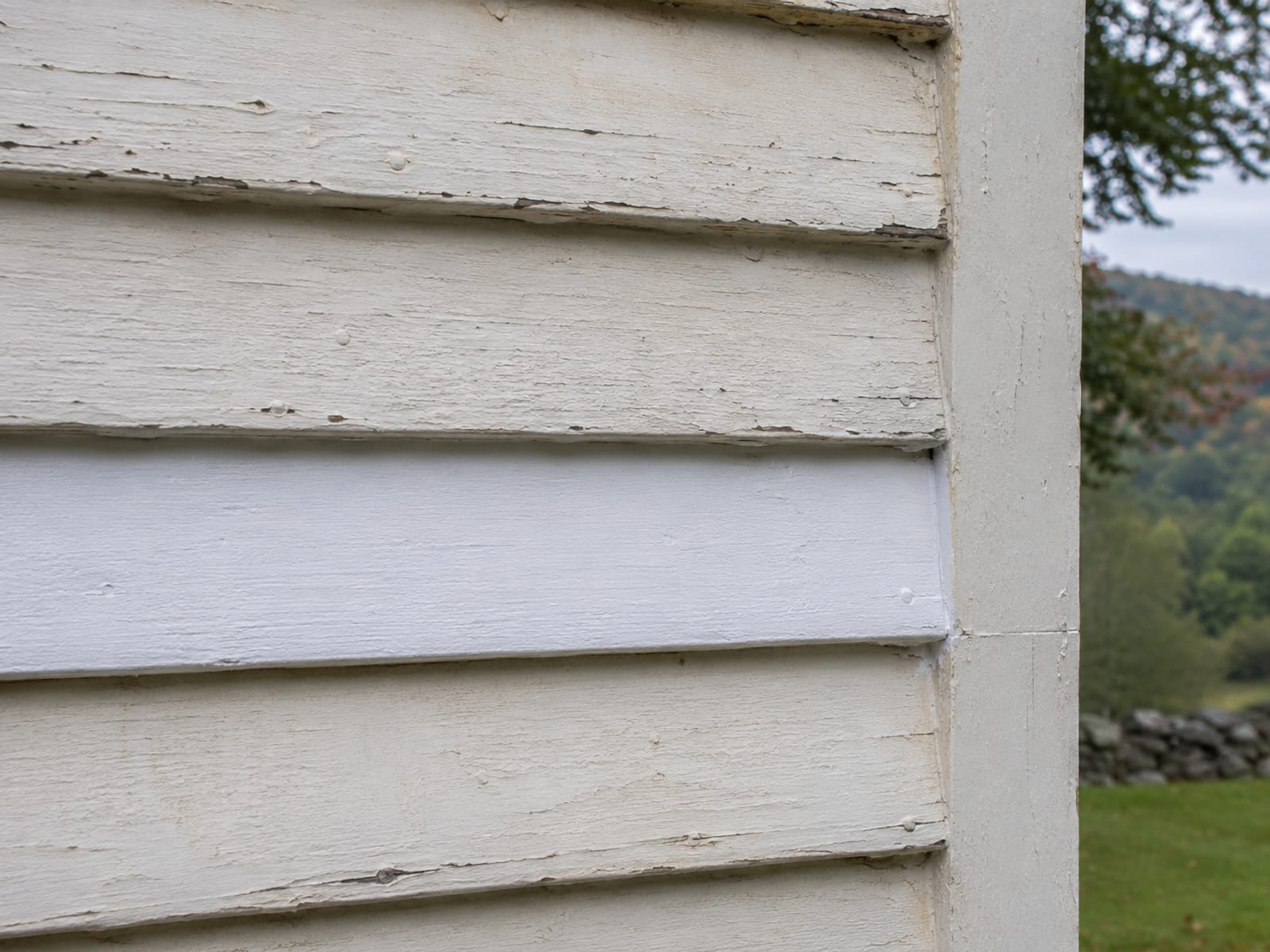
Paint failure and wood damage usually travel together. The National Park Service's Preservation Brief 10 links failing paint to moisture getting in, poor surface preparation, too many paint layers and exposed end grain, and says deteriorated wood should be repaired or replaced before repainting. Paint over a soft board and the new coat peels again.
From the ground, look at the places water tends to sit or run:
- The bottom courses and the butt ends of boards, where wood can feel soft when you press it
- Window sills, corners and areas near porches and decks
- Boards below gutters, valleys and dormers
- Cupped or bowed boards, long splits and open joints
- Dark staining or mold that returns after cleaning
Photograph every side of the house and close up the worst spots, and note failed caulk, exposed nails and gaps around openings. Those photos help a contractor give you a useful estimate, and they help you compare what each one says about the same wall. If damage clusters under a roof edge or valley, the cause may be runoff, and a gutter fix or a roof repair may need to come before the siding work.
What Does the Work Look Like From Inspection Through Finish Paint?
A repair job starts by finding why the wood got wet, because boards replaced without fixing the source will fail again. After that, loose paint comes off, and on a pre-1978 house that step follows lead-safe rules (covered below). Failed fasteners and caulk are replaced, small defects are patched where the wood allows it, and sound wood is primed and repainted.
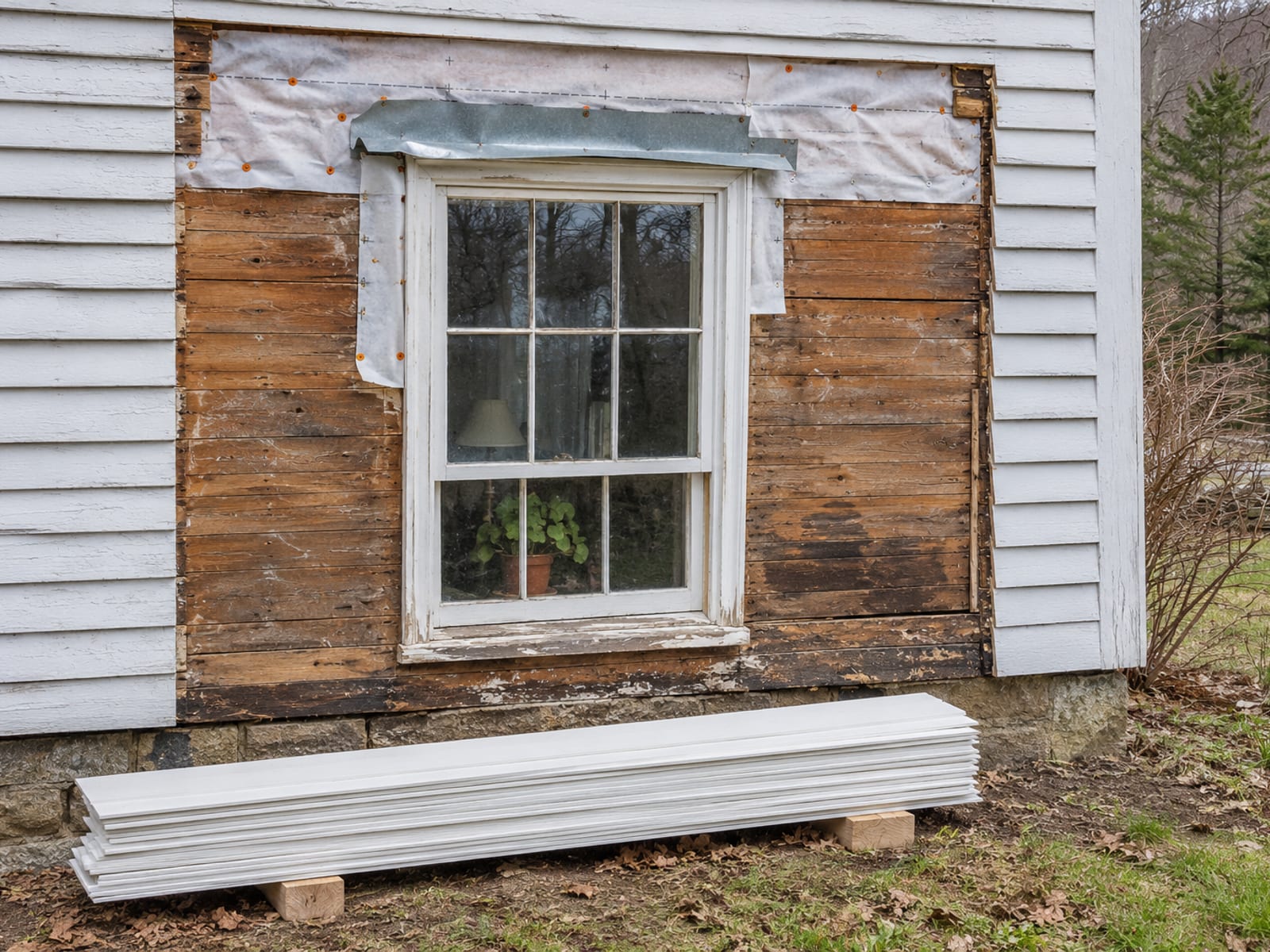
A full re-side is a larger project. It commonly includes removing existing siding in whole or in part, checking the sheathing, replacing damaged substrate, installing or repairing the water-resistive barrier and flashing, trim work, the new siding, and a final coating or a factory finish. Each step is a line a written proposal should name, because each one carries labor and material cost.
Timing matters too. Ask any contractor how the job will be scheduled around Connecticut's seasons, what protects an open wall if the weather turns, and when the finish coat will go on.
Vinyl, Fiber Cement, Engineered Wood or New Wood Clapboard: How Do They Compare?
All four can give the look of horizontal lap siding. If you are weighing the two most common replacements, see our comparison of fiber cement and vinyl siding. They differ in weight, upkeep, how closely they match old clapboard and what a historic commission will accept. The manufacturer's installation instructions control clearances, fastening, flashing and warranty for each product, so ask which instructions the installer follows.
Four Clapboard-Look Materials Side by Side
Closest match in look and material to historic siding when the original profile can be copied; needs repainting and moisture management over time
Tap a factor to see how it moves the price.
On price, published figures are national, not Connecticut bids. The 2025 Cost vs. Value report listed national project costs of $17,950 for vinyl and $21,485 for fiber cement, each with its own assumptions.
Those numbers show how the materials compare, not what your house will cost. Wall area, stories, porches, dormers, rot behind the siding, flashing corrections, lead-safe controls and historic review all move the total. Repair and board replacement on painted wood are priced from the actual wall, so a written, site-specific estimate is the only reliable figure.
Historic New England's homeowner primer says many historic districts do not allow substitute materials such as vinyl or composite fiber cement on historic houses. The local commission decides, so check before you order anything.
What Do Connecticut Permits, Weather and Older Housing Mean for Siding Work?
Connecticut's current State Building Code is the 2022 code, based on the 2021 International Codes including the International Residential Code, and it applies to permit applications filed from October 1, 2022, according to the state building code page. Permits are handled by your town's building official, so the answer for your house comes from your town.
The Department of Consumer Protection says many home improvement projects need a town building permit, that the permit must be in hand before work begins, and that the homeowner is ultimately responsible for confirming it is in place, on its building permit guidance. Several towns list siding work by name. Greenwich lists re-siding for one- and two-family homes, East Haven lists siding installation, and Glastonbury lists new siding. Call your building department, describe the job, and ask who pulls the permit.
Weather is the reason siding takes a beating here. NOAA's 2023 climate summary for Hartford Bradley Airport describes strong, persistent northeast winds when storms move up the coast, summer thunderstorms with wind and hail, and winter rain that can freeze into hazardous ice. The station's 1991 to 2020 climate normals give rainfall and snowfall for one inland location, not a statewide average.
The year your house was built matters for the next question. You can find it in the town assessor's records or your deed.
What Do Lead Paint Rules and Historic-District Approval Require Before Work Starts?
Homes built before 1978 may contain lead-based paint, and the EPA says renovation, repair or painting that disturbs painted surfaces can create dangerous lead dust. For paid work on a pre-1978 house, the EPA's lead renovation rule generally requires an EPA-certified firm, workers trained by a certified renovator, pre-renovation education for owners, and containment, dust control, cleaning and recordkeeping. The EPA administers the program in Connecticut, as the Department of Public Health explains.
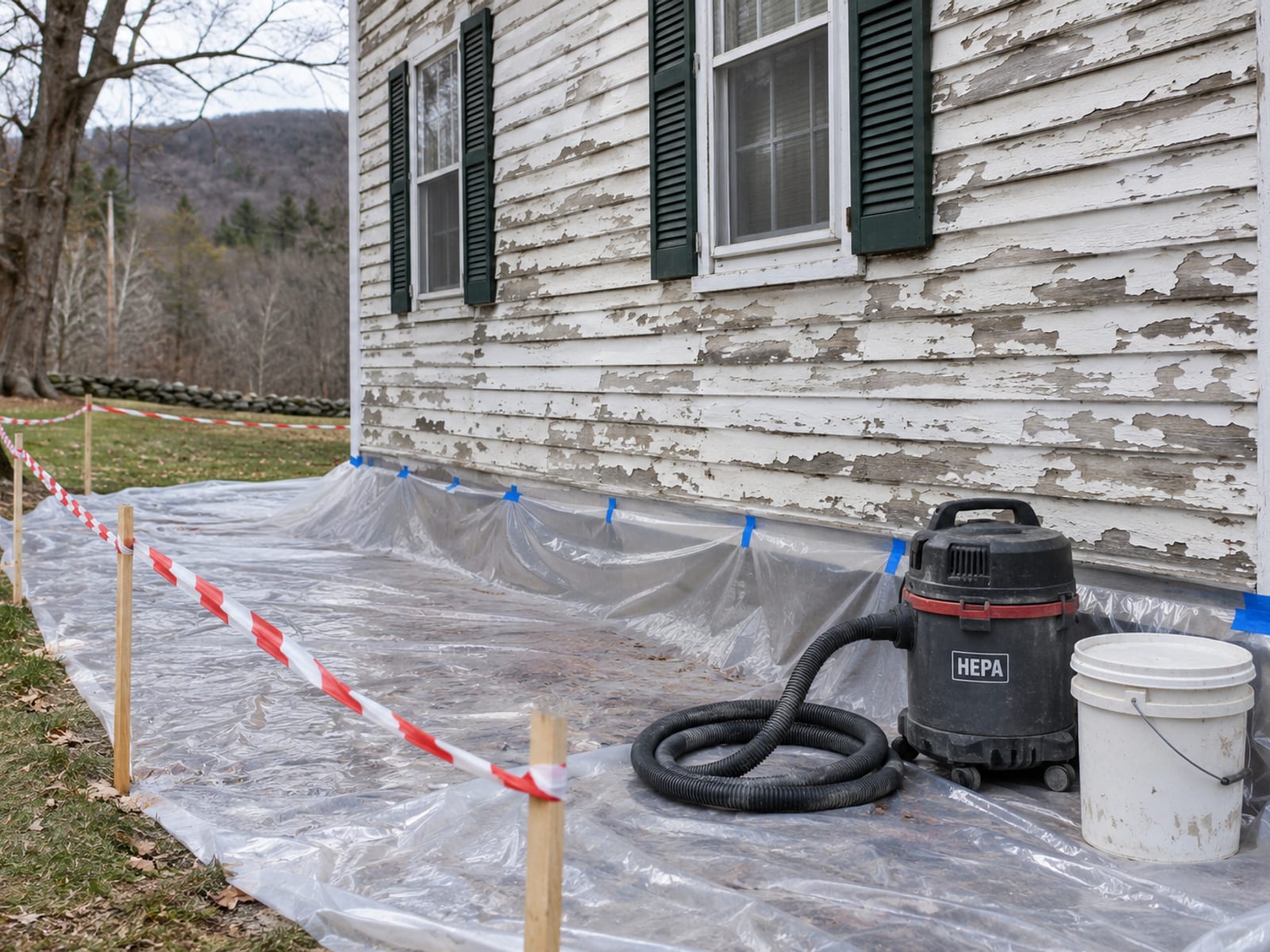
Connecticut's Department of Public Health advises against dry scraping or sanding painted surfaces and against power washing a pre-1978 house. It recommends wetting surfaces before disturbing paint and using barriers to control chips and dust, in its guidance for homeowners. If you plan to hire for this work, hire a firm certified for lead-safe renovation, and leave the scraping to them.
Historic districts add a separate approval. The State Historic Preservation Office reports 126 local historic districts containing 8,128 buildings, plus 92 individual properties, across 72 Connecticut municipalities. Under Chapter 97a of the General Statutes, a building in a local historic district cannot be altered on the exterior until a certificate of appropriateness is approved. That certificate is required whether or not a building permit is, and the commission generally must act within 65 days of filing.
To find out whether your house is covered, check your town's planning, zoning or historic-preservation page, ask the town clerk for district maps, and ask whether the property is individually designated. A National Register listing alone does not necessarily bring local commission review. Westport's certificate of appropriateness page shows what one town's application looks like.
How Do You Vet a Connecticut Siding Contractor and Read the Contract?
Siding, roofing and painting count as home improvement work in Connecticut, so a contractor doing it for a homeowner must be registered with the Department of Consumer Protection. You can check a registration through the state's home improvement contractor licensing page, and you should ask to see the registration card. The department's pre-hire checklist also tells you to ask for proof of current insurance; registered contractors must carry at least $20,000 in general liability coverage.
The contract is the main protection you have. Under the state's guidance on working with a home improvement contractor, it must be written, signed and dated. It has to identify the contractor and the HIC registration number, describe the work and materials, give start and completion dates, state who is responsible for permits, and include your three-business-day right to cancel.
For an older clapboard house, add what the state form does not spell out. Ask for references from comparable older-home or wood-repair jobs, the exact material brand and profile, and the payment schedule. Get every change in writing. On a pre-1978 house, ask for the firm's EPA lead-safe certification and the name of the certified renovator supervising the job.
Then put your bids side by side on the same scope. A low price that leaves out substrate repairs, trim, flashing, disposal or lead-safe controls is a different job, not a better deal. A good proposal also explains how hidden rot found behind the siding will be documented and priced before extra work begins. If you are comparing a repair with a full re-side, ask for both written the same way.
How Do You Keep Repaired or New Siding Dry and Serviceable?
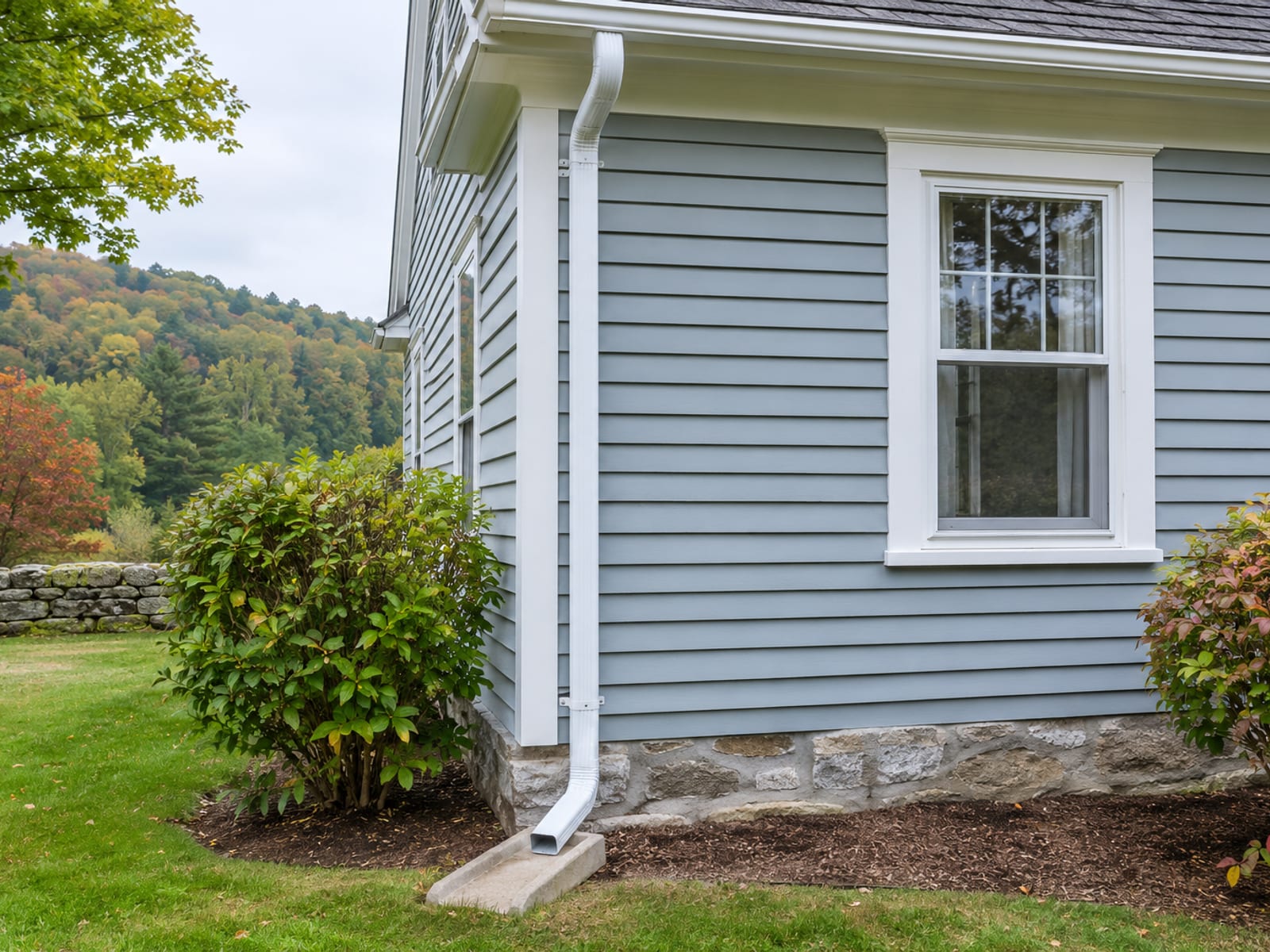
Water is the main enemy of any siding, so the habits that protect it are the same whichever material you choose. Keep gutters and downspouts clear and pointed away from the wall, keep caulk and flashing intact at windows, doors and roof edges, and trim back plants that hold moisture against the boards. A leak at a valley or roof edge can rot siding below it, which is why the roof sometimes belongs in the same conversation as the siding.
Vinyl needs room to move. Because panels expand and contract with temperature, the Vinyl Siding Institute installation manual says they must not be fastened tightly. For fiber cement, ask whether the installer will follow the manufacturer's current installation instructions, including weather barrier, flashing, fastening and clearances. For engineered wood, ask for the exact product, its installation guide, the finish warranty and the moisture details.
If you are leaning toward new siding, our siding installation page is the place to start, and an estimate request makes sense once you have your photos, your house's year and your town's answers in hand.
Frequently Asked Questions About Clapboard Siding in Connecticut
Can I just repaint peeling clapboard?
Often, yes, if the wood underneath is sound. Peeling paint over soft or rotted boards will fail again, so any damaged wood should be repaired or replaced first. On a house built before 1978, how the old paint is removed matters as much as the new coat.
How do I know if my clapboard has rot?
From the ground, look for soft or crumbling wood at the bottom courses, board ends, window sills and corners. Cupped boards, long splits, open joints and staining that comes back are other signs. A contractor can check the sheathing behind the boards, which you cannot see from outside.
Do I need a permit to replace clapboard siding?
It depends on your town and the scope of work. Several Connecticut towns list siding or re-siding as permit work, and the state says many home improvement projects need a permit that must be in hand before work begins. Call your building department before you sign.
Is there lead in the paint on my older house?
Homes built before 1978 may contain lead-based paint, and the EPA says disturbing it can create dangerous lead dust. Treat any pre-1978 painted surface as possible lead paint, avoid dry scraping, sanding and power washing, and hire an EPA lead-safe certified firm for paid work.
Can I put vinyl or fiber cement on a house in a historic district?
Not always. Many historic districts do not allow substitute materials on historic houses, and a certificate of appropriateness is required before exterior changes even when no building permit is. Get the local commission's requirements before ordering materials.
Is new wood clapboard better than vinyl or fiber cement?
It depends on what matters to you. New wood is the closest match to historic siding and may be the only option in a historic district, but it needs repainting and moisture care. Vinyl and fiber cement need less painting but follow their own installation rules.
What should a siding contract include in Connecticut?
The contractor's name and HIC registration number, a description of the work and materials, start and completion dates, who handles permits, and your three-business-day right to cancel. It should be written, signed and dated.
Quick Clapboard Siding Knowledge Check
1. A few split boards and limited peeling on an otherwise sound wall usually suit which path?
2. When rot is spread across a whole wall, which option usually makes the most sense?
3. Which paint-removal habit does Connecticut's health department warn against on a pre-1978 house?
4. In a local historic district, when is a certificate of appropriateness required for exterior changes?
5. What makes two siding bids comparable?
Final Thoughts
For an older Connecticut house, the damage sets the path: repair and repaint when the wood is mostly sound, new boards where rot is local, and residing when a wall has given out. The year the house was built and its historic status decide how the work has to be done, so check both before you hire anyone.
Taking those steps now protects the house behind the siding as well as the siding itself. You will go into every estimate knowing what a complete proposal includes and what a written contract must say.
If you want help sorting out the options for your house, we are American Quality Roofing and Siding, licensed and insured (CT HIC #0633301), serving Central and Western Connecticut from Brookfield since 2006. We handle siding along with roofing, gutters and painting, and we offer free estimates. Request a free estimate or call us, and bring your photos.
Written by Jose Zaruma, American Quality Roofing and Siding.
← Back to the blog