Roofing Guide
What the 25 Percent Roof Rule Means in Connecticut
By Jose ZarumaPublished
- roofing
- roof repair
- roofing permits
- connecticut
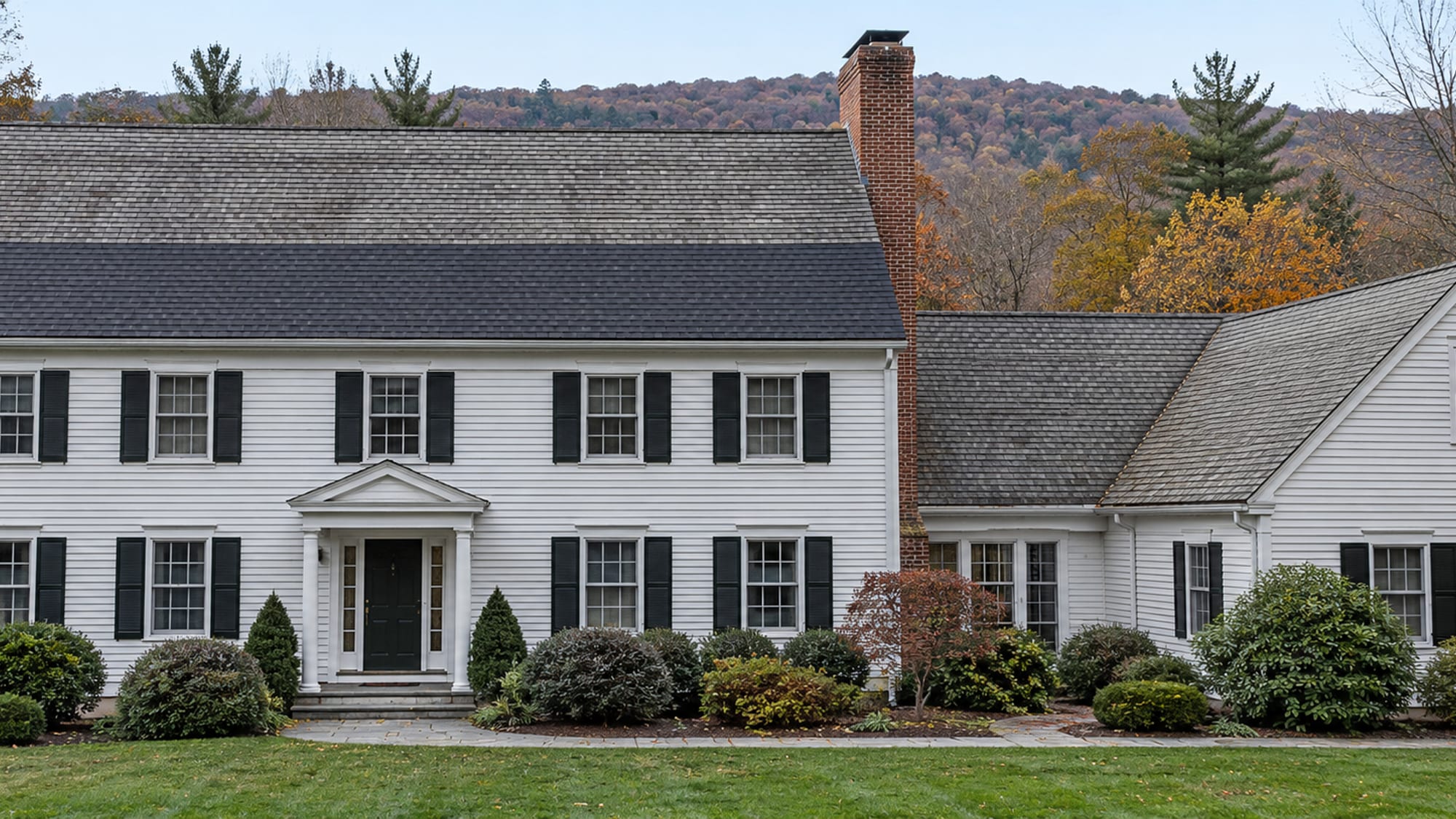
The 25 percent roof rule you keep running into online comes from Florida. Florida's building code limits how much of an existing roof can be repaired, replaced or recovered in a 12-month period before the whole roof section has to be brought up to the current code. Connecticut uses the same number for a different purpose.
Here, the 2022 Connecticut State Building Code exempts repairs limited to 25 percent of the roof covering and siding within one calendar year from the building permit requirement. A repair that touches a quarter of your roof does not mean the rest of the roof has to come off. It means the job has moved out of that permit exemption and into your town's normal permit process.
What actually settles repair or replacement is closer to home: how far the damage spreads, what the deck looks like, how many layers are on the roof, and whether new shingles can match the old ones.
Key Takeaways
Where it began
The widely searched 25 percent rule is a Florida Building Code reroofing provision, measured over 12 months.
The Connecticut version
The 2022 state code exempts repairs limited to 25 percent of roof covering and siding in one calendar year from a building permit.
Not a replacement order
Going past 25 percent takes the work out of the exemption; it does not require replacing the rest of the roof.
Insurance
For a covered loss, the Connecticut Insurance Department says the insurer must repair or replace the damaged portion to match adjacent items in a reasonably uniform appearance, and your policy decides what is paid.
Age is a factor, not a verdict
Extent of damage, decking, layers, matching and installation details settle the choice.
Know Where the Number Comes From Before You Compare Quotes
Most people hear the 25 percent figure from a neighbor, a forum thread or a roofer's offhand comment, and then it gets stretched to cover every state. The rule people are repeating is Florida Building Code section 706.1.1. As Florida's published code text reads, no more than 25 percent of the total roof area or roof section of an existing building may be repaired, replaced or recovered in any 12-month period unless the entire existing roofing system or roof section is replaced to meet the code.
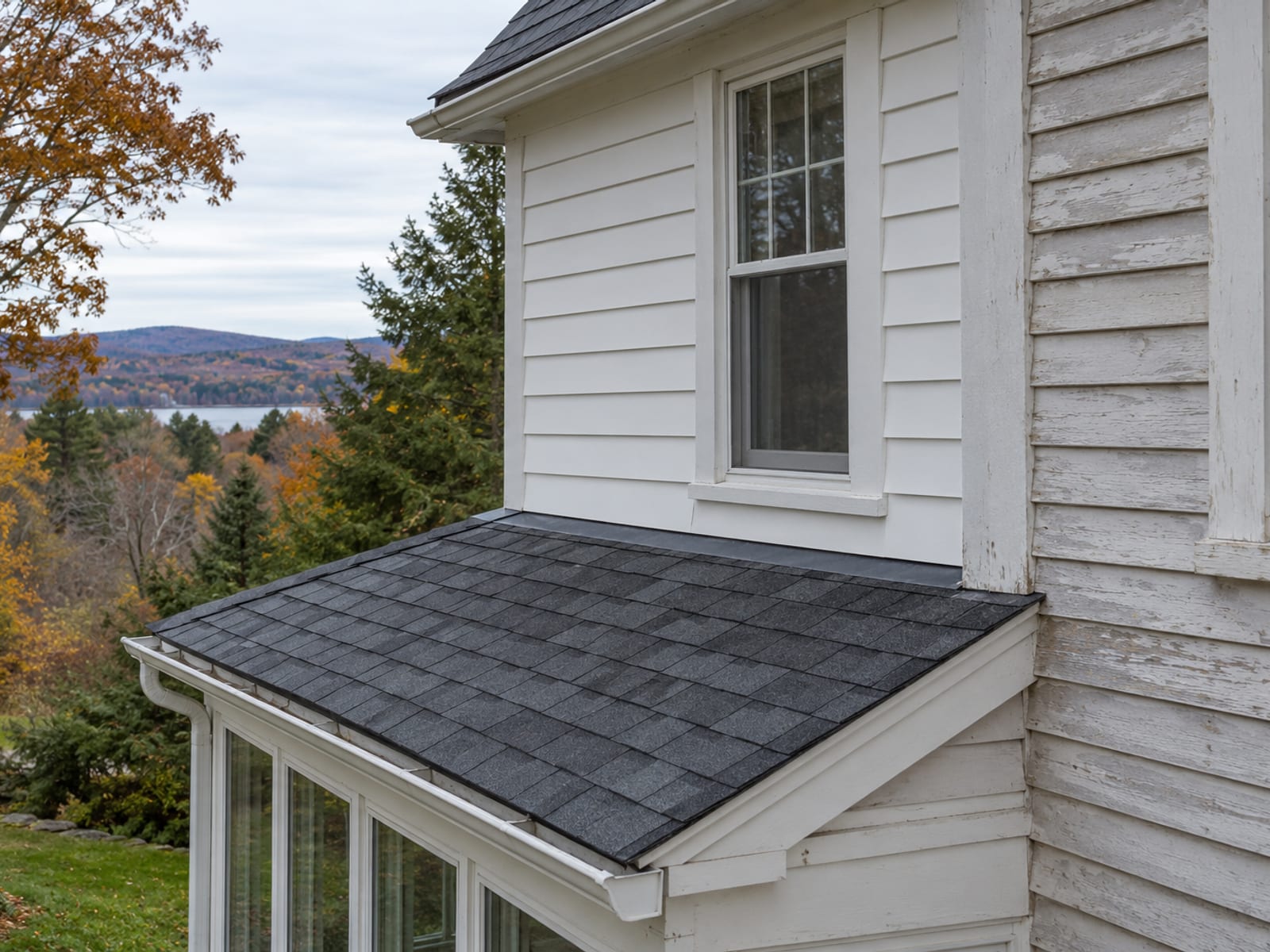
The Florida Provision and the Connecticut Provision
Florida Building Code: Roof area or roof section repaired, replaced or recovered
2022 Connecticut State Building Code: Roof covering and building siding repaired
Tap a factor to see how it moves the price.
Because the Connecticut provision sits in the list of permit exemptions, the practical question changes. Instead of asking whether you are allowed to repair more than a quarter of your roof, ask whether the job needs a permit, and what the town expects to see.
Find Out Whether Your Repair Needs a Permit in Your Town
The Connecticut provision is section R105.2, item 11, of the 2022 Connecticut State Building Code, which applies to permit applications filed on or after October 1, 2022. One- and two-family houses and townhouses within its scope follow the 2021 International Residential Code portion. The code also says that an exemption from permitting does not authorize work that violates the building code, other laws or local ordinances.
A full roof replacement normally needs a permit, because it is not a repair limited to 25 percent of the roof covering. Reroofing still has to meet the roof-assembly requirements for underlayment, roof-covering installation, flashing and ventilation, and local inspection rules apply on top of them.
Towns run this process themselves. Greenwich's building department lists repairs limited to 25 percent of roof covering and siding within one calendar year among its work exempt from building or trade permits. Tolland's roofing handout takes a different angle: it asks for the job cost, whether the roof is being stripped and the number of squares, and it lists in-progress and final inspections.
Towns can differ in paperwork and in how inspections are scheduled, so a phone call to your own building office gives the answer that counts. Ask whether your scope is exempt, who applies if it is not, and which inspections to expect. Our guide to roofing permits in Connecticut walks through the rest.
Decide Between a Repair and a Replacement With Facts About Your Roof
Age is the first thing most people think of, and it is only one input. The National Roofing Contractors Association (NRCA) says most new roofs are designed to give about 20 years of useful service, while slate, clay tile and some metal roofs can last longer. The same source says actual life depends on climate, design, materials, installation and maintenance. That figure is a general industry statement, not a promise about your house.
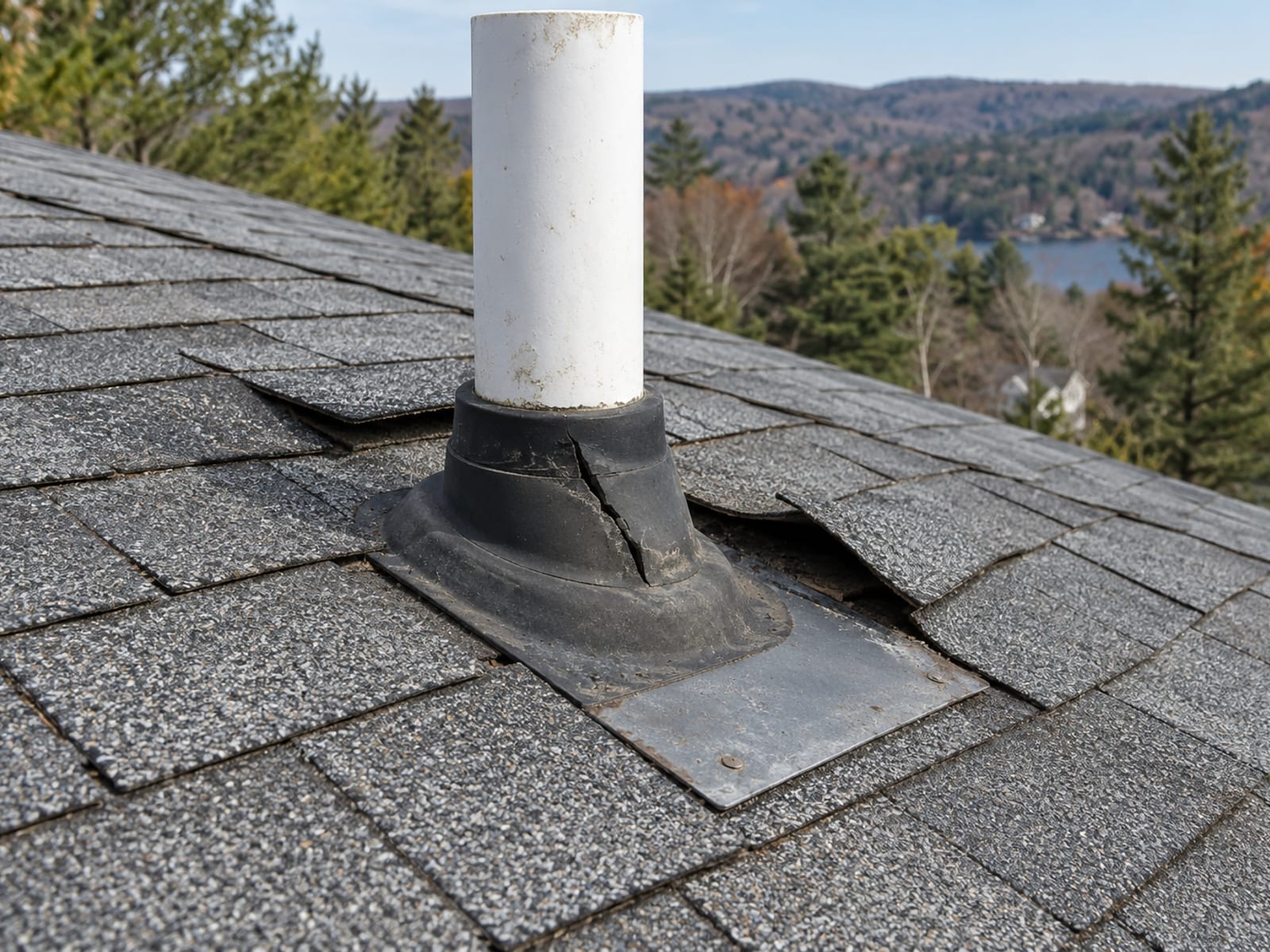
Signs That Point Toward Repair or Replacement
Repair
Tap a factor to see how it moves the price.
If the problem is a leak or a handful of shingles, our roof repair page covers leaks and small fixes. If the roof is failing everywhere, a roof replacement is the fix that lasts.
Spot What Is Under the Shingles Before It Changes the Price
Four things beneath the surface can swing the decision, and none of them shows from the driveway. The first is the deck. Soft, wet, rotted, sagging or poorly fastened decking may need to be removed and replaced before any new shingles go on, whether the job is a patch or a full roof.
The second is the number of layers. NRCA names complete tear-off and re-covering as the two basic reroofing options, and it says building codes commonly limit re-covering to one additional layer. Tolland's handout sets two layers of shingles as the maximum under its listed requirements. Every proposal you receive should state how many layers are on the roof now and what the crew plans to do about them.
The third is installation detail. Shingle manufacturers write the rules for fastening, underlayment, deck preparation, flashing and weather conditions, and a repair that skips them can cause trouble later. One Owens Corning shingle line's installation instructions, for example, require the existing roof to be removed before that product goes on.
The fourth is partial-plane work. When a crew replaces one roof plane, the new underlayment has to tie in at the hips and ridges. GAF's October 2024 technical bulletin calls for overlaps of 4 to 6 inches there, along with resealing or replacing shingles that get disturbed. A neat-looking patch can still be a poor one if that step is skipped.
Understand What Your Insurer Must Do About Matching Shingles
If your damage came from a storm, matching becomes an insurance question as well as a building one. The Connecticut Insurance Department's homeowner guidance says that for a covered loss, the insurer must repair or replace the damaged portion so it matches adjacent items in a reasonably uniform appearance. If the materials do not match in quality, color or size, the insurer replaces adjacent items with like kind and quality materials to reach that appearance.
Read that carefully. It describes a covered loss, and it is not a rule that every older roof must be replaced. The cause of the loss, the policy language, exclusions, your deductible, any depreciation terms and the facts of your claim all still control what is paid. If you think matching will be a problem, raise it with your adjuster early and ask for the answer in writing. For wind in particular, our page on whether to repair or replace a wind-damaged roof covers how that decision usually plays out.
Insurers also look at the roof when they write or renew a policy. The Insurance Department's February 2026 advisory says insurers commonly consider roof age and condition, missing, lifted, curled or cracked shingles, multiple layers, unrepaired damage, debris, moss and overhanging limbs. It adds that asphalt, wood, rubber and similar materials often carry eligibility limits commonly in the 15 to 20 year range. Those are common underwriting ranges, not a statewide replacement rule. A 2024 Insurance Department notice adds that cosmetic discoloration or streaking alone does not support nonrenewal, and that incomplete patching or tarping may support underwriting action.
Take These Steps Today and This Week
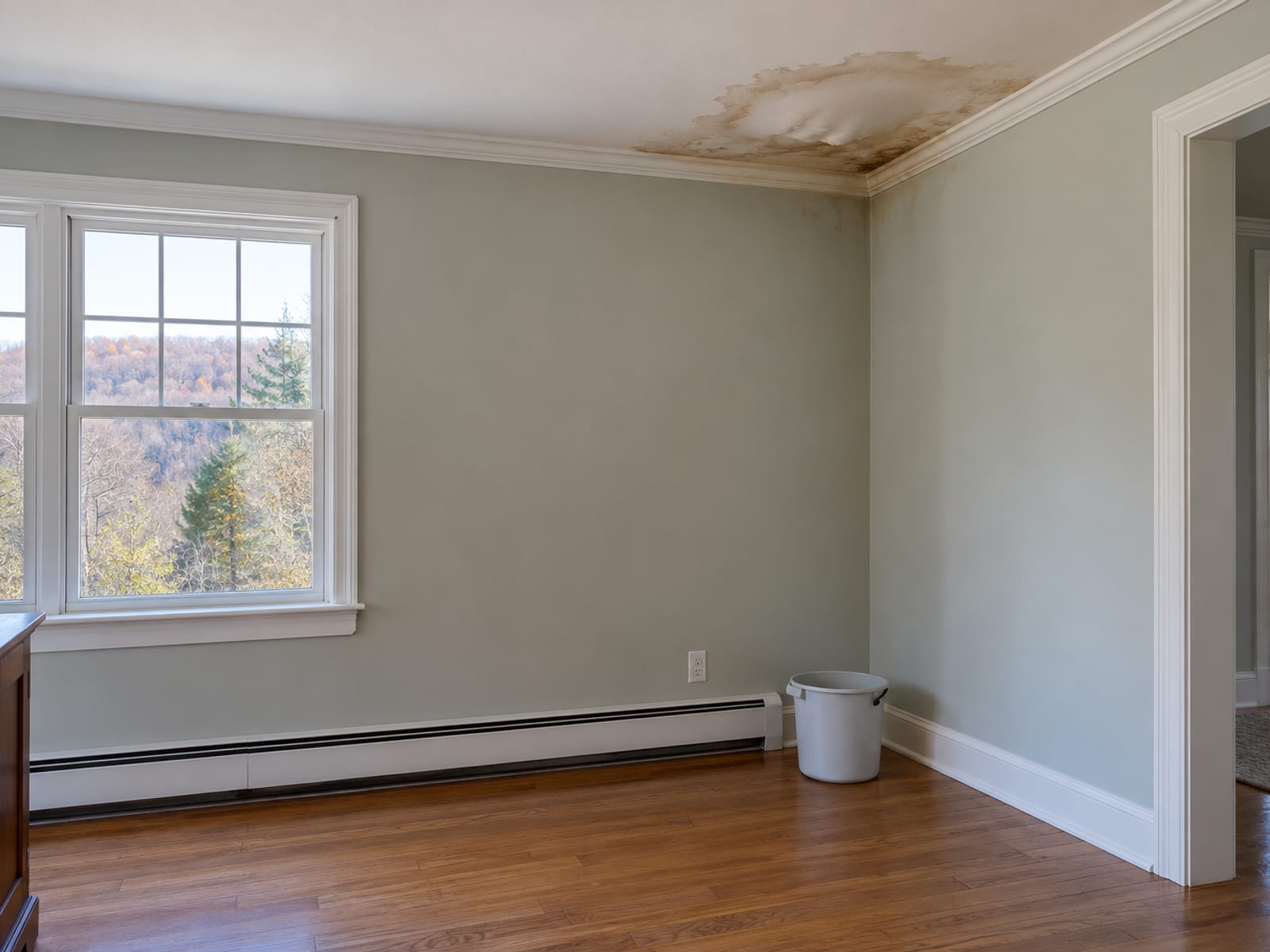
If water is coming in right now, stay off the roof and keep clear of any sagging or wet ceiling. Move belongings, set out containers and photograph the interior damage. From the ground, photograph what you can see outside. A roofer can place a tarp or temporary protection when conditions are safe, and notifying your insurer promptly matters if the damage may be covered.
Connecticut weather is part of the timeline. NOAA's state climate summary records a January snowfall of 54.3 inches at Hartford Bradley International Airport in 2011, and the state's 2019 hazard mitigation plan reports an average of three to four severe hail days a year for 2003 through 2012. Freeze and thaw cycles, nor'easters and thunderstorms keep working on a damaged roof, so a small opening is worth closing before the next one.
Compare Proposals on Cost Drivers Without Guessing at a Price
What a roof costs comes from that roof, so a statewide number would tell you little. What you can do is make sure each proposal breaks the cost into the same pieces, so a difference in total points to a difference in work.
Roof size matters, and it means the actual roof area, not the floor area of the house. Pitch, height, access, valleys, dormers, chimneys, skylights and other penetrations add labor. Tear-off, disposal and the number of existing layers matter, as does any replacement of damaged plywood, OSB, plank decking, fascia or framing. Flashing, drip edge, ice barrier, underlayment, ventilation and chimney work are priced separately in a good proposal, and so are the shingles themselves. Permit fees, inspections, weather delays and material availability round out the list.
Ask each contractor for itemized estimates that separate labor, materials, tear-off, disposal, a decking allowance, flashing, ventilation, permits, inspections and change-order terms. The more specific the line items, the easier it is to see whether you are comparing a repair, a partial replacement, a re-cover or a full tear-off.
Pick a Connecticut Roofer You Can Check
Roofing counts as home improvement in Connecticut, so the contractor has to be registered with the Department of Consumer Protection. You can confirm that on the state's license lookup, and the registration number should appear on the contract and in advertising. Ask for proof of liability insurance, and for workers' compensation coverage where it applies.
On money, the Department of Consumer Protection advises against paying the full price up front and warns against cash or peer-to-peer app payments for deposits. Ask who pulls the permit and schedules inspections, how concealed decking damage will be priced, what happens if there are more layers than expected or the old shingles cannot be matched, and whether the contractor holds the manufacturer certification behind the warranty being offered. Ask for references on comparable Connecticut jobs, too.
Frequently Asked Questions About the 25 Percent Roof Rule in Connecticut
What is the 25 percent rule for roofs in Connecticut?
It is a permit exemption in the 2022 Connecticut State Building Code: repairs limited to 25 percent of roof covering and building siding within one calendar year do not need a building permit. The exemption never authorizes work that breaks the code or local ordinances, so confirm the details with your town's building department.
If I repair more than 25 percent, do I have to replace the whole roof?
The code does not say so. Past the threshold, the work is outside the permit exemption and goes through the town's permit and code review. The decision to replace the rest of the roof rests on its condition, not on the percentage.
My roof is 20 years old. Should I replace it?
Age alone does not decide it. A 20-year-old asphalt shingle roof with widespread cracking, curling, leaks, exposed underlayment or a deteriorated deck is a stronger replacement candidate than one with isolated damage and sound material around it. An inspection can tell you which describes yours.
Will my insurance pay for the shingles next to the damage?
For a covered loss, the Connecticut Insurance Department says the insurer must repair or replace the damaged portion so it matches adjacent items in a reasonably uniform appearance, and must replace adjacent items with like kind and quality materials when a match cannot reasonably be made. Your policy and claim facts decide the amount, so ask your adjuster in writing.
How long does it take to replace a roof on a 2,000-square-foot home?
Time depends on the roof area rather than the house's floor area, plus roof complexity, weather, crew size, material availability, tear-off, decking repairs and inspections. Have the contractor put an estimated start date and completion date in the written contract.
What is the lifespan of a new roof?
NRCA says most new roofs are designed for about 20 years of useful service, with slate, clay tile and certain metal roofs lasting longer. It is a general industry figure, so your own roof's life depends on installation, ventilation, weather and upkeep.
Can I write off roof replacement on my taxes?
IRS Publication 530 for 2025 treats replacing an entire roof as a capital improvement that generally adds to your home's basis, while ordinary repairs generally are not deductible. Traditional roofing materials generally do not qualify for the residential clean energy credit. Rental, business, casualty-loss and insurance situations can differ, so check current IRS guidance or a tax professional.
Quick Check on the 25 Percent Roof Rule
1. Where does the widely searched 25 percent roofing rule come from?
2. What does Connecticut's 25 percent figure do in the 2022 State Building Code?
3. If a repair goes past 25 percent, what changes?
4. Which of these helps decide repair versus replacement?
5. What does the Connecticut Insurance Department say about matching on a covered loss?
Final Thoughts
The 25 percent figure is a Florida reroofing limit that Connecticut does not use in the same way. Here it marks the edge of a permit exemption for limited repairs, and your town's building office has the final word on what your job needs. What decides repair or replacement is the extent of the damage, the deck, the layers, the match and the installation details, and your insurance policy decides what is paid after a covered loss.
Sorting those out early keeps you from replacing a roof that only needed a repair, and from patching one that is past patching. It also gives you proposals that line up on the same scope, which is the clearest way to compare them.
If you are holding a repair quote beside a replacement quote, American Quality Roofing and Siding can look at the roof with you. We serve Central and Western Connecticut from Brookfield, and we offer free estimates for repairs and full replacements, as well as 24/7 emergency roof services when a leak cannot wait. Request a free estimate or call us, and we will go through what your roof needs.
Written by Jose Zaruma, American Quality Roofing and Siding.
← Back to the blog