Roofing Guide
Roof Leaking in Heavy Rain? Common Causes in Connecticut
By Jose ZarumaPublished
- roof leaks
- storm damage
- roof repair
- connecticut

A roof that leaks only in heavy rain is usually pointing at one weak detail: a valley where two roof planes meet, flashing at a chimney or wall, a gutter that backs up at the eave, or a window or siding joint that sends water into the wall. Light rain runs off these spots. A downpour with wind finds the gap.
While it is still raining, stay inside and set containers under the drips. Move belongings out of the way, keep clear of any ceiling that sags, and stay away from water near outlets, wiring or the electrical panel. Do not go up on the roof or a ladder to look.
You do not have to solve the leak tonight. The part that failed can be found in daylight, and the permanent fix follows that part.
Key Takeaways
One detail is failing
A leak that shows up only in heavy or wind-driven rain points to a specific spot such as a valley, flashing, a gutter, a low-slope section, or a wall or window joint.
Stay inside during the storm
Contain the water, protect belongings and photograph the damage, but stay off the roof and away from water near electrical equipment.
A sagging ceiling is urgent
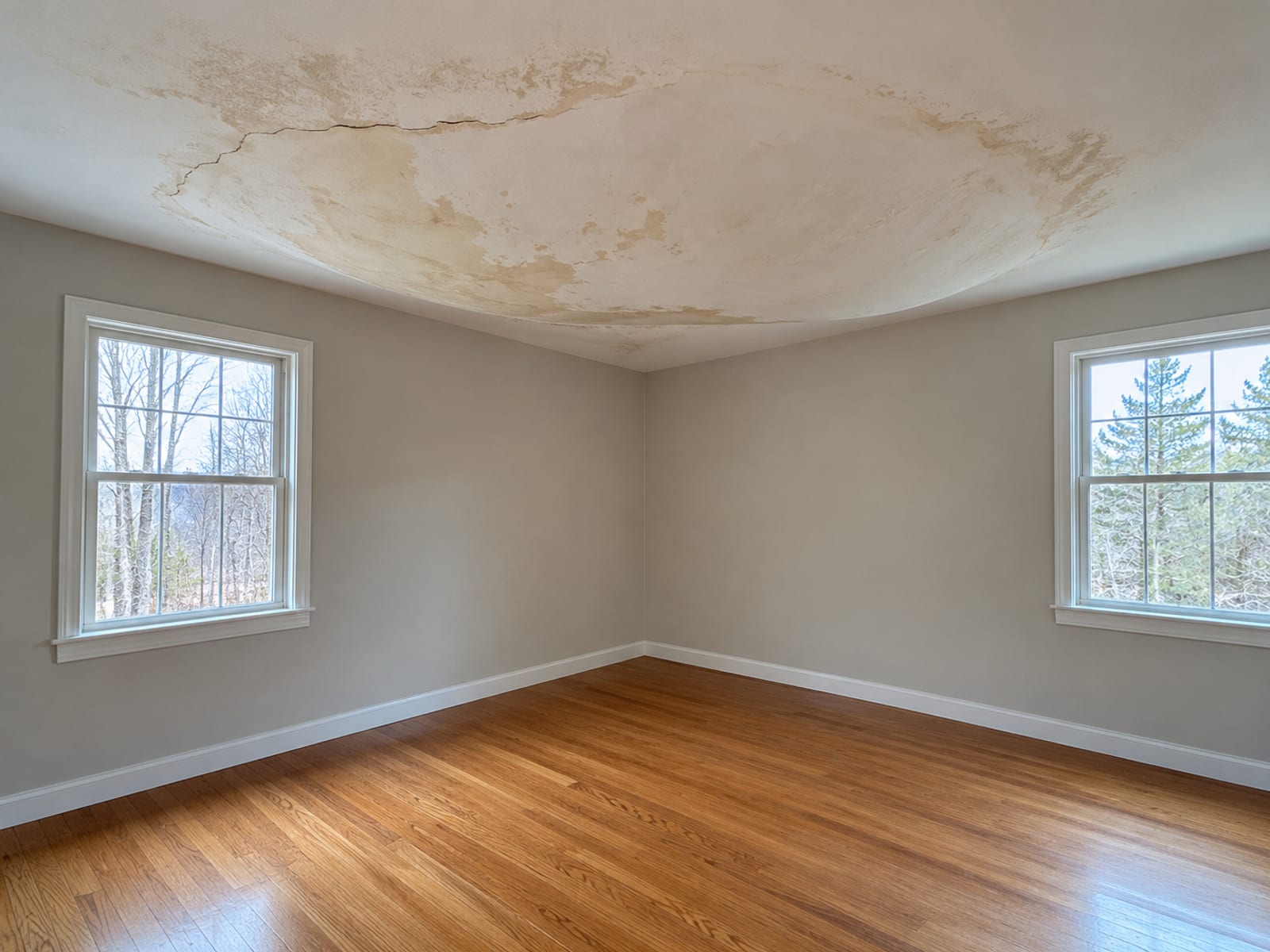
A wet, bulging ceiling is heavy and can fall, so clear the area and call for help.
Coverage depends on the cause
Connecticut's Insurance Department says wind or wind-driven rain damage may be covered while flood damage is generally excluded from standard homeowners policies.
Get the diagnosis in writing
The repair should name the failed part, the materials, the exclusions, the timeline, the payment schedule and the warranty before work starts.
Why Does a Roof Leak Only When the Rain Is Heavy?
Think of a roof as a set of overlapping parts that are built to shed water, one layer onto the next. In ordinary rain, a small gap or a worn seal may never meet enough water to matter. When the volume climbs, or the wind pushes the rain sideways, or water pools for a while, the same gap suddenly has more water than it can turn away.
That is also why the entry point can shift. A leak that appears on a northeast wind may not show up when the storm comes from the southwest, because a different part of the house is taking the rain. If you can note the wind direction and the room where water appears, you give a roofer a head start.
The water you see inside is also not always at the entry point. It can ride along decking, rafters and framing before it drips, so the stain on the ceiling may be several feet from the opening.
Which Roof Details Let Wind-Driven Rain In?
Most heavy-rain leaks start at a place where the roof changes direction, meets a wall or has something poked through it. GAF's installation instructions show how a roof system depends on drip edge, underlayment, valley flashing, step flashing, sealants and roof-to-wall transitions working together. When one of those is damaged, loose or missing, the roof can look fine on a dry day and still let water through under load.
These are the usual suspects:
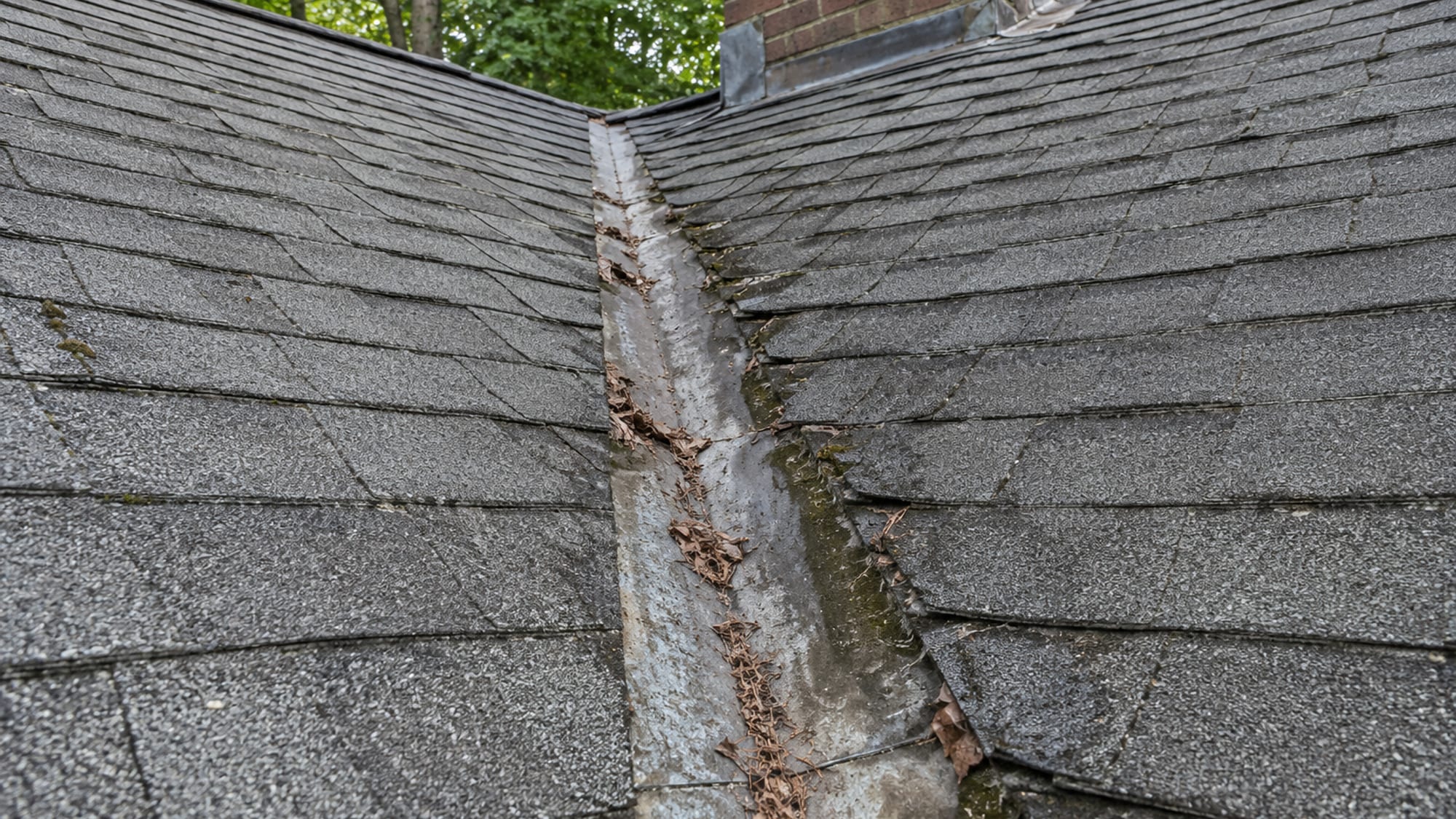
- Valleys: Two roof planes send their runoff into one channel. Debris, exposed fasteners, damaged flashing or poor laps can let a heavy flow slip under the covering.
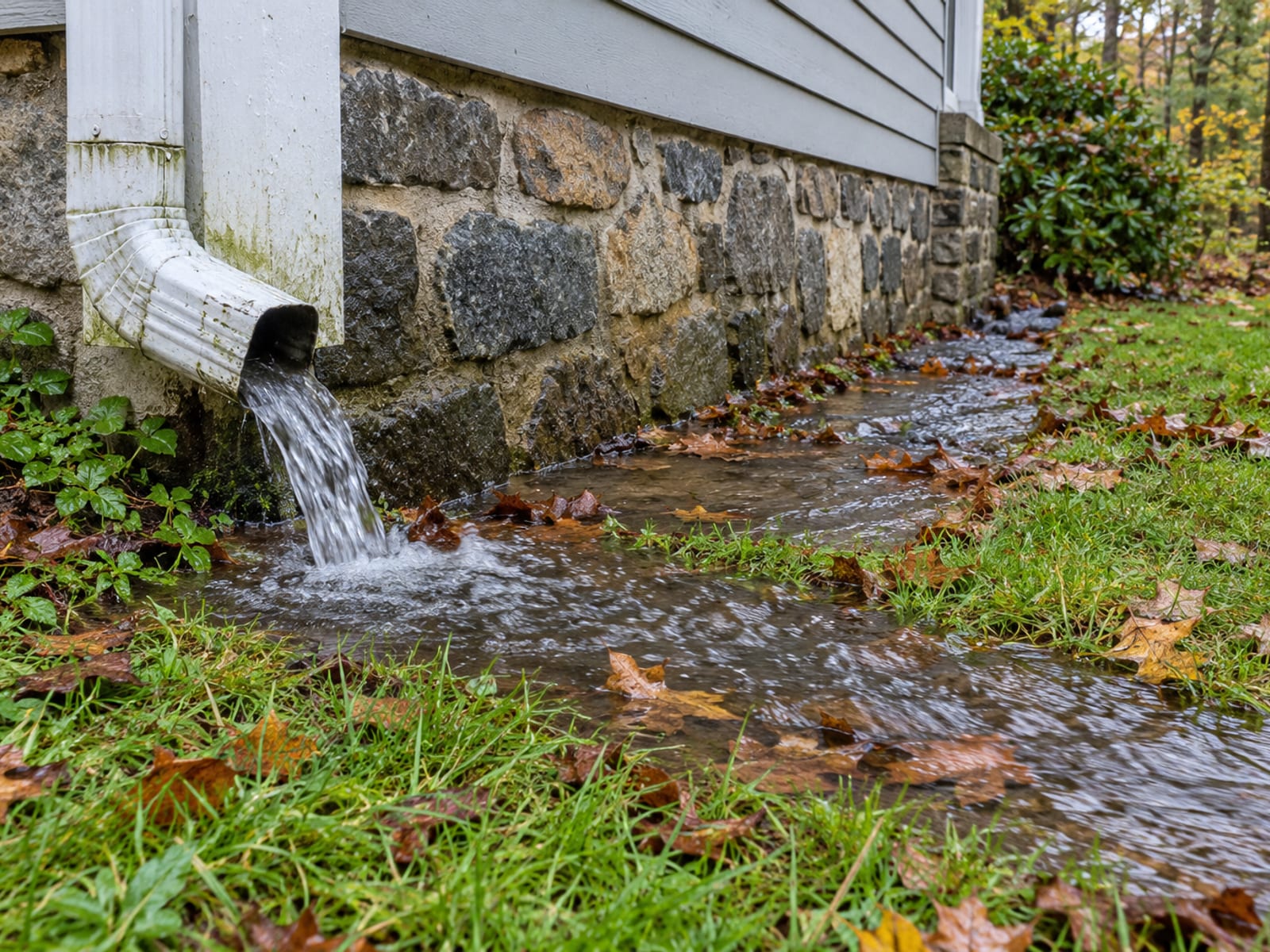
- Gutters and downspouts: Clogged, undersized or poorly pitched gutters and blocked outlets back water up at the eave, where it can overflow against the fascia and roof edge.
- Low-slope sections: A low pitch has less fall to drain water, so it relies on continuous membrane, good laps and drainage.
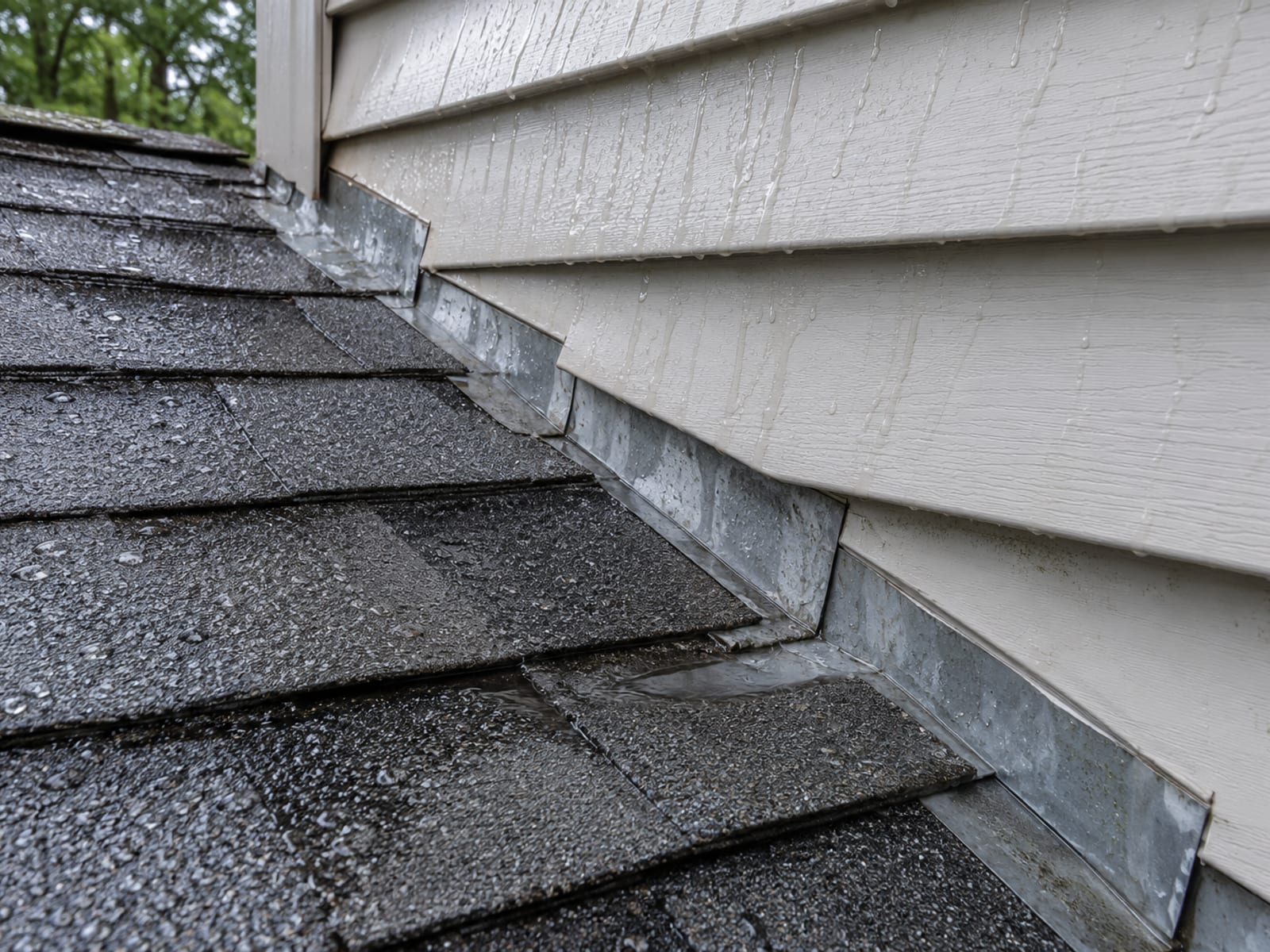
- Flashing and counterflashing: Chimneys, skylights, plumbing vents, dormers and roof-to-wall joints interrupt the roof. Gaps, rust, loose pieces or failed sealant can let wind-driven rain in.
- Siding and windows: Water that gets in at siding joints, trim, window heads or wall penetrations can run down inside the wall and appear on an upper ceiling or wall, which makes it look like a roof leak.
Winter adds one more. When warm attic air melts snow on the upper roof, the water can refreeze at the cold eave and form an ice dam. Water backing up behind the dam can enter through vulnerable details. ENERGY STAR's attic ventilation guidance says a cold, ventilated attic helps reduce the risk, along with air sealing and insulation.
If a leak could be coming from a skylight or a plumbing vent as easily as from the shingles, a general walk through of how to find a roof leak can help you describe what you are seeing.
What Can You Do From Inside While It Is Still Raining?
Keep your feet on the floor. The American Red Cross's thunderstorm guidance calls for staying indoors during lightning, and the same sense applies to high wind and heavy rain. Tarping or sealing from the outside during a storm is a job for later, with a trained crew.
Inside the house, a short routine limits the damage:
- Contain the water: Put buckets or pots under each drip. Lay down towels or plastic to protect floors.
- Move things: Take furniture, electronics and stored boxes out of the wet zone.
- Record it: Photograph and film the ceiling, walls, the area around the attic hatch and any damaged belongings, and mark where each leak appears.
- Check the electrical risk: Avoid wet fixtures, outlets and wiring. If water is near the panel, do not stand in it or touch the equipment.
- Report storm damage: If the leak followed wind, hail, a branch or a severe storm, call your insurer or agent when it is safe to do so.
The Red Cross page on utilities and major systems warns against standing in water near electrical panels or handling damaged wiring. If you see sparks, smell burning, notice exposed wiring or find water around electrical equipment, call a qualified electrician or emergency services.
When the rain stops and conditions are safe, arrange temporary weather protection if more rain is coming, and keep your receipts. A roofer offering emergency roof services can do that work with the proper equipment.
When Is a Rain Leak an Emergency?
Most heavy-rain leaks need a prompt inspection but not a midnight call. A few signs change that.
Water near electrical equipment is the second. That means a dripping light fixture, water running down a wall with an outlet, or any wet area around the panel or damaged wiring.
The third is anything that points to the structure. Cracks in walls or ceilings, a roofline that looks like it has shifted, or visibly sagging framing mean you should leave the area and get help.
The fourth is impact. If a tree or heavy branch has struck the roof, treat the area as a structural emergency even if the water inflow seems small.
If none of those apply, you can usually wait until daylight, but not for long. A roof leak alone does not mean a collapse is coming. There is also no dependable clock for how long a leak can run before damage starts, because water can reach ceiling finishes, insulation, sheathing, framing and wiring while the leak is still on and off. The next storm may bring more water or send it down a new path.
How Is the Leak Fixed for Good?
The permanent repair follows the part that failed. A patch of sealant over a stain rarely does that job, which is why a good repair starts with finding the water's real path from the outside in.
Where the Water Enters and the Usual Permanent Fix
Rebuild or replace valley flashing and underlayment using the roof manufacturer's approved method, and replace damaged covering or decking
Tap a factor to see how it moves the price.
Two notes help here. First, ENERGY STAR describes an ice-dam membrane as backup protection, not a replacement for controlling attic heat and air movement. Second, if the cause turns out to be the wall or a window, a new roof will not stop the leak. That is why a written diagnosis matters before anyone signs for a roof.
For leaks that are limited to one spot, a targeted leaky roof repair may be all it takes. If the roof is old and several details have failed, a broader roof repair or a replacement conversation is reasonable. Either way, the first step is the same: get the cause named.
What Does Connecticut Weather Mean for Your Roof?
There is no single rainfall number at which every roof starts to leak. NOAA's Atlas 14, Volume 10, revised in 2019, gives rainfall depths and intensities for Connecticut by location, storm length and how often a storm of that size is expected. Your relevant figure depends on where your house is and how long the rain lasts.
Storms of other kinds matter too. The Connecticut Insurance Department's 2026 consumer notice lists thunderstorms, high winds and hail as recent causes of storm damage, and winter brings snow and ice dams.
On permits, the state's 2022 Building Code applies to applications filed since October 1, 2022, and adopts the 2021 International Residential Code, including requirements for roof underlayment. Your town's building department decides whether a repair, flashing rebuild, structural fix or related electrical work needs a permit and which inspections apply. Ask it before work starts.
Does Homeowners Insurance Cover a Heavy-Rain Leak?
Sometimes. It depends on your policy and on what caused the damage. The Connecticut Insurance Department says that damage from wind or wind-driven rain may be covered, while flood damage is generally excluded from standard homeowners policies. Its pages on storm water and flood coverage and an August 2024 consumer alert explain the difference.
Age is a factor as well. The Department's winter claim guidance says sudden and accidental roof collapse is normally covered under many policies, but damage tied to age or pre-existing conditions can lead to a denial. Nobody can tell you in advance how your claim will go, and a contractor should not try.
What helps is a clean record. The Department's 2026 notice advises photographing the damage, making safe temporary repairs, keeping receipts, saving damaged materials where possible and letting the insurer inspect before permanent repairs. Call your insurer or agent promptly after wind, hail, a fallen branch or a severe storm. Ask what the policy requires before permanent work begins.
What Does Fixing a Heavy-Rain Leak Cost?
The price follows the part that failed and what the water reached on its way in. A cleared gutter outlet or a resealed boot is a small job, while a rebuilt valley with new decking underneath is a much larger one. Our guide to roof leak repair cost in Connecticut walks through published figures by repair type.
What moves the price is the failed part, the size of the affected area, roof height, pitch and access, the roofing material and whether it can be matched, wet insulation or decking underneath, emergency conditions, permits and disposal, and the age of the roof. On an older roof, a limited repair may not give you a lasting match.
For a number that fits your house, ask for a written Connecticut estimate that separates diagnosis, temporary protection, roof work, drainage work, interior drying or repairs, permits, disposal and warranty.
How Do You Pick a Connecticut Roofer for a Leak?
Start with the registration. Connecticut requires contractors who do home improvement on residential property, roofing included, to register with the Department of Consumer Protection. You can verify a license online, and the registration number should appear on the contract and in advertising. The state's home improvement contract notice from 2025 explains that a written contract is generally required before work begins.

Then ask for the diagnosis in writing. The questions to put to any roofer are:
- Can you show me exactly where water enters, and is it the roof covering, flashing, a valley, a gutter, siding or a window?
- What happens if you find wet decking or framing?
- Is this repair temporary or permanent?
- Does the quote include underlayment, flashing, disposal, permits and interior drying?
- Who pulls the permit, and what manufacturer instructions will govern the work?
- What warranty covers labor and materials, and what is the payment schedule?
Avoid a vague "seal the leak" scope, full payment up front, and a roof patch that never looked at the walls and windows. The cheapest bid is not a good comparison unless the materials and scope match.
Frequently Asked Questions About Roof Leaks in Heavy Rain in Connecticut
Is a roof that leaks only in heavy rain urgent?
It needs a prompt inspection, because the next storm may bring more water or find a different path. It becomes an emergency when a ceiling sags or bulges, water reaches electrical equipment, there are structural cracks, or a tree or branch has hit the roof.
Why does my roof leak in wind-driven rain but not in light rain?
Wind can push rain sideways under laps and against walls, and heavy volume can overwhelm valleys and gutters. A detail that handles ordinary rain can fail under that extra load.
Should I call my insurance company if my roof is leaking?
Yes, when the leak follows wind, hail, a falling branch or a severe storm. Photograph the damage first if it is safe, make temporary repairs to prevent more damage, keep receipts, and ask what the policy requires before permanent work.
Can I just seal the leak myself?
Stay off the roof, especially in wet weather. A sealant also tends to treat the stain and not the cause, and if the water is coming from a wall, window or flashing, a roof patch will not stop it.
Can a handyman fix a roof leak?
A handyman may handle limited, clearly defined maintenance. A leak that involves the roof covering, valleys, flashing, low-slope roofing, structural damage or an insurance claim calls for a qualified roofing contractor registered in Connecticut.
Will my roof collapse from a leak?
A leak alone does not mean collapse is near. A wet, sagging ceiling is a hazard because it is heavy. If the ceiling, roofline or framing visibly sags, shifts or cracks, leave the area and get emergency help.
Heavy-Rain Roof Leak Knowledge Check
1. What should you do from inside the house while a heavy storm is still going?
2. Which of these is a sign of an urgent safety problem?
3. Why can a roof leak only in heavy rain?
4. According to Connecticut's Insurance Department, which damage is generally excluded from a standard homeowners policy?
5. What should a written roof leak diagnosis tell you before work starts?
Final Thoughts
A roof that leaks only in heavy rain is giving you a clue. One detail, whether a valley, flashing, a gutter, a low slope, a wall or a window, is failing under extra water or wind, and the permanent fix follows that part. During the storm, stay inside, contain the water, protect belongings and photograph the damage. Treat a sagging ceiling or water near electrical equipment as urgent.
Finding the cause before the next big storm protects your ceilings, insulation, framing and wiring from repeated wetting, and it gives your insurance claim the clean record it needs if the damage came from a covered storm.
If your roof is leaking, American Quality Roofing and Siding can help anywhere in Central and Western Connecticut, and we are based in Brookfield. We offer 24/7 emergency roof services, along with roof repair, siding and gutters, and we will trace where the water gets in and put it in writing. Call us or request a free estimate before the next storm arrives.
Written by Jose Zaruma, American Quality Roofing and Siding.
← Back to the blog