Roofing Guide
What a Metal Roof Replacement Involves in Connecticut
By Jose ZarumaPublished
- roofing
- roof replacement
- metal roofing
- connecticut
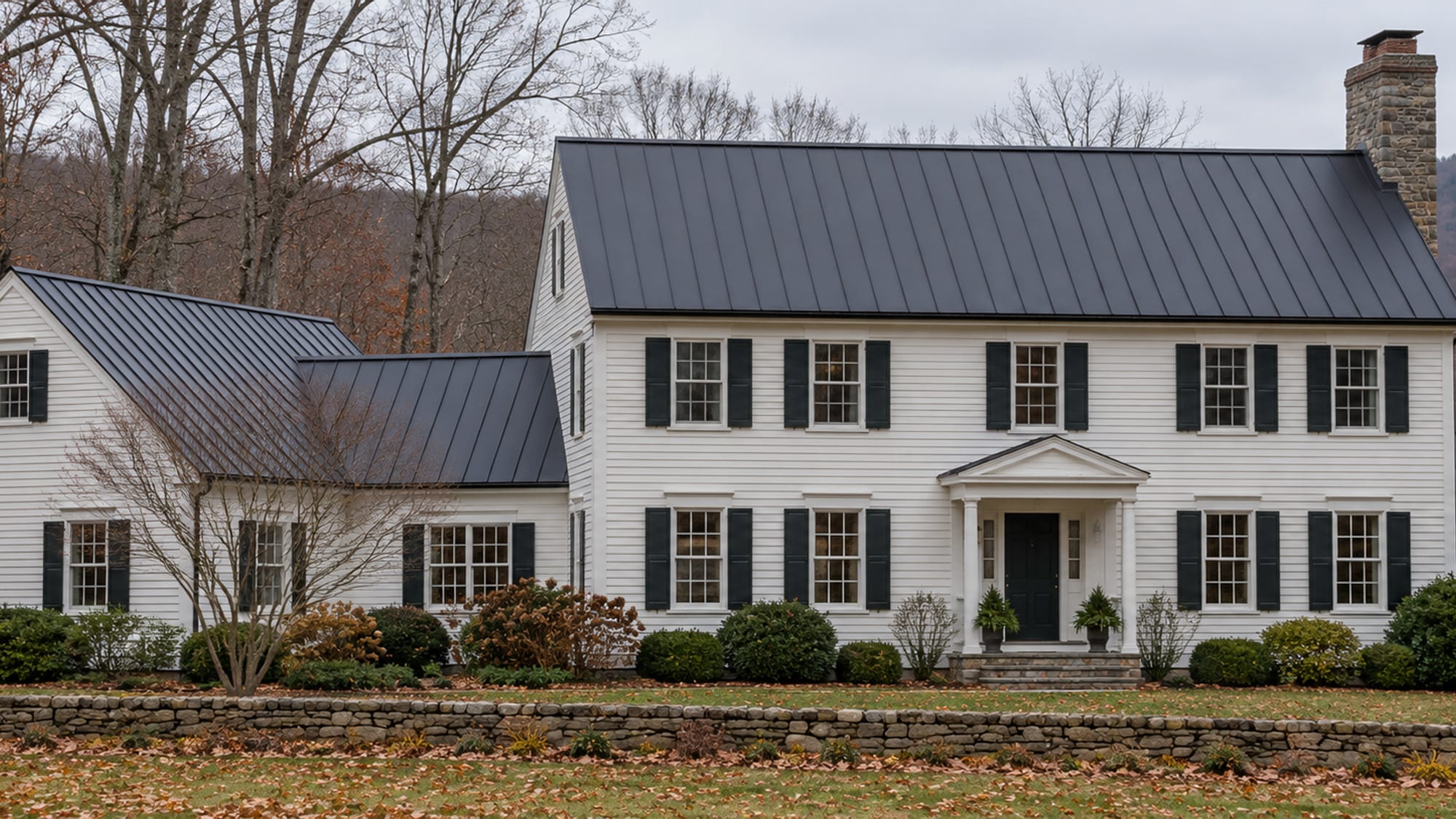
A metal roof replacement in Connecticut usually costs more up front than asphalt shingles, and whether the extra money pays off depends on which kind of metal you choose and how the roof underneath it is built. Metal is a roof system, not a color. Standing seam, metal shingles and exposed-fastener panels look different, go on differently and age differently.
For a sense of scale, the 2025 Cost vs. Value report lists New England averages of $56,282 for a metal roof replacement and $35,701 for asphalt shingles. Those are regional remodeling averages, not Connecticut quotes. Your own number will move with roof area, pitch, tear-off and whatever the crew finds under the old roof.
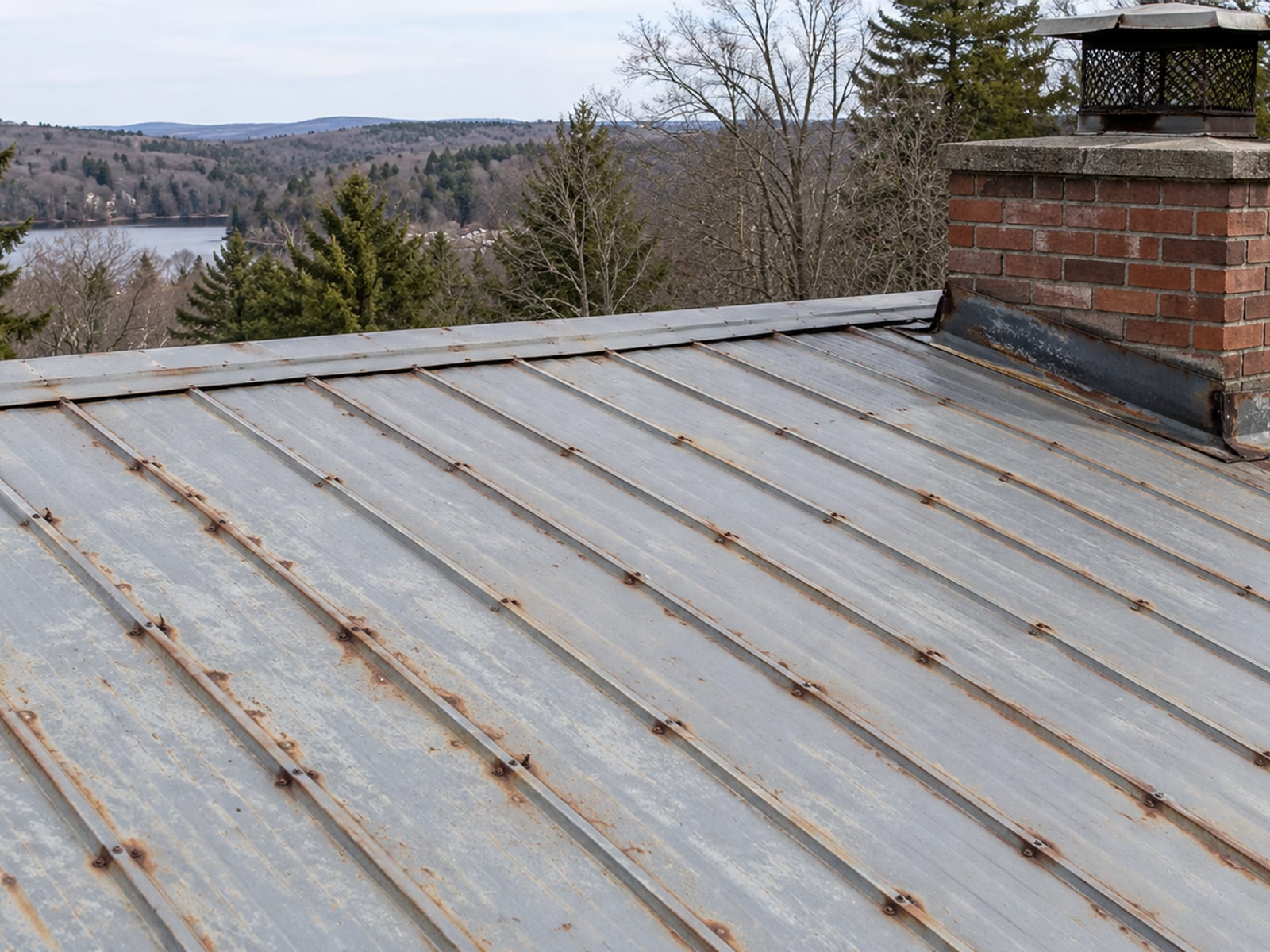
The same questions apply if you already have a metal roof that is leaking, rusting or working loose at the fasteners. Start with the panel type, then the snow plan, the permit and the warranty. The price makes more sense once those are settled.
Key Takeaways
Metal costs more up front. The 2025 Cost vs. Value averages for New England are $56,282 for metal and $35,701 for asphalt shingles, and neither number is a Connecticut quote.
The panel type comes before the price. Standing seam, metal shingles and exposed-fastener panels differ in how they are attached and in the upkeep they need.
Snow guards, attic insulation and ventilation, and solid decking do work that people expect the metal itself to do.
A full replacement usually needs a building permit, and you stay responsible for confirming it is in place.
Decide Whether Metal Fits Your House Before You Price It
Start with what is on the roof now. If you are replacing aging asphalt shingles, the question is whether you want to pay more for a roof that may last longer. If you are replacing a failed metal roof, the question is why it failed. Leaks, rust, loose fasteners and damaged flashing at chimneys, skylights and valleys each point to a different cause, and a new roof of the same type can fail the same way if the cause stays. When the trouble is one flashing or one small area, roof repair may answer it before a replacement does.
Connecticut is not one climate. NOAA's climate pages for Connecticut show that conditions differ between the shoreline, central Connecticut and the northwest hills, and the Storm Events Database logs hail, wind and snow events by county. The weather your roof sees depends on where in the state it sits, which is one reason your town's building department sets the design requirements, not a statewide average.
Connecticut houses are also old. A state Department of Public Health housing report built on 2010 Census data put 73% of the state's housing stock as built before 1980. That figure is from 2010, so today's share differs, but it is a good reason to look at the framing and deck under the roof covering before anyone picks a panel.
Choose the Panel Type You Can Live With for Decades
The three common residential metal systems are built differently, and those differences show up years later as leaks, noise, upkeep or repair bills. The table sets them side by side. It describes how each one is made, and what to ask any crew before you accept a proposal that just says "metal roof."
Metal Roof Panel Types Compared
How It Is Attached: Raised seams with concealed clips or fasteners, which leaves fewer exposed penetration points and lets panels move with temperature
What to Ask About: Whether the panels are field-formed or mechanically seamed, since those systems can be more specialized and cost more
Tap a factor to see how it moves the price.
Standing seam suits homeowners who want a clean look, a long service life and a high-performance roof assembly. Metal shingles suit a house where long vertical panels would look out of place. Exposed-fastener panels install quickly and generally cost less than field-formed standing seam, but their long-term performance leans heavily on the fasteners, washers and sealants staying in good shape. If you choose them, ask who will check those fasteners and how often.
The metal itself matters too. Residential steel panels commonly carry a metallic coating such as galvanized or aluminum-zinc, with a paint finish on top. The Journal of Light Construction's metal panel field guide lists 24-, 26- and 29-gauge steel as common roofing-panel thicknesses, and a higher gauge number means thinner metal. Aluminum resists corrosion better than steel and suits corrosive environments, but it is softer and moves more with temperature, so the manufacturer's installation details for fasteners and movement matter even more.
One more upside is energy use. ENERGY STAR notes that a metal roof counts as a cool roof when its surface has suitable solar reflectance and thermal emittance, and lighter, reflective coatings generally lower roof-surface temperature.
Keep Snow, Ice Dams and Rain Noise From Surprising You
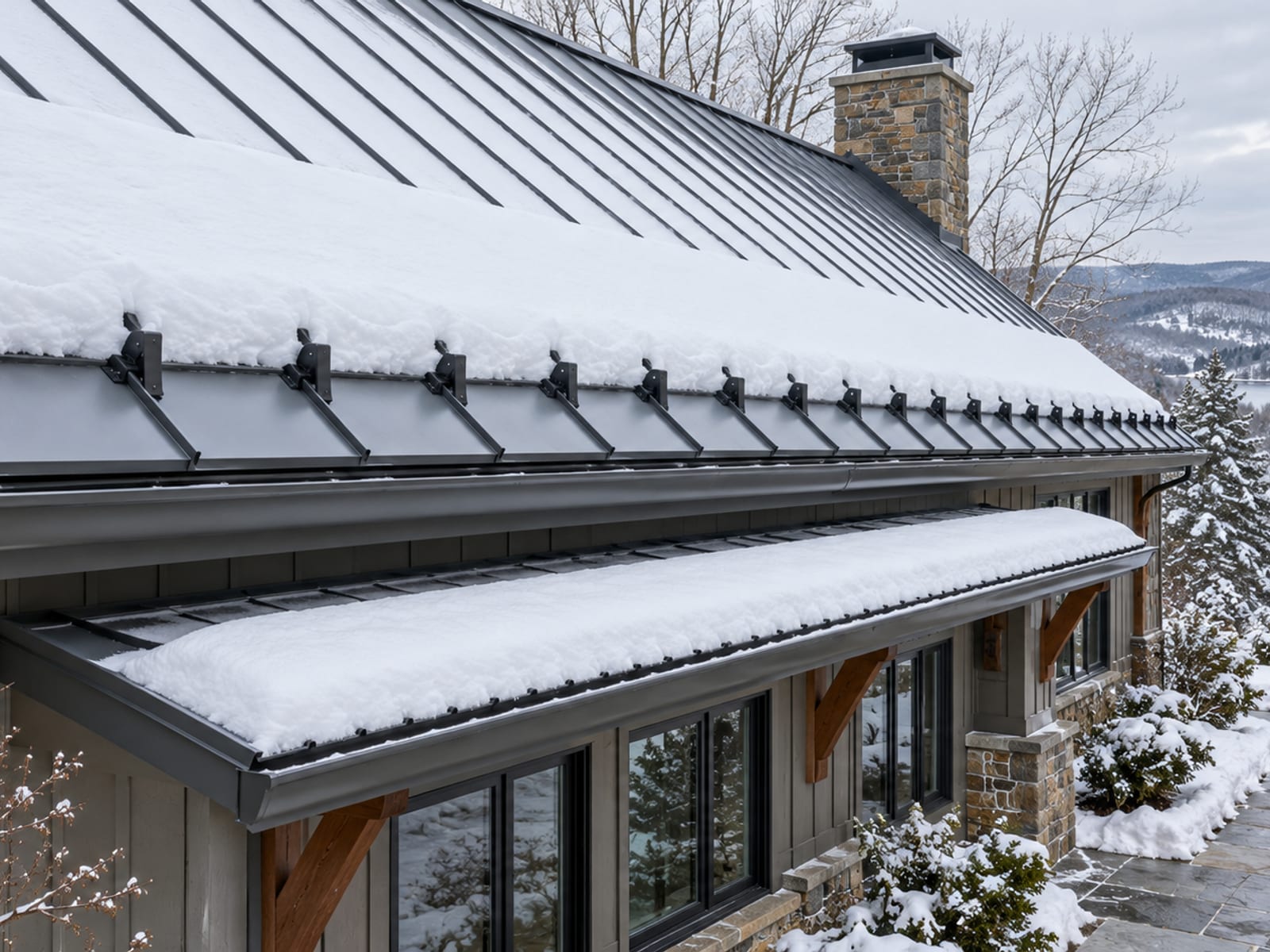
Metal sheds snow faster than most roof coverings, and that is both the benefit and the hazard. The Metal Roofing Alliance explains that most residential metal systems are designed for snow and ice loads and that a smooth surface promotes shedding. A sheet of snow that lets go all at once can land on a walkway, a parked car, a deck, landscaping or a lower roof. Wherever a slide could reach something or someone, ask for snow guards or rails.
Ice dams are a separate problem, and metal does not remove them. They form when uneven roof temperatures, heat loss, snow cover, melting and refreezing work together. The same Metal Roofing Alliance page says a smooth surface can reduce ice-dam buildup, but the cause still lives in the attic and at the eaves. Insulation, air sealing, ventilation, underlayment and eave protection do that work, so a metal proposal that says nothing about them is leaving out the part that matters most in a Connecticut winter.
Rain noise depends mostly on what sits under the metal. Roofing installed over solid decking is not inherently noisier than other materials, and open framing transmits more sound. In the sound test published by ATAS, metal did not register a significantly higher sound level than conventional asphalt shingles. Solid decking, underlayment and attic insulation do more for the quiet inside than the word metal does.
Budget With Real Numbers and Written Assumptions
The 2025 Cost vs. Value report is the dated benchmark available for this region, and it covers Connecticut, Maine, Massachusetts, New Hampshire, Rhode Island and Vermont together. It lists a metal roof replacement at an average job cost of $56,282, with $21,904 in resale value and 38.9% of the cost recouped. The asphalt-shingle replacement it lists averages $35,701, which leaves a difference of $20,581. These are averages for a defined remodeling project, not bids, and no one should present them as the price for your house.
The report also answers the resale question in a plain way: the higher cost of metal is not automatically recovered when you sell. If you plan to stay for decades, a longer service life may matter more than resale. If you plan to sell in five years, it matters less. Either way, compare written proposals that name the same assumptions, and decide with your own ownership period in mind.
Roof area is the first assumption to check. A 2,000-square-foot house does not have a 2,000-square-foot roof, because pitch, overhangs, valleys, hips, dormers and attached sections all add surface. Ask each contractor how the roof area was measured. Our guide to reading a roofing estimate shows how squares and line items are counted. The rest of the price follows from the items below.
What Moves the Price of a Metal Roof Replacement
Pitch, overhangs, hips, valleys, dormers and additions add area beyond the house footprint
Tap a factor to see how it moves the price.
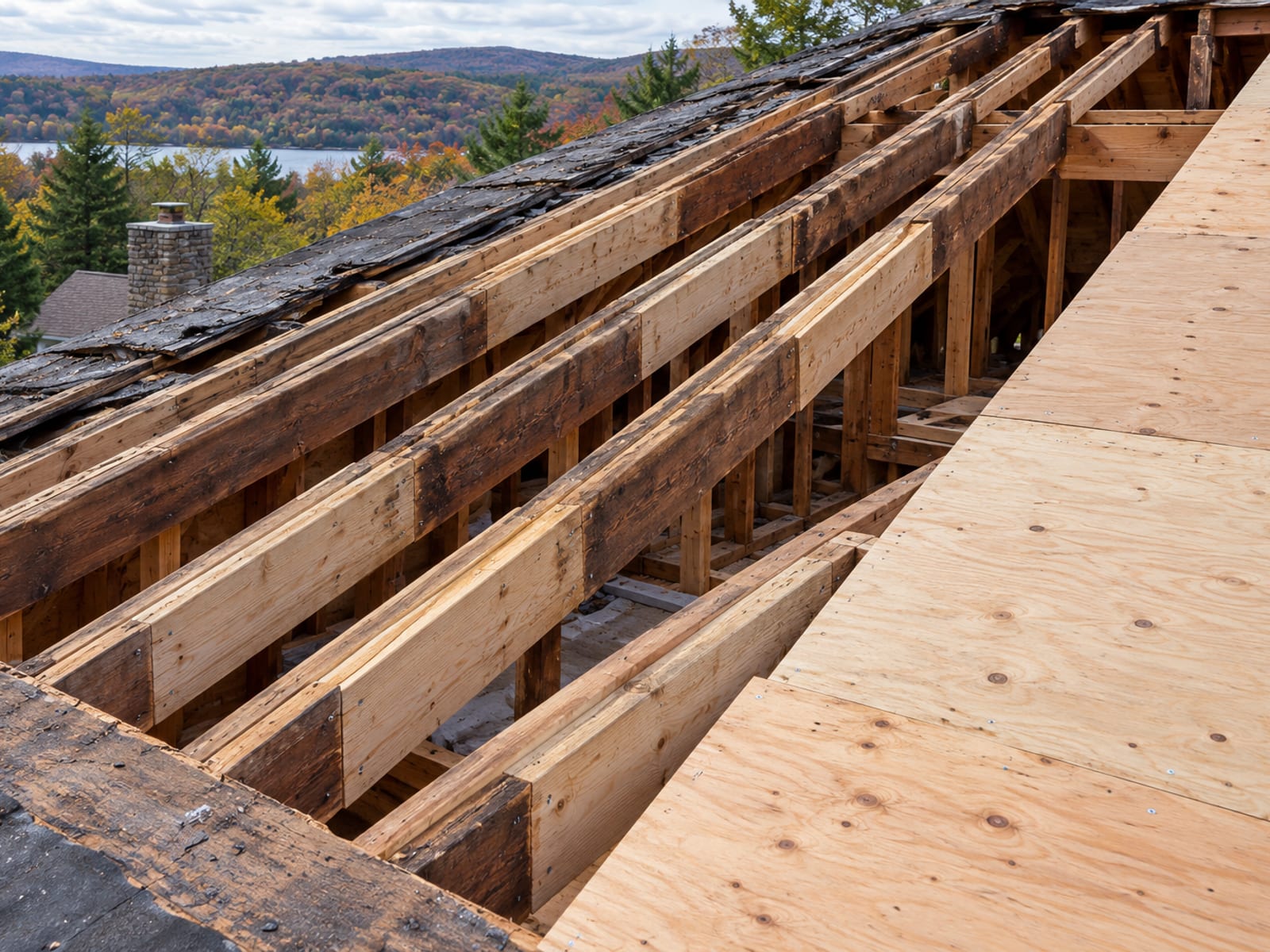
Hidden deck damage is the line that surprises people most, because nobody can price it until the old roof comes off. Ask each proposal to state an allowance for it and to explain how change orders work. A proposal that is silent on those two points has not really priced the roof.
Settle the Permit and Snow-Load Questions Early
The 2022 Connecticut State Building Code applies to permit applications filed on or after October 1, 2022, and it adopts the 2021 International Residential Code. Under the state code regulations, a permitted reroof triggers a snow-load requirement: existing structural elements that support snow loads must be replaced or altered as needed to carry the required design snow loads, including drift effects. The code text lists exceptions, such as a building already designed under a qualifying later edition of the Connecticut code or one that a professional engineer shows can support the required loads.
Permits are handled town by town. The Department of Consumer Protection's building guidance says many home-improvement projects need a town building permit, that the permit must be in hand before work begins and that the owner remains responsible for confirming it, even when the contractor applies. East Haven's permit page lists installation of a new roof as permit work, and Tolland publishes a roofing permit process with inspections and roof-deck and ice-and-water requirements. Rules for limited repairs, second layers, historic districts and deck replacement can differ from town to town.
That last point is also the answer to whether metal can go over existing shingles. It depends on the panel manufacturer's installation instructions, the condition of the deck and your town's rules on second layers, so ask all three before anyone assumes it. Our guide to roofing permits in Connecticut covers the town process.
Before you sign, put three things in writing: who applies for the permit, who schedules the inspections and who provides the final permit paperwork. Insurance is a separate conversation. Ask your insurer directly whether the roof system or installation records affect your policy, and use the Connecticut Insurance Department for questions about your rights. A discount is never a given.
Know How Long It Lasts and What the Warranty Pays For
Metal Construction Association material reports a service life of around 70 years for a properly designed and constructed metallic-coated steel roof in many non-coastal U.S. environments, and describes metal roof life more broadly as commonly 40 to 60 years or more. Those are system expectations, not promises for every house. Design, installation, coatings, sealants, fasteners, trims, maintenance and exposure all change the result, and the 70-year figure carries a non-coastal qualifier, so a shoreline home should ask specifically about coating and metal choice.
Warranties need the same careful reading. A long paint warranty does not mean the roof will stay leak-free for the same stretch of time. One published manufacturer warranty standard lists different periods for different parts of the coating in the category it describes, 40 years for film integrity, 30 years for chalk and 20 years for fade, and it excludes problems from improper installation, incompatible accessories, improper venting, insulation or underlayment, structural movement, abuse, storm damage and missed maintenance.
Four Warranties That Are Easy to Mix Up
What It Is About: The metal panel material itself
Question to Ask: Which defects are covered, and for how many years?
Tap a factor to see how it moves the price.
Ask for the exact manufacturer warranty and installation requirements for the system you choose before you sign. Coverage depends on the product, the installation method, approved accessories, registration requirements and maintenance, and a warranty that was never registered may not help when you need it.
Hire a Crew That Has Installed the Metal You Chose
In Connecticut, roofing counts as home improvement work, and a contractor doing residential work must hold an active Home Improvement Contractor registration. You can verify it through the state's eLicense system using the DCP registration information. Confirm that the legal business name on the registration matches the contract and the name on your check, and ask for a current certificate of liability insurance, then call the insurer or agency to confirm it.
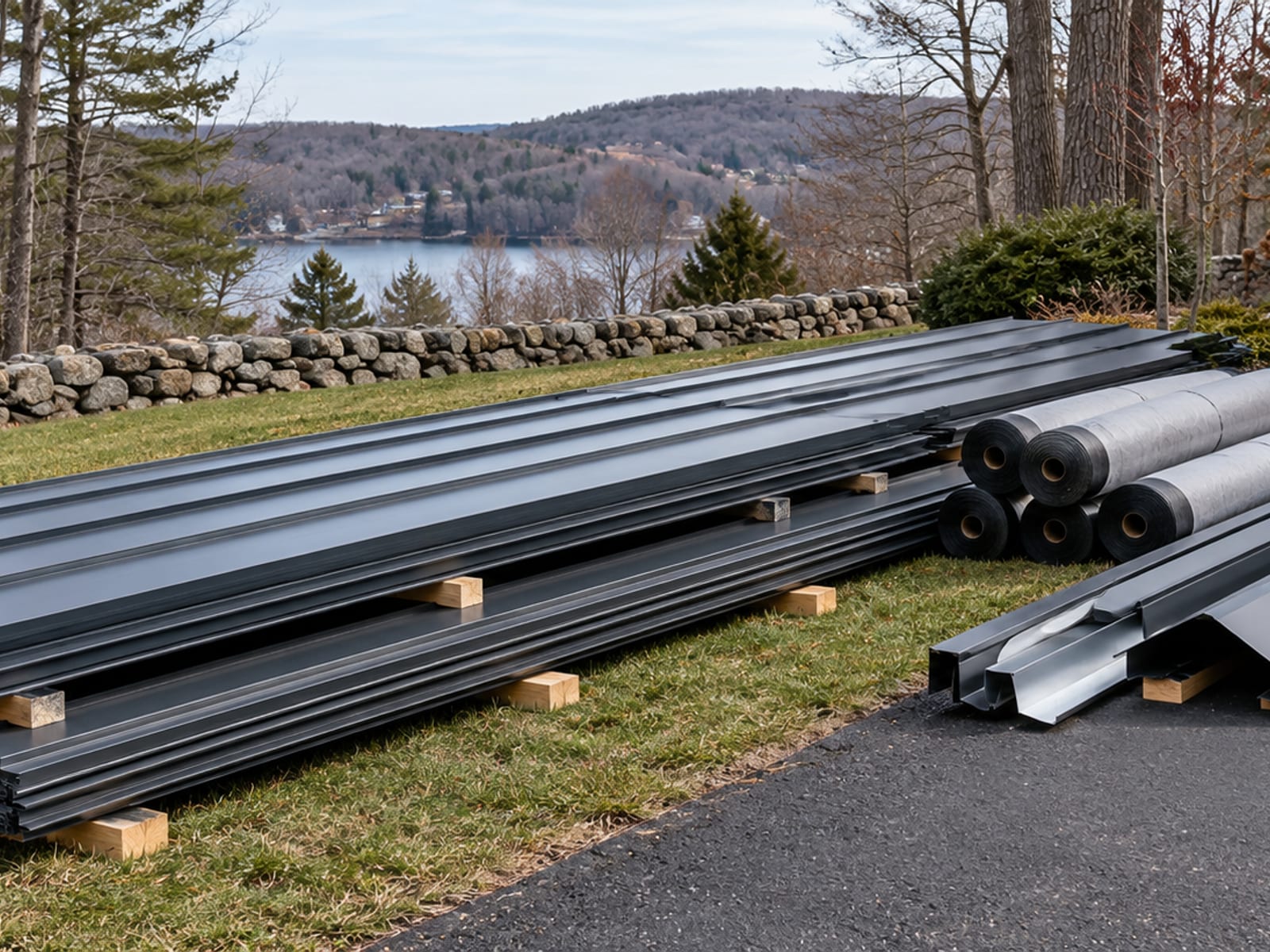
The contract requirements are set by the state. The contract must be written, signed and dated, with the contractor's registration number, work dates, price, payment terms and your three-business-day cancellation right. Add a written scope that names the panel profile, metal and gauge, coating, underlayment, tear-off, deck repair, flashing, ventilation, snow guards, cleanup and warranties. Require every change order in writing and signed. Avoid paying everything up front, and avoid cash or peer-to-peer payments. If you are financing the project, read those documents separately before you sign.
The steps around any replacement are the same ones described on our roof replacement page: tear-off, deck inspection, ice-and-water protection, underlayment, flashing, ventilation and cleanup. The metal-specific questions sit on top of that list. The comparison is easiest when three contractors price the same written assumptions.
Frequently Asked Questions About Metal Roof Replacement in Connecticut
How much does a metal roof replacement cost in Connecticut?
The dated benchmark is the 2025 Cost vs. Value report, which lists $56,282 as the New England average for a metal roof replacement and $35,701 for asphalt shingles. Those regional averages are not Connecticut quotes. Get written proposals that state the same panel, gauge, coating, tear-off, deck allowance and snow-retention assumptions so the prices can be compared.
Is a metal roof noisy in the rain?
Not by itself. Metal over solid decking, with underlayment and an insulated attic, is not inherently louder than other roofing, and open framing carries more sound. A published ATAS sound test found that metal did not register a significantly higher sound level than conventional asphalt shingles.
Do I need snow guards on a metal roof?
Wherever sliding snow could reach a walkway, a car, a deck, landscaping or a lower roof, snow guards or rails are worth having. They should be chosen for the specific panel profile and attached according to the manufacturer's requirements.
How long does a metal roof last?
Metal Construction Association material cites around 70 years for a well-designed, well-installed metallic-coated steel roof in many non-coastal environments, and commonly 40 to 60 years or more for metal roofing in general. Coating, fasteners, flashing, ventilation, maintenance and exposure change the result.
Do I need a permit to replace a roof in Connecticut?
Usually yes for a full replacement. Treat it as permit work unless your local building official says otherwise, since Connecticut's consumer protection department says many home-improvement projects need a town permit before work starts. The owner stays responsible for confirming it is in place.
Will a metal roof lower my homeowners insurance?
That depends on your insurer and your policy. Ask the insurer whether the roof system, its documentation or any impact rating affects coverage or pricing. The Connecticut Insurance Department is the state source for insurance questions.
Metal Roof Replacement Knowledge Check
1. What should you compare first when choosing a metal roof?
2. What do the 2025 Cost vs. Value figures of $56,282 for metal and $35,701 for asphalt represent?
3. Does a metal roof stop ice dams?
4. Who stays responsible for confirming a required permit is in place?
5. Which question belongs on your list for any crew bidding a metal roof?
Final Thoughts
A metal roof replacement goes well when you decide the panel type first and then work through the snow plan, the permit, the warranty and the written scope in that order. Regional figures show metal costing more than asphalt up front, so the proposals you collect should name the same assumptions, from the metal and gauge down to the deck allowance.
Done carefully, a metal roof can serve a Connecticut house for decades, and the questions you ask before signing are what protect that value. The permit, the snow-load rules and the warranty fine print are far easier to settle before the work starts than after.
American Quality Roofing and Siding has served Central and Western Connecticut from Brookfield since 2006. We are licensed and insured under CT HIC #0633301, offer free estimates and have financing options available. Ask us, as you would ask any crew, whether we have installed the metal system you are considering. Request a free estimate or call us, and we will go through your roof, your snow concerns and your written scope with you.
Written by Jose Zaruma, American Quality Roofing and Siding.
← Back to the blog