Roofing Guide
Chimney Flashing Repair in Connecticut: Signs, Causes and Costs
By Jose ZarumaPublished
- roof leaks
- roof repair
- roofing
- connecticut
A stain on the ceiling near the chimney, damp framing in the attic or drips after a hard rain all call for the same first steps today. Stay off the roof. Photograph the stain, the wet spots in the attic and anything you can see from inside and from the ground, write down the weather when it leaks (wind-driven rain, snowmelt or a steady downpour), and move belongings out from under the drip.
Chimney flashing repair means finding where the water gets in and replacing the metal layers that shed it. A bead of caulk over the top often fails when the flashing underneath is rusted, loose or pulled away from the brick, so the metal is what needs the attention.
Flashing is a frequent suspect, but it is not the only one. Cracked mortar, a damaged crown or a missing cap can leak the same way, and who fixes which part depends on where the water comes in.
Key Takeaways
Keep off the roof and document the leak from inside and from the ground, including the date and the weather when it shows up.
A proper repair replaces the metal layers (step, counter and apron or back flashing), not just the caulk over them.
Cracked masonry, a damaged crown or a missing cap can leak like flashing, and a mason or chimney professional handles those parts.
National cost guides from 2026 put chimney flashing repair or replacement at about $400 to $1,600 for most jobs, so ask for a written Connecticut quote that prices each part separately.
Connecticut treats chimney repair as home improvement work, so check the contractor's registration before you sign anything.
Finding Out if the Flashing Is Really the Leak
The stain on the ceiling is where the water shows up, not always where it enters. Water follows framing, insulation and masonry before it drips, which is why a leak near the chimney can start at the flashing, the brick, the top of the chimney or even a different part of the roof above the stain. Ruling those out one at a time is how you avoid paying for a repair that misses the leak.
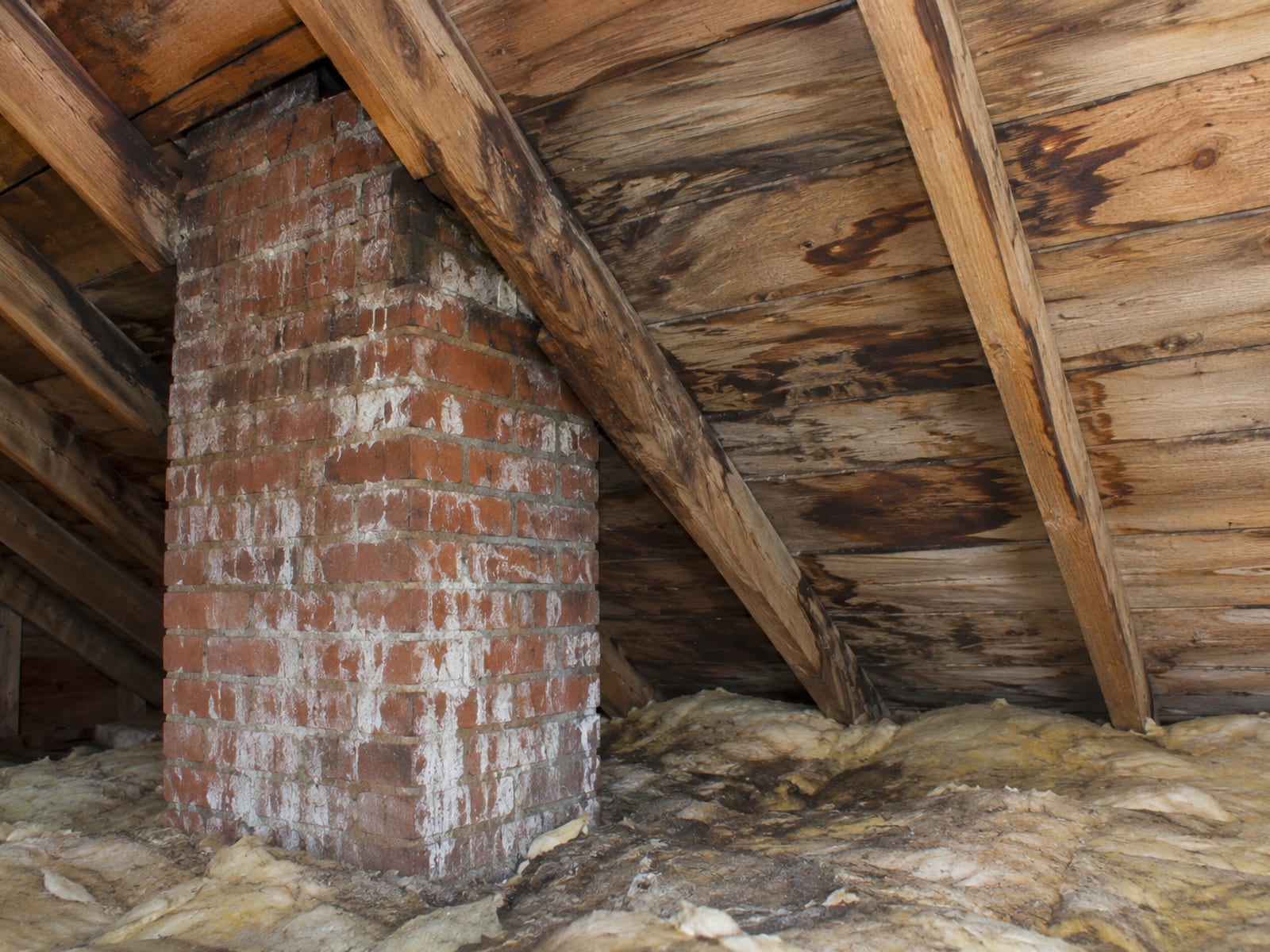
From the ground, look for flashing that is bent, rusted or separated from the brick, open mortar joints, cracked masonry, a damaged crown or a cap that is missing, along with water stains on the chimney itself. Binoculars help. A ladder does not, and neither does stepping out onto the roof.
A chimney should not leak in heavy rain. Hard rain can expose a defect, but a chimney and roof joined correctly send water away from the house. If the leak only shows up in wind-driven rain or during snowmelt, say so when you call. That detail narrows the search quickly. If you are still tracing where the water starts, our guide on how to find a roof leak in Connecticut walks through the attic and exterior checks.
Understanding the Metal Layers That Keep Water Out
Chimney flashing is not one piece of metal. It is a set of layers that overlap so water runs down and out instead of into the roof. Knowing the names helps you read an estimate and spot a shortcut.
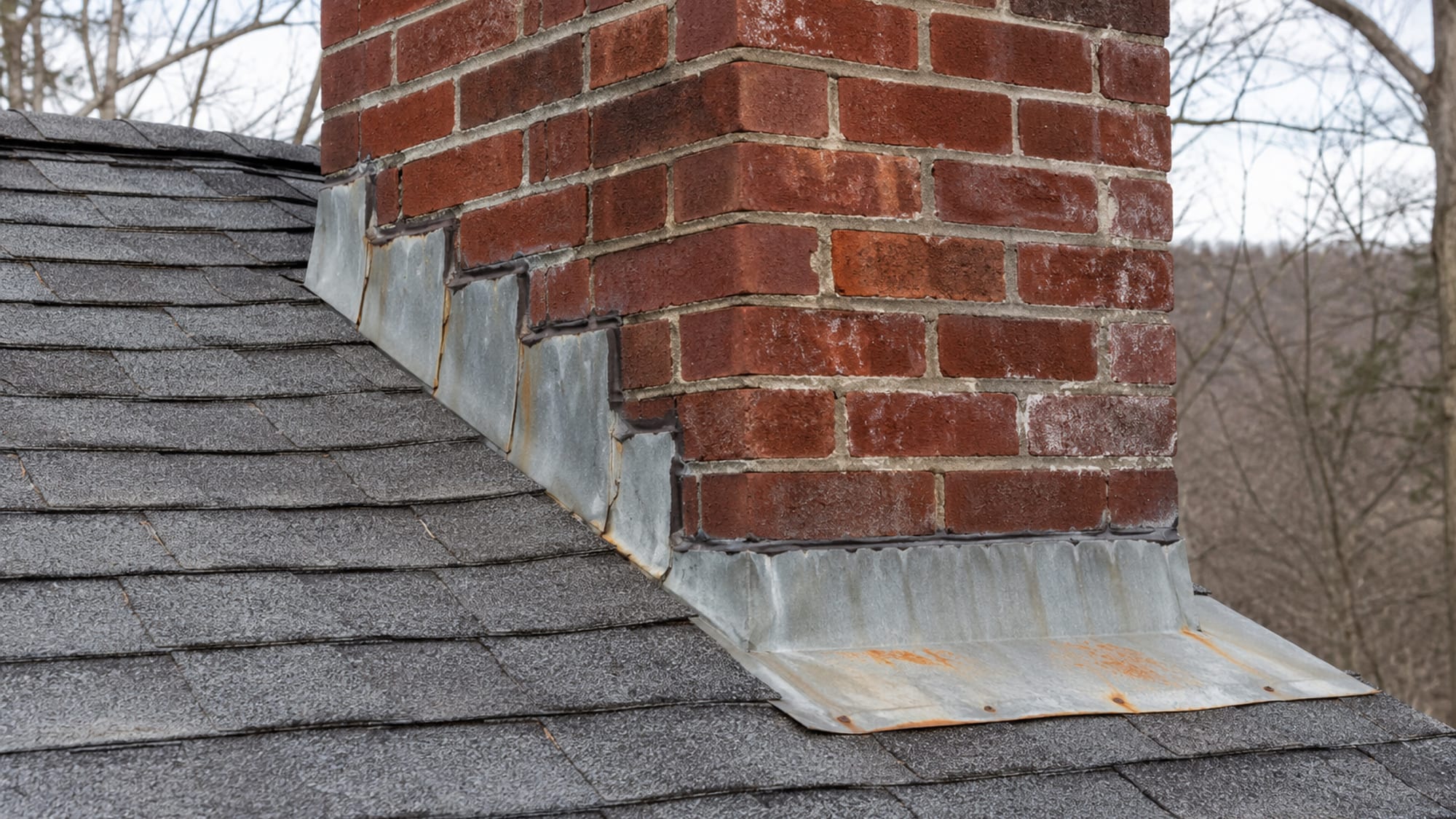
Step flashing is a row of small metal pieces along the sides of the chimney, one woven in with each course of shingles. The shingles cover the roof side of each piece, so water runs over the shingle, onto the metal and back down the roof. Counter flashing is the upper layer. It is attached to the chimney and covers the top edge of the step flashing. According to GAF's field guide for steep slope roofs, counter flashing is set about 1½ inches into a cut mortar joint, then sealed.
Apron flashing, sometimes called base flashing, protects the lower face of the chimney, where the roof slopes toward it. Back flashing protects the upper side. Together the pieces form a system where the sealant is only a finishing touch at a few joints, never the main barrier.
A wide chimney adds one more part. Connecticut's published chimney guidance says that a chimney more than 30 inches wide, measured parallel to the ridge, and not meeting the ridge needs a cricket. A cricket, also called a back-pan, is a small peaked ramp behind the chimney that splits the water and carries it around instead of letting it pool against the brick. The cricket is flashed and counter-flashed like any other chimney joint.
What a Real Repair Includes and When a New Roof Makes Sense
A proper chimney flashing repair is a short sequence of steps, and each one has a purpose. GAF describes caulk-only chimney flashing as a shortcut that can break down and let water in, and sealant also wears out from weather, movement and freeze-thaw cycles. A reflash replaces the layers instead.
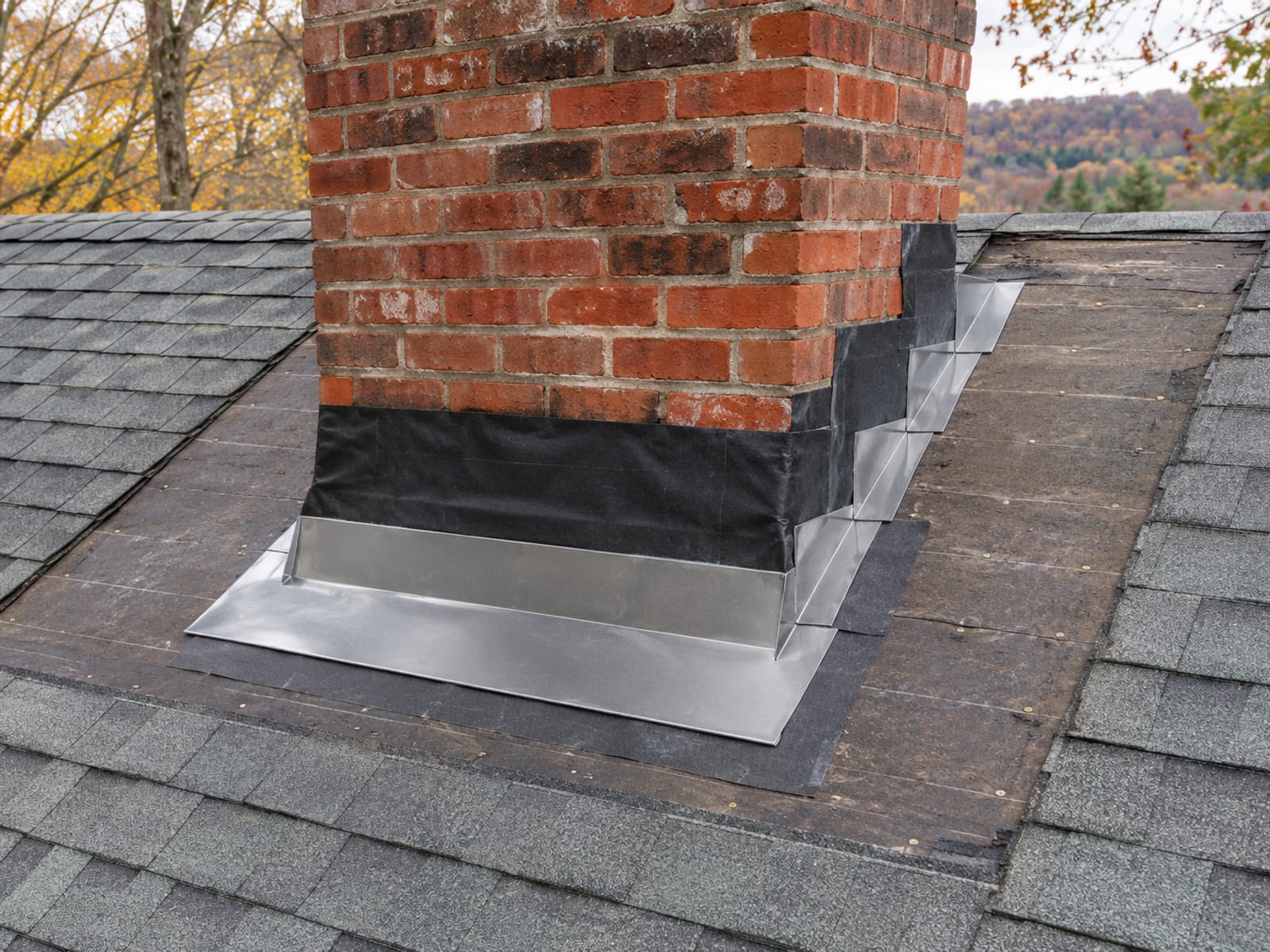
The counter flashing is fitted into a mortar joint or fastened mechanically. Shingles go back on, or new ones go in, so water flows over the flashing system. Sealant is used only at the joints that need it. The last step is an inspection of the finished work with the result documented, ideally with photos you can keep.
Many homeowners ask whether this means a whole new roof. Often it does not. A contractor can replace the shingles right around the chimney, install new flashing and weave the repair into the existing roof. If the roof is worn out or damaged across a wide area, a larger repair or a full roof replacement may serve you better. During a reroof, GAF's guide says new step flashing goes in with the new shingles, while existing counter flashing can stay only if it is sound enough to last as long as the new roof. Rusted, cracked or holed counter flashing should be replaced.
Chimney Flashing Layers and What Each One Does
Small metal pieces along the chimney sides, woven in with each shingle course so water runs over the shingles
Tap a factor to see how it moves the price.
Telling Roof Leaks From Masonry, Crown and Cap Problems
Sometimes the metal is fine and the water is coming in somewhere else. A cracked crown, the top surface of the chimney, can let rain in from above. A missing or damaged cap leaves the flue and the inside of the chimney open to the weather. Open mortar joints and cracked brick take on water, which then works its way down into the house.
You can often see hints from the ground, such as a crumbling top, gaps in the mortar or dark water stains on the brick. You cannot always tell which source is leaking by looking. A chimney professional may need to separate a roof-to-chimney leak from a leak at the top of the masonry, and a leak after a storm, visible structural damage or doubt about hidden conditions can be reasons to ask about a deeper inspection. The National Fire Protection Association's NFPA 211 standard defines three inspection levels, from a look at the readily accessible parts up to opening concealed construction.
This is also where the roofer-or-mason question gets answered. A roofer normally leads on flashing, shingles, underlayment, roof-deck damage and cricket construction. A mason or chimney specialist handles cracked masonry, mortar, the crown, the cap, and any flue or liner problems. If both are involved, ask each contractor how the work will be coordinated and who is responsible for what, and get the answer in writing.
Knowing What Chimney Flashing Repair Costs and What Moves the Price
The published price guides for this job are national, so use them as a rough yardstick and then get a written local quote. Angi's 2026 cost guide puts chimney flashing repair or replacement at about $1,000 on average, with most projects between $400 and $1,600. It lists minor resealing near $200 and says large or unusually shaped chimneys can top $2,000.
The same guide lists step flashing at about $400 to $600 and continuous flashing at about $800 to $1,000. Kiplinger's 2026 home-prep list puts general flashing repairs at $200 to $500. These are national numbers, not Connecticut bids, so treat them as a way to see whether a quote is in the neighborhood, not as a price for your house.
National Chimney Flashing Cost Figures (2026)
About $400 to $1,600 (Angi, 2026)
Tap a factor to see how it moves the price.
What moves a quote up or down is mostly the chimney and the roof. The width, height and number of sides to flash, the roof pitch and how hard it is to reach, and whether the job is a spot repair, a full reflash or part of a reroof all matter. So does the metal itself, whether galvanized steel, aluminum or copper. Masonry work, such as cutting mortar joints, crown repair, a new cap or brick replacement, adds cost, as do rotted decking or wet insulation found once the old flashing comes off.
Because so much of that is hidden until the work starts, ask for a written quote that lists flashing, masonry, cricket, roof deck, permit and interior repair as separate lines. Two bids are only comparable when they cover the same scope.
Handling Connecticut Permits, Storms and Insurance
Connecticut's consumer guidance tells homeowners to ask the local building official whether a chimney repair needs a permit. There is no single statewide answer for flashing-only work, because it can depend on your town and on whether the job touches roofing, framing or masonry. Ask your town's building office before work starts, and get the answer in writing. The current rules come from the 2022 Connecticut State Building Code, which adopts the 2021 International Residential Code.
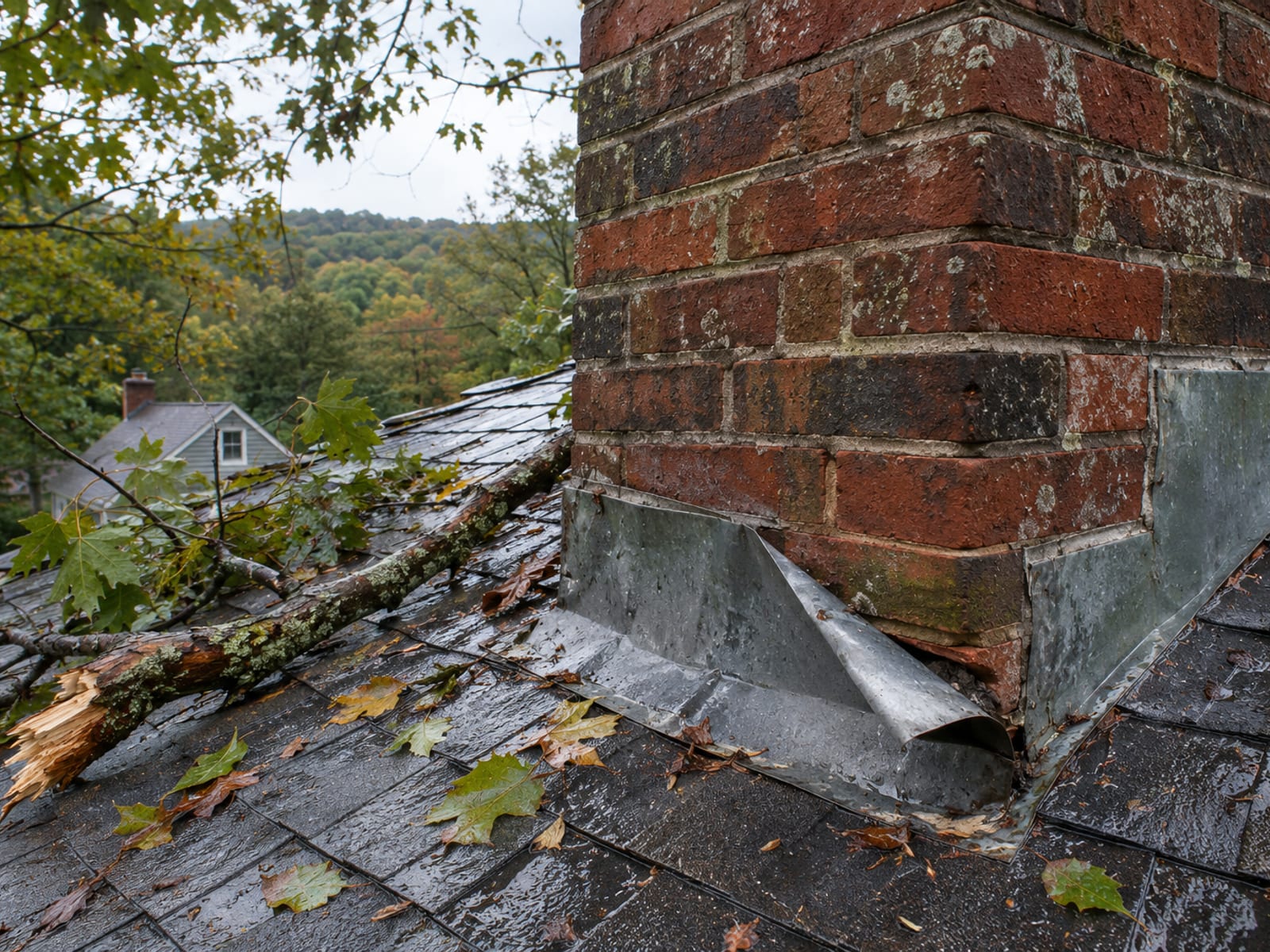
Insurance depends on your policy. Connecticut's insurance guide explains that homeowners policies commonly cover named perils such as windstorm and hail, while ordinary wear and maintenance are treated differently from policy to policy. Storm-damaged flashing may be covered if your policy covers that cause and the damage is documented. Long-term leaking, corrosion, faulty installation or deferred maintenance may not be.
If you think a storm did it, report it promptly, record the date, and ask your insurer what documentation and protective steps they require. Your photos from today are the start of that record. Your agent can tell you what your own policy says.
Choosing the Right Roofer, Mason or Chimney Professional
Start with the registration, because Connecticut's Department of Consumer Protection classifies chimney repair as home improvement, and anyone doing it must hold a home improvement contractor registration. The same page warns that a chimney sweep may not be credentialed to do repairs. A sweep cleans and inspects, which is useful, but the repair itself should go to a registered contractor. You can check any registration on the state's eLicense portal.
The state also spells out what a home improvement contract must contain: it must be in writing and include the contractor's registration number, a project description, start and completion dates, the cost, a payment schedule, who is responsible for the permit, and a three-business-day cancellation notice. Keep every change and addition in writing, too.
A few more habits protect you. Ask for proof of liability insurance and confirm it with the insurer. Avoid paying the full price before the work is finished, and avoid cash or peer-to-peer payment apps. Ask for photos or a diagram showing the flashing layers the contractor plans to use. A low bid is not a bargain if it leaves out the counter flashing or the mason's work that the other bid includes.
Ask directly whether the contractor will coordinate with a mason or chimney professional if masonry, the crown, the cap or the liner turns out to be the problem. Then ask what the warranty covers: labor, flashing materials, masonry and leaks are four different things.
Putting the Repair Scope in Writing Before Work Begins
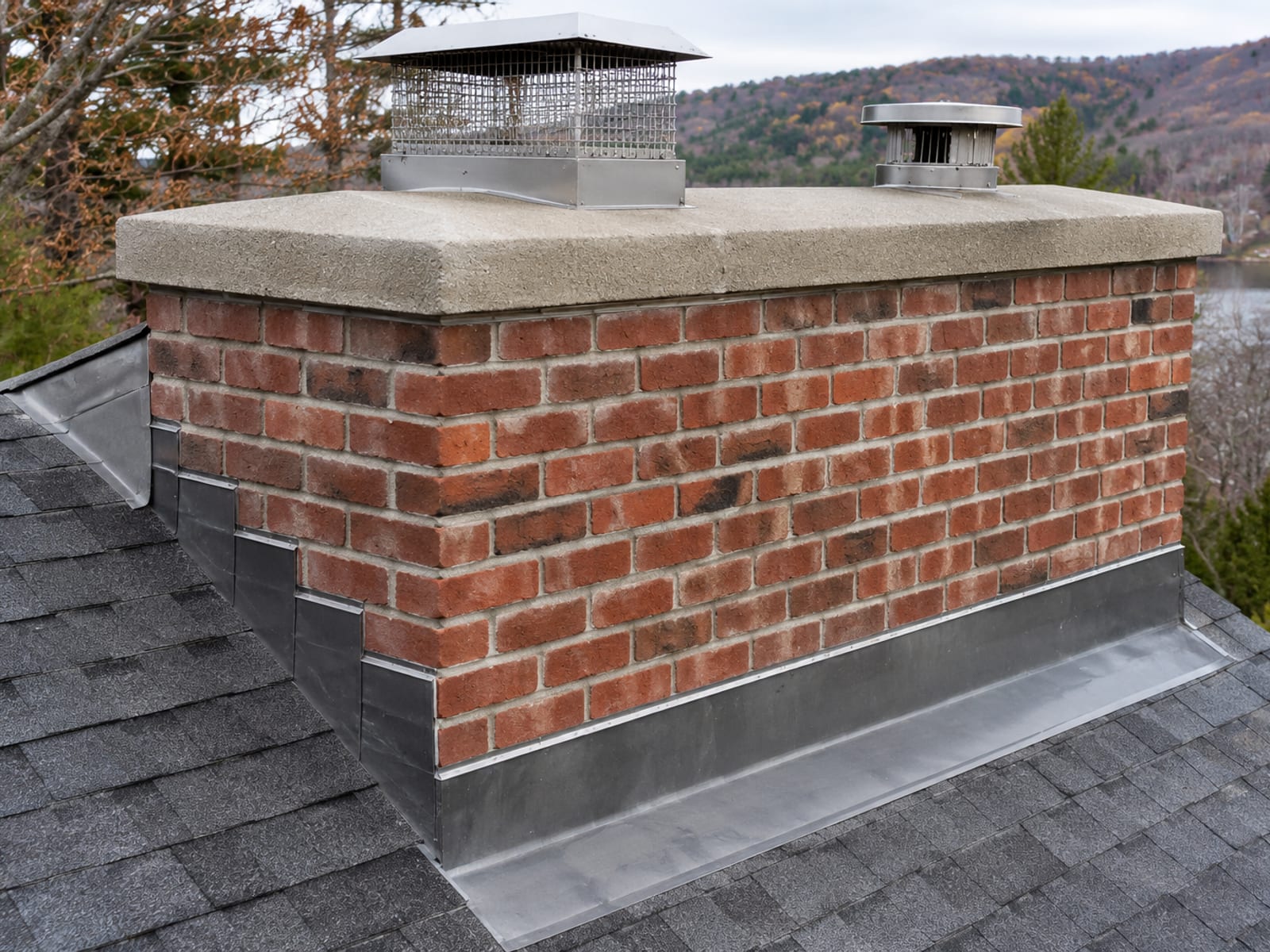
A written scope is what separates a repair that holds from one that returns. Before anyone starts, the paperwork should name every layer of flashing, whether that is step, counter, and apron or back flashing, and say whether a cricket is needed. It should say who does any masonry, crown or cap repair, by name, and whether roof-deck repair and replacement shingles are included.
Common mistakes tend to come from skipping this step: accepting a caulk-only patch without looking at the flashing underneath, assuming every chimney leak is a flashing leak, hiring someone who is not registered, leaving permit responsibility unclear, signing an incomplete contract, or treating two bids as equal when their scopes differ. If you are still working out whether the chimney is the source, our leaky roof repair page and our roof repair service cover the wider search.
Frequently Asked Questions About Chimney Flashing Repair in Connecticut
Do roofers fix chimney flashing?
Yes, roofers commonly install and repair the flashing where the roof meets the chimney. If the masonry, crown, liner or chimney structure is damaged too, a mason or qualified chimney professional may need to handle that part. Connecticut requires anyone doing chimney repair to hold a home improvement registration.
Can chimney flashing be replaced without replacing the roof?
Often, yes. A contractor can remove the shingles right around the chimney, install new flashing and weave the repaired area into the existing roof. Widespread roof wear or damage can make a larger repair or a full replacement the better choice.
How often should chimney flashing be replaced?
There is no fixed replacement interval to rely on. Have it looked at when it is rusted, bent, separated, holed, loose or leaking. During a reroof, worn flashing should be replaced, and sound counter flashing may sometimes stay if it can last as long as the new roof.
Does chimney flashing go under or over the shingles?
Both, depending on the piece. Step flashing is woven in with the shingle courses, with the shingles overlapping its roof-side edge. Apron or back flashing extends over the shingles where it sits, and counter flashing covers the top of the step flashing and attaches to the chimney.
Will homeowners insurance pay for chimney repair?
It depends on your policy and the cause. Storm damage may be covered if the policy covers that peril and the damage is documented, while wear, corrosion and faulty installation may not be. Report suspected storm damage promptly and ask your insurer what they need from you.
What does proper chimney flashing look like?
Corrosion-resistant metal fitted tight to the masonry, with individual step pieces along the sides, apron flashing at the bottom, counter flashing set into or fastened to a mortar joint, and a cricket or back-pan where the chimney needs one. It should shed water onto the roof instead of relying on a surface bead of caulk.
Do I need a permit for chimney flashing repair?
It depends on your town and the scope of the work. Connecticut's guidance says to ask the local building official, and the contractor and homeowner should agree in the contract on who pulls any permit. Get the building office's answer in writing.
Quick Chimney Flashing Knowledge Check
1. What should you do first when you see a ceiling stain near the chimney?
2. Why does a caulk-only patch often fail?
3. Which part sits behind a wide chimney to carry water around it?
4. Who normally leads repair of cracked masonry, the crown and the cap?
5. What should a Connecticut homeowner check before hiring someone for chimney repair?
Final Thoughts
The leak near your chimney can usually be traced and fixed, as long as the repair goes after the real entry point. That often means replacing the step, counter and apron or back flashing instead of sealing over it, and having a mason or chimney professional look at the crown, cap or brick if they are the source. Photos, weather notes and a written, itemized scope put you in a strong spot from the first phone call.
A repair done at the right layer protects the framing, insulation and ceiling below it from the slow damage that follows every storm. Dealing with it before the next nor'easter season gives you the best chance of keeping a small leak small.
If you have a stain, a drip or damp attic framing near the chimney, call American Quality Roofing and Siding at our Brookfield, CT base, and we will look at the roof side of the leak and tell you what we find. We serve Central and Western Connecticut, we are licensed and insured under CT HIC #0633301, and we offer free estimates and 24/7 emergency roof services. Request a free estimate or call us, and we will put the flashing scope in writing before any work starts.
Written by Jose Zaruma, American Quality Roofing and Siding.
← Back to the blog