Roofing Guide
How Long an Asphalt Shingle Roof Lasts in Connecticut
By Jose ZarumaPublished
- roofing
- asphalt shingles
- roof replacement
- connecticut
Plan on about 20 years for most asphalt shingle roofs in Connecticut, and up to about 30 for a well-built architectural roof. InterNACHI lists roughly 20 years for 3-tab shingles and 30 for architectural shingles. The NAHB life-expectancy chart puts asphalt shingles at about 20 years overall.
Both references tie those numbers to local weather, building design, material quality and maintenance. That is why the "30-year" printed on a shingle wrapper does not settle anything. The label usually names a limited warranty period or a product class, and a warranty is a promise about manufacturing defects, not a forecast for your roof.
If your roof is somewhere between 15 and 25 years old, the better question is what shape it is in and what Connecticut has put it through. A roof that has reached 20 years deserves a close look, but age alone does not mean it is finished. Condition does, and you can read a good deal of it from the driveway.
Key Takeaways
Two published references, two numbers
InterNACHI lists about 20 years for 3-tab and about 30 for architectural shingles; the NAHB lists about 20 years for asphalt shingles overall.
A warranty is not a lifespan
Manufacturer warranties cover defects, and "lifetime" is defined by ownership and by the terms in the document.
Connecticut weather shortens life
Ice dams, attic moisture, shade, moss, wind and hail each take years off a roof that might otherwise reach its reference age.
Ground checks come first
Missing shingles, curling edges, bare patches and granules in the gutters can be seen without climbing anything.
A written scope settles the rest
Only an inspection can show the deck and the hidden flashing, and a proposal should list every layer it covers.
Two Published References Put Shingle Life Between 20 and 30 Years
The two sources most often quoted for roof life are InterNACHI, the home inspectors' association, and the National Association of Home Builders. They do not agree exactly, and the gap is useful. InterNACHI separates the two common shingle styles: 3-tab shingles are the flat, single-layer kind, and architectural shingles are the thicker, layered kind sold on most newer roofs. The NAHB gives one figure for asphalt shingles as a group.
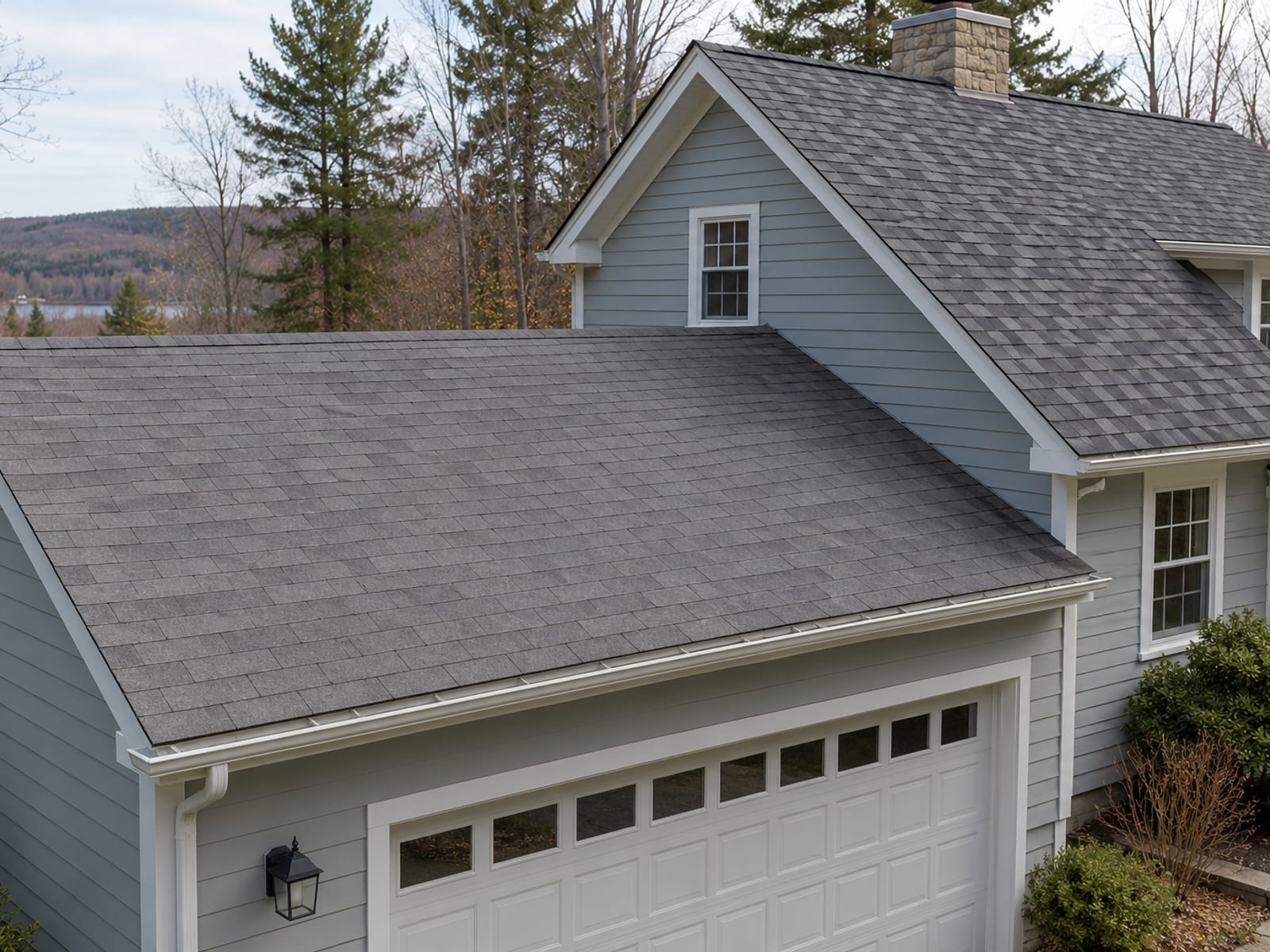
Treat these as service-life references, not guarantees. InterNACHI also notes that severe weather such as hail can shorten a roof's life or cause isolated damage that needs repair. Neither reference lists 50 years for asphalt shingles; the longer figures you may have heard belong to other roofing materials.
Age matters most as a signal to start paying attention. For asphalt roofs in Connecticut, the decision usually gets real somewhere around 15 to 20 years for 3-tab shingles and around 20 to 30 years for architectural ones. If you are not sure which kind you have, look at the shingle edges from the ground: 3-tab shingles have evenly cut notches along the bottom, while architectural shingles look thicker and more varied.
Pinning down the real age helps too. Closing documents, town permits, old invoices and notes from the prior owner can all confirm when the roof went on, and a roof that was installed over a second layer behaves differently from one installed over bare wood.
A "30-Year" Label Describes a Warranty, and Warranties Have Their Own Fine Print
A manufacturer warranty generally covers manufacturing defects. It does not cover every reason a roof can fail, and the word "lifetime" has a narrower meaning than most people expect. Reading the actual warranty document, not the wrapper, is the only way to know what you have.
CertainTeed's own warranty explainer says most of its architectural shingles carry a lifetime or lifetime-limited warranty against manufacturing defects, while most 3-tab shingles carry a 20- to 30-year limited warranty against the same. It adds that "lifetime" generally refers to the original homeowner, and that limited coverage depends on the roof being installed to the manufacturer's requirements.
The company's 2026 warranty document limits the manufacturer's obligation to repairing or replacing defective product, excludes or limits liability for consequential property damage, and caps total liability at the reasonable cost of shingles and the labor to repair or replace the defective ones.
Other manufacturers define the terms differently. Owens Corning's warranty page lists, for its standard lifetime coverage on single-family homes, a 10-year enhanced protection period, materials-only coverage after that, blow-off coverage for the first 15 years, algae-resistance coverage for the first 25 years and no standard workmanship coverage. GAF's product page for one of its lines describes a lifetime limited warranty against manufacturing defects, a 25-year algae-protection warranty on qualifying products and a 15-year wind warranty when the required accessories are installed. These are examples of how the same word changes from one document to the next, not a comparison of who is better.
So, before you lean on a warranty in a repair-or-replace decision, ask what defect is covered and whether labor is included. Ask when coverage becomes prorated, and whether wind, hail, algae or cosmetic damage is covered at all. Ask whether specific accessories are required and whether the warranty transfers to a buyer. Then ask a separate question that matters just as much: does the contractor's workmanship carry its own written warranty? A shingle defect and a poor installation are different problems with different people responsible.
Connecticut Winters Use Up Shingle Life Faster Than the Calendar Suggests
Four conditions do most of the damage here, and they often work together. Knowing which ones your house has helps you judge whether your roof is likely to reach its reference age or fall short of it.
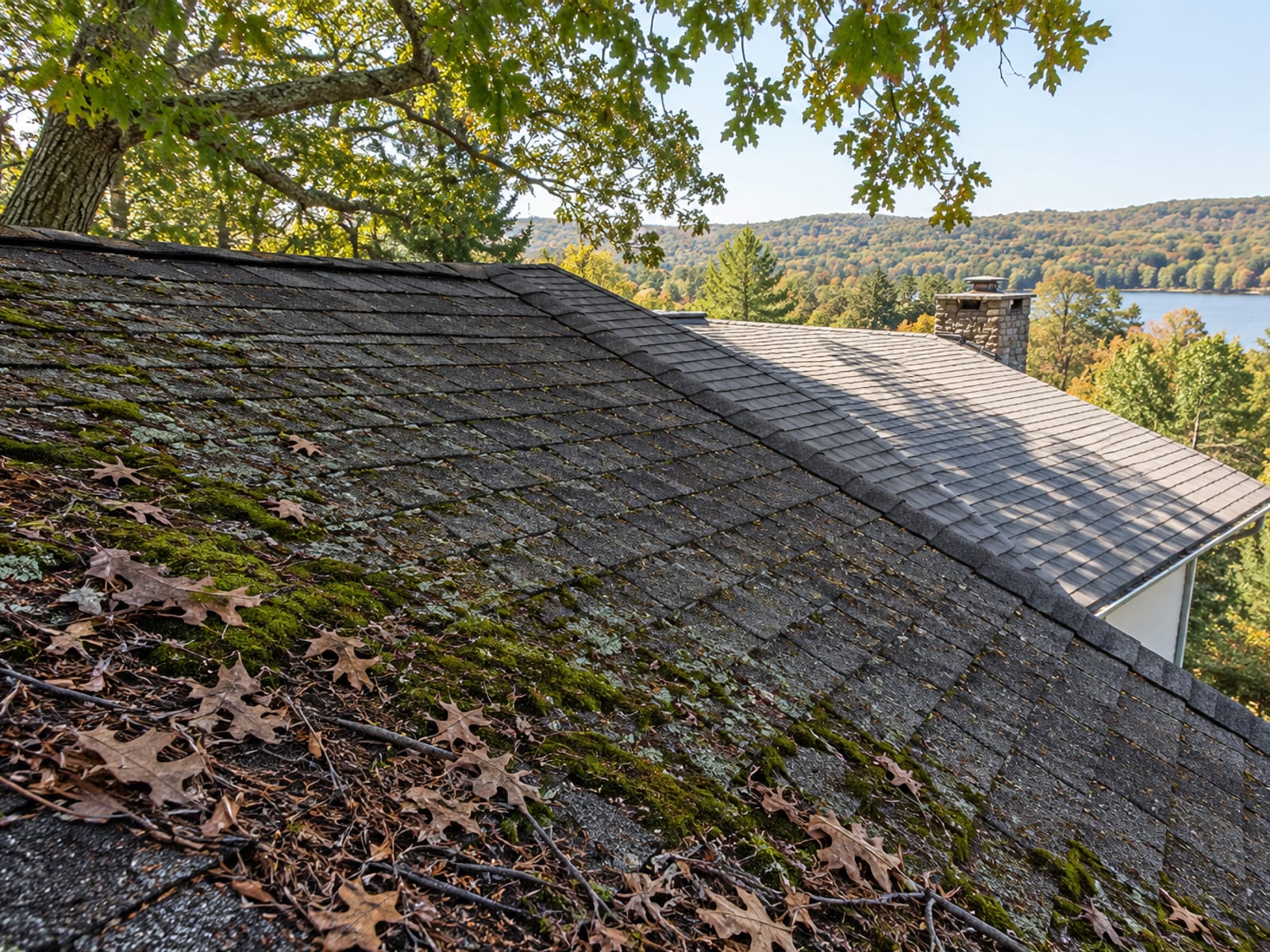
Attic heat and moisture are the second. The same guide ties moisture problems to weak insulation, air leakage and poor ventilation. NRCA, the national roofing contractors' association, says balanced ventilation should provide air movement at both the eaves and the ridge, with roughly half of the ventilation area near the ridge. A roof with a hot, damp attic wears from the underside as well as the top.
Shade and moss are the third. NRCA notes that algae grows in damp, shaded areas on asphalt shingles and that moss and algae can hold moisture against the roof. The EPA's moisture-control guidance lists moss and lichen among the conditions that keep asphalt roofing damp. A north-facing slope under oak or maple often ages faster than the south side of the same house.
Wind and hail are the fourth. A Connecticut DEEP planning document from 2025 describes severe thunderstorm winds above 58 mph, reports that derecho winds can reach 80 to 100 mph over wide areas, and puts the state's average at about three to four severe hail days a year.
Nor'easters bring their own damaging winds along cold fronts. The 2022 Connecticut State Building Code lists ultimate design wind speeds from 110 mph to 194 mph, depending on location and building conditions, so a shoreline house and a hilltop house are not held to the same number.
The Signs of an Aging Roof Show From the Ground
You do not need a ladder to learn a lot about a roof, and you should not walk on one. NRCA recommends visual inspection for cracked or curling shingles and warns homeowners against walking on unsafe roof areas. A walk around the house, with binoculars if you have them, covers most of what follows.
- Missing or torn shingles: Gaps in a course, or shingles lifted or displaced after a windstorm.
- Curling, clawing or buckling edges: The corners lift or turn up instead of lying flat.
- Cracks across the shingle surface: Splits across a tab or the body of the shingle.
- Bare patches and granules in the gutters: Dark, smooth spots where the gritty surface has worn away, and sand-like granules collecting at downspouts. InterNACHI says asphalt shingles should be replaced when they begin losing their granular covering and curling.
- Dark stains and sagging: Moisture stains on ceilings or around roof penetrations, a sagging roof line, or visibly damaged flashing.
Add one pattern on top of the list: repairs or leaks in different parts of the roof. One damaged shingle may be a simple repair, and a roof repair can carry an otherwise healthy roof for years. Several symptoms across more than one slope point to broad aging or weather damage, and that changes the conversation. Our guide on how often to get a roof inspection covers the timing.
Ground checks have limits. They cannot show the condition of the deck, hidden flashing failures or how far water has traveled. A professional roof inspection with a written scope is the next step once you see more than one of these signs, and photographing ceiling stains with a date on them gives that inspector a head start.
A Replacement Covers the Whole Roof System Under the Shingles
When a roof does reach the replacement stage, the shingles are the part you see and the least of what you are paying for. A roof replacement normally includes the roof deck, the underlayment, a leak barrier where required, flashing, drip edge, ventilation and then the shingles on top.
In Connecticut, the layer worth asking about is the ice-and-water barrier. Owens Corning's installation instructions call for a self-adhered barrier at the eaves in regions with a history of ice and water backup, extending at least 24 inches upslope from the interior wall line. The same layer protects valleys, penetrations and wall intersections. Synthetic underlayment goes over the deck beneath the shingles, installed to the product instructions and local code.
Quantities have their own vocabulary. A roofing square is 100 square feet of roof surface, and many common asphalt shingles are packaged at about three bundles per square, so one bundle covers roughly a third of a square. Coverage varies by product, and the wrapper and the manufacturer's installation instructions control the actual number. That matters when you compare two proposals that quote different "bundle" counts.
The code and the permit sit on top of all this. Connecticut's current rules are the 2022 State Building Code, which applies to permit applications filed on or after October 1, 2022, and adopts the 2021 International Residential Code; the state's code page has the details. Its asphalt-shingle provisions cover wind classification and roof assemblies. The Department of Consumer Protection says a building permit must be in hand before covered work begins and that the property owner remains ultimately responsible for confirming it exists.
Procedures differ by town. East Haven lists a new roof as work needing a permit and says the owner, agent or contractor arranges the inspections, while Trumbull's building department says the permit holder or agent notifies the building official when work is ready for inspection. Call your own town's building office and ask who is pulling the permit.
What a Connecticut Roof Replacement Costs Depends on the House
There is no state price schedule for roof replacement, so published figures are budgeting averages, not quotes. This Old House's 2026 Connecticut guide lists average Connecticut replacement costs by house size and an average of $4.84 per square foot.
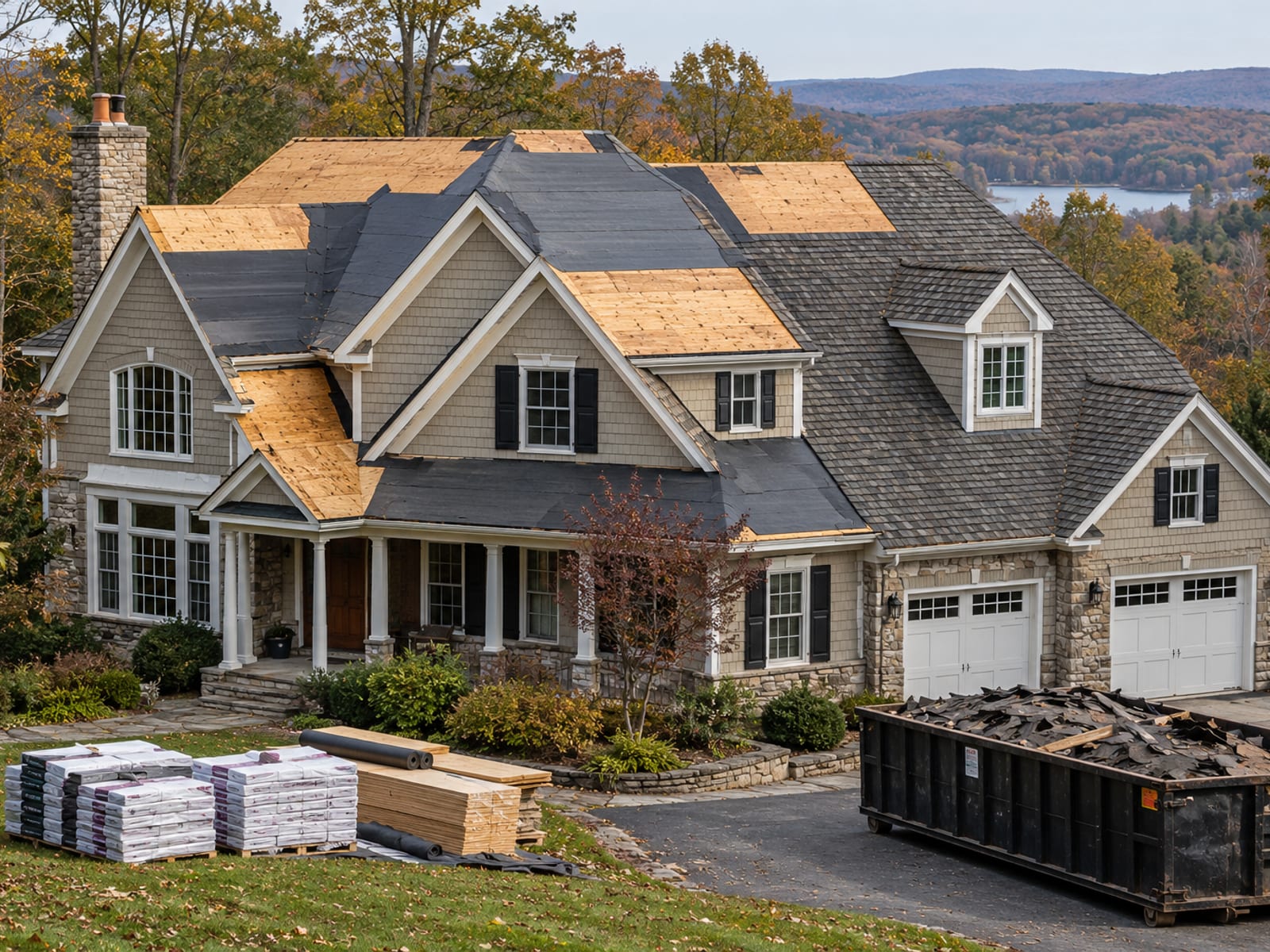
The same guide reports $500 to $3,000 for possible deck, rafter or truss repairs and $150 to $500 for typical permits. Those are published estimates, not fee schedules, and your house can land well outside them.
What moves your number is mostly physical. The actual roof surface and the number of squares set the baseline. Stories and access change labor, since a steep, three-story house with a tight driveway takes longer than a ranch with a clear yard. Valleys, dormers, skylights and chimneys add flashing work. Tear-off and disposal of the old roofing, any rotted decking or framing found after tear-off, the ice barrier, underlayment and ventilation changes all add to the total, and so do the shingle type and the permit and inspection steps.
Since you cannot know the deck's condition until the old roofing is off, a fair proposal says how rotted decking will be priced before the work starts. Compare itemized written proposals that separate labor, materials, tear-off, decking, flashing, ventilation, permits, disposal and any change-order pricing. Two bids at the same total can include very different amounts of work.
A Good Proposal Is Specific, and the Contractor Is Registered
Connecticut treats roofing as home improvement work, so a contractor working on your home must be registered with the Department of Consumer Protection. You can verify an active registration through the state's eLicense system, and the DCP home improvement page explains the requirement. Ask for a current certificate of liability insurance too, and confirm it with the insurance agency named on the certificate.
The contract has to be in writing. DCP's guidance on contracting says it must be signed and dated and must identify the contractor, address and registration number, the scope, materials, payment schedule, permit responsibility and cancellation information. Connecticut gives you three business days to cancel, and Saturday counts as a business day. The state also advises against large cash deposits, pressure to sign right away and full payment before the work is done.
A useful proposal for a shingle roof lists these items:
- Tear-off and layers: How many layers come off, and where the debris goes.
- Deck repair: What happens if the decking is rotten, and how that is priced.
- Ice barrier and underlayment: Which products, and how far the barrier runs.
- Flashing and ventilation: What is replaced and what changes in the attic airflow.
- Warranties: The manufacturer's product warranty and the contractor's workmanship warranty, written separately.
Common mistakes run in a pattern: choosing by price alone, treating a product warranty as a workmanship warranty, accepting a vague allowance for decking or flashing, skipping the permit question and signing before reading the cancellation terms.
Small Habits That Help a Shingle Roof Reach Its Reference Age
Most of what extends shingle life is maintenance you can arrange without touching the roof. Keeping gutters and downspouts clear lets meltwater leave the eaves, which lowers the odds of ice backing up. Having someone evaluate attic insulation and ventilation addresses the heat and moisture that wear a roof from below, the issues the Department of Energy guide describes.
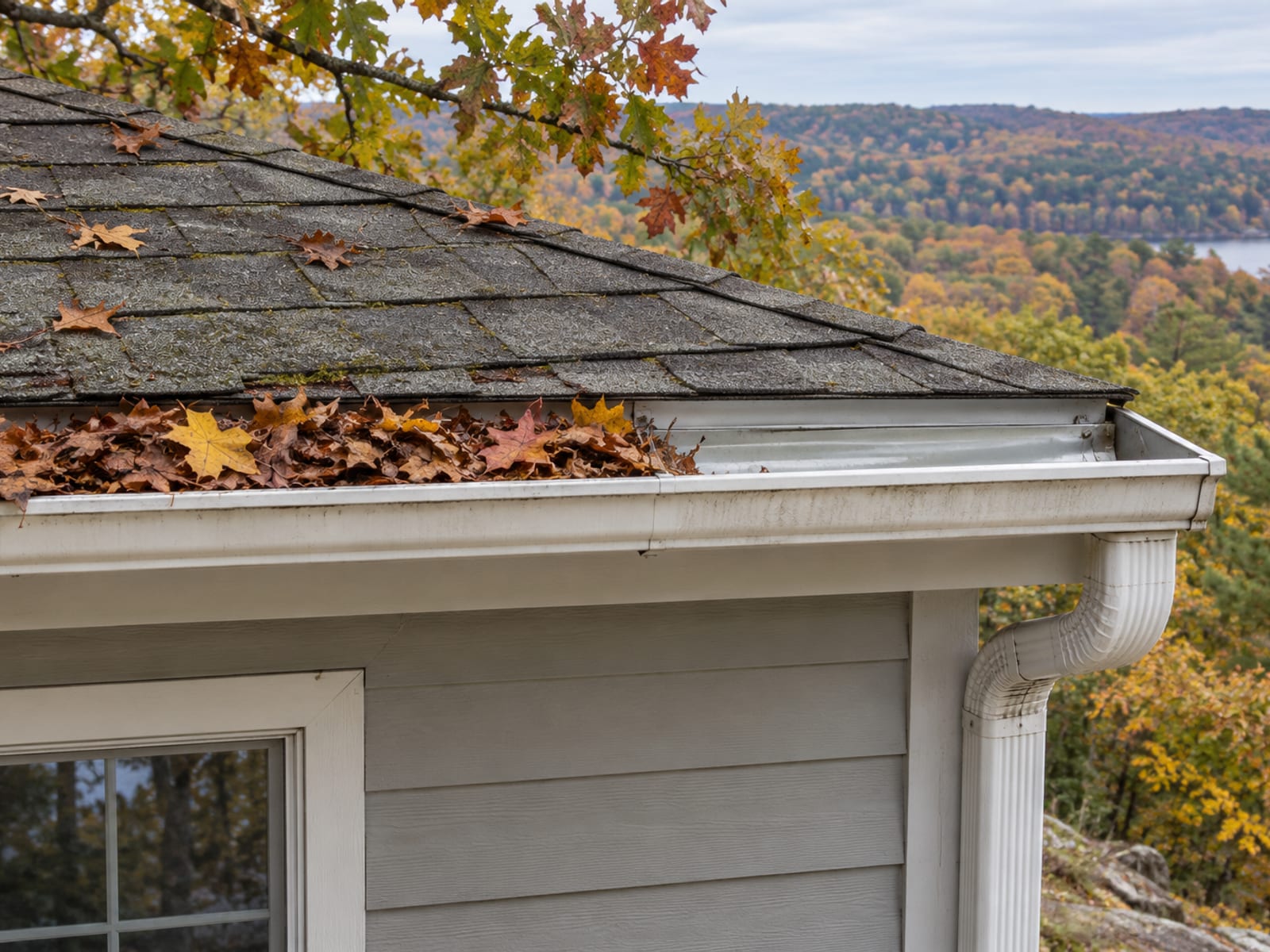
Small repairs matter as well. A lifted shingle or a worn pipe boot costs little when it is found early and a great deal when water has had a winter to work on the deck. A roof that is repaired when something small appears and inspected after severe weather has the best chance of reaching the upper end of its published range.
Frequently Asked Questions About Asphalt Shingle Roof Lifespan in Connecticut
Does a 30-year shingle really last 30 years?
Not necessarily. A "30-year" label generally names a limited manufacturer warranty period or a product class, not a guaranteed service life. InterNACHI lists architectural shingles at about 30 years under stated conditions, while the NAHB lists asphalt shingles at about 20 years overall. Weather, installation, ventilation, maintenance, ice dams, wind, hail and moisture can all shorten the real number.
Should a 20-year-old roof be replaced?
Not automatically. A roof at 20 years is at the reference point for 3-tab shingles and the NAHB figure, so it deserves a close inspection. An architectural roof may have more years left. Widespread curling, cracking, granule loss, missing shingles, recurring leaks or damaged flashing can justify replacement sooner.
At what age is an asphalt roof considered old?
Age becomes a major factor around 15 to 20 years, especially for 3-tab shingles, and replacement planning for architectural roofs commonly starts around 20 to 30 years. Age is not a diagnosis by itself; condition and installation history matter just as much.
Can an asphalt shingle roof last 50 years?
Neither InterNACHI nor the NAHB lists 50 years for asphalt shingles. InterNACHI gives about 30 for architectural and 20 for 3-tab. Some other roofing materials have longer published life expectancies, but those figures do not carry over to asphalt.
How much does one bundle of shingles cover?
Many common asphalt shingles come three bundles to a square, and a square is 100 square feet of roof surface, so a bundle often covers about a third of a square. Coverage varies by product. The package wrapper and the manufacturer's installation instructions give the number that applies to the shingle on your roof.
What goes under asphalt shingles?
A roof assembly normally includes the deck, underlayment, a self-adhered ice-and-water barrier where required, flashing, drip edge and ventilation. In regions with a history of ice and water backup, Owens Corning's instructions call for the barrier at the eaves, running at least 24 inches upslope from the interior wall line.
Is a metal roof or a shingle roof cheaper?
Asphalt shingles generally cost less to install than metal roofing, but the final Connecticut price depends on roof size, pitch, stories, access, tear-off, decking, flashing, ventilation, material grade and labor. A written local estimate gives you the figure for your house.
Quick Shingle Roof Lifespan Knowledge Check
1. What does a "30-year" shingle label generally name?
2. Which published reference lists about 20 years for 3-tab and about 30 years for architectural asphalt shingles?
3. What causes an ice dam?
4. Which of these can you check safely from the ground?
5. What should a roofing proposal list separately?
Final Thoughts
A shingle roof in Connecticut is usually planned around 20 years, with architectural shingles sometimes reaching toward 30. The warranty on the wrapper is a separate promise about defects, and the real answer for your house comes from its age, its condition and what ice, shade, attic heat and wind have done to it. A roof at 20 years needs a careful look, not an automatic quote.
Taking that look early gives you time. You can plan the replacement, compare written scopes and pick a start date, instead of reacting to a ceiling stain in the middle of a thaw. Knowing which warranty questions matter also keeps a long product label from making the decision for you.
If you want a specific roof assessed, American Quality Roofing and Siding can inspect it and write a scope that covers tear-off, decking, ice barrier, underlayment, flashing, ventilation and warranties, serving Central and Western Connecticut from our base in Brookfield. We are licensed and insured, CT HIC #0633301. Request a free estimate or call us, and we will tell you what we see before you decide anything.
Written by Jose Zaruma, American Quality Roofing and Siding.
← Back to the blog