Roofing Guide
Architectural vs 3-Tab Shingles: Which Fits a Connecticut Roof
By Jose ZarumaPublished
- asphalt shingles
- roof replacement
- roofing
- connecticut
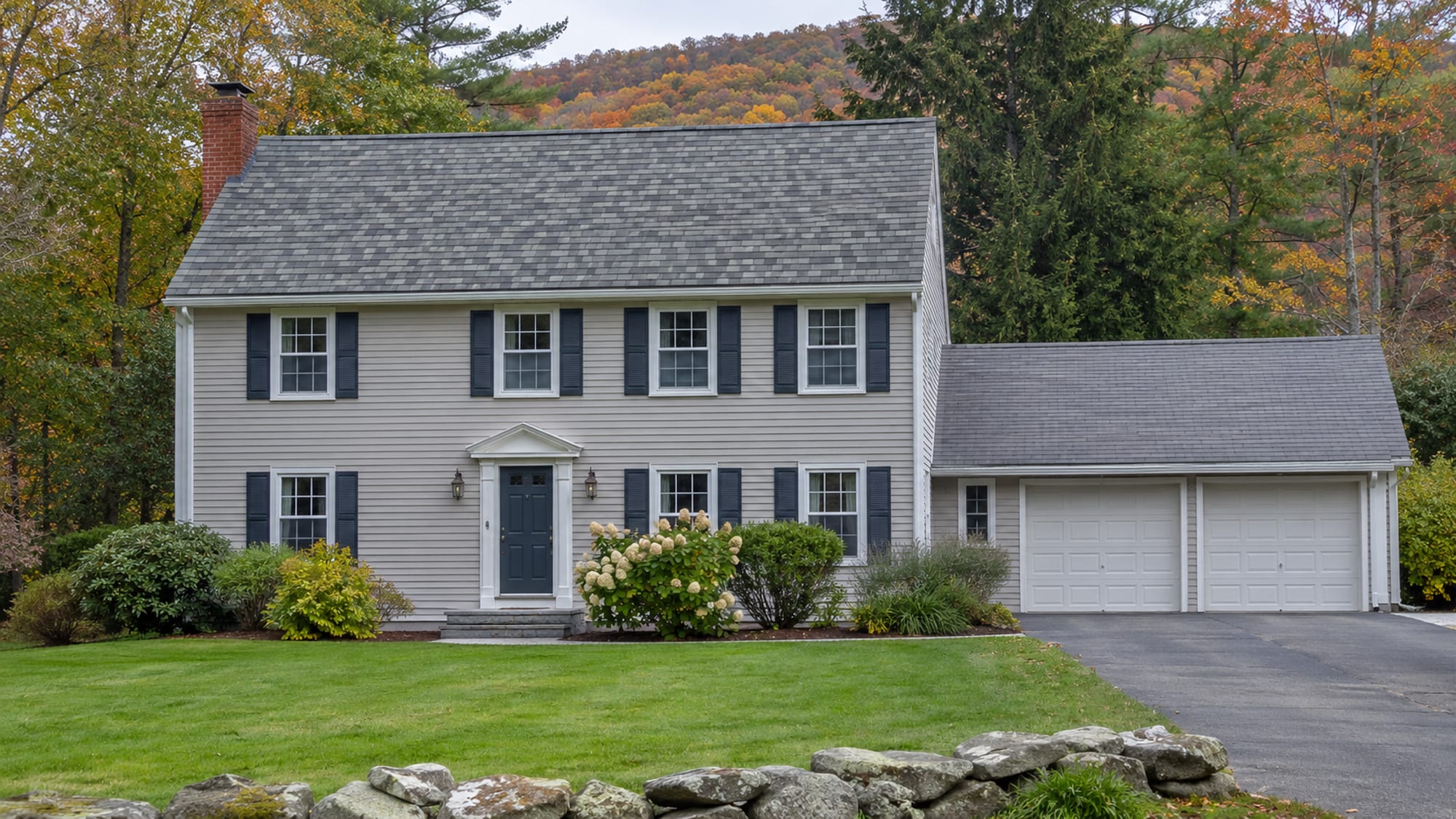
Architectural shingles are built from two or more laminated layers, look deeper and more dimensional on the roof, and commonly carry stronger warranty and wind terms. 3-tab shingles are a single layer, are still sold by several manufacturers, and cost less as a material. If you have one quote that says architectural and another that says 3-tab, that is the basic difference between them.
The harder part is that the two quotes rarely line up line by line. The product names differ, the warranty wording differs, and one may include things the other leaves out. A price gap between them can come from the shingle, or from the work around it.
Before you decide, it helps to know what each shingle actually promises, what Connecticut weather asks of a roof, and what a fair comparison between two written quotes looks like.
Key Takeaways
Construction
Architectural shingles are laminated from two or more layers; 3-tab shingles are one layer cut into three tabs.
Wind
Wind warranties belong to the exact product, so ask for the maximum covered speed and the accessories it requires, not just the shingle category.
Connecticut weather
Ice dams, snow, freeze-thaw and wind-driven rain are handled by the whole installed system, including ice-and-water protection, ventilation and flashing.
Price
This Old House's 2026 Connecticut guide gives an average replacement of $8,562, which is a planning figure; only written quotes for the same roof show the real gap.
Insurance
Connecticut's Insurance Department says insurers often allow longer roof-age periods for architectural shingles, so ask your insurer before ordering.
The quote
Each quote should name the exact product and color, say tear-off or overlay, list who pulls the permit, and show the manufacturer warranty and workmanship warranty separately.
How 3-Tab and Architectural Shingles Are Built and How They Look
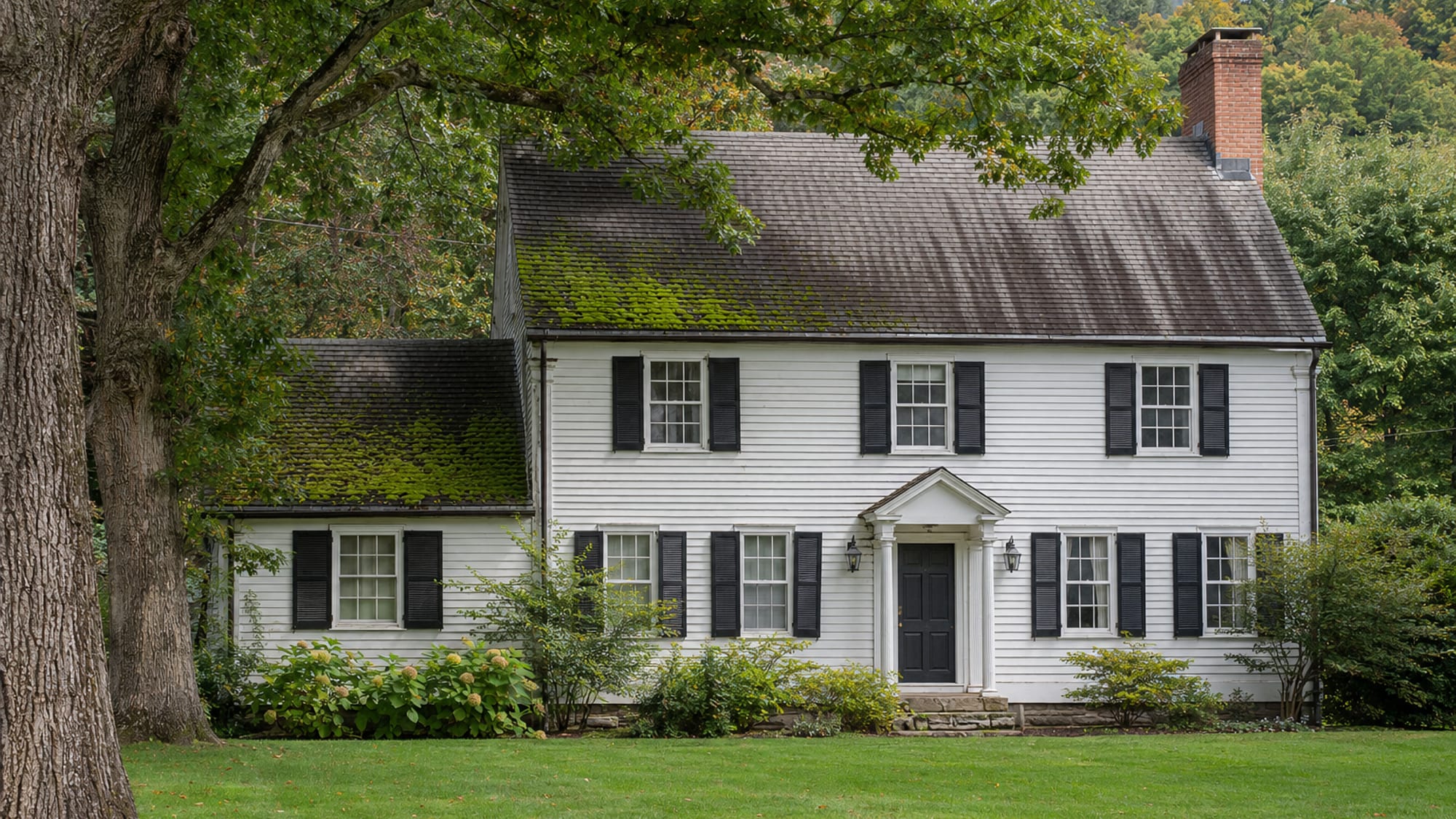
GAF describes 3-tab shingles as a single layer of fiberglass asphalt shingle cut into three tabs, and architectural shingles as several asphalt-coated fiberglass layers laminated together. That one difference in construction explains most of what you see from the street. A 3-tab roof shows a flat, uniform, repeating pattern. An architectural roof has shadow lines and a varied cut that can resemble wood shakes.
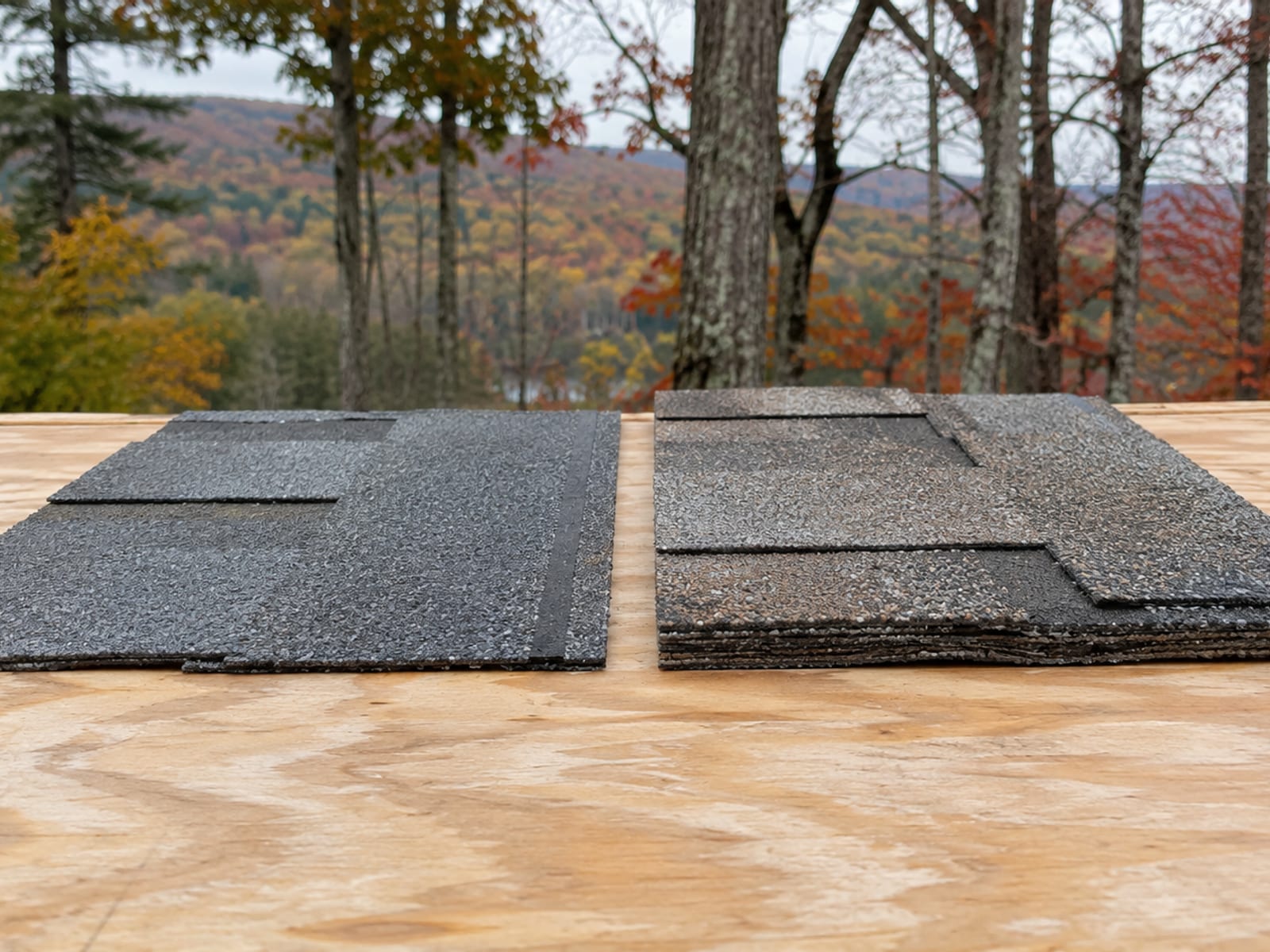
Weight is a point to confirm if you are worried about the roof structure. CertainTeed lists its Landmark architectural shingle at roughly 217 to 229 pounds per square. For a 3-tab product, ask for the weight on that product's own data sheet instead of assuming it.
3-Tab and Architectural Shingles Side by Side
3-Tab Shingles: One fiberglass-reinforced asphalt layer cut into three tabs
Architectural Shingles: Two or more asphalt-coated fiberglass layers laminated together
Tap a factor to see how it moves the price.
The two types do not swap for repairs. A 3-tab patch will not match an architectural roof, because the profile, exposure, shadow pattern and dimensions all differ. Even within one product line, a new shingle can look different beside weathered ones, because asphalt colors and granules age over the years.
Is 3-Tab Still Made?
Yes. Several manufacturers still list 3-tab lines: GAF's Royal Sovereign, Owens Corning's Supreme, CertainTeed's XT 25 and IKO's Marathon Plus AR. GAF calls 3-tab its most economical roofing choice, so it remains a legitimate lower-cost option.
What changes is color choice. GAF's current Royal Sovereign page lists only two colors, Charcoal and Weathered Gray. If you have an older 3-tab roof and need a repair, a discontinued color may have no close match. In that case a roofer can look at repairing one roof plane or replacing more of the roof, rather than patching in a shingle that stands out.
If you have an older roof and you are not sure which type you have, a roofer can identify it, measure the exposure and tell you whether a repair is practical. Our roof repair page covers how that diagnosis usually goes.
Wind Ratings and Warranties: What the Fine Print Requires
"Architectural" and "3-tab" are categories, not wind ratings. Each product carries its own, and the numbers come with conditions. Two terms get mixed up here. ASTM D3161 and ASTM D7158 are wind-test standards that manufacturers reference; a product's test class is not the same thing as the wind speed its warranty covers.
Published Wind Warranty Examples, by Product
Type: 3-tab
Published wind warranty: 60 mph
Condition: 25-year limited warranty
Tap a factor to see how it moves the price.
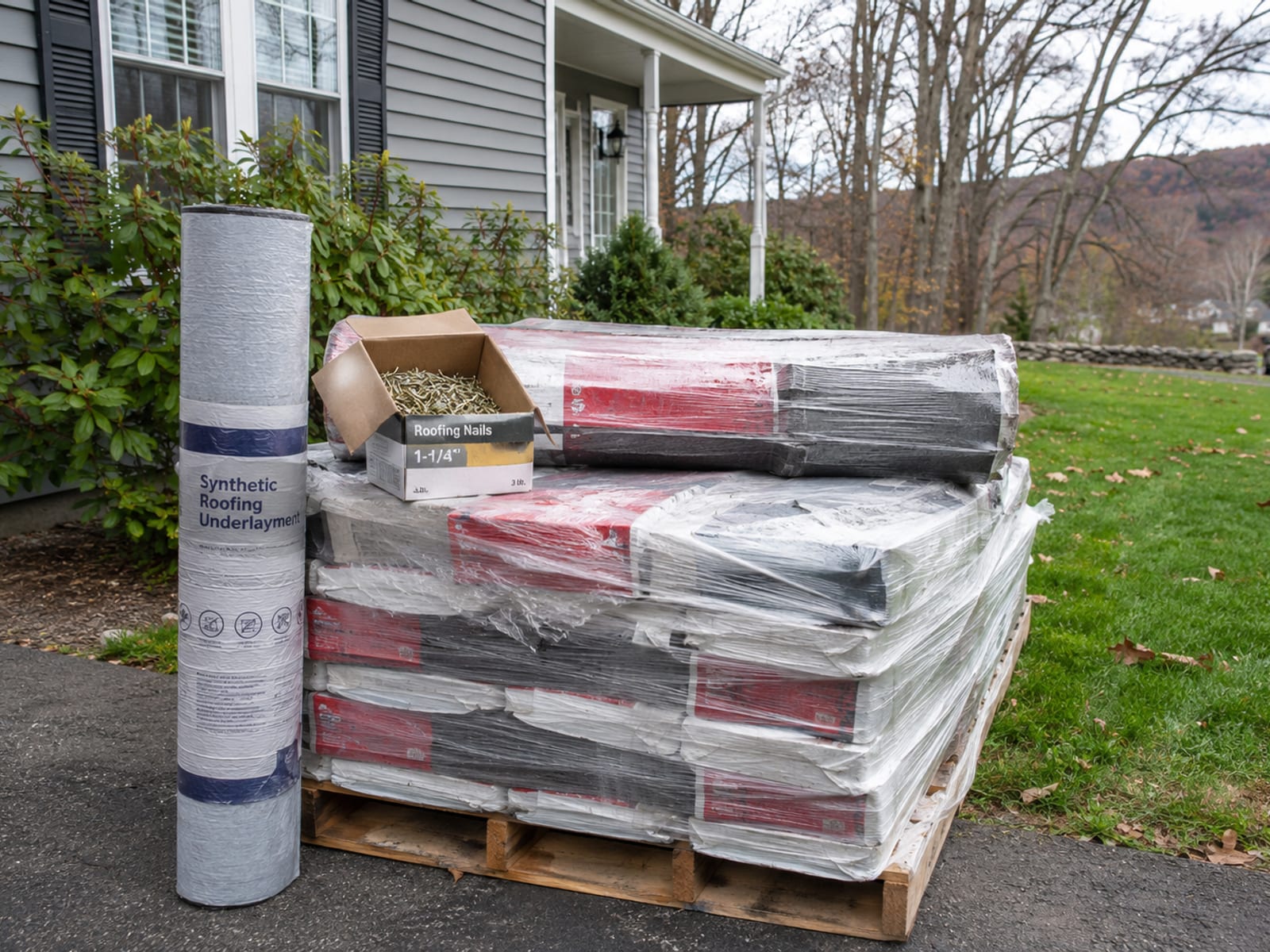
Look at the right-hand column. Most of the higher wind figures depend on accessories: specific starter strips, ridge caps, nails or underlayment. If a quote lists a high wind warranty but not the accessories that earn it, ask the contractor to put them in writing. Owens Corning's Duration page is one place where the required components are described.
So, the questions to put to each contractor are simple. What is the exact product's wind warranty? What is the maximum covered wind speed? How many nails, which starter strips, which ridge caps, and what underlayment or leak barrier does the warranty require? Is registration needed, and what does it exclude? The warranty issued with your product controls, not a brochure.
What Connecticut Roofs Need for Snow, Ice Dams, Wind and Hail
Connecticut roofs deal with wind-driven rain, severe thunderstorms, hail, snow, ice and repeated freeze-thaw cycles. The National Weather Service's Boston/Norton office defines a severe thunderstorm as one that can produce wind gusts of at least 58 mph or hail at least one inch across. A shingle's profile does not solve all of that on its own.
Architectural shingles are often the stronger default for a full replacement when you want a dimensional look, longer manufacturer warranty terms and higher published wind coverage. They are not immune to storm damage or ice-dam leaks, and a better shingle does not make up for a weak installation around it.
The details that matter most on a Connecticut roof are these:
- Ice-and-water protection: At vulnerable eaves, valleys, wall intersections, chimneys, skylights and penetrations. GAF describes its leak barrier as helping prevent leaks from wind-driven rain and ice dams.
- Attic ventilation: Adequate intake at the soffit and exhaust at the ridge keep the roof deck drier and cooler.
- Starters and ridge caps: The correct pieces for the product, because wind warranties often depend on them.
- Nailing and sealant: The right nails in the right place, with the shingle seal strips activating.
- Flashing and decking: Proper metal at chimneys, walls, skylights and penetrations, over a solid roof deck.
For the layer under the shingles, our guide to where ice-and-water shield goes on a roof goes through the code and the estimate checklist. If storms have already damaged your roof, our storm damage page explains how that process works.
What a Connecticut Roof Replacement Costs and What Changes the Price
This Old House's 2026 Connecticut roof replacement guide gives a Connecticut average of $8,562 for a replacement, with a reported range of $6,630 to $21,288. For a 2,000-square-foot, two-story home, it lists $9,331. These are planning figures built from cost data and assumptions about roof pitch and overhangs. They are not a quote for your house.
Connecticut Roof Replacement Planning Figures (This Old House, 2026)
$8,562
Tap a factor to see how it moves the price.
The guide lists what moves the number: actual roof area (not floor area), pitch and complexity, dormers and valleys, tear-off and disposal, extra roof layers, damaged decking, flashing, ventilation upgrades, permits and local code requirements. A cut-up roof with several valleys costs more than a simple gable of the same square footage.
Lifespan matters to the price comparison too. The same publisher's roofing guide gives general estimates of about 30 years for architectural asphalt shingles and about 20 years for 3-tab. A "30-year" label is not a guarantee of 30 years of service; ventilation, installation quality, exposure, ice dams and storms all change the real number. Our asphalt shingle roof lifespan page covers what shortens and extends a Connecticut roof's life.
Insurance can also affect the choice. The Connecticut Insurance Department's consumer advisory says insurers commonly look at roof age, condition, missing or lifted shingles, multiple layers and deterioration, and that architectural shingles may be eligible for longer roof-age periods, often 25 years or more. Rules vary by insurer. Ask yours about roof-age limits, wind or hail deductibles and any credits before you order materials.
The Permit and Replacement Timeline in Connecticut
Connecticut's 2022 State Building Code applies to permit applications filed on or after October 1, 2022, and it adopts the 2021 International Residential Code, according to the state building code page. Your town's building department issues the permit and does the inspections. Danbury's Building Department, for example, reviews plans, issues permits, performs inspections and issues a final certificate. Requirements differ by town, so contact yours before work begins.
The Department of Consumer Protection says many home improvement projects need a town building permit and that it must be in hand before work starts. Even when the contractor agrees to apply, you stay responsible for confirming the right permit is in place. A full replacement is a bigger job than a small repair, so do not assume it is exempt.
A sensible order for the decision:
- Today: Photograph visible damage, leaks, missing shingles, granules in the gutters, sagging and damaged flashing.
- This week: Collect at least three written quotes, check each contractor's Connecticut HIC registration, ask for proof of insurance and ask who will pull the permit.
- Before signing: Confirm the exact shingle product, warranty terms, wind coverage, payment schedule, start and completion dates, how change orders work, cleanup and the decking allowance.
A question that comes up often is whether new architectural shingles can go over an old 3-tab layer. Sometimes an overlay is allowed when the deck, slope, number of existing layers, code and the manufacturer's instructions all permit it, and the existing roof has to be evaluated first. The quote should say whether the job is a full tear-off or an approved overlay, and how many layers will remain.
How to Compare Quotes and Vet a Connecticut Roofing Contractor
Start with the registration. Roofing is home improvement work in Connecticut, so the contractor must be registered with the Department of Consumer Protection. You can verify the number through the state's eLicense system, then confirm the name on the registration matches the name on the contract, invoices and insurance documents. The DCP home improvement page is the starting point.
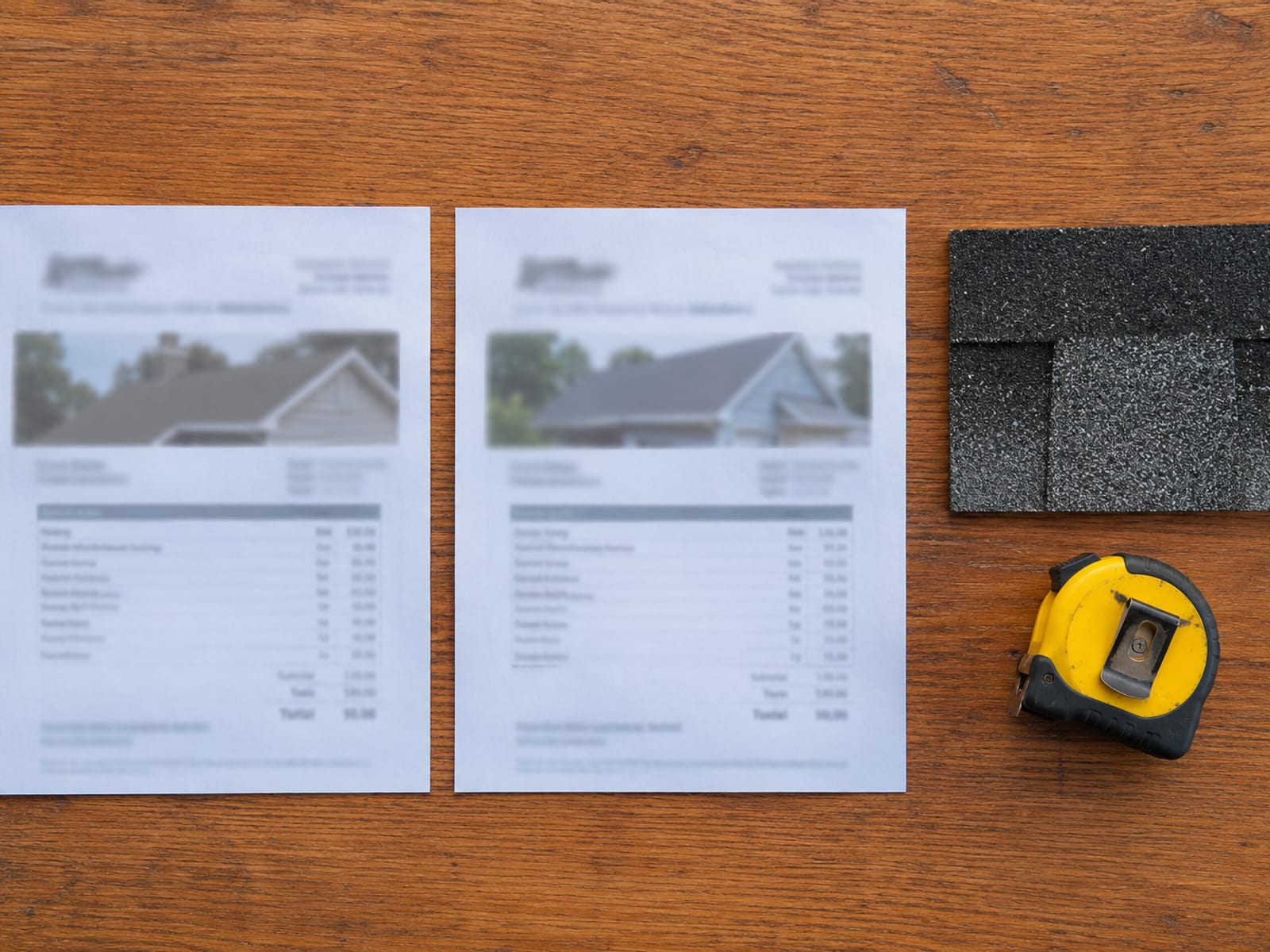
Connecticut requires home improvement contracts to be in writing. According to the DCP's guide to what a contract must include, that means the HIC registration number, a description of the work, start and completion dates, the price, the payment schedule, who handles the permit and a three-business-day cancellation notice. For a shingle comparison, add these to the quote:
- Product: The exact manufacturer, product line and color.
- Scope: Tear-off or approved overlay, how many layers stay, who pulls the permit and who schedules inspections.
- System: Ice-and-water protection, underlayment, flashing, ventilation, ridge caps and cleanup.
- Decking: How hidden damage is priced and approved before the work continues.
- Warranties: The manufacturer warranty and the workmanship warranty, listed separately.
Common mistakes are choosing from a verbal price, comparing different scopes as if they were equal, not naming the exact shingle, assuming a 30-year label means 30 years and accepting a change order that is not in writing.
Frequently Asked Questions About Architectural vs 3-Tab Shingles in Connecticut
Are architectural shingles really better than 3-tab?
They commonly carry stronger warranty and wind terms and have a deeper, more dimensional look. 3-tab remains a legitimate lower-cost product. The better choice depends on your roof's condition, your budget, how long you plan to own the house, appearance, insurance and the exact product and installation.
Does anyone still use 3-tab shingles?
Yes. GAF, Owens Corning, CertainTeed and IKO each list a 3-tab product. Availability varies by color, distributor and region, so confirm your color before counting on it for a repair.
Are architectural shingles more expensive than 3-tab?
As a material, yes, since they use more material and a more involved construction. The size of the difference on a Connecticut installation depends on your quotes, so compare written quotes for the same roof area and tear-off.
How long do 30-year architectural shingles really last?
A 30-year label is not a guaranteed service life. General estimates are about 30 years for architectural and about 20 for 3-tab, and Connecticut freeze-thaw cycles, ice dams, wind, ventilation and installation quality can shorten or extend that.
Can I put architectural shingles over a 3-tab layer?
Sometimes, when the deck, slope, existing layers, code and manufacturer instructions allow it. The existing roof has to be evaluated first, and the quote should say whether it is a tear-off or an approved overlay.
How much does a shingle roof cost for a 2,000-square-foot house in Connecticut?
This Old House's 2026 Connecticut guide lists $9,331 for a 2,000-square-foot, two-story home, and $8,562 as the state average. These are planning figures, not a quote.
Are architectural shingles heavier than 3-tab?
They are commonly heavier because of the laminated layers. CertainTeed lists Landmark at roughly 217 to 229 pounds per square. Confirm the weight on the exact product's data sheet if the roof has structural concerns.
Architectural vs 3-Tab Shingles Quiz
1. What is the basic construction difference between the two shingle types?
2. Is a test class such as ASTM D3161 Class F the same as the warranty wind speed?
3. What is the fairest way to compare a 3-tab quote with an architectural quote?
4. Who is responsible for confirming the right permit is in place?
5. What should a good quote list separately?
Final Thoughts
Architectural shingles bring a deeper look and commonly stronger warranty and wind terms. 3-tab shingles are still made and cost less as a material. Whichever you choose, the exact product's wind warranty, the accessories it requires and the whole installed system matter more than the shingle category.
A roof built to the manufacturer's instructions, with ice-and-water protection, ventilation and flashing done correctly, gives you the best chance of getting a full life out of whichever shingle you choose, and a clear written quote makes that much easier to check.
If you want a measured, written estimate that answers these questions in order, American Quality Roofing and Siding can help. We serve Central and Western Connecticut from Brookfield, and handle roof replacement for homes across the area. Request a free estimate or call us, and we will put the product, the scope, the permit and both warranties in writing.
Written by Jose Zaruma, American Quality Roofing and Siding.
← Back to the blog