Roofing Guide
Replacing Your Roof and Siding at the Same Time
By Jose ZarumaPublished
- siding
- roof replacement
- roofing
- connecticut
When both your roof and your siding are worn out, the roof generally goes first, then the siding, then the gutters. That order protects the places where the two meet. The roof sets the drip edge and the flashing that runs up against your walls, and the siding's water barrier, J-channels and trim have to tie into those pieces.
Doing both jobs in one project can also save money, though not by a set percentage. The savings come from work that only has to happen once: one setup, one disposal plan, one look at the sheathing under the old siding.
Whether to combine or split the work depends on what each system looks like today, how you want to pay for it, and how much of a construction site you can live with while the crew works.
Key Takeaways
The order
Roof first, siding second, gutters last, because roof flashing and the roof edge have to be in place before siding covers them.
The savings
A combined job can share setup, scaffolding, disposal and one look at hidden damage. Your estimate should show each of those, not just a lower total.
The test
Ask for a combined estimate and separate roof-only and siding-only scopes, then compare them line by line.
The paperwork
Connecticut requires a written contract with the contractor's HIC registration number, and your town's building department decides which permits apply.
Combining the Two Jobs Shares Setup Costs, Not a Fixed Percentage
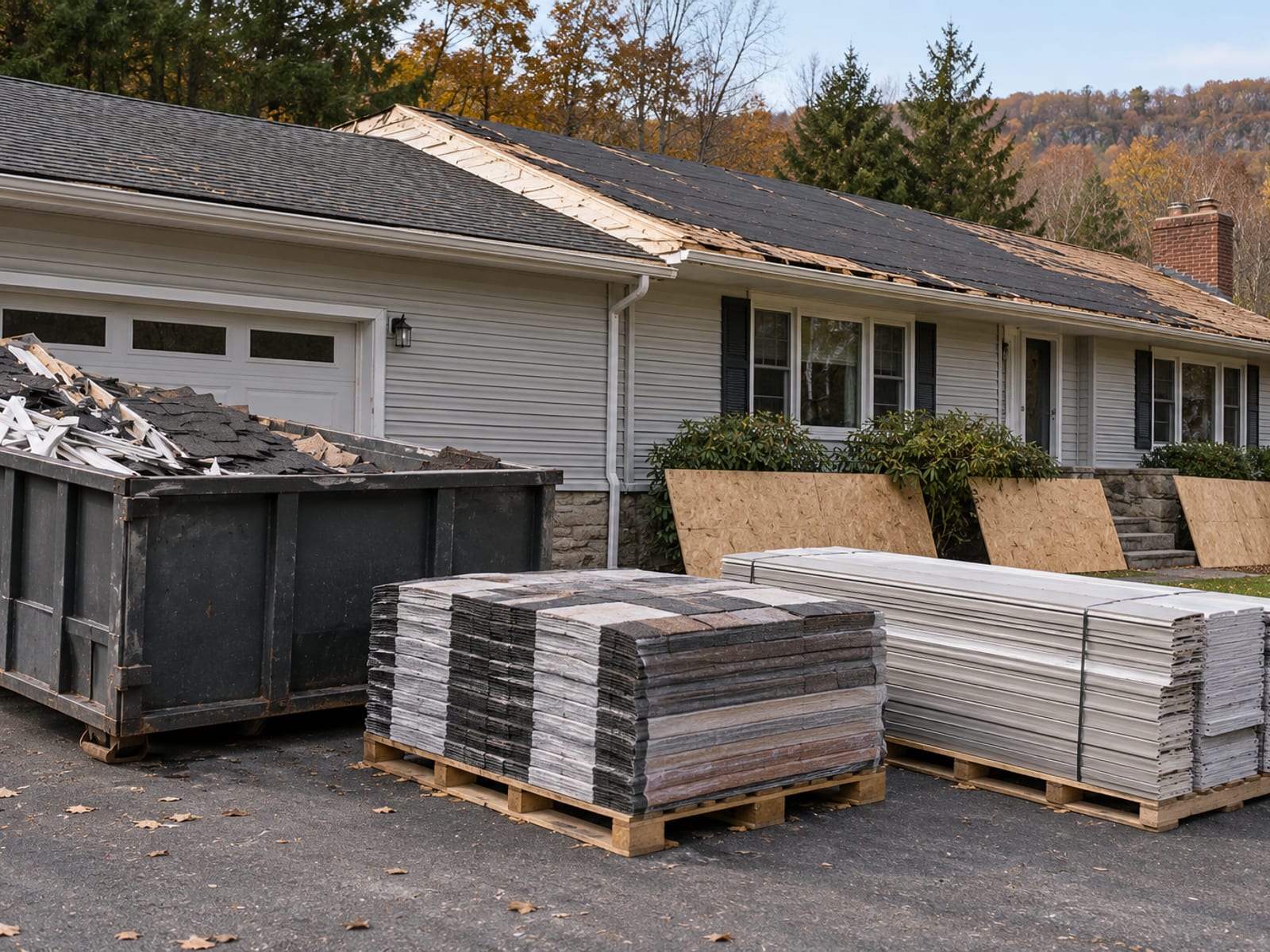
What you save by doing a roof and siding together depends on the work that is actually shared, not on a set percentage, so treat any promised discount as a claim to check. What a combined job can do is remove duplicated work. A crew that sets up once, protects your landscaping once and hauls away debris once is not paying for those steps twice, and the estimate is where you see whether that savings was passed on.
Where a Combined Roof and Siding Job Can Share Work
One setup charge instead of two, or a clear note that setup is included once.
Tap a factor to see how it moves the price.
Splitting the work can be the better choice in several situations. If the roof still has plenty of service life and the siding is the part failing, there is no reason to tear off a good roof. If you need to spread payments across seasons, two smaller projects are easier to finance than one large one. If one wall needs immediate repair and the rest of the exterior is fine, fix that wall now.
A combined project also means one larger disruption, one larger payment and a greater need for a detailed written scope. A contractor who does only one of the two trades is another reason to stage the work. Splitting also makes sense when an inspection shows that replacing one system will not disturb the other system's drainage details.
Rotted trim or sheathing found along the way is a separate question from the replacement itself, so ask how wood rot repair will be scoped and priced before you sign. Rot along the roof edge itself is covered in our guide to rotted fascia and soffit repair.
Photos and Inspection Points That Make Your Quotes Comparable
Before anyone gives you a number, take photographs from the ground of every roof slope you can see and every side of the house. Capture the places where a roof meets a wall, the gutters, the fascia (the board behind the gutter) and the soffit (the underside of the roof overhang). Zoom in rather than climbing for a closer look; roof access belongs to a qualified crew.
Write down what you see. Ceiling stains, loose or missing siding, swollen trim, cracked caulk, gutters that sag and places where runoff lands against the foundation all help a contractor price the real job. You can check most of the siding from the ground, so walk the house and note each elevation.
A combined inspection should then cover the full list. For the roof, that means the covering and deck, the underlayment and ice-barrier scope, the drip edge, and the step flashing at chimneys and walls. For the walls, it means the siding substrate and sheathing, the housewrap or other water-resistive barrier, and the flashing around windows, doors and penetrations. Fascia, soffit and gutters finish the list, along with the repairs likely to be hiding under all of it.
Write down the year your house was built. If it went up before 1978, the paint on old siding and trim may contain lead, and that changes how the crew has to work. More on that below.
Connecticut's Department of Consumer Protection publishes its own guidance on hiring a contractor for home repairs, and it is worth reading before the first estimate appointment.
The Roof Comes First Because Siding Has to Cover Its Flashing
Water moves down. Rain that runs off a roof can end up on the wall below it, so the point where a sloped roof meets a vertical wall is one of the most important details on the house. Step flashing, a series of small metal pieces woven under the shingles and up the wall, carries that water out onto the roof surface. Owens Corning's installation instructions for its shingles call for corrosion-resistant step flashing where a roof plane meets a vertical sidewall and tell installers to check local codes.
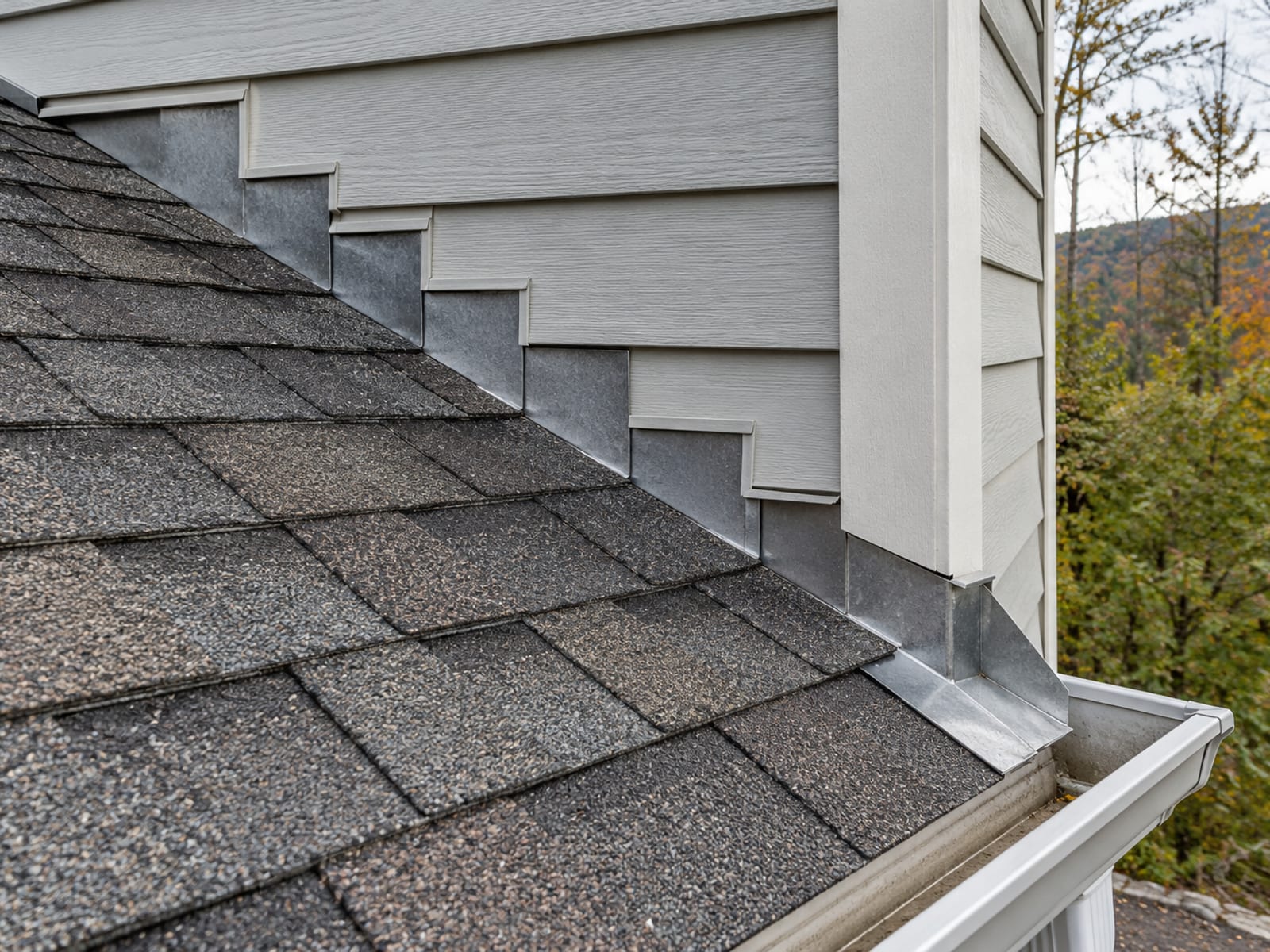
The Vinyl Siding Institute's 2020 installation manual shows the same relationship from the wall side. It shows the water-resistive barrier being cut and resealed so a kickout or diverter flashing can connect with the roof flashing, and it shows siding or J-channel held above the roof surface so water is not trapped at the intersection. That manual is industry installation guidance, not Connecticut law, but it is a clear picture of why the details have to be coordinated.
A kickout flashing is a small angled piece at the bottom of a roof-to-wall joint that steers water into the gutter instead of behind the siding. When the roof and wall are done by different crews at different times, this is a piece that is easy to overlook, so ask about it by name.
When the same company handles both trades, ask how the crews will work together at the intersections. If they are separate companies, ask who is responsible for the flashing where the two scopes meet.
From Gutter Removal to Gutter Reinstall: The Order of Work
A combined job runs in a sequence that follows the way water drains. It starts with protecting the site and taking down gutters and downspouts where they are in the way. Then the old roofing comes off, and the crew inspects the deck, the fascia and the areas where the roof meets walls.
Next come any deck repairs, underlayment, ice-barrier material where it is required, drip edge and roof flashing, followed by the roof covering itself and the roof penetrations. Only after the roof is complete does the siding crew start removing old siding and inspecting the sheathing, trim and the existing water barrier underneath.
With the wall exposed, the crew repairs the substrate and connects its flashing to the roof details. The water-resistive barrier, window and door flashing, kickout flashing and trim go in, then the siding and exterior trim. Gutters and downspouts come last, installed or reinstalled and checked so that discharge moves water away from the foundation.
Gutters go on last because their position depends on the finished roof edge, the fascia and the thickness of the new siding. If you are replacing them rather than reusing them, new gutters follow the same logic. The contract should say whether your existing gutters will be protected, removed and reused, or replaced.
Weather affects the calendar too. Spring through fall generally gives the most workable conditions, though the right window depends on the materials, crew availability and the condition of your exterior. If water is already getting into the house, the building's condition matters more than waiting for a preferred season.
What Moves the Price of a Combined Job in Connecticut
A combined roof and siding price depends on your particular house, so any single number you read online is a guess. What you can do is understand the drivers and make every estimate show them.
On the roof side, the cost follows the roof's area, pitch, height and complexity. Valleys, dormers, penetrations and roof-to-wall intersections each add detail work. The number of existing shingle layers affects tear-off and disposal, and so does the material you choose, whether shingle, metal or something else. Deck, fascia and soffit repairs can appear once the old roof comes off.
On the wall side, the siding material, profile, color and trim package set the starting point. Wall height, access and scaffolding needs add to it, as does the removal of the existing siding. Rot and moisture repairs in the sheathing or framing, housewrap, window and door flashing, and kickout and step flashing work are the items that most often change a siding quote after the work starts.
A few costs belong to both: gutter removal and replacement, permits, inspections, site protection and cleanup. For a house built before 1978, the lead-safe work requirements add another line. Seasonal scheduling and labor availability also move prices.
Because so many of these items only show up once the old material is off, ask how concealed damage will be priced. A written unit price or a defined allowance is far easier to deal with than a vague "as needed" repair line.
To test whether a combined price is actually lower, ask for three documents: the combined estimate, a roof-only scope, and a siding-only scope. Put them side by side and look at setup, disposal, permit and flashing charges. If the combined number is the sum of the two separate ones with nothing removed, the sharing has not shown up.
What the Cost vs. Value Report Says About Resale
The 2025 Cost vs. Value report models each project separately, with its own regional figures. These are not Connecticut numbers and they are not a combined roof-and-siding result. They are modeled New England projects, and they are useful mainly to see how differently each one is treated at resale.
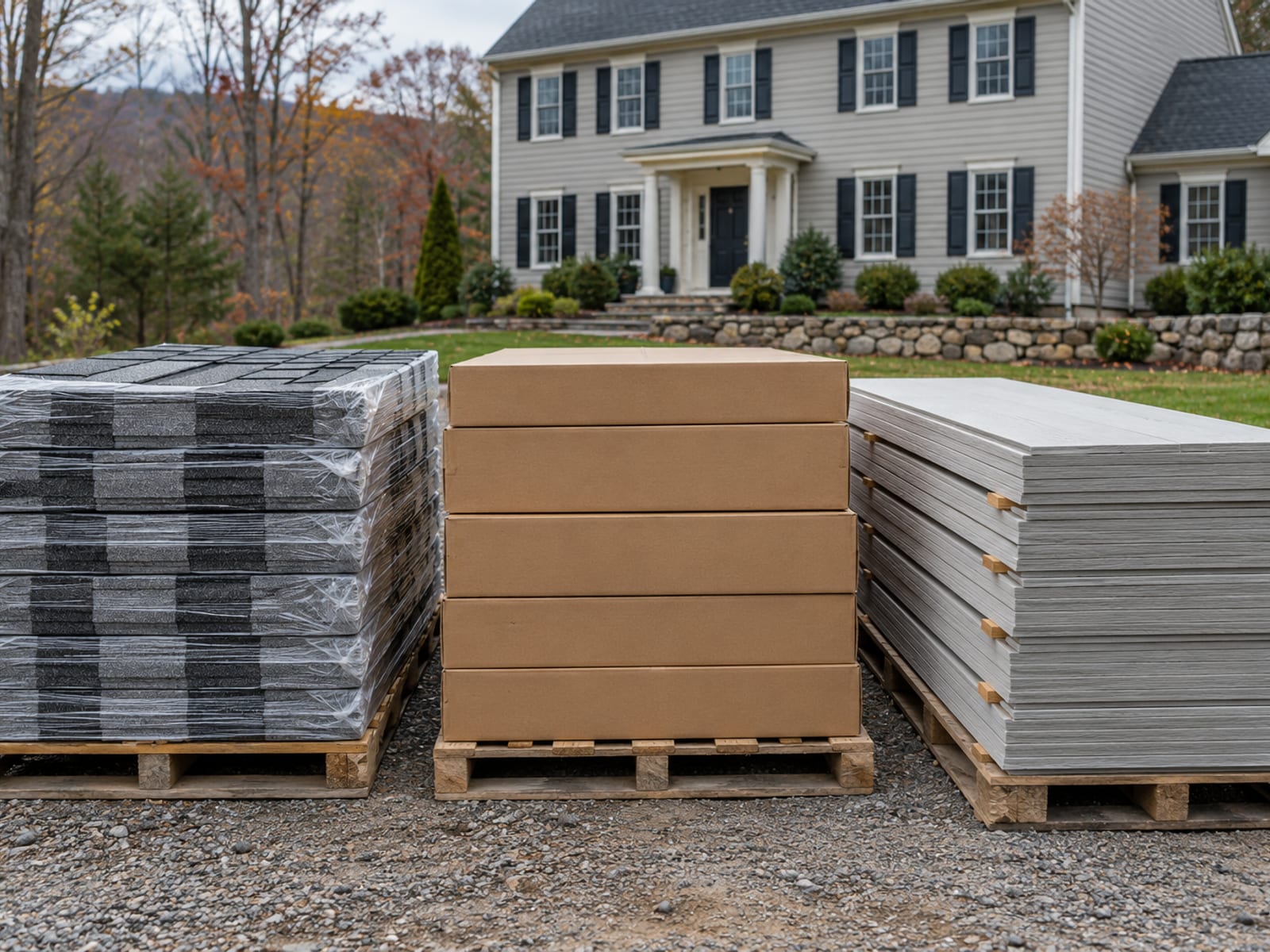
The Cost vs. Value New England figures show a modeled asphalt-roof replacement costing more than either siding project. That is regional context for how the two compare, not a promise of what your own house will return. Your estimate will depend on your roof's shape, the number of stories, the materials and the repairs your house needs.
Roof condition can matter in a second way. The Connecticut Insurance Department's 2026 advisory says insurers commonly consider roof age, roof condition, missing or deteriorated shingles, multiple roofing layers and overhanging limbs when they evaluate roof risk. That effect on underwriting is separate from resale value, and what your own policy does depends on your insurer, so ask your agent.
Permits, Storm Exposure and Older Homes in Connecticut
Connecticut has one statewide building code, and each town's building department runs the permits and inspections. The 2022 Connecticut State Building Code applies to permit applications filed on or after October 1, 2022, and it is based on the 2021 International Residential Code.
The Department of Consumer Protection says many home-improvement projects need a town building permit, that the permit must be in hand before work starts, and that you remain responsible for confirming the required permits are in place. Roof and siding permit requirements can differ by town, and zoning or wetlands approvals may apply to some properties. Call your building official, ask which permits apply to the roof and to the siding, and ask who will schedule the inspections. Keep the records.
Connecticut's severe storm guidance from the Insurance Department lists hail as capable of damaging roofs and siding, and it describes hurricanes and tropical storms as capable of bringing heavy rain, flooding and high winds. Wind and hail coverage depends on your policy. A contractor can assess your house's exposure, drainage and any storm damage already present, and your agent can answer the coverage question.
If your home was built before 1978, the Environmental Protection Agency's Renovation, Repair and Painting Rule generally applies when paid work disturbs painted surfaces. Siding removal, cutting, scraping and demolition can all disturb old paint. The firm must be EPA-certified, use a certified renovator and follow lead-safe work practices, and you can ask for the firm's certification details. EPA firm certification is valid for five years. Also ask how painted siding, trim and demolition waste will be handled.
Contract Terms and Questions That Protect a Large Project
Roofing and siding are both home improvements under Connecticut law, so the contractor generally must hold a Home Improvement Contractor registration from the Department of Consumer Protection. Confirm that the registration belongs to the same business named on your contract. The state publishes what a home-improvement contract must include: the HIC number, contract and project dates, a cancellation date, the materials, who handles cleanup, who pulls the permit and the payment schedule. You also have a three-business-day cancellation right.
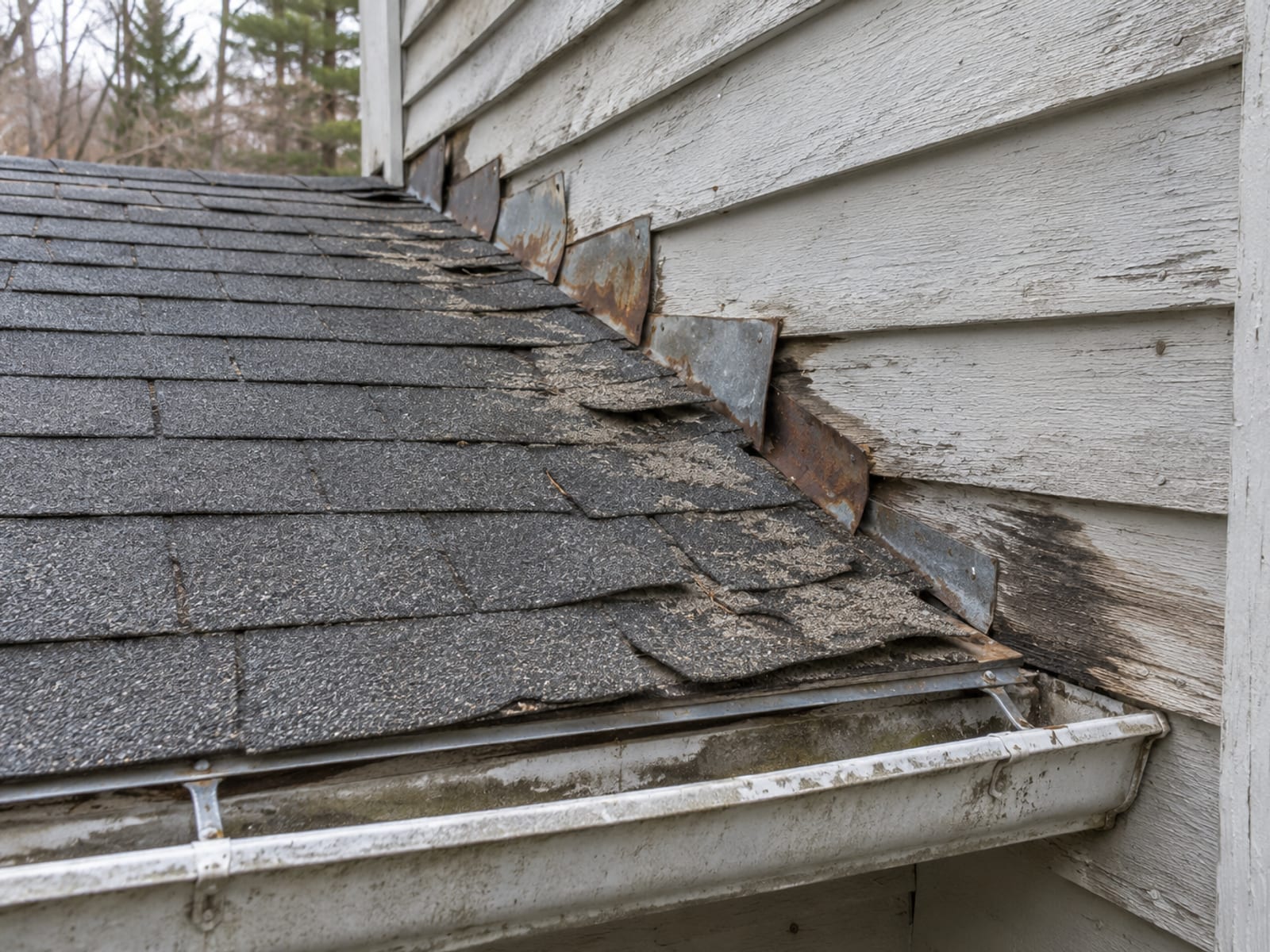
With a combined job, put these questions to each bidder and get the answers in writing:
- Which comes off first, the roof or the siding?
- Will the existing step flashing be replaced?
- How will the kickout flashing connect to the siding's drainage plane?
- Will the water-resistive barrier be repaired and taped?
- What happens if the deck or wall sheathing turns out to be damaged?
A few more belong in the same conversation. Are gutters removed and reused, or replaced? Who pulls the permit and schedules inspections? What does disposal and cleanup include? How are changes priced and approved? Is the firm EPA-certified for pre-1978 work? Which materials and warranties are in the price?
The mistakes to avoid are accepting a verbal scope, comparing totals without comparing flashing and materials, allowing an undefined repair allowance, and signing a roof-only proposal that leaves the wall flashing unresolved. Keep the signed contract, permit, inspection records, product information and warranty documents together. If you price the roof on its own first, a roof replacement scope gives you a baseline to measure the combined proposal against.
Frequently Asked Questions About Replacing a Roof and Siding Together
Should the roof or the siding go first?
When both need replacing, the roof generally goes first, followed by siding, then gutters. The roof establishes the drip edge and roof-to-wall flashing, and the siding's water barrier, J-channels and trim are built to match.
Does doing both at once cost less?
It can. A combined job may share setup, scaffolding, disposal, a permit application and one look at concealed damage. There is no fixed percentage, so compare a combined estimate with separate roof-only and siding-only scopes and look at which charges disappeared.
Do roofers install siding too?
Some do, and others subcontract or refer it. Whichever applies, confirm that the business named in your contract holds the Connecticut HIC registration and that the scope says who performs each trade.
Do gutters go on before or after siding?
After. Gutters may come down so crews can reach the roof edge and fascia, and new or reinstalled gutters normally go up once the roof edge, fascia and siding details are done.
What time of year works best for siding?
Spring through fall generally gives the most workable conditions, but weather, materials and crew schedules all play a part. If water is entering the house, address the damage rather than waiting for a better season.
What costs more, a new roof or new siding?
In the 2025 New England Cost vs. Value figures, the modeled asphalt-roof replacement cost $35,701, compared with $17,590 for vinyl siding and $20,678 for fiber-cement siding. Your Connecticut estimate depends on roof shape, number of stories, access, materials and repairs.
Do I need an EPA lead-safe contractor?
If your home was built before 1978 and paid work will disturb painted surfaces, the EPA's rule generally applies and the firm should be certified. Ask for the certification and who will supervise the lead-safe practices.
Roof and Siding Replacement Check
1. When both the roof and siding need replacing, which order generally works best?
2. What is the best way to test whether a combined price is actually lower?
3. Which item is a shared cost in a combined project?
4. Who is responsible for confirming that required permits are in place?
5. What should you ask a contractor if your house was built before 1978?
Final Thoughts
Replace the roof first, the siding second and the gutters last, and make sure the written scope explains how the flashing, the water barrier and the gutters connect. A combined job can share setup, disposal, permitting and a single look at hidden damage, and the estimate should show you where that happened.
Getting the sequence and the paperwork right at the start protects the walls and the roof edge for years afterward, and it leaves you with a record of what was done to your house.
If you are looking at both a roof and siding that are showing their age, American Quality Roofing and Siding can look at the whole exterior with you anywhere in Central and Western Connecticut. We are based in Brookfield, we carry CT HIC #0633301, and we have worked on Connecticut homes since 2006. Request a free estimate or call us, and bring the questions above.
Written by Jose Zaruma, American Quality Roofing and Siding.
← Back to the blog